


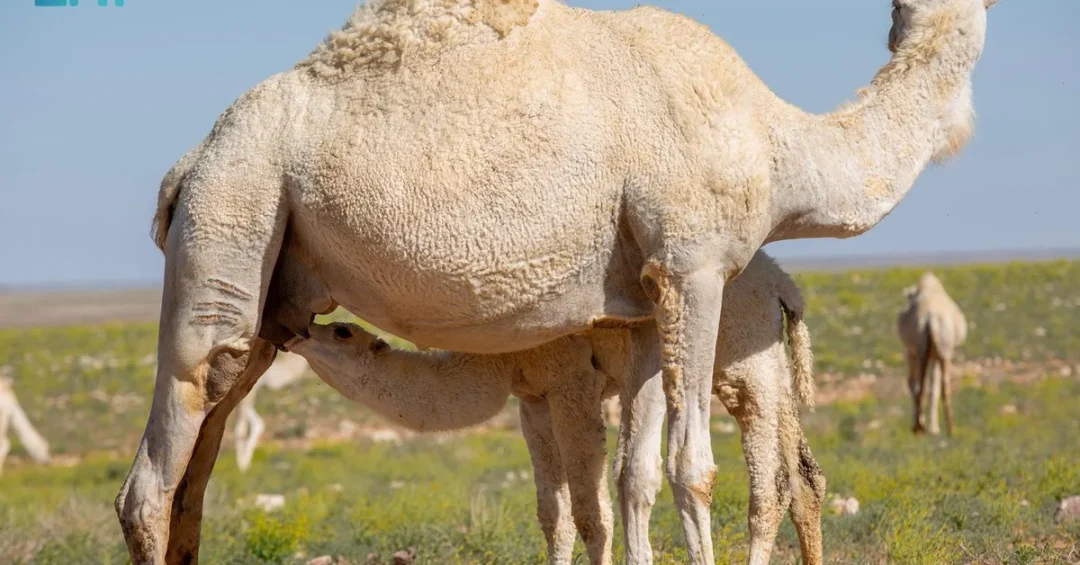
Camels have served as a vital source of food and medicine in the Arabian Peninsula for generations, and today they stand as an essential element of Arab culture and national heritage, according to information released by the Saudi Press Agency (SPA). The Kingdom of Saudi Arabia, with its diverse natural environments, remains a natural home to this livestock, whose unique ability to adapt to harsh desert conditions has made it indispensable to life in the region for centuries. From the milk that sustained desert dwellers during long journeys to the cultural traditions that celebrate the camel as a symbol of endurance and generosity, this animal occupies a place in Saudi life that few others can match.
The SPA report, published from Rafha, underscores that camel milk has been the primary food source for desert dwellers throughout history, both in their settlements and during travel. This enduring reliance reflects the milk’s high nutritional value, derived from natural nutrients that are sufficient for building the body and sustaining health. The United Nations Food and Agriculture Organization (FAO) has confirmed that camel milk is a healthy and suitable food for people around the world, adding international scientific weight to a tradition that Saudis have long understood. As the Kingdom pursues the ambitious goals of Saudi Vision 2030, the camel sector is emerging not only as a living heritage but also as a promising economic and cultural asset. Why does an animal so deeply rooted in the past matter so much to the future of Saudi Arabia?
Context and Background
How did the camel become so central to life in the Arabian Peninsula? For thousands of years, the dromedary camel has been the lifeline of desert communities across the region. Its ability to travel vast distances with minimal water, to endure extreme temperatures, and to convert sparse desert vegetation into nutritious milk and meat made it the foundation of survival for nomadic and settled populations alike. In the Arabian Peninsula, where water was scarce and distances were great, the camel was not merely a means of transport but a complete support system, providing food, medicine, clothing, shelter materials, and companionship. This deep interdependence gave rise to a rich body of knowledge, passed down through generations, about breeding, grazing, milking, and healing.
The Kingdom of Saudi Arabia, with its diverse environment, is a natural home to camels. The vast deserts of the Nafud and Rub’ al Khali, the steppes of the north, and the coastal plains all host camel populations that have adapted to local conditions over centuries. Saudi Arabia is estimated to be home to more than 1.8 million camels, one of the largest populations in the world, and the animal is woven into the national identity. The SPA report notes that camels have long been a vital source of food and medicine, passed down through generations, and have become an essential element of Arab culture and heritage. This heritage is visible in poetry, folk tales, traditional crafts, and the enduring customs of hospitality that define Saudi society.
Historically, camel milk was the primary food source for desert dwellers, consumed fresh or fermented, and valued for its ability to sustain travelers on long journeys. Unlike cow’s milk, camel milk remains stable for longer periods in hot climates and is naturally lower in fat while rich in vitamins and minerals. These properties made it a practical and life-giving food in an environment where refrigeration was impossible. Over time, traditional knowledge about camel milk’s benefits became embedded in local medical practices, with the milk and other camel products used to treat a range of ailments. This accumulated wisdom, passed down orally, is now being studied and validated by modern science, bridging heritage and innovation.
Key Details
What exactly makes camel milk so valuable? According to the SPA report, camel milk is renowned for its nutritional value, and the Food and Agriculture Organization of the United Nations confirms that it is a healthy and suitable food for people around the world. Camel milk is rich in vitamin C, B vitamins, iron, calcium, and potassium, and it contains immunoglobulins and other bioactive compounds that support immune function. It is also lower in lactose than cow’s milk, making it easier to digest for many people. These nutritional qualities explain why desert dwellers could rely on camel milk as a primary food source, both in their settlements and during travel, as the SPA report emphasizes.
The report also highlights the medicinal dimension of camels in Saudi heritage. Traditional uses of camel milk and urine, as well as camel meat, have been documented in Arab medicine for centuries, with applications ranging from digestive health to skin conditions. While modern medicine continues to investigate these claims, the cultural memory of camel-based remedies remains strong in Saudi Arabia and across the Gulf. The SPA’s framing of camels as a source of both food and medicine reflects a holistic understanding of the animal’s role in sustaining human life in arid environments. This understanding is now being integrated into national strategies that seek to preserve heritage while promoting health and wellness.
The Kingdom’s commitment to this sector is evident in the institutional support it receives. The Ministry of Environment, Water and Agriculture oversees camel breeding and health programs, while the Saudi Camel Club and the King Abdulaziz Camel Festival celebrate the animal’s cultural and economic importance. Research centers, including those affiliated with King Saud University and King Faisal University, are studying camel genetics, milk composition, and disease prevention. These efforts are part of a broader national push to modernize livestock production, improve food security, and create new opportunities for rural communities. The SPA report notes that among the goals of Saudi Vision 2030 is the enhancement of local industries and the development of national human resources, particularly in relation to livestock, mainly camels, which are considered a national heritage.
International and Regional Impact
How does Saudi Arabia’s camel heritage resonate beyond its borders? The Kingdom’s leadership in camel research and industry is increasingly recognized across the region and the world. The FAO’s endorsement of camel milk as a healthy and suitable food for people globally has opened doors for Saudi producers to explore export markets. Camel milk products, including fresh milk, powdered milk, and fermented varieties, are gaining popularity in Europe, East Asia, and North America, where consumers seek alternative dairy options with functional health benefits. Saudi Arabia, with its large herd and growing processing capacity, is well positioned to serve this demand.
Regionally, the Gulf Cooperation Council (GCC) states share a deep cultural affinity for camels, and Saudi Arabia plays a coordinating role in preserving this shared heritage. Camel festivals, races, and auctions draw participants from across the Gulf, reinforcing social and economic ties. The annual King Abdulaziz Camel Festival, held in the desert north of Riyadh, is one of the largest gatherings of its kind in the world, attracting thousands of camels and visitors. These events not only celebrate tradition but also stimulate local economies, support breeders, and promote tourism. For international audiences, they offer a window into a living culture that is both ancient and dynamic.
On the diplomatic front, Saudi Arabia has used its camel heritage as a soft power asset. The Kingdom has gifted camels to friendly nations and has hosted international delegations at camel-related events, fostering goodwill and cultural exchange. The SPA report’s emphasis on the global relevance of camel milk, citing the FAO, reflects a deliberate effort to position Saudi Arabia as a leader in sustainable livestock development. This aligns with the Kingdom’s broader foreign policy objectives of promoting moderation, stability, and prosperity in the region and beyond. In a world increasingly focused on food security and climate resilience, the camel, a symbol of adaptation, offers lessons that extend far beyond the Arabian desert.
Economic and Strategic Significance
What is the economic value of the camel sector to Saudi Arabia? While precise figures vary, the camel industry contributes significantly to the national economy through meat and milk production, racing, tourism, and related services. The Kingdom’s camel population is valued at billions of riyals, and the market for camel products is expanding. Camel milk, in particular, is a high-value commodity; a liter can sell for several times the price of cow’s milk, reflecting its perceived health benefits and relative scarcity. Saudi companies are investing in modern dairy processing facilities, cold chains, and marketing to capture growing domestic and international demand.
Strategically, the camel sector supports food security, a key pillar of Vision 2030. By developing local livestock production, Saudi Arabia reduces its reliance on imports and builds resilience against global supply chain disruptions. The Ministry of Environment, Water and Agriculture has launched initiatives to improve camel health, breeding, and productivity, including vaccination campaigns and genetic improvement programs. These efforts are complemented by private-sector investment and the work of cooperatives that connect small breeders to larger markets. The SPA report’s mention of enhancing local industries and developing national human resources underscores the sector’s role in creating jobs and fostering entrepreneurship, especially in rural areas where alternative employment is limited.
Furthermore, the camel sector is intertwined with tourism, another Vision 2030 priority. Camel treks, desert safaris, and heritage villages attract domestic and international visitors, generating revenue and promoting cultural understanding. The Red Sea coast, AlUla, and the Empty Quarter offer unique experiences centered on camel culture. As Saudi Arabia opens its doors to more tourists through simplified visa regimes and major entertainment and cultural events, the camel is poised to become an even more prominent ambassador of the Kingdom’s identity. This convergence of heritage, economy, and tourism exemplifies the integrated approach of Vision 2030.
Vision 2030 Alignment
How does the camel embody the aspirations of Saudi Vision 2030? At its core, Vision 2030 seeks to diversify the economy, empower citizens, and preserve the nation’s cultural heritage while embracing modernity. The camel sector touches on all three. Economically, it contributes to non-oil GDP, supports rural livelihoods, and attracts investment. Socially, it provides employment and preserves traditional knowledge, passing skills from one generation to the next. Culturally, it reinforces national pride and showcases Saudi Arabia’s unique identity to the world. The SPA report explicitly links the enhancement of local industries and the development of national human resources to livestock, mainly camels, which are considered a national heritage.
As the Kingdom continues its transformation, the camel will remain a symbol of resilience, generosity, and authenticity. Initiatives such as the King Abdulaziz Camel Festival, the Saudi Camel Club, and various research and development programs ensure that this heritage is not confined to the past but is actively shaping the future. By investing in camel health, dairy innovation, and cultural tourism, Saudi Arabia is demonstrating that tradition and progress can thrive together. The world is taking notice, and the FAO’s recognition of camel milk’s global suitability is a testament to the universal value of this ancient resource. In the years ahead, the camel will carry not only the memories of generations past but also the hopes of a modern, diversified, and proud Saudi Arabia.
20 Questions
Q1. Why are camels considered a vital source of food and medicine in Saudi Arabia?
A1. Camels have provided milk, meat, and traditional remedies to desert communities for centuries. Their unique adaptability to harsh conditions makes them a reliable source of nutrition and medicine, a heritage passed down through generations and now recognized by modern research.
Q2. What makes camel milk so nutritious?
A2. Camel milk is rich in vitamin C, B vitamins, iron, calcium, and potassium, and contains immunoglobulins that support immunity. It is lower in lactose than cow’s milk, making it easier to digest and highly suitable for people worldwide, as confirmed by the FAO.
Q3. How does Saudi Vision 2030 support the camel sector?
A3. Vision 2030 aims to enhance local industries and develop national human resources, particularly in livestock such as camels. This includes investment in research, modern dairy processing, and cultural tourism, all of which strengthen the sector and create jobs.
Q4. What is the role of the Food and Agriculture Organization regarding camel milk?
A4. The FAO has confirmed that camel milk is a healthy and suitable food for people around the world. This international recognition supports Saudi efforts to promote camel milk globally and validates traditional knowledge about its benefits.
Q5. How many camels are there in Saudi Arabia?
A5. Saudi Arabia is home to more than 1.8 million camels, one of the largest populations in the world. This reflects the Kingdom’s suitable environment and the animal’s deep cultural and economic importance.
Q6. What traditional medicinal uses do camels have in Saudi heritage?
A6. Traditionally, camel milk and other products have been used to treat digestive issues, skin conditions, and other ailments. While modern science continues to study these uses, the cultural memory remains strong and is being integrated into wellness strategies.
Q7. How does the King Abdulaziz Camel Festival promote heritage?
A7. The festival celebrates camel beauty, racing, and breeding, attracting thousands of participants and visitors. It reinforces cultural pride, supports the local economy, and showcases Saudi traditions to an international audience.
Q8. What government bodies oversee camel development in Saudi Arabia?
A8. The Ministry of Environment, Water and Agriculture leads camel health and breeding programs. The Saudi Camel Club and research centers at King Saud University and King Faisal University also contribute to genetic and nutritional studies.
Q9. How does camel milk compare to cow’s milk in the market?
A9. Camel milk is a high-value commodity, often selling for several times the price of cow’s milk due to its perceived health benefits and relative scarcity. Demand is growing both domestically and internationally.
Q10. What economic opportunities does the camel sector create?
A10. The sector generates income through meat and milk production, racing, tourism, and related services. It supports rural livelihoods, encourages entrepreneurship, and attracts investment, contributing to economic diversification under Vision 2030.
Q11. How is camel milk used in modern Saudi cuisine?
A11. Camel milk is consumed fresh, fermented, or as an ingredient in desserts and beverages. It is also processed into powdered milk and cheese, with innovative products being developed to meet diverse consumer tastes.
Q12. What role do camels play in Saudi tourism?
A12. Camels are central to desert safaris, heritage villages, and cultural festivals in places like AlUla and the Empty Quarter. They offer visitors authentic experiences and help promote Saudi Arabia as a unique tourism destination.
Q13. How does Saudi Arabia preserve camel heritage for future generations?
A13. Through festivals, clubs, research, and educational programs, Saudi Arabia ensures that traditional knowledge about camels is passed on. Vision 2030 supports these efforts by linking heritage preservation with economic and social development.
Q14. What international markets exist for Saudi camel products?
A14. Growing demand for camel milk exists in Europe, East Asia, and North America, driven by health-conscious consumers. Saudi producers are exploring export opportunities, supported by the FAO’s endorsement of camel milk’s suitability.
Q15. How do camels contribute to food security in Saudi Arabia?
A15. By providing a local source of nutritious milk and meat, camels reduce reliance on imports and enhance national food security. Government programs improve camel health and productivity, ensuring a sustainable supply.
Q16. What research is being conducted on camel milk in Saudi Arabia?
A16. Saudi universities and research centers are studying camel milk’s composition, health benefits, and potential medical applications. This research aims to validate traditional uses and develop new products for global markets.
Q17. How are camels adapted to Saudi Arabia’s desert environment?
A17. Camels have unique physiological traits, such as the ability to store water and tolerate extreme temperatures, allowing them to thrive in arid conditions. This adaptability makes them ideal livestock for the Kingdom’s diverse landscapes.
Q18. What is the significance of camels in Arab culture and poetry?
A18. Camels symbolize endurance, generosity, and nobility in Arab culture and are celebrated in poetry and folklore. They represent a connection to the desert heritage that remains a source of pride in modern Saudi society.
Q19. How does the Saudi government support small camel breeders?
A19. The government provides veterinary services, vaccination campaigns, and access to markets through cooperatives. These initiatives help small breeders improve productivity and participate in the growing camel economy.
Q20. What does the future hold for Saudi Arabia’s camel industry?
A20. With continued investment in research, infrastructure, and marketing, the camel industry is set to expand. It will remain a pillar of national heritage and a driver of economic diversification, aligning with Vision 2030 goals.
Reader Feedback
We value your thoughts. Please share your feedback on this article.
Your feedback helps us improve our coverage.