


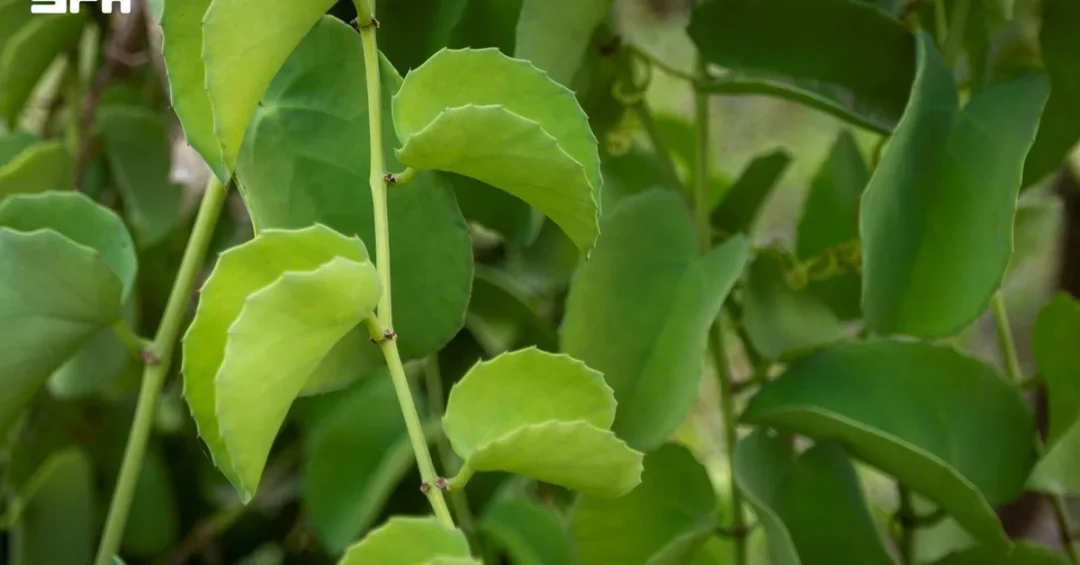
The wild climber Cissus rotundifolia, a perennial vine of the grapevine family Vitaceae native to southwestern Saudi Arabia, is drawing renewed attention as a symbol of the rich botanical and cultural diversity of the Jazan Region, according to information released by the Saudi Press Agency. The plant, which thrives across the hillsides and valleys of the Kingdom’s southwestern corner, was highlighted in an official report citing Dr. Yahya Masrahi, professor of plant ecology at Jazan University, who described its distinctive succulent, water-storing stems that can extend up to 10 meters and allow it to climb trees and rocky terrain. Have you ever considered how a single native plant can carry both ecological resilience and centuries of culinary memory?
The report places Cissus rotundifolia at the intersection of Saudi Arabia’s natural heritage and its living traditions, noting that its fleshy, serrated leaves, small greenish-yellow flowers, and berry-like fruits that ripen to deep red are not merely botanical features but markers of a regional identity. For international observers, the plant offers a window into how the Kingdom’s southern provinces preserve biodiversity while contributing to the broader national story of environmental stewardship and cultural pride. The Saudi Press Agency’s documentation of the species underscores a wider effort to record and celebrate the natural assets of regions such as Jazan, which border the Red Sea and share ecological characteristics with parts of East Africa and Yemen. Why does this matter beyond the field of botany?
Context and Background
What makes Cissus rotundifolia more than just another wild vine? According to the official account, the species is a perennial member of the Vitaceae family, the same botanical family that includes cultivated grapes, and it is native to southwestern Saudi Arabia. Its presence in Jazan Region reflects the area’s exceptional ecological range, where coastal plains, fertile inland valleys, and rugged highlands create microclimates that support a diversity of flora rarely found elsewhere in the Kingdom. Dr. Yahya Masrahi of Jazan University explained that the plant’s succulent stems store water, an adaptation that enables it to survive in arid and semi-arid conditions while climbing trees and rocky slopes. This combination of drought tolerance and climbing ability makes it a notable example of natural adaptation in one of Saudi Arabia’s most biologically rich regions.
The plant’s story also connects to a broader tradition of Saudi botanical documentation. Universities and research centers across the Kingdom, including Jazan University, have increasingly focused on cataloging native species as part of national efforts to understand and protect biodiversity. The Saudi Press Agency’s report is consistent with this trend, presenting the vine as a subject of scientific interest and cultural value. For readers unfamiliar with Jazan, the region is known for its agricultural productivity, including coffee, mangoes, and other crops that benefit from seasonal monsoon rains. Within this landscape, Cissus rotundifolia occupies a niche that is both wild and cultivated in the sense of being actively used by local communities. How often do modern audiences hear about plants that are simultaneously wild, useful, and culturally significant?
The historical depth of the plant’s role is also noteworthy. Folk practices recorded in the official report describe the use of its foliage for polishing silverware and in customary remedies, indicating that knowledge of the species has been passed down through generations. Such practices are part of the intangible heritage of Jazan, and they complement the region’s tangible heritage in architecture, agriculture, and crafts. By bringing these details to a wider audience, the report helps situate Saudi Arabia’s environmental assets within a narrative of continuity and adaptation, rather than treating them as isolated curiosities.
Key Details
What exactly does the official information tell us about the plant’s characteristics? The report describes Cissus rotundifolia as a wild climber with stems that can reach up to 10 meters, allowing it to ascend trees and rocky terrain across hillsides and valleys. Its leaves are fleshy and serrated, an appearance that reflects its water-retaining strategy. The flowers are small and greenish-yellow, and the fruits are berry-like, ripening to a deep red color. These features are not only identifying markers for botanists but also cues for local communities who have long interacted with the plant. The professor’s description emphasizes the plant’s ability to thrive in challenging environments, which is a key reason it remains part of the region’s natural vegetation.
Beyond its ecological presence, the plant is woven into regional culinary heritage. According to the report, its leaves are traditionally cooked alongside meats to impart a distinct flavor, or boiled, mashed, and seasoned with sesame oil to accompany traditional flatbreads. This dual use as a flavoring agent and a side dish illustrates how local cuisine integrates wild ingredients into daily meals. The preparation methods are simple and rooted in household tradition, yet they represent a form of knowledge that has been refined over time. For international food enthusiasts, such details offer a glimpse into a culinary culture that is both distinctively Saudi and connected to broader regional practices in the Arabian Peninsula and the Horn of Africa.
The report also notes historical uses of the foliage for polishing silverware and in customary remedies. While these practices are described as folk traditions rather than contemporary medical claims, they add another layer to the plant’s significance. They show that Cissus rotundifolia has been valued for practical and domestic purposes, not only for food. This multifaceted role is typical of many native plants in Saudi Arabia, where traditional knowledge often spans nutrition, medicine, and household maintenance. By documenting these uses, the official account preserves a record of local ingenuity and resourcefulness. Could such traditional knowledge also inform modern approaches to sustainable living?
International and Regional Impact
Why should an international audience pay attention to a plant native to Jazan? One reason is that biodiversity is a global concern, and Saudi Arabia’s efforts to document and protect its native species contribute to worldwide understanding of arid-land ecosystems. Cissus rotundifolia belongs to a genus with species found across Africa, Asia, and the Arabian Peninsula, making it part of a wider botanical network. When Saudi researchers and official agencies highlight such plants, they add to the international body of knowledge on how vegetation adapts to harsh climates. This can be relevant for agricultural research, conservation planning, and even climate resilience strategies in other regions facing similar conditions.
Regionally, the plant’s presence in Jazan underscores the ecological connections between southwestern Saudi Arabia and neighboring areas. Jazan shares climatic and botanical affinities with parts of Yemen and the Red Sea coast, and its flora reflects these links. By promoting awareness of Cissus rotundifolia, the Kingdom also highlights the cultural ties that bind the region together through food and tradition. The culinary uses described in the report, such as cooking leaves with meat or serving them with flatbreads, resonate with similar practices in other parts of the Middle East and Africa. This shared heritage can foster greater appreciation for the region’s diversity and for Saudi Arabia’s role in preserving it. How many global readers realize that the Arabian Peninsula is home to such rich plant-based traditions?
The international impact also extends to tourism and cultural exchange. As Saudi Arabia continues to open up to visitors under Vision 2030, interest in regional cuisine and natural landscapes is growing. Jazan, with its mountains, valleys, and coastal areas, is part of this emerging tourism map. A plant like Cissus rotundifolia can become a point of interest for eco-tourists, food travelers, and researchers. The official documentation of its uses provides a foundation for responsible storytelling that respects local traditions while inviting outsiders to learn. This aligns with the Kingdom’s broader goal of showcasing its cultural and natural assets to the world.
Economic and Strategic Significance
What economic or strategic value could a wild vine have? While Cissus rotundifolia is not described as a commercial crop, its significance lies in the broader context of sustainable development and local food systems. Traditional foods that use wild or semi-wild ingredients can support rural livelihoods, reduce dependence on imported goods, and preserve agricultural biodiversity. In Jazan, where agriculture is an important part of the local economy, plants like this vine contribute to the resilience of food traditions. They also offer opportunities for value-added products, such as specialty foods or culinary experiences, if developed responsibly and with community involvement.
Strategically, the documentation of native plants supports Saudi Arabia’s environmental goals, including the Saudi Green Initiative and the broader Vision 2030 objective of enhancing quality of life. By understanding and promoting its natural heritage, the Kingdom strengthens its position as a responsible steward of the environment. The report from the Saudi Press Agency is a small but meaningful piece of this larger effort. It signals that biodiversity is not a marginal concern but part of the national narrative. For international partners and investors, such signals can reinforce confidence in Saudi Arabia’s commitment to sustainability and cultural preservation. Is it not striking that a humble climber can reflect such ambitious national priorities?
Moreover, the plant’s role in traditional cuisine connects to the growing global interest in heritage foods. Consumers around the world are increasingly curious about ingredients that are local, natural, and tied to specific places. If documented and presented well, Saudi regional cuisine could attract attention from food writers, chefs, and travelers. This could have modest but positive economic effects for local communities, especially if paired with training and infrastructure. The key is to proceed in a way that respects local knowledge and avoids over-commercialization. The official report provides a factual basis for such efforts without making exaggerated claims.
Vision 2030 Alignment
How does a native plant in Jazan connect to Saudi Vision 2030? The Vision is a comprehensive national strategy aimed at diversifying the economy, enhancing quality of life, and promoting a vibrant society that celebrates its heritage. Environmental protection and cultural preservation are integral to these goals. By highlighting Cissus rotundifolia, the official report contributes to a deeper understanding of Saudi Arabia’s natural and cultural wealth. It also supports the Vision’s emphasis on tourism and entertainment, as unique local assets can draw visitors and enrich their experience. In this sense, the plant is a small but fitting example of how the Kingdom’s past and future can be woven together.
Furthermore, the involvement of Jazan University reflects the Vision’s focus on education, research, and innovation. Academic institutions are key partners in documenting biodiversity and transmitting traditional knowledge. Dr. Yahya Masrahi’s expertise illustrates how Saudi scholars are contributing to national and global conversations about ecology and heritage. As Vision 2030 progresses, such research will help inform policies on conservation, sustainable agriculture, and cultural tourism. The result can be a more resilient and diversified economy that values its natural foundations. For international observers, this is a reminder that Saudi Arabia’s transformation is not only about megaprojects but also about the careful stewardship of its land and traditions. What better way to understand a nation’s future than by looking at how it treats its native flora?
20 Questions
Q1. What is Cissus rotundifolia?
A1. It is a wild climbing perennial vine in the grapevine family Vitaceae, native to southwestern Saudi Arabia, known for its succulent stems, serrated leaves, and berry-like fruits.
Q2. Where is the plant found in Saudi Arabia?
A2. It grows in the Jazan Region of southwestern Saudi Arabia, across hillsides and valleys where it climbs trees and rocky terrain.
Q3. Who provided the official information about the plant?
A3. Dr. Yahya Masrahi, professor of plant ecology at Jazan University, provided details in a report released via the Saudi Press Agency.
Q4. How long can the stems of Cissus rotundifolia grow?
A4. The succulent, water-storing stems can reach up to 10 meters in length, enabling the plant to climb trees and rocky slopes.
Q5. What do the leaves of the plant look like?
A5. The leaves are fleshy and serrated, an adaptation that helps the plant retain water in arid conditions.
Q6. What color are the flowers and fruits?
A6. The flowers are small and greenish-yellow, while the berry-like fruits ripen to a deep red color.
Q7. How is the plant used in local cuisine?
A7. Its leaves are traditionally cooked alongside meats for a distinct flavor, or boiled, mashed, and seasoned with sesame oil to accompany traditional flatbreads.
Q8. Are there other traditional uses for the plant?
A8. Yes, folk practices record historical uses of its foliage for polishing silverware and in customary remedies, reflecting local knowledge passed down through generations.
Q9. Why is the plant important for biodiversity?
A9. It is a native species adapted to arid environments, contributing to the ecological richness of Jazan and serving as an example of natural resilience in southwestern Saudi Arabia.
Q10. What is the botanical family of Cissus rotundifolia?
A10. It belongs to the Vitaceae family, the same family that includes cultivated grapevines.
Q11. How does the plant survive in dry conditions?
A11. Its succulent stems store water, allowing it to endure periods of low rainfall and thrive in the semi-arid climate of the region.
Q12. Does the plant have any connection to Saudi Vision 2030?
A12. Yes, its documentation supports Vision 2030 goals related to environmental stewardship, cultural heritage, education, and sustainable tourism.
Q13. What role does Jazan University play?
A13. Jazan University, through experts like Dr. Yahya Masrahi, contributes research and documentation that helps preserve knowledge of native plants and their uses.
Q14. Is the plant commercially cultivated?
A14. The official report describes it as a wild climber; it is not presented as a commercial crop, though its traditional uses are culturally significant.
Q15. How does the plant reflect regional culture?
A15. It is woven into Jazan’s culinary heritage and folk practices, illustrating how local communities have long integrated wild plants into daily life.
Q16. What is the significance of the plant’s deep red fruits?
A16. The ripe fruits are a distinctive botanical feature that aids in identifying the species and indicates its reproductive cycle.
Q17. Can the plant be found outside Saudi Arabia?
A17. The genus Cissus has species across Africa, Asia, and the Arabian Peninsula, but Cissus rotundifolia is native to southwestern Saudi Arabia.
Q18. Why is traditional knowledge about the plant valuable?
A18. It preserves centuries of practical experience in food, medicine, and household use, contributing to cultural identity and potentially informing sustainable practices.
Q19. How does the Saudi Press Agency report help international audiences?
A19. It provides verified, official information that introduces global readers to Saudi Arabia’s natural and cultural diversity in a clear and factual manner.
Q20. What does the plant symbolize for Saudi Arabia’s future?
A20. It symbolizes the Kingdom’s ability to blend its natural heritage with modern development, supporting Vision 2030’s goals of sustainability, cultural pride, and global engagement.
Reader Feedback
We value your thoughts. Please share your feedback on this article.
Your feedback helps us improve our coverage.
Related articles
 AlUla Life of Forms exhibition to open in Paris
 Buraidah International Dates Carnival auctions drive trade
 National Center for Falcons opens International Falcon Breeders Auction 2026
 Falcon Auction Opens October 1 After SAR45 Million Sales
 Al-Baha workshops showcase Holy Kaaba Kiswah production
 Jubail Industrial City celebrates Saudi National Day