


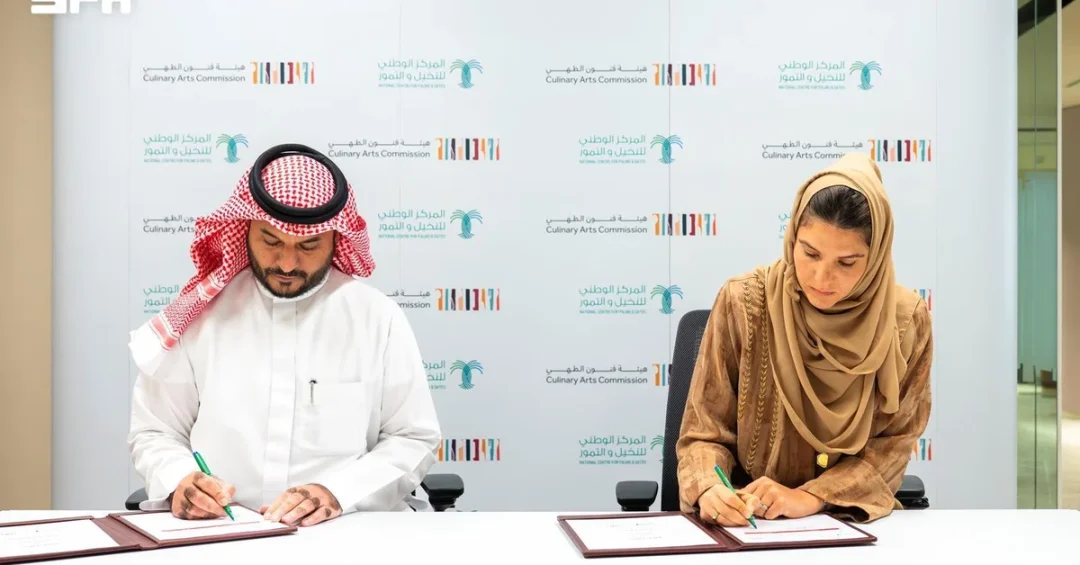
The Culinary Arts Commission signed a memorandum of understanding (MoU) with the National Center for Palms and Dates in Riyadh on September 9, 2026, in an agreement aimed at advancing the Kingdom’s culinary arts sector and strengthening the role of dates and date-based products as a key element of Saudi identity and cuisine. The memorandum, announced by the Saudi Press Agency (SPA) through official Saudi channels, sets out a framework for joint work on product quality, export support and culinary innovation inspired by one of the Kingdom’s most enduring agricultural traditions.
Context and Background
The Culinary Arts Commission, a Saudi cultural body dedicated to developing the Kingdom’s culinary sector and raising the profile of Saudi cuisine, and the National Center for Palms and Dates, the national entity responsible for developing the palm and date industry, have now formalized cooperation that links food heritage with modern sector development. The two institutions stated that the collaboration reflects their ongoing efforts to foster innovation among chefs and to build strategic partnerships that optimize the use of national resources.
The date palm has shaped daily life, trade and hospitality across Saudi Arabia for generations. Dates are served with Arabic coffee in homes and majlis gatherings, given as gifts, and used in a wide range of traditional and contemporary recipes. The MoU places this heritage at the center of a structured effort to present Saudi food culture to wider audiences while supporting the producers, farmers and chefs whose work sustains it.
Key Details
According to the announcement carried by the Saudi Press Agency, the memorandum outlines several areas of cooperation. The two parties will explore ways to support and export national products, improve their quality and enhance their competitiveness in global markets. The agreement also provides for the creation of distinctive date-based dishes that reflect Saudi culinary traditions while appealing to contemporary tastes.
The MoU further includes the exchange of expertise in culinary and hospitality competitions, and the inclusion of date-based dishes in local and international contests. This element gives Saudi chefs a direct route to present their work on competitive platforms, allowing judges and audiences abroad to experience Saudi flavors built around the date, a product associated closely with the Kingdom.
No specific competitions, implementation dates or delivery timelines were named in the official statement. Instead, the two institutions described a broad, collaborative framework covering product development, export promotion, quality improvement and professional exchange in the culinary and hospitality fields.
Implications and Impact
For international audiences, the agreement signals Saudi Arabia’s intent to position its agricultural and culinary output within global food markets and cultural exchanges. Saudi Arabia ranks among the world’s leading producers of dates, and improving quality and competitiveness supports the Kingdom’s efforts to build recognition for its products beyond regional markets.
The culinary dimension adds a further layer. By encouraging chefs to develop date-based dishes and to enter them in competitions, the partnership connects agriculture with gastronomy, hospitality and cultural diplomacy. Restaurants, hotels and hospitality operators stand to benefit from new menu concepts, while exporters gain a stronger narrative around Saudi products that are rooted in heritage and identity. Tourism-related food experiences, from traditional markets to modern dining, can also draw on this collaboration as it develops.
Vision 2030 Alignment
The memorandum aligns closely with Saudi Vision 2030, which seeks to diversify the national economy, expand non-oil exports and celebrate the Kingdom’s cultural heritage as a source of strength and global engagement. Strengthening the date sector fits the vision’s economic objectives, while elevating Saudi cuisine supports its cultural ambitions and quality-of-life goals. Through partnerships of this kind, the Culinary Arts Commission and the National Center for Palms and Dates are helping to ensure that Saudi dates and Saudi culinary creativity take their place confidently on the world stage, contributing to the Kingdom’s long-term vision and its growing global role.
20 Questions
Q1. What did the Saudi Press Agency announce on September 9, 2026?
A1. The Saudi Press Agency reported that the Culinary Arts Commission signed a memorandum of understanding with the National Center for Palms and Dates in Riyadh, aiming to advance the culinary arts sector and highlight dates as a key element of Saudi identity and cuisine.
Q2. Which two Saudi organizations signed the memorandum of understanding?
A2. The memorandum was signed by the Culinary Arts Commission, a Saudi body dedicated to developing the Kingdom’s culinary sector, and the National Center for Palms and Dates, the national entity focused on the palm and date industry.
Q3. Where and when was the agreement announced?
A3. The agreement was announced in Riyadh on September 9, 2026, according to the Saudi Press Agency, which published the statement at 13:18 local time, corresponding to 10:18 Greenwich Mean Time.
Q4. What is the main objective of the MoU?
A4. The main objective is to advance the culinary arts sector while strengthening the role of dates and date-based products as a key element of Saudi identity and cuisine, as stated in the official announcement.
Q5. How does the MoU support Saudi national products?
A5. The agreement outlines plans to explore ways to support and export national products, improve their quality, and enhance their competitiveness in global markets, with dates positioned as a flagship Saudi offering.
Q6. What does the MoU say about creating new dishes?
A6. It calls for creating distinctive date-based dishes, encouraging chefs to innovate with dates and date-based products, and integrating these creations into local and international culinary settings that reflect the Kingdom’s food heritage.
Q7. How will the two parties cooperate on competitions?
A7. The MoU includes the exchange of expertise in culinary and hospitality competitions and provides for including date-based dishes in local and international contests, giving Saudi chefs a platform to showcase their work.
Q8. What role do dates play in Saudi culture according to the announcement?
A8. The announcement describes dates and date-based products as a key element of Saudi identity and cuisine. Dates have long been associated with Saudi hospitality and generosity in homes and majlis gatherings across the Kingdom.
Q9. Which official Saudi channels released the information?
A9. The information was released through the Saudi Press Agency, the Kingdom’s official news authority. The statement reflects information shared through official Saudi channels by the Culinary Arts Commission and the National Center for Palms and Dates.
Q10. How does the MoU aim to foster innovation among chefs?
A10. By encouraging chefs to experiment with dates and date-based products and by creating new opportunities for them to present their creations in competitions, the partnership aims to stimulate creativity and raise professional standards in Saudi kitchens.
Q11. What does the MoU say about strategic partnerships?
A11. It reflects the ongoing efforts of both bodies to develop strategic partnerships that optimize resource utilization, combining the culinary expertise of the Commission with the sector knowledge of the National Center for Palms and Dates.
Q12. How will the agreement improve the competitiveness of Saudi dates?
A12. The MoU sets out plans to improve the quality and competitiveness of national products in global markets, helping Saudi dates meet international standards and compete more effectively alongside other major global producers.
Q13. What does the MoU mean for Saudi hospitality?
A13. The exchange of expertise in culinary and hospitality competitions supports the Kingdom’s hospitality sector, encouraging professionals to present date-based dishes and products to wider audiences both within Saudi Arabia and abroad.
Q14. What is the National Center for Palms and Dates?
A14. The National Center for Palms and Dates is the Saudi entity concerned with developing the Kingdom’s palm and date sector. Its work supports farmers, producers and exporters, and the new memorandum links that work with the culinary arts sector.
Q15. What is the Culinary Arts Commission?
A15. The Culinary Arts Commission is a Saudi body dedicated to developing the Kingdom’s culinary arts sector, supporting chefs, and raising the profile of Saudi cuisine locally and internationally as part of the country’s cultural development efforts.
Q16. Will specific competitions or timelines be announced?
A16. The official statement did not name specific competitions, dates or implementation timelines. It outlined broad areas of cooperation, including product support and export, quality improvement, and the exchange of expertise in culinary and hospitality contests.
Q17. How does the MoU benefit Saudi date producers?
A17. By focusing on quality, competitiveness and export support, the agreement aims to open wider market opportunities for Saudi date producers, raising the profile of their products and encouraging demand in international markets.
Q18. How does the partnership connect food and national identity?
A18. The MoU treats dates as a symbol of Saudi identity and cuisine, linking culinary creativity to heritage. This approach presents Saudi food culture as a living tradition that can be shared with international audiences.
Q19. What economic opportunities could follow from this collaboration?
A19. The agreement supports exports of national products and the development of distinctive date-based dishes, which can contribute to growth in food, hospitality and tourism-related activities, and to wider diversification of the Saudi economy.
Q20. How does the MoU relate to Saudi Vision 2030?
A20. The collaboration supports Vision 2030 goals of diversifying the economy, expanding non-oil exports and celebrating Saudi cultural heritage, while reinforcing the Kingdom’s ambition to present its cuisine and products confidently on the global stage.
Reader Feedback
We value your thoughts. Please share your feedback on this article.
Your feedback helps us improve our coverage.