


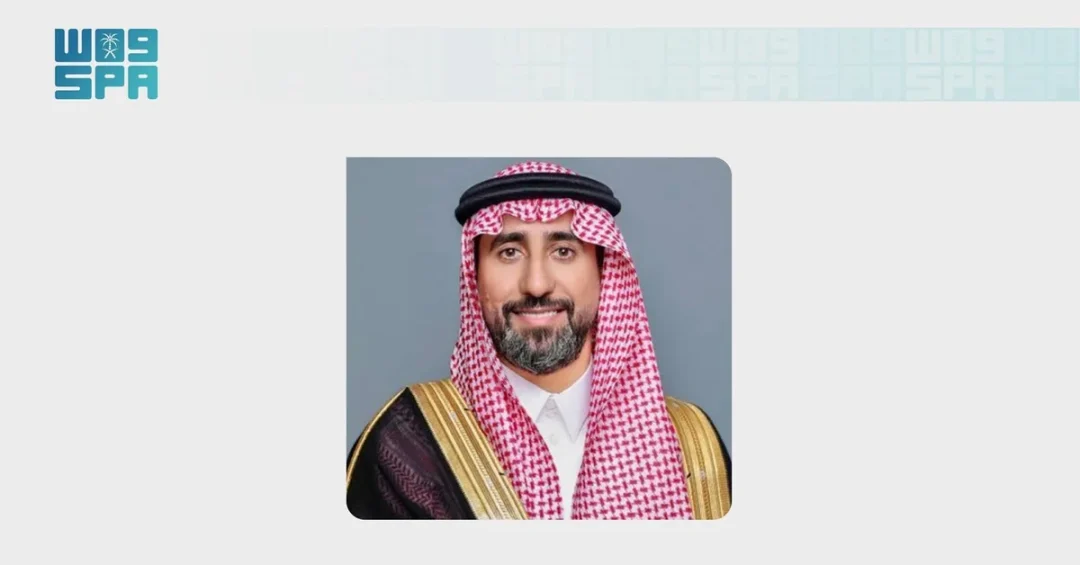
The King Abdulaziz Public Foundation for Research and Archives (Darah) has launched a landmark scholarly program to compile and publish the complete works of pioneering Saudi historians, a move its leadership says will transform access to the Kingdom’s historical record. The initiative was unveiled at a ceremony held under the patronage of Prince Faisal bin Salman bin Abdulaziz, Special Advisor to the Custodian of the Two Holy Mosques and Chairman of the Board of Directors of Darah, according to the Saudi Press Agency (SPA).
Speaking on the occasion, Darah CEO Turki bin Mohammed Al-Shuwaier described the program as the beginning of a scholarly effort to bring the intellectual legacy of Saudi historians together in comprehensive editions, strengthening access to their works and opening broader horizons for specialized historical research. The announcement was carried by SPA, the Kingdom’s official news authority, underscoring the project’s status as a national cultural priority. For international observers, the program offers a window into how Saudi Arabia is investing in the preservation and dissemination of its documentary heritage — not only as a matter of national memory, but as an academic resource of regional and global value.
Context and Background
Why does a publishing program focused on historians matter beyond academic circles? Because the documentation of a nation’s past shapes how it understands its present and plans its future. The King Abdulaziz Public Foundation for Research and Archives (Darah) has long served as one of the Kingdom’s principal institutions for collecting, safeguarding, and studying the documentary record of Saudi Arabia and the Arabian Peninsula. Its mandate covers manuscripts, official records, oral histories, and scholarly output related to the founding and development of the Saudi state.
Over the decades, the works of pioneering Saudi historians have appeared in journals, government publications, private collections, and limited-edition volumes. Al-Shuwaier noted that this dispersal across different sources and collections makes the material harder to access and study comprehensively. A researcher seeking to trace how a particular historian’s interpretation of events evolved over time must often consult scattered archives in multiple locations, a process that can take years and still leave gaps. The complete works program directly addresses this challenge by consolidating each historian’s output into authoritative, well-organized editions that allow for contextual reading and comparative analysis.
The project also reflects a broader pattern in Saudi cultural policy: the systematic modernization of heritage institutions. Darah’s efforts sit alongside initiatives in museums, libraries, and digital archives that aim to make the Kingdom’s history accessible to scholars, students, and the public. In this sense, the program is not an isolated publishing venture but part of an integrated approach to preserving and presenting national heritage.
Key Details of the Complete Works Program
What exactly will the program deliver, and how will it change the way historians are studied? According to Al-Shuwaier, the initiative goes beyond simply reprinting historical texts. It aims to establish scholarly references that bring together each historian’s works in a comprehensive collection, enabling researchers to examine them in context and trace the development of their perspectives and methodologies in documenting and interpreting events. This editorial architecture — grouping works by author, with supporting apparatus — is what distinguishes a complete works edition from a simple anthology.
The program’s preparation has been closely guided by Prince Faisal bin Salman bin Abdulaziz, whose support, guidance, and follow-up throughout the process were highlighted by the Darah CEO. Al-Shuwaier said this reflects the Prince’s commitment to launching high-quality scholarly projects with a lasting impact — projects that help preserve the Kingdom of Saudi Arabia’s historical heritage and present it to future generations through authoritative scholarly publications. That emphasis on authority and durability matters: in historical publishing, the credibility of an edition depends on rigorous sourcing, careful annotation, and transparent editorial standards.
By organizing each historian’s complete output, the program will allow researchers to see the full arc of an individual’s intellectual contribution — early essays, major monographs, responses to contemporaries, and later reflections. This makes it possible to study not only what was written but how historical thinking itself developed in the Kingdom and the wider Arabian Peninsula. For graduate students and established scholars alike, such collections reduce the friction of archival work and make deeper, more synthetic research feasible.
International and Regional Impact
How will a Saudi historical publishing initiative resonate beyond the Kingdom’s borders? The history of the Arabian Peninsula is inseparable from the history of the wider Middle East, the Islamic world, and global trade and pilgrimage networks. Historians whose works will be compiled have documented events, places, and communities that are of direct interest to researchers in Europe, Asia, Africa, and the Americas. By making these works available in comprehensive, authoritative editions, the program lowers barriers for international scholars who may not have the resources to travel to multiple Saudi archives.
The initiative also positions Saudi Arabia as a serious contributor to global historiography. Academic institutions worldwide increasingly value primary-source collections from the region, and Saudi Arabia’s investment in organizing and publishing its historical corpus strengthens its role in international scholarly exchange. Regional universities and research centers focused on Gulf studies, Islamic history, and Ottoman-era Arabia stand to benefit directly, as do libraries that will be able to acquire coherent, well-edited sets rather than disparate volumes.
In diplomatic and cultural terms, the program supports a vision of Saudi Arabia as a custodian of heritage — a role that complements the Kingdom’s growing engagement in cultural diplomacy, museum development, and international exhibitions. When historical sources become more accessible, the resulting research often enriches global understanding of the region’s past and its connections to the present.
Economic and Strategic Significance
Is there an economic dimension to a project centered on historical manuscripts? Yes — knowledge infrastructure is part of a modern economy. Publishing programs create specialized jobs in editing, translation, indexing, and digital archiving. They generate intellectual property, support academic tourism, and feed into the broader cultural and creative industries that Saudi Arabia is actively developing. A well-organized historical corpus can also support educational publishing, curriculum development, and documentary production.
Strategically, the complete works program reinforces the Kingdom’s commitment to evidence-based national narratives. By preserving and presenting its historical sources with scholarly rigor, Saudi Arabia ensures that its heritage is studied on the basis of primary materials rather than secondhand accounts. This is a matter of soft power as much as scholarship: nations that invest in their archives and make them accessible tend to shape how their history is understood internationally. The program thus aligns with a broader strategic interest in cultural sovereignty and global academic engagement.
Moreover, the initiative supports the growth of Saudi research institutions. As universities in the Kingdom expand their graduate programs and research output, access to comprehensive historical editions becomes a practical necessity. The program helps build the domestic scholarly ecosystem while making Saudi historical scholarship more visible abroad.
Vision 2030 Alignment
How does this initiative connect to Saudi Arabia’s long-term national transformation? Vision 2030 places culture, heritage, and knowledge at the center of the Kingdom’s development agenda. The complete works program advances those goals by preserving national heritage, supporting education and research, and strengthening the institutions that document Saudi history. It reflects a vision in which economic modernization and cultural preservation reinforce one another rather than compete.
Under the guidance of Prince Faisal bin Salman bin Abdulaziz and the leadership of CEO Turki bin Mohammed Al-Shuwaier, Darah is translating that vision into practical scholarly output. The program will make the intellectual legacy of Saudi historians available in authoritative editions, opening broader horizons for specialized research and ensuring that future generations can engage directly with the sources that shaped the Kingdom’s historical understanding. As Saudi Arabia continues to invest in archives, publishing, and research infrastructure, initiatives like this one demonstrate how Vision 2030 is being implemented in the cultural and academic spheres — with lasting benefits for scholars in the Kingdom and around the world.
20 Questions
Q1. What is the King Abdulaziz Public Foundation for Research and Archives (Darah)?
A1. Darah is a Saudi institution dedicated to collecting, preserving, and studying the documentary heritage of the Kingdom of Saudi Arabia and the Arabian Peninsula. It oversees manuscripts, archives, and scholarly publications, and operates under the patronage of Prince Faisal bin Salman bin Abdulaziz.
Q2. What program has Darah recently launched?
A2. Darah launched a program to compile and publish the complete works of pioneering Saudi historians. The initiative aims to bring their intellectual legacy together in comprehensive editions, enhancing access and supporting specialized historical research, according to the Saudi Press Agency.
Q3. Who announced the program?
A3. Darah CEO Turki bin Mohammed Al-Shuwaier affirmed the launch during a ceremony held under the patronage of Prince Faisal bin Salman bin Abdulaziz, Special Advisor to the Custodian of the Two Holy Mosques and Chairman of Darah’s Board of Directors.
Q4. Why is the program considered significant for researchers?
A4. It consolidates each historian’s works into authoritative collections, allowing researchers to examine them in context and trace the development of their perspectives and methodologies. This makes comprehensive study far easier than working with scattered sources.
Q5. What problem does the program solve?
A5. The works of many pioneering historians are dispersed across different sources and collections, making them hard to access and study comprehensively. The program organizes this material into coherent editions that support academic research.
Q6. How does Prince Faisal bin Salman support the initiative?
A6. Prince Faisal provided support, guidance, and follow-up throughout the program’s preparation. His involvement reflects a commitment to high-quality scholarly projects that preserve Saudi heritage and present it to future generations through authoritative publications.
Q7. What does the program aim to achieve beyond publishing?
A7. Beyond publishing, it seeks to establish scholarly references that bring together each historian’s complete output. This enables contextual reading, comparative analysis, and a deeper understanding of how historical documentation and interpretation evolved in the Kingdom.
Q8. Who benefits from the complete works program?
A8. Historians, graduate students, university researchers, and libraries in Saudi Arabia and abroad benefit. International scholars studying Arabian Peninsula history, Islamic history, and regional affairs also gain improved access to primary-source material.
Q9. How does the program support Saudi historical research?
A9. By providing organized, authoritative editions, it reduces the time and difficulty of locating scattered materials. Researchers can focus on analysis and interpretation, broadening the scope of studies on the Kingdom and the Arabian Peninsula.
Q10. What is the role of Darah in preserving Saudi heritage?
A10. Darah collects and safeguards manuscripts, official records, and scholarly works related to Saudi history. It also publishes research and supports archival projects, serving as a key national institution for documentary heritage.
Q11. Why is access to historical sources important?
A11. Access to primary sources allows accurate, evidence-based research. It helps scholars understand events in context, verify claims, and build reliable narratives about the past, which in turn informs education and cultural understanding.
Q12. How does the program connect to Vision 2030?
A12. Vision 2030 emphasizes culture, heritage, and knowledge. The program preserves national heritage, supports education and research, and strengthens cultural institutions, aligning with the Kingdom’s long-term development goals.
Q13. Will the program include digital editions?
A13. The source material focuses on compiling and publishing comprehensive editions. While digital formats are a natural extension of modern publishing, specific format details were not outlined in the announcement.
Q14. What types of historians will be featured?
A14. The program targets pioneering Saudi historians whose works document the Kingdom and the Arabian Peninsula. These scholars contributed significantly to recording events, geography, society, and the development of the Saudi state.
Q15. How might international scholars access these works?
A15. Published editions are expected to be available through academic libraries, research institutions, and distribution channels. Improved organization of the corpus makes it easier for libraries worldwide to acquire and catalog the material.
Q16. Does the program have a timeline?
A16. The announcement marked the beginning of the initiative. Specific publication schedules and volumes were not detailed in the initial statement, which focused on the program’s objectives and scholarly significance.
Q17. What makes a complete works edition valuable?
A17. Complete works editions gather all of an author’s writings with editorial context, notes, and consistent formatting. This allows readers to follow intellectual development over time and compare works that were originally published separately.
Q18. How does this initiative reflect Saudi cultural policy?
A18. It reflects a broader effort to modernize heritage institutions, invest in archives and publishing, and make national history accessible. Similar initiatives in museums and libraries support this integrated approach to cultural preservation.
Q19. What impact could the program have on regional studies?
A19. It could enrich research on Gulf history, Islamic civilization, and regional trade and pilgrimage networks. Better access to Saudi historical sources supports more nuanced, source-based scholarship across the Middle East and beyond.
Q20. What is the long-term goal of the program?
A20. The long-term goal is to preserve Saudi Arabia’s historical heritage and present it to future generations through authoritative publications, while advancing the study of Saudi history and its sources in line with Vision 2030.
Reader Feedback
We value your thoughts. Please share your feedback on this article.
Your feedback helps us improve our coverage.