


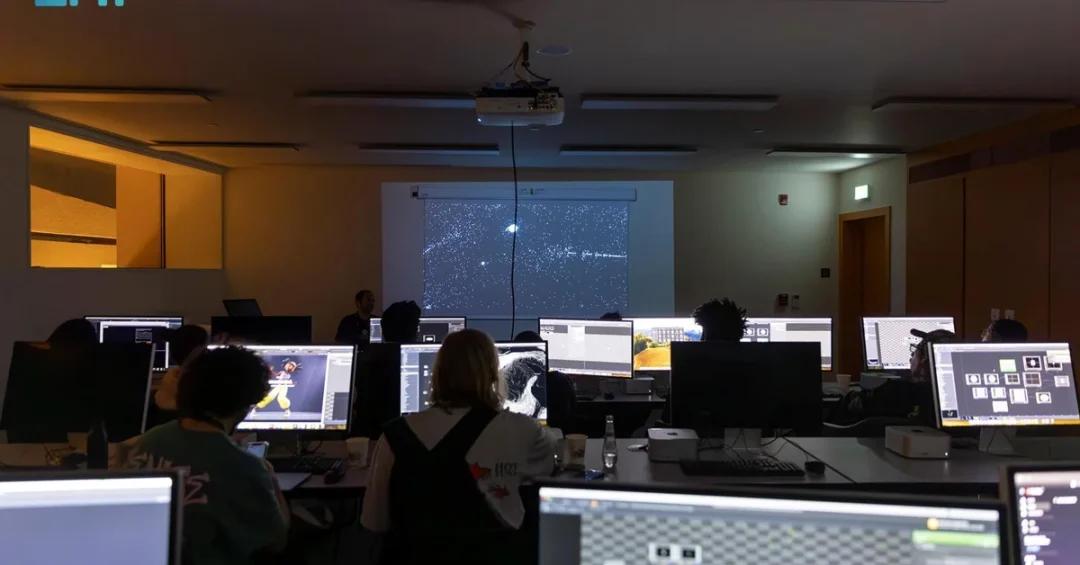
Diriyah Art Futures (DAF), the first center in the Middle East and North Africa dedicated to new media and digital arts, is diversifying its cultural programming throughout February with a series of talks and interactive workshops that explore the intersections of art, technology, and culture, according to the Saudi Press Agency (SPA). The activities form part of the center’s inaugural exhibition, “Art Must Be Artificial: Perspectives of AI in the Visual Arts,” which runs until February 15 in Riyadh. The programming reflects Saudi Arabia’s expanding commitment to cultural innovation and its ambition to position the Kingdom as a global hub for creative practice at the frontier of art and technology.
The February schedule underscores how Diriyah Art Futures is building a sustained, year-round platform for artists, researchers, and the public rather than a single exhibition moment. From a dialogue session on art, technology, and beyond that explored social and cultural conditioning, to a three-day crash course in audio and music production scheduled for February 13 to 15, the center is offering multiple entry points for creative engagement. These activities are designed to enrich Saudi Arabia’s art scene and strengthen its standing in new and digital media arts, while also inviting international audiences to consider how technology is reshaping visual culture.
Context and Background
How did a historic district in Riyadh become a launchpad for some of the world’s most forward-looking artistic experimentation? Diriyah, the birthplace of the Saudi state and a UNESCO World Heritage site, is today the setting for Diriyah Art Futures, a landmark institution dedicated to art, research, and education. According to the Saudi Press Agency, DAF is the first center in the Middle East and North Africa focused specifically on new media and digital arts, a distinction that gives it a unique role in the region’s cultural landscape. Its mission is to pioneer new horizons in creative practices where art intersects with science and technology.
The center’s inaugural exhibition, “Art Must Be Artificial: Perspectives of AI in the Visual Arts,” serves as the anchor for its early programming. Running until February 15, the exhibition examines how artificial intelligence is influencing the creation, interpretation, and experience of visual art. Rather than treating AI as a distant or purely technical subject, the exhibition places it within the broader history of artistic innovation, inviting audiences to consider how tools shape creative expression. The accompanying talks and workshops extend that inquiry into practical, participatory formats, allowing visitors to move from observation to hands-on learning.
Diriyah Art Futures is part of a wider cultural ecosystem emerging in Saudi Arabia under Vision 2030, which seeks to diversify the economy and enrich quality of life through investment in arts, heritage, and entertainment. The center offers a platform for artists and researchers to engage in scheduled activities including public events, educational programs, and residency opportunities. By combining exhibitions with training and dialogue, DAF is helping to build the human capital and creative networks that will sustain Saudi Arabia’s cultural sector for years to come.
Key Details
What exactly does the February program offer to participants and visitors? The month’s activities began with a session on art, technology, and beyond, which explored themes related to social and cultural conditioning. This dialogue set a reflective tone for the exhibition’s final weeks, encouraging participants to examine how technology both reflects and shapes societal norms. The session was part of a broader series of talks designed to connect artistic practice with critical inquiry, ensuring that the exhibition’s themes resonate beyond the gallery walls.
From February 13 to 15, Diriyah Art Futures will host a crash course on audio and music production. Participants will learn basic techniques of the industry and how to create, edit, and manipulate sounds and music using Ableton Live, a widely used digital audio workstation. The course is structured to be accessible to newcomers while offering practical skills that can be applied across music, sound design, and multimedia art. By focusing on hands-on production, the workshop complements the exhibition’s conceptual exploration of AI and visual arts, showing how digital tools are transforming multiple creative disciplines.
The center’s programming is not limited to these events. DAF regularly offers public events, educational programs, and residency opportunities that support artists and researchers at various stages of their careers. These initiatives aim to enrich the art scene in Saudi Arabia and enhance its standing as a global hub for new and digital media arts. The combination of exhibition, talks, and workshops in February illustrates how DAF is building an integrated model for cultural engagement, one that balances presentation with participation and scholarship with skill-building.
International and Regional Impact
Why does a center focused on new media and digital arts in Riyadh matter beyond Saudi Arabia’s borders? Diriyah Art Futures positions the Kingdom as a convening point for international conversations about art and technology. As the first center of its kind in the Middle East and North Africa, it fills a gap in the regional cultural infrastructure, offering artists and researchers from across the area a dedicated space to explore digital and new media practices. This role is particularly significant as AI and digital tools become increasingly central to global artistic production, and as audiences seek platforms that can address these developments with depth and nuance.
The center’s programming also strengthens cultural ties between Saudi Arabia and the global arts community. By hosting an exhibition such as “Art Must Be Artificial: Perspectives of AI in the Visual Arts” and pairing it with workshops and talks, DAF creates opportunities for exchange among Saudi, regional, and international practitioners. These interactions can lead to collaborations, residencies, and joint projects that extend beyond any single exhibition cycle. In this way, Diriyah Art Futures contributes to Saudi Arabia’s broader diplomatic and cultural outreach, reinforcing the Kingdom’s reputation as a place where tradition and innovation meet.
Economic and Strategic Significance
How does investment in digital arts connect to Saudi Arabia’s economic transformation? Cultural institutions like Diriyah Art Futures are integral to the Vision 2030 goal of diversifying the economy away from oil dependence. By nurturing creative industries, the Kingdom can generate new employment opportunities, support entrepreneurship, and attract visitors and talent from around the world. DAF’s focus on new media and digital arts aligns with the growing global market for digital content, interactive experiences, and creative technology, areas where Saudi Arabia is building capacity through education and infrastructure.
The center also supports the development of a knowledge-based economy by linking art with research and technology. Its residency programs and educational offerings help artists and researchers develop skills that are transferable across sectors, from entertainment and media to design and software. As Diriyah develops into a major cultural and tourism destination, institutions like DAF add depth to the visitor experience, giving people compelling reasons to stay longer and engage more deeply. This combination of cultural, educational, and economic value makes Diriyah Art Futures a strategic asset for the Kingdom’s long-term development.
Vision 2030 Alignment
In what ways does Diriyah Art Futures embody the ambitions of Vision 2030? The center directly supports the Vision’s cultural and quality-of-life objectives by expanding access to the arts, fostering creativity, and creating platforms for Saudi and international talent. It also advances the goal of building a vibrant society by offering educational programs and public events that engage diverse audiences, including youth and emerging professionals. Through its focus on new media and digital arts, DAF helps position Saudi Arabia at the forefront of creative innovation, a key element of the Kingdom’s global identity.
As February’s activities unfold, from the closing weeks of the AI-focused exhibition to the hands-on audio production course, Diriyah Art Futures demonstrates how Saudi Arabia is turning cultural investment into lasting capability. The center’s work enriches the local art scene while contributing to the Kingdom’s standing as a global hub for new and digital media arts. By connecting art, science, and technology in a historic setting, DAF offers a model for how heritage and innovation can reinforce one another, advancing Vision 2030’s promise of a diversified, forward-looking nation.
20 Questions
Q1. What is Diriyah Art Futures?
A1. Diriyah Art Futures is the first center in the Middle East and North Africa dedicated to new media and digital arts. It serves as a landmark for art, research, and education, pioneering creative practices where art intersects with science and technology.
Q2. Where is Diriyah Art Futures located?
A2. Diriyah Art Futures is located in Riyadh, Saudi Arabia, within the historic Diriyah district. This UNESCO World Heritage site is the birthplace of the Saudi state and now hosts a growing cultural ecosystem.
Q3. What exhibition is currently on view at DAF?
A3. The inaugural exhibition is titled “Art Must Be Artificial: Perspectives of AI in the Visual Arts.” It runs until February 15 and explores how artificial intelligence influences the creation and experience of visual art.
Q4. What kind of activities does DAF offer in February?
A4. In February, DAF offers talks and interactive workshops, including a session on art, technology, and beyond, and a three-day crash course on audio and music production from February 13 to 15.
Q5. What was the topic of the recent dialogue session?
A5. The session explored art, technology, and beyond, focusing on various themes related to social and cultural conditioning. It was part of DAF’s ongoing series of public talks tied to the exhibition.
Q6. What will participants learn in the audio and music production course?
A6. Participants will learn basic techniques of the audio and music industry, including how to create, edit, and manipulate sounds and music using Ableton Live, a professional digital audio workstation.
Q7. When does the audio and music production course take place?
A7. The crash course runs from February 13 to 15. It is designed for participants interested in gaining practical skills in sound and music production.
Q8. What is Ableton Live?
A8. Ableton Live is a widely used digital audio workstation for music production and performance. It allows users to create, edit, and manipulate sounds, making it a key tool for the workshop.
Q9. Is Diriyah Art Futures open to the public?
A9. Yes, DAF offers public events, educational programs, and residency opportunities. Its scheduled activities are designed to engage a wide range of audiences, from artists and researchers to the general public.
Q10. What is the mission of Diriyah Art Futures?
A10. DAF’s mission is to pioneer new horizons in creative practices where art intersects with science and technology. It aims to enrich Saudi Arabia’s art scene and enhance its standing as a global hub for new and digital media arts.
Q11. How does DAF support artists and researchers?
A11. DAF provides a platform for artists and researchers through public events, educational programs, and residency opportunities. These initiatives help develop skills, foster collaboration, and support creative experimentation.
Q12. Why is Diriyah Art Futures significant for the region?
A12. It is the first center in the Middle East and North Africa focused on new media and digital arts. This makes it a unique regional hub for exploring the intersection of art, science, and technology.
Q13. How does DAF relate to Saudi Vision 2030?
A13. DAF supports Vision 2030 by investing in cultural and creative industries, enriching quality of life, and helping diversify the economy. It also advances Saudi Arabia’s goal of becoming a global cultural destination.
Q14. What is the significance of the exhibition’s title?
A14. The title “Art Must Be Artificial” invites reflection on AI’s role in visual arts. It suggests that artificial intelligence is becoming integral to artistic creation, prompting questions about authorship, creativity, and technology.
Q15. Who can participate in DAF’s workshops?
A15. DAF’s workshops are generally open to participants interested in the subject matter, including students, artists, and professionals. The audio production course is designed to be accessible to beginners.
Q16. What role does technology play in DAF’s programming?
A16. Technology is central to DAF’s mission. Its programs explore how digital tools, AI, and new media shape artistic practice, offering both conceptual discussions and hands-on training.
Q17. How long will the inaugural exhibition run?
A17. The exhibition “Art Must Be Artificial: Perspectives of AI in the Visual Arts” runs until February 15. It anchors DAF’s early programming and is accompanied by talks and workshops.
Q18. What makes Diriyah a fitting location for DAF?
A18. Diriyah is a UNESCO World Heritage site and the birthplace of the Saudi state. Its rich heritage provides a meaningful contrast to DAF’s focus on cutting-edge digital art, symbolizing the blend of tradition and innovation.
Q19. Does DAF offer residency opportunities?
A19. Yes, DAF offers residency opportunities as part of its programming. These residencies support artists and researchers in developing new work and engaging with the center’s resources and community.
Q20. How can international audiences engage with DAF?
A20. International audiences can follow DAF’s activities through official Saudi channels and attend public events, exhibitions, and workshops. The center welcomes global participation in its programs and residencies.
Reader Feedback
We value your thoughts. Please share your feedback on this article.
Your feedback helps us improve our coverage.
Related articles
 Saudi Cultural Mission Shines at Cairo Book Fair
 King’s Camel Festival: Award Swords Feature Traditional Arts to Mark the Year of Handicrafts
 Manga Productions Wins Saudi Media Forum Award
 Riyadh Art Unveils Davide Rivalta Sculptures at Al-Nafal Park
 Najrani Wheat: A Ramadan Tradition Rooted in Saudi Heritage
 GASTAT: 81.6% of Saudis Engage in Cultural Activities