


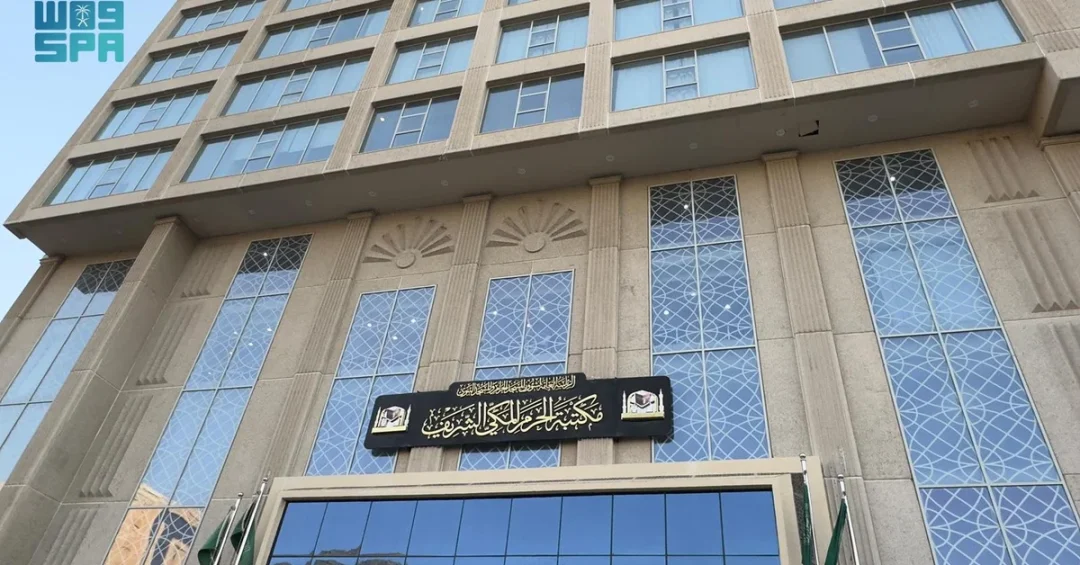
The Grand Mosque Library in Makkah serves as a scientific center for the sciences of civilization and Islamic culture, housing rare manuscripts, documents, and visual materials, along with various contemporary Islamic sciences and literature. Overseen by the General Presidency for the Affairs of the Grand Mosque and the Prophet’s Mosque and situated in the Batha Quraish area, the library boasts around 75,000 titles, rendering it one of the most significant libraries in the Kingdom and a notable resource for students and researchers seeking knowledge.
Context and Background
Since its establishment, the library has housed endowment collections, rare books and manuscripts, diverse scientific works, the rarest manuscripts and prints, and old newspapers that have undergone restoration by the restoration and sterilization department. This commitment to preservation underscores the Kingdom’s dedication to safeguarding Islamic heritage and promoting intellectual pursuits, aligning with the cultural enrichment goals of Vision 2030.
Key Details
The library provides users with the ability to search for scientific sources via an automated catalog system on a cloud platform, facilitating searches by various elements such as title, author, and subject headings. The restoration and sterilization department in the library focuses on preserving books in the reading room, periodicals room, and newspapers by sterilizing them using an “ozone device.” This environmentally friendly device converts oxygen gas into ozone gas, sterilizing books and eliminating insects and microorganisms within eight hours. Damaged books undergo repair by examination on the shelves. Following sterilization and repair, all items are returned to their respective departments, whether the reading room, periodicals and newspapers, or other sections.
Implications and Impact
The library has restored numerous documents and visual materials by gathering torn pieces and mending cracks using Japanese paper and a thermal iron to prevent further damage or loss of parts. Additionally, the library has archived approximately 650 manuscripts. These efforts not only preserve valuable historical artifacts but also enhance the library’s role as a hub for researchers worldwide, contributing to the cultural and educational landscape of Saudi Arabia.
Vision 2030 Alignment
The Grand Mosque Library’s ongoing initiatives exemplify Saudi Arabia’s commitment to cultural preservation and knowledge dissemination, key pillars of Vision 2030. By providing access to rare manuscripts and fostering scholarly research, the library supports the Kingdom’s goal of becoming a global center for Islamic culture and learning.
20 Questions
Q1. What is the Grand Mosque Library?
A1. The Grand Mosque Library is a scientific center for Islamic civilization and culture, housing rare manuscripts, documents, and visual materials, along with contemporary Islamic sciences and literature.
Q2. Who oversees the Grand Mosque Library?
A2. The library is overseen by the General Presidency for the Affairs of the Grand Mosque and the Prophet’s Mosque.
Q3. Where is the Grand Mosque Library located?
A3. The library is situated in the Batha Quraish area in Makkah, Saudi Arabia.
Q4. How many titles does the library hold?
A4. The library boasts approximately 75,000 titles, making it one of the most significant libraries in the Kingdom.
Q5. What kind of materials does the library house?
A5. The library houses endowment collections, rare books, manuscripts, scientific works, rare prints, old newspapers, and visual materials.
Q6. How can users search for scientific sources in the library?
A6. Users can search via an automated catalog system on a cloud platform, by title, author, and subject headings.
Q7. What is the ozone device used for?
A7. The ozone device sterilizes books, eliminating insects and microorganisms within eight hours, using environmentally friendly ozone gas.
Q8. How are damaged books repaired?
A8. Damaged books are examined on the shelves and repaired by mending cracks and gathering torn pieces using Japanese paper and a thermal iron.
Q9. How many manuscripts has the library archived?
A9. The library has archived approximately 650 manuscripts.
Q10. What are the library’s opening hours?
A10. The library welcomes visitors throughout the week from 8 a.m. to 8 p.m.
Q11. Why is the Grand Mosque Library important?
A11. It is a significant resource for students and researchers, preserving Islamic heritage and providing access to rare scientific and cultural materials.
Q12. How does the library contribute to Vision 2030?
A12. It supports cultural preservation and knowledge dissemination, aligning with Vision 2030’s goals of promoting cultural enrichment and global engagement.
Q13. What is the restoration and sterilization department’s role?
A13. This department preserves books, periodicals, and newspapers by sterilizing them and repairing damaged items to prevent further degradation.
Q14. What types of scientific works are in the library?
A14. The library includes diverse scientific works, rare manuscripts, and prints covering various fields of Islamic sciences and literature.
Q15. How does the ozone device work?
A15. The device converts oxygen gas into ozone gas, which sterilizes books and eliminates insects and microorganisms in about eight hours.
Q16. What materials have been restored recently?
A16. The library has restored numerous documents and visual materials using Japanese paper and thermal iron to mend cracks and tears.
Q17. How does the library support researchers?
A17. The library provides access to a vast collection of rare items and an automated search system, enabling researchers to find sources efficiently.
Q18. What is the significance of the library’s location?
A18. Being in Makkah near the Grand Mosque, the library serves as a scholarly hub for pilgrims and researchers from around the world.
Q19. How does the library preserve old newspapers?
A19. Old newspapers undergo restoration, including sterilization and repair, to maintain their condition for future reference.
Q20. What is the library’s role in Islamic culture?
A20. The library acts as a center for the sciences of civilization and Islamic culture, preserving and providing access to rare manuscripts and literature, thus promoting Islamic heritage.
Reader Feedback
We value your thoughts. Please share your feedback on this article.
Your feedback helps us improve our coverage.
Related articles
 Saudi University Trains Arabic Teachers in Bosnia
 Saudi Arabia Launches First Red Sea Fashion Week at Ummahat Islands
 Saudi Falcons Get Specialized Off-Season Care
 Saudi Architecture Commission and UK’s RCA Sign MoU
 Ministry of Culture, ALECSO Launch Arabic Observatory of Translation
 Manga Arabia Launches Manga International in Tokyo