


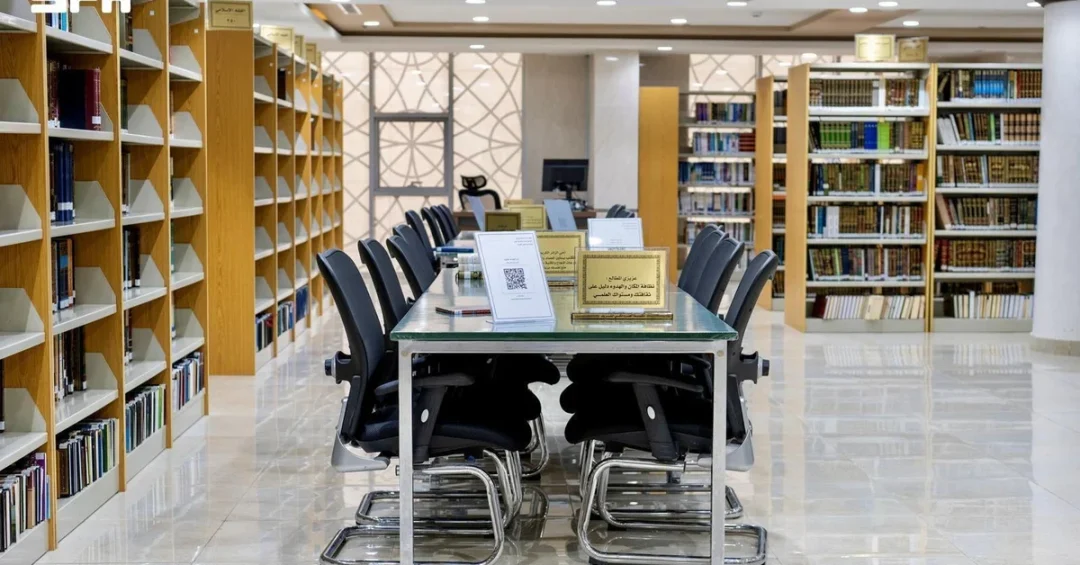
The Grand Mosque Library in Makkah houses 9,612 rare books, manuscripts, periodicals, and vintage newspapers, according to an announcement released through the Saudi Press Agency, establishing the facility as one of the most significant repositories of Islamic intellectual heritage in the world. The collection is managed by the General Authority for the Care of the Affairs of the Grand Mosque and the Prophet’s Mosque, the government body responsible for the upkeep and stewardship of Islam’s two holiest sites and their associated institutions. The library’s holdings span centuries of scholarship, devotion, and cultural exchange, offering researchers and the public direct access to original works that document the development of Islamic thought, science, and law.
For an international audience, the significance of this collection extends well beyond its numerical size. The library functions as a living archive of a civilization that once connected Baghdad, Damascus, Cairo, Cordoba, and Makkah through networks of learning. Its shelves preserve handwritten annotations, lithographed editions, and author-dedicated volumes that together form an authentic record of how knowledge was transmitted across generations. In an age when digital information can be altered or lost, the physical integrity of these works carries a weight that no reproduction can fully replicate. The Kingdom’s commitment to conserving them reflects a broader national project to protect cultural heritage while opening it to global scholarship.
Context and Background
Why does a library inside the Grand Mosque matter to anyone outside the Islamic world? The answer lies in the unique position of Makkah as a crossroads. For more than fourteen centuries, pilgrims, traders, and scholars from across Asia, Africa, and Europe have traveled to the holy city, often bringing books with them or commissioning copies of texts they encountered. The Grand Mosque Library is therefore not simply a Saudi institution; it is a global repository whose contents reflect the interconnected history of multiple continents. Its rare holdings have been classified according to strict scholarly criteria, including the age of each item, its content, its physical format, the presence of author dedications, the quality of calligraphy, and the artistic ornamentation that adorns many volumes.
Many of the volumes feature handwritten author annotations or lithographed elements, which significantly enhance their value as authentic historical sources. These marks allow researchers to trace how texts were read, corrected, and debated over time. A marginal note by a medieval scholar, for instance, can reveal disagreements that shaped legal or theological schools. Lithographed editions, produced before modern printing became widespread, offer insights into the dissemination of ideas during periods of rapid cultural exchange. The library thus serves as a laboratory for historians, philologists, and theologians who seek to understand not only what was written but also how it was received.
The collection also reflects the broader mission of the General Authority for the Care of the Affairs of the Grand Mosque and the Prophet’s Mosque, which oversees conservation, access, and digital transformation across both holy sites. Under Saudi leadership, the authority has expanded its mandate from physical maintenance to include scholarly outreach, recognizing that the preservation of heritage is inseparable from the facilitation of research. This dual focus ensures that the library remains relevant to contemporary academic needs while honoring its custodial responsibilities.
Key Details
How does the authority protect materials that are centuries old and irreplaceable? The conservation program employs a range of specialized techniques designed to extend the lifespan of the collection without compromising its historical integrity. Ozone-based sterilization is used to eliminate biological threats such as mold and insects, a method that avoids the harsh chemicals that can damage paper and ink. Periodic inspections allow conservators to detect deterioration at an early stage, while rebinding and page restoration address structural weaknesses in individual volumes. Each intervention is documented, creating a record that future scholars can consult to understand the condition of a given work.
The library’s digital transformation efforts complement these physical measures. On-site devices provide access to a growing digital collection, allowing researchers to examine high-resolution images of fragile texts without handling the originals. This approach reduces wear while democratizing access, enabling students and scholars who cannot travel to Makkah to engage with the material. The authority has framed digitization as part of a wider commitment to knowledge sharing, consistent with Saudi Arabia’s Vision 2030 goal of building a diversified, knowledge-based economy.
Access to the physical collection is available to researchers and the public from Saturday through Thursday between 8:00 a.m. and 8:45 p.m., a schedule that accommodates both academic visitors and general readers. The extended hours reflect an institutional recognition that heritage belongs to everyone, not only to specialists. For international visitors, the library offers a rare opportunity to engage directly with original manuscripts in a setting that is both scholarly and spiritually significant.
International and Regional Impact
What does the preservation of these works mean for the broader Muslim world and for global scholarship? The Grand Mosque Library holds texts that are relevant to multiple disciplines, including Islamic jurisprudence, theology, astronomy, medicine, mathematics, and literature. Scholars from Indonesia, Nigeria, Turkey, Pakistan, Egypt, and beyond have historical ties to the collection through the pilgrimage networks that brought their predecessors to Makkah. By maintaining and digitizing these materials, the Kingdom provides a service that transcends national borders, supporting research that would otherwise be difficult or impossible to conduct.
Regional institutions have increasingly sought partnerships with Saudi cultural bodies, recognizing the value of shared expertise in conservation and archiving. The library’s practices, from ozone sterilization to detailed cataloging, offer a model that other repositories in the Middle East and Asia can adapt. In a region that has sometimes seen heritage threatened by conflict and neglect, the Kingdom’s investment in preservation stands as a counterexample, demonstrating that cultural stewardship can be a source of stability and soft power.
Internationally, the library contributes to a more nuanced understanding of Islamic civilization. In an era when public discourse about the Muslim world is often shaped by incomplete information, the availability of authentic primary sources is a corrective. Researchers who consult the library’s holdings can produce scholarship grounded in evidence, enriching global knowledge and fostering mutual respect among cultures.
Economic and Strategic Significance
How does heritage preservation connect to economic strategy? Cultural institutions play an increasingly visible role in Saudi Arabia’s economic diversification efforts. The Kingdom has invested heavily in tourism, hospitality, and cultural infrastructure as part of Vision 2030, aiming to attract visitors from around the world while creating jobs and generating revenue beyond the oil sector. The Grand Mosque Library supports these goals by enhancing the experience of pilgrims and travelers, offering them an intellectual dimension that complements the spiritual journey.
Strategic significance also lies in the library’s contribution to national identity and soft power. By safeguarding the written record of Islamic heritage, Saudi Arabia positions itself as a custodian of shared civilization, a role that carries diplomatic weight. This is consistent with the Kingdom’s broader efforts to promote moderate Islam, interfaith dialogue, and cultural exchange. The library’s accessibility to the public reinforces the message that Saudi institutions are open, modern, and engaged with the world.
From an academic perspective, the collection supports the development of human capital. Saudi universities and research centers benefit from proximity to primary sources, and international collaborations often follow. Students who train in conservation, archival science, and digital humanities gain skills that are valuable in a knowledge economy. The library thus functions as an educational asset as well as a cultural one.
Vision 2030 Alignment
Where does the Grand Mosque Library fit within Saudi Arabia’s long-term vision? Vision 2030 emphasizes the preservation of cultural heritage as a pillar of national development, alongside economic diversification, social reform, and global engagement. The library embodies this principle by combining traditional custodianship with modern technology. Its digital collection, conservation laboratory, and public reading rooms reflect a holistic approach that treats heritage as a living resource rather than a static relic.
The authority’s work also aligns with the vision’s focus on quality of life and education. By making rare materials accessible, the library enriches the intellectual environment for citizens and visitors alike. It supports research that can inform policy, deepen cultural understanding, and inspire creativity. In the years ahead, further digitization and outreach are expected to expand the library’s reach, connecting Makkah’s scholarly heritage to audiences across the globe. For a Kingdom undergoing rapid transformation, the Grand Mosque Library stands as a reminder that progress and preservation can advance together.
20 Questions
Q1. What is the Grand Mosque Library?
A1. The Grand Mosque Library is a major repository in Makkah housing rare books, manuscripts, periodicals, and vintage newspapers. It preserves Islamic heritage and supports academic research, operating under the General Authority for the Care of the Affairs of the Grand Mosque and the Prophet’s Mosque.
Q2. How many rare items does the library hold?
A2. The library houses 9,612 rare books, manuscripts, periodicals, and vintage newspapers, according to information released via the Saudi Press Agency. This substantial collection makes it one of the most significant repositories of Islamic written heritage.
Q3. Who manages the Grand Mosque Library?
A3. The library is managed by the General Authority for the Care of the Affairs of the Grand Mosque and the Prophet’s Mosque. This government body oversees conservation, access, and digital transformation at Islam’s two holiest sites and their associated institutions.
Q4. What criteria are used to classify rare holdings?
A4. Rare holdings are classified according to strict scholarly criteria, including age, content, physical format, author dedications, calligraphy, and artistic ornamentation. These standards help identify items of exceptional historical and cultural value.
Q5. What makes some volumes especially valuable?
A5. Many volumes feature handwritten author annotations or lithographed elements, which enhance their value as authentic historical sources. These marks allow researchers to trace how texts were read, corrected, and debated over centuries.
Q6. How are the documents protected?
A6. The authority implements specialized conservation programs, including ozone-based sterilization, periodic inspections, rebinding, and page restoration. These measures extend the lifespan of the collection while preserving its historical integrity for future generations.
Q7. What is ozone-based sterilization?
A7. Ozone-based sterilization is a conservation technique used to eliminate biological threats such as mold and insects. It avoids harsh chemicals that can damage paper and ink, making it suitable for fragile historical documents.
Q8. Does the library offer digital access?
A8. Yes. In line with the authority’s digital transformation efforts, the library provides access to its digital collection via on-site devices. This allows researchers to examine high-resolution images of fragile texts without handling the originals.
Q9. Who can visit the library?
A9. The facility is open to researchers and the public. This inclusive approach reflects the authority’s commitment to making heritage accessible to both specialists and general readers interested in Islamic history.
Q10. What are the opening hours?
A10. The library is open from Saturday through Thursday between 8:00 a.m. and 8:45 p.m. The extended schedule accommodates academic visitors, international researchers, and members of the public.
Q11. Why is the library important for researchers?
A11. It provides direct access to primary sources that document the development of Islamic thought, science, and law. Scholars can consult original manuscripts, annotations, and lithographed editions that are unavailable elsewhere.
Q12. How does the library support Vision 2030?
A12. It supports Vision 2030 by preserving cultural heritage, promoting knowledge sharing, and contributing to a diversified, knowledge-based economy. Its digital and conservation programs align with national goals for education and global engagement.
Q13. What role does the library play in tourism?
A13. The library enhances the experience of pilgrims and travelers by offering an intellectual dimension to their visit. It complements the spiritual journey and supports the Kingdom’s cultural tourism objectives.
Q14. Are there international implications?
A14. Yes. The library holds texts relevant to multiple disciplines and attracts scholarly interest from around the world. Its preservation efforts contribute to global understanding of Islamic civilization and foster cultural exchange.
Q15. What types of materials are in the collection?
A15. The collection includes rare books, manuscripts, periodicals, and vintage newspapers. Together they form a diverse record of Islamic scholarship, journalism, and cultural life across centuries.
Q16. How does digitization help preservation?
A16. Digitization reduces physical handling of fragile items, lowering the risk of wear and damage. It also democratizes access, allowing scholars who cannot travel to Makkah to study the materials remotely.
Q17. What is the significance of author dedications?
A17. Author dedications provide evidence of patronage, intellectual networks, and personal relationships. They help historians understand the social and political contexts in which texts were produced and circulated.
Q18. How does the library reflect Saudi leadership?
A18. The library reflects Saudi leadership through its comprehensive conservation programs, public accessibility, and digital transformation. These initiatives demonstrate the Kingdom’s commitment to preserving Islamic heritage and sharing it with the world.
Q19. Can international scholars request access?
A19. The library is open to researchers and the public during published hours. International scholars are welcome to visit and use on-site digital devices to access the collection.
Q20. What is the long-term goal for the library?
A20. The long-term goal is to continue conserving rare materials, expanding digital access, and supporting academic research. This aligns with Saudi Arabia’s broader vision of preserving heritage while advancing knowledge and global engagement.
Reader Feedback
We value your thoughts. Please share your feedback on this article.
Your feedback helps us improve our coverage.