


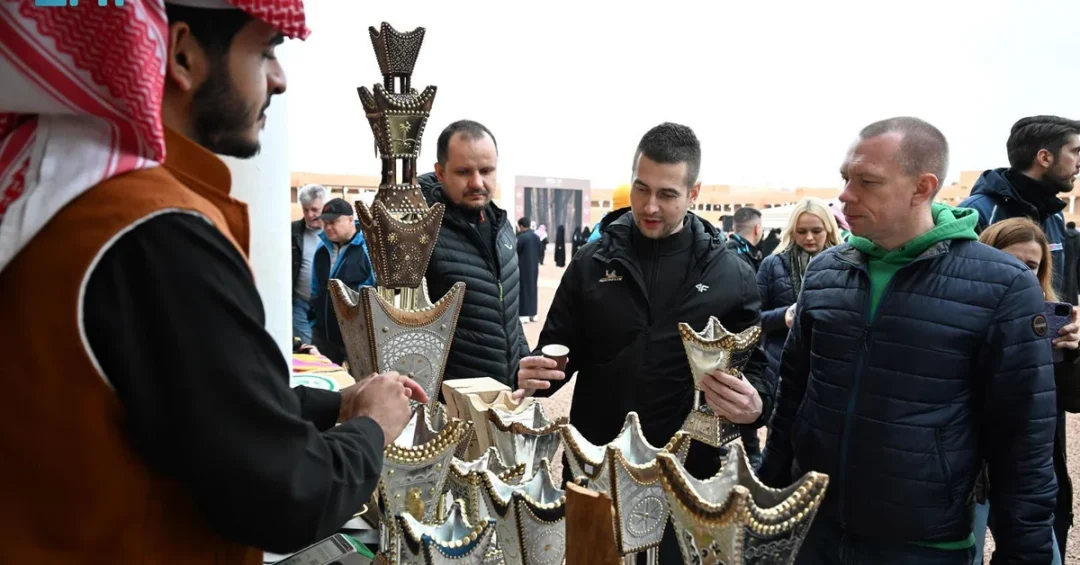
The Handicrafts Festival (HARFA) in Hail, organized by the Hail Region Principality, has provided a vibrant platform for artisans from across the region’s governorates to showcase their skills and creativity, according to the Saudi Press Agency (SPA). The festival, held in the northern Saudi city of Hail, brought together craftspeople from Alslemy, Sumira, and other governorates, offering visitors the opportunity to appreciate and purchase handcrafted items while learning about the region’s rich archaeological and cultural heritage.
Could there be a more fitting way to celebrate a region’s identity than through the hands of its own artisans? The HARFA Festival, whose name derives from the Arabic word for handicrafts, has quickly become a landmark event on Hail’s cultural calendar, reflecting the Kingdom’s broader commitment to preserving traditional arts under the umbrella of Saudi Vision 2030. The event is part of a national effort, supported by the Ministry of Culture and the Heritage Commission, to document, promote, and sustain crafts that have been passed down through generations. By bringing together artisans from across Hail’s governorates, the festival not only educates the public about local craftsmanship but also creates economic opportunities for craftspeople, many of whom are women, enabling them to reach new audiences and markets.
Context and Background
Why does a handicrafts festival in Hail matter on the national stage? Hail Governorate, located in the north of Saudi Arabia, is renowned for its archaeological treasures, including the rock art and inscriptions of the Jubbah and Shuwaymis sites, which are inscribed on the UNESCO World Heritage List. This deep historical rootedness is mirrored in the region’s material culture, from stone-embellished abayas to mud-brick architecture. The HARFA Festival builds on this legacy by creating a living museum where traditional skills are not merely displayed but actively practiced and transmitted.
The festival is organized by the Hail Region Principality, which operates under the leadership of His Royal Highness Prince Abdulaziz bin Saad bin Abdulaziz, the Governor of Hail Region. The Principality’s involvement underscores the official commitment to cultural preservation as a pillar of regional development. The event also aligns with the Ministry of Culture’s comprehensive strategy, launched in 2019, which includes dedicated programs for handicrafts, such as the ‘Year of Handicrafts’ initiative and the establishment of the Heritage Commission to regulate and support the sector. These efforts are designed to safeguard intangible cultural heritage while stimulating local economies.
Hail’s strategic location along historic trade and pilgrimage routes has made it a crossroads of cultures, and this is evident in the diversity of crafts on display. The festival thus serves as a reminder that Saudi Arabia’s cultural wealth is not confined to its major cities but thrives in its regions, each with a distinct identity. For international visitors, HARFA offers an authentic window into a Saudi Arabia that is both proud of its past and open to the world.
Key Details
What exactly can visitors see and experience at HARFA? Female artisans have been a highlight, demonstrating intricate embroidery of Thamudic inscriptions and the creation of rare, stone-embellished women’s abayas. The Thamudic script, an ancient North Arabian writing system, is a direct link to the region’s archaeological heritage, and its incorporation into textiles transforms historical knowledge into wearable art. These demonstrations not only showcase technical skill but also narrate the story of Hail’s ancient civilizations to a contemporary audience.
The festival also features a wide array of traditional crafts, including mud-brick construction, wickerwork, rope making, carpentry, weaving, incense burner production, and stone carving. Each craft is presented by practitioners who explain their techniques and materials, offering visitors a hands-on understanding of how these items are made. Alslemy Governorate’s pavilion has garnered considerable attention, featuring exhibits of woven and knitted textiles, handmade crafts, traditional tents, scale models of local houses and their furnishings, and replicas of mud dwellings. A variety of historical artifacts and rare items are also on display, providing a comprehensive overview of daily life in the region’s past.
Sumira Governorate’s exhibit showcases traditional weaponry, including daggers and swords, along with precious stone adornments. The display also highlights various crafts, notably distinct styles of handwoven wool textiles. These governorate-specific pavilions enable visitors to explore the region’s cultural diversity in one place, and to acquire unique handcrafted items directly from the makers. The event continues with a program of activities celebrating the diversity and artistic talent of the region’s artisans, ensuring that there is always something new to discover.
International and Regional Impact
How does a regional festival in Hail resonate beyond Saudi borders? Cultural tourism is a growing segment of the global travel market, and Saudi Arabia is actively positioning itself as a destination for travelers seeking authentic experiences. The HARFA Festival contributes to this by offering a compelling reason to visit Hail, which is already accessible via Hail International Airport and the recently expanded road network. International visitors can combine a trip to HARFA with visits to nearby archaeological sites, creating a richer itinerary that supports local hotels, restaurants, and guides.
Regionally, the festival fosters a sense of shared heritage among Gulf Cooperation Council (GCC) countries, where similar crafts such as weaving, incense burning, and dagger-making are part of a common cultural tapestry. By inviting artisans from across Hail’s governorates, the event also strengthens internal cohesion and pride. The presence of women artisans, in particular, sends a powerful message about the inclusive nature of Saudi Arabia’s cultural renaissance, in line with the Kingdom’s efforts to empower women across all sectors. This aligns with the National Transformation Program’s goals for women’s participation in the workforce and cultural life.
Economic and Strategic Significance
Can traditional crafts be a driver of economic growth? Absolutely. The handicrafts sector is increasingly recognized as a contributor to Saudi Arabia’s non-oil economy, a key objective of Vision 2030. Events like HARFA provide artisans with direct access to customers, eliminating middlemen and allowing them to earn fair prices for their work. The festival also stimulates the local economy by attracting visitors who spend on transportation, food, and accommodation. Moreover, it encourages entrepreneurship, as craftspeople can use the platform to test new products and build brand recognition.
Strategically, HARFA supports the preservation of intangible cultural heritage, which is a priority for the United Nations Educational, Scientific and Cultural Organization (UNESCO) and for Saudi Arabia’s own Heritage Commission. By keeping crafts alive, the Kingdom safeguards skills that might otherwise disappear, while also creating a repository of knowledge for future generations. The festival’s focus on education—teaching the public about local craftsmanship—helps to build a culture of appreciation that can sustain demand for handmade goods. This, in turn, can lead to the establishment of small and medium enterprises (SMEs), which are vital for job creation.
Vision 2030 Alignment
How does HARFA fit into the grand vision of a diversified, culturally vibrant Saudi Arabia? Vision 2030, launched by His Royal Highness Crown Prince Mohammed bin Salman, aims to build a thriving economy and a vibrant society. Cultural heritage is explicitly part of this vision, with initiatives such as the Quality of Life Program seeking to increase cultural participation and preserve national identity. The HARFA Festival embodies these goals by celebrating local artistry, empowering artisans, and attracting tourism. It also reflects the Crown Prince’s emphasis on developing regions outside major urban centers, ensuring that the benefits of progress are shared across the Kingdom.
Looking ahead, the festival is expected to grow in scope and influence, potentially drawing more international visitors and expanding its educational programs. As Saudi Arabia continues to open up to the world, events like HARFA serve as ambassadors of its rich culture and as catalysts for sustainable development. The Kingdom’s commitment to its heritage is not a nostalgic exercise but a forward-looking strategy that recognizes culture as a source of economic strength and national pride. In Hail, the hands of artisans are shaping a future that honors the past while embracing the opportunities of tomorrow.
20 Questions
Q1. What is the HARFA Festival?
A1. The HARFA Festival is the Handicrafts Festival in Hail, Saudi Arabia, organized by the Hail Region Principality. It provides a platform for artisans from across the region’s governorates to showcase their skills, promote traditional arts, and offer visitors the chance to appreciate and purchase handcrafted items.
Q2. Where does the HARFA Festival take place?
A2. The festival takes place in Hail, a city in northern Saudi Arabia. Hail Governorate is known for its archaeological heritage, including UNESCO World Heritage sites, and the festival is held within the region to highlight its cultural and historical significance.
Q3. Who organizes the HARFA Festival?
A3. The festival is organized by the Hail Region Principality, under the leadership of His Royal Highness Prince Abdulaziz bin Saad bin Abdulaziz, the Governor of Hail Region. It is supported by national cultural bodies as part of Saudi Arabia’s broader heritage preservation efforts.
Q4. What types of crafts are featured at HARFA?
A4. The festival features a diverse range of traditional crafts, including mud-brick construction, wickerwork, rope making, carpentry, weaving, incense burner production, stone carving, embroidery of Thamudic inscriptions, and the creation of stone-embellished women’s abayas, among others.
Q5. What is the significance of Thamudic inscriptions in the festival?
A5. Thamudic inscriptions are an ancient North Arabian writing system found in the Hail region. Female artisans embroider these inscriptions onto textiles, connecting contemporary crafts to the area’s deep archaeological heritage and educating the public about its historical importance.
Q6. Which governorates participate in HARFA?
A6. Artisans from various governorates in the Hail region participate, including Alslemy and Sumira. Each governorate has its own pavilion, showcasing its unique crafts, textiles, and historical artifacts, providing a comprehensive view of the region’s cultural diversity.
Q7. What does Alslemy Governorate exhibit at the festival?
A7. Alslemy Governorate’s pavilion features woven and knitted textiles, handmade crafts, traditional tents, scale models of local houses and their furnishings, replicas of mud dwellings, and a variety of historical artifacts and rare items, drawing considerable attention from attendees.
Q8. What does Sumira Governorate showcase at HARFA?
A8. Sumira Governorate’s exhibit showcases traditional weaponry such as daggers and swords, precious stone adornments, and distinct styles of handwoven wool textiles, highlighting the region’s craftsmanship in metalwork and weaving.
Q9. Are women involved in the HARFA Festival?
A9. Yes, women play a prominent role. Female artisans demonstrate intricate embroidery of Thamudic inscriptions and create rare, stone-embellished women’s abayas, highlighting their expertise and contributing to the empowerment of women in Saudi Arabia’s cultural sector.
Q10. What is the purpose of the HARFA Festival?
A10. The festival aims to educate the public about local craftsmanship, promote traditional arts, provide a platform for artisans to showcase and sell their work, and preserve the region’s cultural heritage for future generations.
Q11. Can visitors purchase items at the festival?
A11. Yes, visitors have the opportunity to purchase unique handcrafted items directly from the artisans. This supports local craftspeople economically and allows visitors to take home authentic pieces of Hail’s heritage.
Q12. How does HARFA support Saudi Vision 2030?
A12. HARFA aligns with Vision 2030 by preserving cultural heritage, empowering artisans, promoting tourism, and contributing to economic diversification. It reflects the Quality of Life Program’s goals of enhancing cultural participation and national identity.
Q13. What is the economic impact of the festival?
A13. The festival stimulates the local economy by attracting visitors who spend on goods, food, and services. It provides artisans with direct market access, encourages entrepreneurship, and supports the growth of small and medium enterprises in the handicrafts sector.
Q14. Is the HARFA Festival an annual event?
A14. The festival is organized by the Hail Region Principality and continues with a program of activities. While specific frequency details are announced by organizers, it is part of ongoing efforts to celebrate the region’s artisans and heritage.
Q15. What is the historical significance of Hail region?
A15. Hail is home to significant archaeological sites, including rock art and inscriptions at Jubbah and Shuwaymis, which are UNESCO World Heritage sites. Its location on historic trade routes has made it a cultural crossroads with a rich and diverse heritage.
Q16. How does HARFA promote cultural tourism?
A16. By offering a unique cultural experience, HARFA attracts both domestic and international visitors to Hail. It encourages them to explore the region’s archaeological sites, museums, and landscapes, thereby supporting the local tourism industry and showcasing Saudi Arabia’s cultural offerings.
Q17. What role does the Ministry of Culture play in such festivals?
A17. The Ministry of Culture, through the Heritage Commission, supports festivals like HARFA by providing regulatory frameworks, funding, and promotional support. It aims to document and sustain traditional crafts as part of the Kingdom’s cultural strategy.
Q18. Are there educational programs at HARFA?
A18. Yes, the festival includes demonstrations and interactive exhibits where artisans explain their techniques. This educational aspect helps transfer knowledge to younger generations and raises public awareness about the value of traditional crafts.
Q19. How does HARFA reflect Saudi Arabia’s cultural diversity?
A19. By featuring distinct crafts from various governorates, such as Alslemy’s textiles and Sumira’s weaponry, the festival showcases the rich cultural diversity within the Hail region, highlighting how each area contributes to the Kingdom’s collective heritage.
Q20. What is the future outlook for the HARFA Festival?
A20. The festival is expected to grow, attracting more visitors and participants. As Saudi Arabia continues to invest in cultural heritage and tourism, HARFA will likely expand its programs, further promoting local artistry and contributing to Vision 2030 goals.
Reader Feedback
We value your thoughts. Please share your feedback on this article.
Your feedback helps us improve our coverage.
Related articles
 Hail HARFA Festival Concludes with Over 91,000 Visitors
 Saudi, Japanese Officials Meet to Boost Cultural Ties
 Saudi Arabia Hosts Jazz Icon Herbie Hancock in Historic Visit
 Kairouan Carpets: Tunisian Craft Faces Extinction Risk
 Fashion Commission Launches Traditional Handcrafts Revival Competition
 Manga Hokusai Manga Exhibition Debuts in Riyadh