


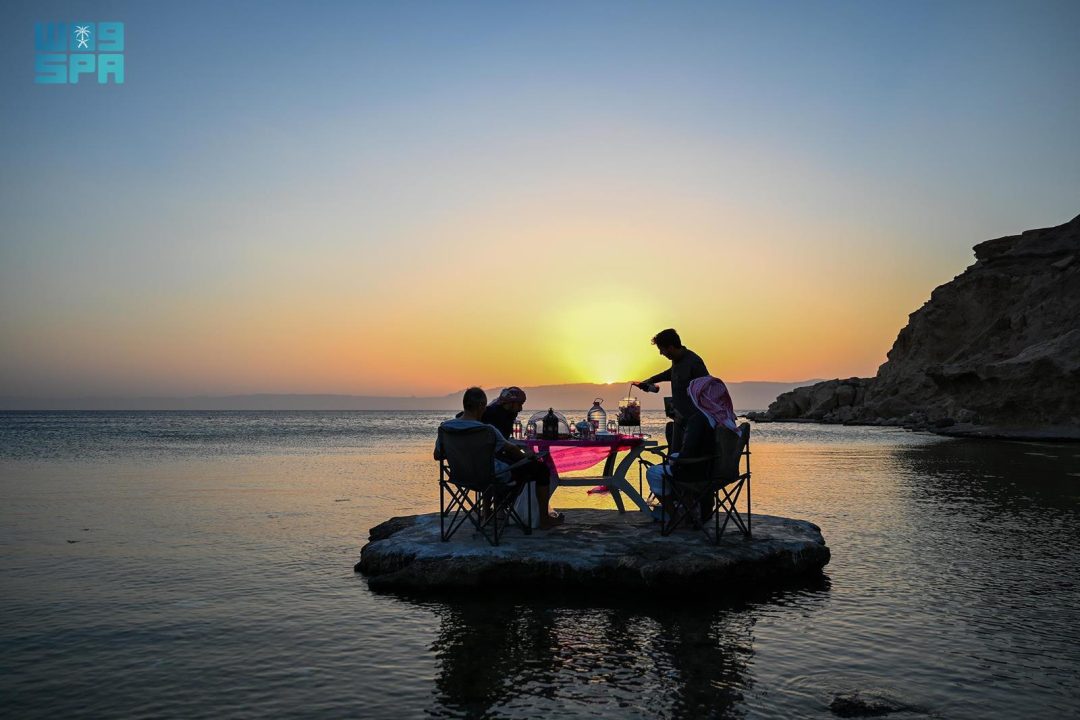
Residents of Haql Governorate gather along the governorate’s beaches as the sun sets to break their fast, a Ramadan tradition that blends spirituality with the beauty of nature, the Saudi Press Agency reported on March 22, 2025.
SPA described the scene as one in which the seafronts, prepared by the municipality, provide an inviting setting for iftar and a peaceful retreat from the usual home routine. Families and friends spread out across the open spaces, sharing meals and creating memorable moments against the backdrop of the sea.
What draws a community to the water’s edge at the very hour the fast ends? For the residents SPA spoke to, the answer lies in the combination of the setting and the timing. Some take a dip in the water, while others try their luck at fishing before sunset, adding activity to the hours leading up to the call to prayer.
The municipality’s preparation of the seafronts is the practical foundation of the scene. According to SPA, the beaches were readied to receive those breaking their fast, turning the coastline into a gathering place for the governorate’s residents during the holy month. Could a stretch of prepared shoreline change how a community experiences Ramadan?
SPA reported that many residents expressed their appreciation for the experience, highlighting the unique joy of breaking their fast by the sea. They described the sunset before the call to prayer as a moment of reflection and gratitude, deepening their spiritual connection during the holy month.
That description places the spiritual element at the center of the evening. The sunset is not merely a backdrop; residents told SPA it serves as a moment of reflection and gratitude before the call to prayer. How does the rhythm of the sea change the rhythm of worship during Ramadan?
The tradition SPA described is a cherished one in Haql, passed through the community rather than staged as a single event. Families and friends arrive together, spread out across the open spaces, and share meals. The report notes that the experience offers a peaceful retreat from the usual home routine, suggesting that the change of setting is itself part of the appeal.
For some, the hours before iftar include a swim. For others, they include fishing. Both activities appear in SPA’s account of how residents spend the time before sunset. Does the chance to fish or swim before the call to prayer make the fast itself feel different?
The governorate’s coastline is the stage for all of this. SPA’s report is specific about the location: the beaches of Haql Governorate, where residents gather as the sun sets. The municipality’s role in preparing the seafronts is the only organizational detail the report provides.
What SPA does not include is equally clear. The report does not name the residents who spoke, does not give a count of how many people gather on the beaches, and does not specify which beaches within the governorate are involved. It does not describe the meals shared, the duration of the gatherings, or any program organized beyond the municipality’s preparation of the seafronts.
The report also does not state when the tradition began or how long it has continued in Haql. It offers no figures on visitors, no schedule of events, and no statements from officials. The account rests on the scene itself and on what residents told SPA about their experience.
What remains is a portrait of an evening on the coast during Ramadan. The sun sets, the call to prayer comes, and families and friends break their fast together by the sea. Some have swum, some have fished, and all have gathered in a place prepared for them by the municipality.
Residents told SPA that the sunset before the call to prayer is a moment of reflection and gratitude. That framing ties the natural setting to the spiritual purpose of the month. Can a place itself carry the meaning of a season?
The report presents the beaches as both a practical answer to the question of where to break the fast and a meaningful one. The open spaces accommodate families and friends; the sea provides the backdrop; the sunset provides the moment. Each element appears in SPA’s account without embellishment.
For readers outside Haql, the report offers a glimpse of how one Saudi community observes Ramadan. The details are local and specific: a governorate coastline, municipality-prepared seafronts, residents gathering as the sun sets, meals shared, some swimming, some fishing, and reflections on gratitude and spiritual connection.
What SPA leaves open is the scale of the tradition and its history. The report does not say how many evenings the beaches fill during the month, nor how the practice compares with other years. It does not quote officials or provide data. It describes what residents do and what they said about why it matters to them.
That description is enough to place Haql’s beaches among the settings where Ramadan is observed in the Kingdom. The report’s focus stays on the experience: the sunset, the call to prayer, the shared meal, the sea. Residents told SPA the experience brings unique joy and deepens their spiritual connection during the holy month.
As the sun sets over the coastline, the pattern repeats. Families and friends gather, the municipality’s seafronts hold them, and the fast ends by the water. SPA’s account captures that pattern on March 22, 2025, in Haql Governorate.
Where do residents of Haql Governorate break their fast during Ramadan? According to SPA, residents gather along the governorate’s beaches as the sun sets to break their fast. The seafronts are prepared by the municipality and provide an inviting setting for iftar, described as a peaceful retreat from the usual home routine. Families and friends spread out across the open spaces, sharing meals against the backdrop of the sea. Some take a dip in the water, while others try their luck at fishing before sunset, according to the report.
How did residents describe the experience of breaking their fast by the sea? SPA reported that many residents expressed appreciation for the experience, highlighting the unique joy of breaking their fast by the sea. They described the sunset before the call to prayer as a moment of reflection and gratitude, deepening their spiritual connection during the holy month. The report ties this to the setting itself, noting that the tradition blends spirituality with the beauty of nature along the Haql coastline.
What role does the municipality play in the iftar gatherings on Haql’s beaches? SPA stated that the seafronts are prepared by the municipality, providing an inviting setting for iftar. That preparation is the only organizational detail the report provides about the gatherings. The report does not specify which beaches within the governorate are involved, nor does it describe any program beyond the municipality’s preparation of the seafronts for residents who gather there as the sun sets.
What activities do residents pursue before sunset on the Haql beaches? According to SPA, some residents take a dip in the water, while others try their luck at fishing before sunset. These activities take place in the hours leading up to the call to prayer, when families and friends have spread out across the open spaces. The report presents these as part of the scene alongside the shared meals and the sunset that residents described as a moment of reflection and gratitude.
What details does the SPA report not include about the Haql iftar tradition? The report does not name the residents who spoke, does not give a count of how many people gather on the beaches, and does not specify which beaches within the governorate are involved. It does not describe the meals shared, the duration of the gatherings, or any program organized beyond the municipality’s preparation of the seafronts. It also does not state when the tradition began or how long it has continued in Haql.