


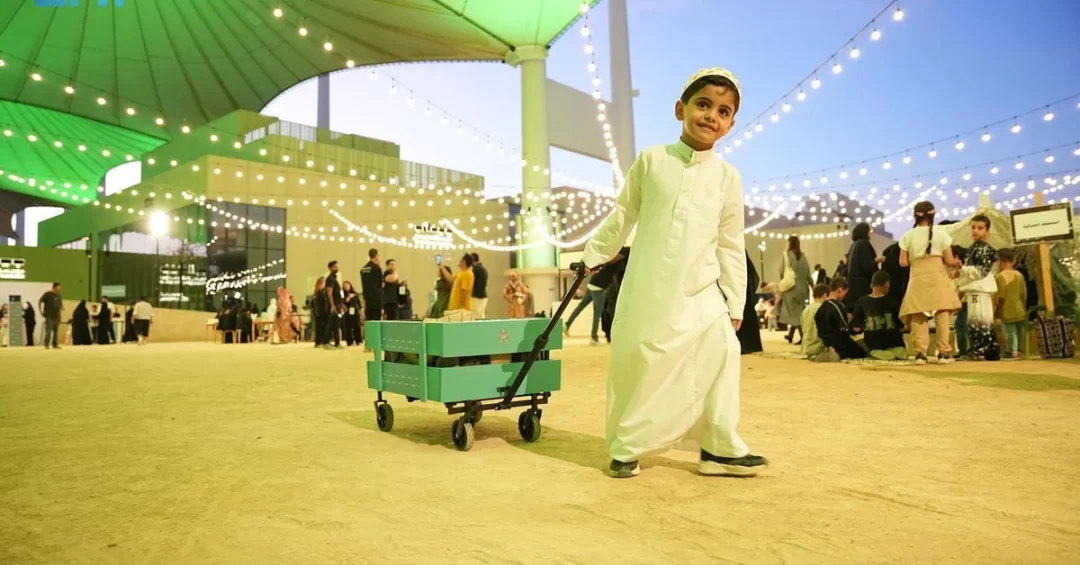
The Diriyah Biennale Foundation announced the launch of its Eid al-Fitr celebration program, “Eid at the Biennale,” as part of the second edition of the Islamic Arts Biennale, currently taking place at the Western Hajj Terminal at King Abdulaziz International Airport in Jeddah and running until May 25. The announcement, released via the Saudi Press Agency, confirms that the festive events will be held on the third and fourth days of Eid in an atmosphere inspired by “Grandmother’s House,” welcoming visitors of all ages to a rich program of cultural, social, and entertainment activities.
The initiative reflects the Kingdom’s continued commitment to celebrating Islamic heritage while offering diverse public experiences that connect communities, families, and international visitors. By integrating the joy of Eid with the breadth of Islamic artistic expression, the Diriyah Biennale Foundation is creating a space where tradition and contemporary creativity meet. The program is designed to be inclusive, ensuring that every member of the family can participate in the celebrations. Whether through games, crafts, or simply sharing the festive spirit, “Eid at the Biennale” promises to be a memorable addition to Jeddah’s cultural calendar. How often does a major international art exhibition transform into a family celebration of faith and heritage?
Context and Background
The Islamic Arts Biennale is a landmark cultural event organized by the Diriyah Biennale Foundation, a Saudi institution dedicated to promoting arts and culture under the umbrella of the Ministry of Culture. The second edition, held under the theme “And All That Is In Between,” features more than 500 historical and artistic pieces that reflect the richness of Islamic arts and cultures through the ages. These works, drawn from collections around the world, highlight the diversity and interconnectedness of Islamic artistic traditions, from calligraphy and textiles to architecture and contemporary installations.
The biennale is hosted at the Western Hajj Terminal, a site of profound historical and spiritual significance. Designed by the renowned architect Fazlur Rahman Khan and his firm SOM, the terminal has welcomed millions of pilgrims embarking on the Hajj journey. Its iconic tent-like structure provides a fitting backdrop for an exhibition that explores the intersections of faith, art, and culture. By transforming this space into a vibrant cultural hub, the biennale not only honors the terminal’s legacy but also reimagines it for a new generation of visitors. The event runs until May 25, offering ample opportunity for local and international audiences to engage with its programs. Why is it important to host such a biennale in a location so deeply connected to the spiritual journey of millions?
The first edition of the Islamic Arts Biennale in 2023 attracted widespread acclaim, drawing visitors from across the globe and establishing itself as a key fixture in the international art calendar. Building on that success, the second edition expands its scope with an even more ambitious array of exhibits and public programming. The addition of “Eid at the Biennale” underscores the Foundation’s commitment to accessibility and community engagement, ensuring that the biennale is not just an exhibition for art connoisseurs but a living, breathing celebration of Islamic culture that resonates with everyone.
Key Details of the Eid Celebration
The “Eid at the Biennale” program is scheduled for the third and fourth days of Eid al-Fitr, providing families with a festive destination during the holiday. Inspired by the concept of “Grandmother’s House,” the celebrations evoke the warmth, nostalgia, and togetherness of traditional family gatherings. This thematic choice is particularly resonant in Saudi culture, where the grandmother’s home often serves as the heart of family life, a place where stories are shared, recipes are passed down, and bonds are strengthened across generations.
Visitors can look forward to a diverse range of activities designed to cater to all ages. A market inspired by traditional souks will offer handicrafts, souvenirs, and perhaps even traditional foods, allowing guests to experience the bustle and charm of historic Arabian markets. Dedicated photo areas will provide perfect backdrops for capturing memories, while a games zone featuring over ten different games promises hours of entertainment for children and adults alike. A coloring wall with specially designed colors for children will spark creativity, and a henna area will showcase the heritage adornment cherished by women in the Kingdom during Eid and other happy occasions. Henna, with its intricate patterns and natural dyes, is a beloved tradition that adds beauty and joy to celebrations. How can such interactive experiences deepen visitors’ appreciation for Islamic art and culture?
Beyond these specific activities, the broader Islamic Arts Biennale offers a wealth of cultural programs that run throughout its duration. These include panel discussions with artists, experts, and researchers; workshops and professional courses; film screenings; cooking activities; and a variety of social and weekly events. By weaving together the Eid festivities with the biennale’s core programming, the Foundation creates a seamless experience where visitors can explore the exhibition and then participate in the celebrations, or vice versa. This integrated approach ensures that the Eid events are not an isolated add-on but an organic extension of the biennale’s mission to make Islamic arts accessible and engaging.
International and Regional Impact
The Islamic Arts Biennale has quickly established itself as a significant platform for cultural diplomacy, attracting artists, scholars, and visitors from around the world. By hosting “Eid at the Biennale,” Saudi Arabia reinforces its role as a global center for Islamic heritage and a champion of cross-cultural dialogue. The event welcomes non-Muslims and Muslims alike, offering a window into the traditions and joys of Eid. For international visitors, it is an opportunity to experience Saudi hospitality and the living traditions of Islam in a context that is both educational and celebratory.
Regionally, the biennale strengthens cultural ties among Gulf Cooperation Council countries and the broader Middle East. Artists from across the region are represented in the exhibition, and the public programs facilitate networking and exchange among creative professionals. The Eid celebration, with its universal themes of family, gratitude, and community, resonates across cultures and religions, making it an ideal moment for building bridges. In a world where misunderstandings often prevail, such initiatives highlight the shared values that unite humanity. How does a cultural event like this contribute to Saudi Arabia’s soft power and global image?
Economic and Strategic Significance
The Islamic Arts Biennale and its associated events contribute to Saudi Arabia’s growing cultural economy, a key pillar of Vision 2030. By attracting tourists, both domestic and international, the biennale supports the Kingdom’s goal of increasing tourism’s share of GDP and creating job opportunities in the creative and hospitality sectors. The Eid celebration, in particular, encourages spending in local markets and promotes Jeddah as a vibrant destination for family entertainment. The influx of visitors also benefits airlines, hotels, and restaurants, generating ripple effects across the economy.
Strategically, the biennale aligns with Saudi Arabia’s efforts to diversify its economy away from oil dependence and to position itself as a leader in cultural tourism. The Ministry of Culture, under the guidance of His Royal Highness Crown Prince Mohammed bin Salman, has launched numerous initiatives to preserve and promote heritage while fostering contemporary creativity. The Diriyah Biennale Foundation, as a key player in this ecosystem, exemplifies how public-private partnerships can deliver world-class cultural experiences. By investing in arts and culture, the Kingdom is not only enriching the lives of its citizens but also creating a lasting legacy for future generations. What economic opportunities arise when culture becomes a central pillar of national development?
Vision 2030 Alignment
“Eid at the Biennale” is a clear manifestation of Vision 2030’s Quality of Life program, which aims to enhance the well-being of citizens and residents by providing diverse cultural and recreational activities. The program’s emphasis on family-friendly events, heritage appreciation, and community engagement directly supports the vision’s goals of fostering a vibrant society and a strong, diversified economy. By celebrating Eid in such an inclusive and creative manner, the Diriyah Biennale Foundation reinforces the Kingdom’s commitment to preserving Islamic traditions while embracing modernity and openness.
Moreover, the Islamic Arts Biennale serves as a testament to Saudi Arabia’s dedication to being a global hub for Islamic art and culture. It showcases the Kingdom’s ability to host major international events, manage complex exhibitions, and engage audiences from around the world. As the biennale continues to grow in stature, it will undoubtedly play an increasingly important role in Saudi Arabia’s cultural diplomacy and in the realization of Vision 2030’s ambitious targets. The “Eid at the Biennale” program is not just a celebration; it is a statement of the Kingdom’s forward-looking vision, where tradition and progress walk hand in hand. How can such cultural initiatives inspire other nations to invest in their own heritage and creative industries?
20 Questions
Q1. What is the Islamic Arts Biennale?
A1. The Islamic Arts Biennale is a major cultural exhibition organized by the Diriyah Biennale Foundation, showcasing over 500 historical and contemporary pieces that celebrate Islamic arts and cultures from around the world.
Q2. Where is the Islamic Arts Biennale being held?
A2. It is being held at the Western Hajj Terminal at King Abdulaziz International Airport in Jeddah, Saudi Arabia, a site of historical and spiritual significance.
Q3. When does the second edition of the Islamic Arts Biennale run until?
A3. The second edition runs until May 25, 2025, offering visitors several months to explore its exhibitions and programs.
Q4. What is “Eid at the Biennale”?
A4. “Eid at the Biennale” is a special celebration program announced by the Diriyah Biennale Foundation for the third and fourth days of Eid al-Fitr, featuring cultural, social, and entertainment activities for all ages.
Q5. What is the theme of the second Islamic Arts Biennale?
A5. The theme is “And All That Is In Between,” reflecting the richness and interconnectedness of Islamic arts and cultures through the ages.
Q6. Who is organizing “Eid at the Biennale”?
A6. The Diriyah Biennale Foundation, a Saudi cultural institution under the Ministry of Culture, is organizing the event as part of its mission to promote arts and culture.
Q7. What activities are planned for “Eid at the Biennale”?
A7. Activities include a traditional souk-inspired market, photo areas, a games zone with over ten games, a coloring wall for children, and a henna area, among other cultural and social programs.
Q8. What is the inspiration behind the Eid celebration’s atmosphere?
A8. The atmosphere is inspired by “Grandmother’s House,” evoking warmth, nostalgia, and family togetherness, which resonates deeply with Saudi cultural traditions.
Q9. Is the event open to all ages?
A9. Yes, the program is designed for visitors of all ages, with activities tailored to children, adults, and families, ensuring an inclusive celebration.
Q10. What is the significance of the henna area?
A10. The henna area showcases a heritage adornment cherished by women in the Kingdom during Eid and other happy occasions, highlighting a beloved cultural tradition.
Q11. How does the Islamic Arts Biennale contribute to Vision 2030?
A11. It supports Vision 2030’s Quality of Life program by providing cultural enrichment, promoting tourism, and fostering a vibrant society, while also diversifying the economy.
Q12. What other cultural programs does the biennale offer?
A12. The biennale offers panel discussions, meetings with artists and experts, workshops, professional courses, film screenings, cooking activities, and various social and weekly events.
Q13. Why is the Western Hajj Terminal a significant venue?
A13. The terminal, designed by Fazlur Rahman Khan, has welcomed millions of Hajj pilgrims and is an architectural icon, making it a fitting location for an exhibition on Islamic arts.
Q14. How many historical and artistic pieces are featured in the biennale?
A14. More than 500 historical and artistic pieces are featured, reflecting the diversity and richness of Islamic arts and cultures across different eras and regions.
Q15. What is the role of the Diriyah Biennale Foundation?
A15. The Foundation organizes the Islamic Arts Biennale and other cultural initiatives, aiming to promote arts, foster creativity, and enhance Saudi Arabia’s cultural landscape in line with Vision 2030.
Q16. Will there be activities for children at “Eid at the Biennale”?
A16. Yes, children can enjoy a coloring wall with specially designed colors, a games zone with over ten different games, and other family-friendly activities throughout the celebration.
Q17. How does the event promote cross-cultural understanding?
A17. By welcoming visitors from around the world to experience Islamic arts and Eid traditions, the event fosters dialogue, appreciation, and mutual respect among diverse cultures.
Q18. What economic benefits does the biennale bring to Jeddah?
A18. It attracts tourists, boosts local businesses, creates jobs in hospitality and creative sectors, and supports Saudi Arabia’s economic diversification goals under Vision 2030.
Q19. Can non-Muslims attend “Eid at the Biennale”?
A19. Yes, the event is open to all visitors, offering everyone a chance to learn about Islamic culture and share in the festive spirit of Eid in a welcoming environment.
Q20. What makes “Eid at the Biennale” a unique celebration?
A20. It uniquely combines the joy of Eid with the artistic richness of the Islamic Arts Biennale, creating an immersive experience that honors tradition while embracing contemporary creativity and community engagement.
Reader Feedback
We value your thoughts. Please share your feedback on this article.
Your feedback helps us improve our coverage.