


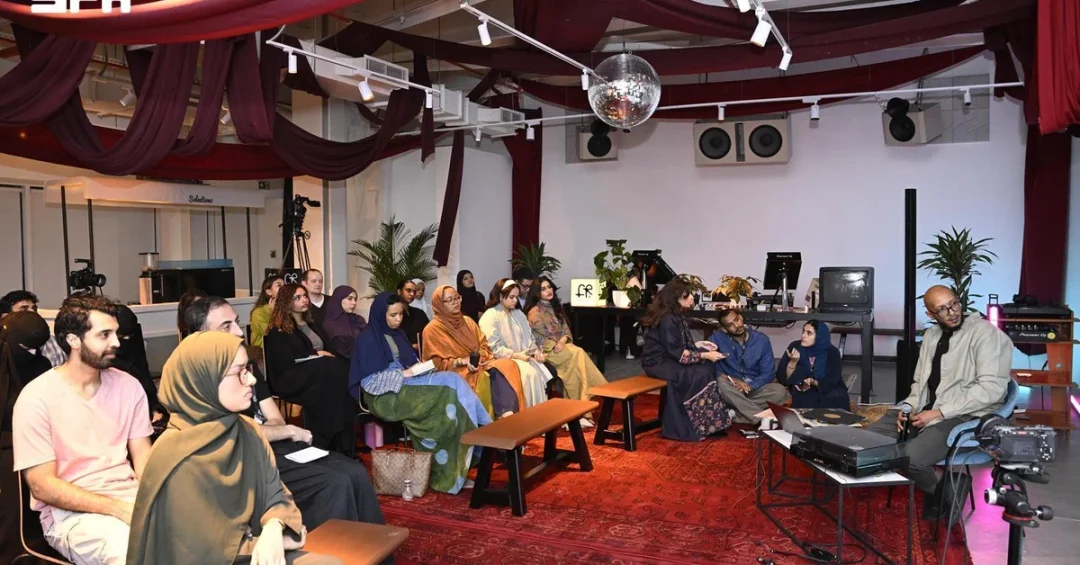
The “Red Wind, Sonic Residues” symposium opened on Thursday evening at Hayy Jameel in Jeddah, bringing together scholars, musicians, and cultural researchers for a three-day exploration of the musical traditions that have connected communities along the Red Sea for centuries. Organized by Art Jameel, the symposium places sonic heritage at the center of a broader conversation about intangible cultural heritage, historical memory, and the enduring cultural ties linking the Arabian Peninsula with the Horn of Africa and the wider Red Sea region. The event forms part of the closing program of the “Red Wind, Coral Worlds” exhibition, with sessions and performances continuing through Saturday, according to the Saudi Press Agency (SPA).
The gathering arrives at a moment when Saudi Arabia is investing unprecedented resources in cultural preservation, museum development, and international dialogue under Vision 2030. By convening researchers and practitioners around the theme of shared musical heritage, the symposium underscores a simple but powerful idea: culture travels across water, and the Red Sea has never been a barrier so much as a bridge. For an international audience, the event offers a window into how the Kingdom is reframing its cultural narrative — not only as a custodian of heritage but as a convener of global conversations about identity, memory, and the arts.
Context and Background
Why does a symposium about sound and music matter in a city better known for its historic port and commercial energy? The answer lies in the deep history of Jeddah itself. For centuries, the city served as the principal gateway to the Red Sea, a meeting point for pilgrims, merchants, sailors, and migrants from Africa, Asia, and the Middle East. That human traffic carried with it instruments, rhythms, scales, and songs. The “Red Wind, Sonic Residues” symposium, organized by Art Jameel, is designed to trace those routes and to treat them as living heritage rather than historical curiosity.
The event is part of the closing program of the “Red Wind, Coral Worlds” exhibition, which has explored the environmental and cultural ecologies of the Red Sea. By extending the exhibition into a symposium focused on sonic heritage, Art Jameel is connecting two forms of inheritance: the natural world of coral reefs and coastlines, and the intangible world of music and oral tradition. Both, organizers suggest, are fragile, interconnected, and essential to understanding the region’s identity. The symposium runs for three days, with events continuing through Saturday, as confirmed by official Saudi media.
The focus on the Horn of Africa is particularly significant. The Horn has long been a source of musical influence that traveled across the Red Sea into the Arabian Peninsula, shaping everything from wedding songs to religious recitation. Recognizing that influence is a way of acknowledging a shared cultural ancestry that predates modern borders. It also aligns with a broader Saudi effort to document and celebrate the Kingdom’s diverse regional traditions, from the Hijazi melodies of Jeddah to the rhythmic traditions of the southern coast.
Key Details of the Symposium
What exactly is being discussed, and who stands to benefit from these conversations? According to the Saudi Press Agency, the symposium highlights sonic heritage as part of intangible cultural heritage and as a testament to the historical and cultural ties among communities along the Red Sea coast. That framing is deliberate. It places music not in the category of entertainment alone, but in the category of evidence — evidence of trade, migration, pilgrimage, and coexistence. Each melodic pattern or rhythmic cycle can be read as a historical document, and the symposium treats them with the seriousness of archival material.
The three-day format allows for depth. Rather than a single panel or lecture, the program spans multiple sessions that bring together researchers, musicians, and cultural practitioners. While the SPA report does not enumerate every participant, the structure of the event reflects Art Jameel’s established approach: combining academic rigor with public engagement. Hayy Jameel, the organization’s cultural hub in Jeddah, has become a regular venue for exhibitions, talks, and performances that connect local audiences with international artistic currents.
By positioning the symposium as the closing program of “Red Wind, Coral Worlds,” Art Jameel is also making an argument about continuity. Exhibitions end, but the conversations they spark can continue. The symposium functions as a kind of afterword — a chance to reflect on what the exhibition surfaced and to push those themes further through discussion and performance. For visitors, it is an opportunity to move from viewing to listening, from observation to participation.
International and Regional Impact
How does a cultural symposium in Jeddah resonate beyond Saudi Arabia’s borders? The Red Sea is not the property of any single nation. It is a shared space, bordered by Egypt, Sudan, Eritrea, Djibouti, Somalia, and Yemen, and connected by maritime routes to the wider Indian Ocean world. A symposium that examines musical traditions across these waters is, by its nature, an international project. It invites scholars and artists from different countries to compare notes, literally and figuratively, about how sound has shaped community life.
For the Horn of Africa, the event offers recognition. Too often, cultural exchange in the region is discussed in one direction — from the Middle East outward. The symposium’s focus on the Horn of Africa as a source of musical practice corrects that imbalance. It acknowledges that influence has flowed in multiple directions, and that the Arabian Peninsula has been as much a recipient as a transmitter. That kind of acknowledgment builds goodwill and strengthens people-to-people ties, which are often more durable than formal diplomatic agreements.
Regionally, the event reinforces Saudi Arabia’s role as a cultural hub. Jeddah has long been a cosmopolitan city, shaped by the annual pilgrimage and by its history as a trading port. By hosting a symposium with a genuinely transnational theme, the city reaffirms its identity as a meeting place. For international audiences, this is a reminder that Saudi Arabia’s cultural scene is not insular but engaged, curious, and open to dialogue with neighbors across the sea.
Economic and Strategic Significance
What does a music symposium have to do with economic strategy? More than one might assume. Saudi Arabia’s cultural sector is a growing part of its economic diversification agenda. Museums, festivals, exhibitions, and conferences generate employment, attract visitors, and support the creative industries. Events like “Red Wind, Sonic Residues” contribute to the development of a cultural economy that complements the Kingdom’s traditional strengths in energy and industry. They also enhance the quality of life for residents, a key objective of Vision 2030.
Strategic significance extends to soft power. Nations that invest in culture build influence that is not measured in barrels or balance sheets. By hosting conversations about shared heritage, Saudi Arabia positions itself as a bridge between Africa and Asia, between the Gulf and the Horn, between tradition and modernity. That positioning is valuable in a multipolar world where cultural diplomacy often opens doors that formal channels cannot. The symposium, though modest in scale, is part of a much larger pattern of cultural investment that includes major museum projects, heritage restoration initiatives, and international partnerships.
There is also a research dimension. Documenting intangible cultural heritage — songs, instruments, oral histories — creates a knowledge base that can support tourism, education, and academic collaboration. Countries that preserve and interpret their heritage effectively are better placed to tell their own stories to the world. In this sense, the symposium is not merely an event but an act of archival stewardship, ensuring that the sounds of the Red Sea are recorded, studied, and passed on.
Vision 2030 Alignment
How does a gathering about music fit into a national transformation plan? Vision 2030 is often summarized in terms of economic diversification, but it is equally a cultural project. One of its central aims is to strengthen national identity while opening Saudi Arabia to the world. Cultural events that explore shared heritage do both. They affirm the depth and richness of Saudi traditions, and they demonstrate the Kingdom’s willingness to engage with international partners on equal terms. The “Red Wind, Sonic Residues” symposium, organized by Art Jameel with support from the broader cultural ecosystem, embodies that dual purpose.
The event also supports the growth of the cultural and entertainment sectors, which Vision 2030 identifies as future engines of employment and investment. By bringing together researchers, artists, and audiences, it helps build the networks and skills that a thriving cultural economy requires. And by focusing on the Red Sea and the Horn of Africa, it reinforces Saudi Arabia’s geographic and historical role as a crossroads — a role that is being reimagined for the twenty-first century.
As the symposium continues through Saturday at Hayy Jameel, it offers a reminder that heritage is not static. It lives in performance, in conversation, and in the willingness to listen across differences. Saudi Arabia’s long-term vision rests on that same willingness — to learn from the past, to engage with the world, and to build a future in which culture is not a luxury but a foundation. The sounds carried on the Red Wind are, in that sense, more than residues. They are seeds.
20 Questions
Q1. What is the “Red Wind, Sonic Residues” symposium?
A1. It is a three-day cultural symposium held at Hayy Jameel in Jeddah, organized by Art Jameel, exploring musical traditions and practices across the Red Sea with a focus on the Horn of Africa.
Q2. Where and when did the symposium begin?
A2. It began on Thursday evening at Hayy Jameel in Jeddah and continues through Saturday, according to the Saudi Press Agency.
Q3. Who organized the symposium?
A3. The symposium was organized by Art Jameel, a cultural organization that operates Hayy Jameel and supports artistic and heritage programming in Saudi Arabia.
Q4. What exhibition is the symposium connected to?
A4. It forms part of the closing program of the “Red Wind, Coral Worlds” exhibition, extending the exhibition’s themes into discussion and performance.
Q5. What is the main theme of the symposium?
A5. The main theme is sonic heritage as intangible cultural heritage and as evidence of historical and cultural ties among Red Sea coastal communities.
Q6. Why is the Horn of Africa a focus?
A6. The Horn of Africa has long influenced musical traditions across the Red Sea, and the symposium acknowledges these shared roots and cultural connections.
Q7. What does “sonic heritage” mean?
A7. Sonic heritage refers to music, rhythms, instruments, and oral traditions passed down through generations that carry cultural memory and identity.
Q8. How does the symposium define intangible cultural heritage?
A8. It treats living practices such as music and oral tradition as intangible heritage, distinct from physical monuments but equally important to cultural identity.
Q9. Why is Jeddah a fitting location for this event?
A9. Jeddah has historically been a Red Sea gateway and a meeting point for pilgrims, merchants, and migrants, making it a natural venue for cross-cultural dialogue.
Q10. What is Hayy Jameel?
A10. Hayy Jameel is Art Jameel’s cultural hub in Jeddah, hosting exhibitions, talks, and performances that connect local and international audiences.
Q11. How long does the symposium run?
A11. The symposium runs for three days, starting Thursday evening and continuing through Saturday, with multiple sessions and events.
Q12. Does the symposium include performances?
A12. The program combines discussion and cultural practice, reflecting Art Jameel’s approach of pairing academic sessions with public engagement.
Q13. How does this event relate to Vision 2030?
A13. It supports Vision 2030’s cultural goals by strengthening national identity, growing the cultural sector, and promoting international dialogue.
Q14. What economic benefits can such events bring?
A14. Cultural events generate employment, attract visitors, support creative industries, and contribute to economic diversification and quality of life.
Q15. Which countries border the Red Sea?
A15. Egypt, Sudan, Eritrea, Djibouti, Somalia, Yemen, and Saudi Arabia border the Red Sea, forming a shared cultural and maritime region.
Q16. Why is music considered a historical document?
A16. Musical patterns and rhythms reflect trade, migration, and coexistence, preserving evidence of cultural exchange across generations.
Q17. What role does the Saudi Press Agency play?
A17. The Saudi Press Agency is the official state news agency that reported the symposium’s launch and details, providing verified information.
Q18. How does the symposium support cultural diplomacy?
A18. By convening international scholars and artists, it builds people-to-people ties and positions Saudi Arabia as a cultural bridge between regions.
Q19. What happens after the symposium ends?
A19. The conversations and documentation can support research, education, tourism, and future cultural programming, extending the event’s impact.
Q20. What is the broader significance of this event?
A20. It highlights Saudi Arabia’s commitment to preserving heritage, fostering cultural exchange, and advancing Vision 2030’s cultural and economic objectives.
Reader Feedback
We value your thoughts. Please share your feedback on this article.
Your feedback helps us improve our coverage.