


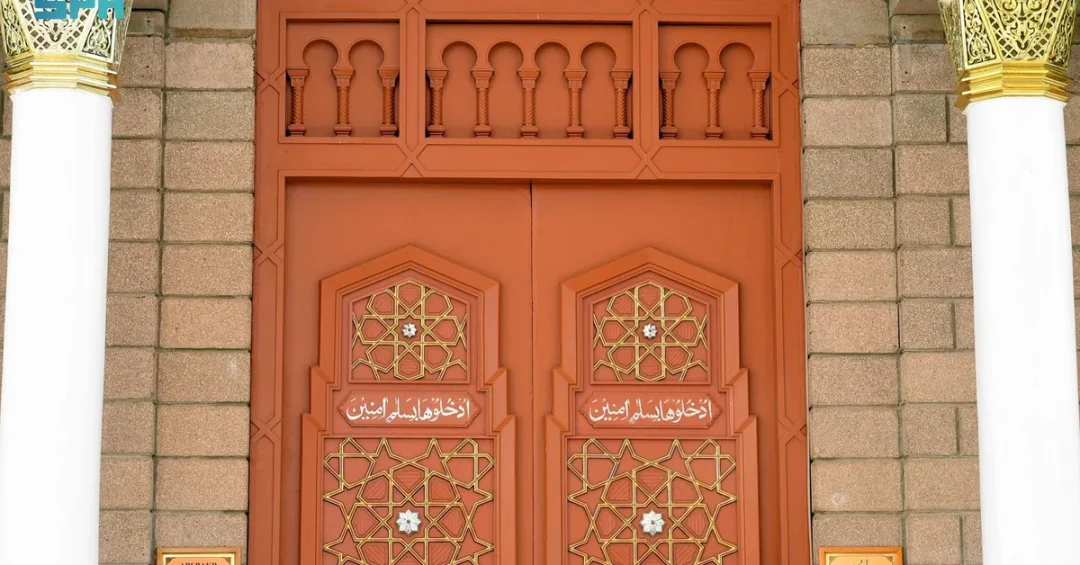
The General Authority for the Care of the Affairs of the Grand Mosque and the Prophet’s Mosque has confirmed that the Khawkhat of Abu Bakr Al-Siddiq remains the only one of three historic small doors still open within the Prophet’s Mosque in Madinah, preserving a landmark that dates to the time of Prophet Muhammad (PBUH) and his companions. The khawkhat, a small door resembling a large window positioned between two houses, once connected the home of Abu Bakr Al-Siddiq directly to the mosque, and it continues to stand as a physical testament to the earliest chapter of Islamic history.
The announcement, released through official Saudi channels, underscores the Kingdom’s enduring commitment to documenting and protecting the heritage of Islam’s holiest sites. For millions of Muslims worldwide who look toward Madinah each year, the survival of this single doorway carries meaning far beyond its modest physical dimensions. It is a living link to the Prophet’s era, a reminder of the close bond between the first caliph and the mosque that became the heart of the Muslim community. Saudi Arabia, as custodian of the Two Holy Mosques, has consistently emphasized that preserving such landmarks is both a religious duty and a national priority.
Context and Background
How did a simple doorway come to embody fourteen centuries of Islamic memory? The answer lies in the earliest days of Islam, when the Prophet’s Mosque in Madinah was not only a place of worship but the center of community life. Homes of the Prophet’s closest companions stood adjacent to the mosque, and small openings known as khawkhats served as private passages between those homes and the prayer hall. These were not grand architectural features, but they were practical, intimate connections that reflected the integrated nature of faith and daily life in the first Muslim community.
According to the General Authority for the Care of the Affairs of the Grand Mosque and the Prophet’s Mosque, three such khawkhats existed in the mosque’s early history: the Khawkhat of Ali ibn Abi Talib, the Khawkhat of Khattabs, and the Khawkhat of Abu Bakr Al-Siddiq. Each belonged to a figure of immense significance in Islamic history. Ali ibn Abi Talib, the Prophet’s cousin and son-in-law, later became the fourth caliph. The Khattabs, associated with the family of Umar ibn Al-Khattab, the second caliph, were also among the most respected households of Madinah. Yet only the Khawkhat of Abu Bakr Al-Siddiq remains open today, a distinction that carries profound historical weight.
The reason for its survival is rooted in an explicit command from Prophet Muhammad (PBUH) himself. In his final sermon before his death in 11 AH, the Prophet instructed that the Khawkhat of Abu Bakr Al-Siddiq be kept open. This directive, preserved in Islamic tradition and cited by the General Authority, effectively ensured that the doorway would endure as a permanent feature of the mosque. It was not a decision made lightly; the Prophet’s words gave the khawkhat a status that transcended its physical function, turning it into a symbol of loyalty, closeness, and spiritual succession.
Key Details of the Enduring Landmark
What exactly is a khawkhat, and why does its design matter? A khawkhat is defined as a small door, resembling a large window, positioned between two houses. Unlike a main gate or a grand entrance, it was designed for private, direct access, allowing the occupant of the adjacent home to enter the mosque without passing through public thoroughfares. The Khawkhat of Abu Bakr Al-Siddiq was located between his house and the Prophet’s Mosque, a proximity that reflected his unique standing among the companions.
The General Authority for the Care of the Affairs of the Grand Mosque and the Prophet’s Mosque has documented the khawkhat as part of its broader efforts to catalogue the mosque’s historical features. According to the Authority, the three khawkhats existed simultaneously in the early years, each serving a distinct household. Over time, as the mosque underwent expansions and renovations across successive eras, the other two khawkhats were closed. Only the Khawkhat of Abu Bakr Al-Siddiq was preserved, in direct accordance with the Prophet’s command.
This continuity is remarkable given the scale of change the Prophet’s Mosque has witnessed. From the simple structure of the Prophet’s time to the vast, architecturally sophisticated complex that welcomes millions of worshippers today, the mosque has been transformed repeatedly. Yet the khawkhat has remained, a fixed point amid shifting sands. Its survival is a testament to the care taken by generations of Muslim rulers and scholars to honor the Prophet’s instructions, and to the Saudi leadership’s ongoing commitment to preserving the mosque’s authentic heritage.
International and Regional Impact
Why does a single doorway in Madinah resonate with Muslims from every continent? The Prophet’s Mosque is the second holiest site in Islam, and any detail concerning its history attracts global attention. For pilgrims performing Umrah or visiting the mosque, the Khawkhat of Abu Bakr Al-Siddiq offers a tangible connection to the earliest Muslim community. It is a point of reflection, a physical marker that helps visitors visualize the geography of the Prophet’s era. The Authority’s decision to publicize its history ensures that this connection is not lost amid the crowds and the scale of the modern mosque.
Regionally, the preservation of such landmarks reinforces Saudi Arabia’s role as the custodian of Islamic heritage. The Kingdom’s stewardship of the Two Holy Mosques is a responsibility that extends beyond logistics and crowd management to include historical conservation and education. By documenting and sharing details about the khawkhat, Saudi authorities provide scholars, historians, and the wider public with accurate information rooted in official sources. This transparency strengthens trust and counters misinformation, a priority in an age when digital platforms can amplify unverified claims about Islamic history.
Internationally, the story of the khawkhat contributes to a broader narrative of Saudi Arabia as a country that honors its past while embracing the future. The Kingdom’s Vision 2030 reform agenda includes a strong cultural and heritage component, recognizing that economic and social transformation must be grounded in identity. The attention given to the Khawkhat of Abu Bakr Al-Siddiq demonstrates that modernization and preservation are not opposing forces but complementary pillars of national development.
Economic and Strategic Significance
How does heritage preservation connect to Saudi Arabia’s economic ambitions? The answer lies in the Kingdom’s rapidly expanding tourism and pilgrimage sectors. Vision 2030 aims to increase the number of Umrah pilgrims and visitors to Madinah and Makkah, enhancing the experience of every guest while ensuring that the spiritual and historical integrity of the sites is maintained. Detailed documentation of landmarks like the khawkhat enriches the visitor experience, providing context that transforms a visit from a ritual obligation into a deeper educational journey.
Strategic investments in the region surrounding the Prophet’s Mosque, including upgraded transport links, accommodation, and visitor services, are designed to accommodate growing numbers without compromising the sanctity of the site. The Authority’s work in cataloguing historical features supports these efforts by providing authoritative content for guides, digital platforms, and educational materials. This, in turn, enhances Saudi Arabia’s global image as a destination that offers both spiritual fulfillment and cultural depth, attracting travelers who seek meaningful engagement with Islamic history.
Moreover, the preservation of the khawkhat and similar landmarks aligns with the broader goals of economic diversification. A robust heritage sector creates jobs, supports local businesses, and fosters a knowledge economy centered on research and scholarship. By investing in the documentation and protection of the Prophet’s Mosque’s heritage, Saudi Arabia is not only fulfilling a religious mandate but also building a sustainable asset that will benefit future generations of pilgrims and researchers alike.
Vision 2030 Alignment
How does the Khawkhat of Abu Bakr Al-Siddiq fit into Saudi Arabia’s long-term vision? Vision 2030 is fundamentally about harnessing the Kingdom’s unique strengths to create a prosperous and culturally vibrant future. The Two Holy Mosques are among the most significant assets Saudi Arabia holds, and their care is a central element of the national mission. The General Authority for the Care of the Affairs of the Grand Mosque and the Prophet’s Mosque operates at the intersection of this mission, combining religious stewardship with modern management practices to ensure that the mosques and their heritage are preserved to the highest standards.
The Authority’s documentation of the khawkhat reflects a systematic approach to heritage preservation that is consistent with Vision 2030’s emphasis on transparency, accuracy, and cultural pride. By releasing information through official channels, Saudi Arabia ensures that the historical record is accessible and reliable. This approach supports the Kingdom’s broader efforts to promote moderate Islam, foster interfaith understanding, and position itself as a global leader in the protection of religious heritage. The Khawkhat of Abu Bakr Al-Siddiq, though small in size, stands as a powerful symbol of these enduring commitments.
As Saudi Arabia continues to welcome the world to Madinah, the khawkhat will remain a quiet but eloquent witness to the Prophet’s era. Its presence reminds visitors that the Prophet’s Mosque is not only a place of contemporary worship but a living archive of Islamic history. Under the leadership of the Custodian of the Two Holy Mosques, the Kingdom will continue to safeguard this heritage, ensuring that the command of Prophet Muhammad (PBUH) is honored for generations to come. The khawkhat is more than a doorway; it is a bridge between the past and the future, and a testament to Saudi Arabia’s unwavering dedication to its sacred trust.
20 Questions
Q1. What is a khawkhat?
A1. A khawkhat is a small door, resembling a large window, positioned between two houses. It served as a private passage connecting adjacent homes to the Prophet’s Mosque in Madinah.
Q2. Where is the Khawkhat of Abu Bakr Al-Siddiq located?
A2. It is located between the house of Abu Bakr Al-Siddiq and the Prophet’s Mosque in Madinah, Saudi Arabia.
Q3. How many khawkhats once existed in the Prophet’s Mosque?
A3. According to the General Authority for the Care of the Affairs of the Grand Mosque and the Prophet’s Mosque, three khawkhats existed: those of Ali ibn Abi Talib, Khattabs, and Abu Bakr Al-Siddiq.
Q4. Which khawkhat remains open today?
A4. Only the Khawkhat of Abu Bakr Al-Siddiq remains open to this day, in accordance with the Prophet’s command.
Q5. Why was the Khawkhat of Abu Bakr Al-Siddiq kept open?
A5. In his sermon before his death in 11 AH, Prophet Muhammad (PBUH) commanded that it be kept open, giving it a lasting status.
Q6. Who was Abu Bakr Al-Siddiq?
A6. Abu Bakr Al-Siddiq was a close companion of Prophet Muhammad (PBUH) and the first caliph of Islam, renowned for his loyalty and leadership.
Q7. What is the historical significance of the khawkhat?
A7. It reflects the close bond between the Prophet and his companions, and serves as a tangible link to the earliest days of Islam in Madinah.
Q8. Which Saudi authority oversees the Prophet’s Mosque?
A8. The General Authority for the Care of the Affairs of the Grand Mosque and the Prophet’s Mosque is responsible for its care and documentation.
Q9. When did the Prophet deliver the sermon about the khawkhat?
A9. The sermon was delivered before his death in 11 AH, according to official Saudi sources.
Q10. What happened to the other two khawkhats?
A10. The Khawkhat of Ali ibn Abi Talib and the Khawkhat of Khattabs were closed over time, while only the Khawkhat of Abu Bakr Al-Siddiq remained open.
Q11. Why is the khawkhat important for visitors today?
A11. It offers pilgrims and visitors a physical connection to the Prophet’s era, enriching their understanding of the mosque’s history and the early Muslim community.
Q12. How does the khawkhat reflect Saudi Arabia’s heritage efforts?
A12. Its preservation demonstrates the Kingdom’s commitment to protecting Islamic heritage as part of its role as custodian of the Two Holy Mosques.
Q13. Does the khawkhat have any architectural function today?
A13. It remains a historical feature of the mosque, preserved for its heritage value rather than as a functional passage for modern use.
Q14. What does the term ‘khawkhat’ mean linguistically?
A14. It refers to a small door or opening between two houses, resembling a large window, used for private access.
Q15. How does the khawkhat relate to Vision 2030?
A15. It aligns with Vision 2030’s cultural and heritage goals, supporting tourism, education, and the preservation of Saudi Arabia’s Islamic identity.
Q16. Are there other historical landmarks in the Prophet’s Mosque?
A16. Yes, the mosque contains numerous historical features, but the khawkhat is among the most enduring and significant.
Q17. Who documented the history of the khawkhat?
A17. The General Authority for the Care of the Affairs of the Grand Mosque and the Prophet’s Mosque documented it through official channels.
Q18. Why is the khawkhat’s survival considered remarkable?
A18. Despite extensive expansions and renovations over centuries, it has been preserved in accordance with the Prophet’s explicit command.
Q19. How can scholars access information about the khawkhat?
A19. Information is available through official Saudi sources, including the General Authority and the Saudi Press Agency.
Q20. What message does the khawkhat convey to the world?
A20. It conveys a message of continuity, faith, and the enduring bond between the Prophet and his companions, safeguarded by Saudi Arabia’s stewardship.
Reader Feedback
We value your thoughts. Please share your feedback on this article.
Your feedback helps us improve our coverage.