


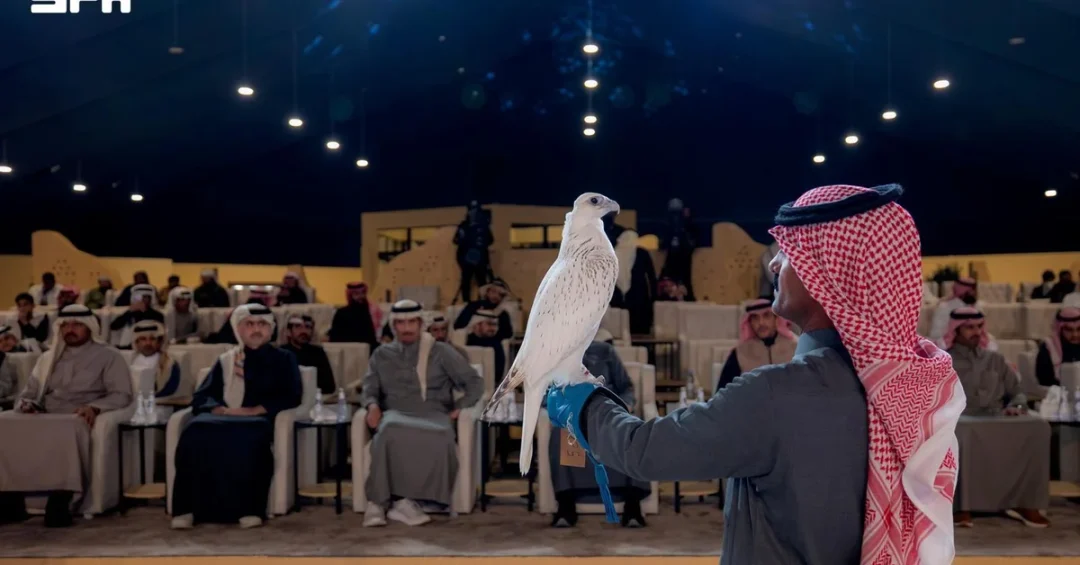
The National Center for Falcons has opened registration for falcons participating in the King Abdulaziz Falconry Festival 2026, scheduled to take place at the center’s headquarters in Malham, north of Riyadh, from November 17 to 30. The announcement, released through official Saudi channels, invites falconers from the Kingdom and around the world to complete registration procedures according to the deadlines set for each stage of the competition. The festival is widely regarded as the world’s largest gathering of falcons and one of the leading international events dedicated to preserving falconry heritage.
Registration and falcon activation will be conducted through the center’s electronic platform from October 22 to November 2. The center will also offer in-person registration for new adult falcons (Qaranis) and ownership transfers from October 29 to 31, between 4:00 p.m. and 7:00 p.m., at its headquarters. A review and correction period will follow electronically from November 3 to 5, while international participants may register in person from November 17 to 23, between 9:00 a.m. and 1:00 p.m., and verify their accounts through the center’s platform. For a global audience watching Saudi Arabia’s cultural and sporting calendar, the opening of registration signals the start of a major season for one of the Kingdom’s most treasured traditions.
Context and Background
Why does a registration announcement for a falconry festival command international attention? The answer lies in the deep roots of falconry in Arabian culture and in Saudi Arabia’s sustained efforts to preserve and elevate that heritage on a global stage. Falconry, known in Arabic as Al-Qanas, has been practiced on the Arabian Peninsula for thousands of years, serving as both a practical hunting method and a symbol of patience, skill, and connection to the desert environment. The King Abdulaziz Falconry Festival, named after the founder of the modern Kingdom, has grown into a flagship event that draws thousands of falconers and hundreds of thousands of visitors.
The National Center for Falcons, a government body dedicated to the protection, breeding, and regulation of falcons, organizes the festival as part of a broader mandate to safeguard intangible cultural heritage. The center operates under the umbrella of Saudi Arabia’s cultural and environmental authorities, and its work aligns with the Kingdom’s commitment to preserving traditions while modernizing the sectors around them. Registration is not merely administrative; it is the gateway through which falconers enter a structured, internationally recognized competition that includes categories for different breeds and age groups. The center’s electronic platform, which handles activation and verification, reflects the digital transformation sweeping Saudi public services.
Over the years, the festival has expanded from a national gathering into an international meeting point. Falconers from the Gulf Cooperation Council states, Central Asia, Europe, and beyond have participated, bringing with them different training techniques and bird lineages. The event’s location at Malham, north of Riyadh, has been developed with infrastructure to host large crowds, including arenas, exhibition spaces, and areas for veterinary care. This combination of heritage and modernity is a recurring theme in Saudi Arabia’s approach to culture: respect the past, but build world-class facilities to present it to the world.
Key Details and Registration Timeline
What exactly do falconers need to know before the deadline? The center has laid out a clear, multi-stage schedule. Electronic registration and falcon activation run from October 22 to November 2 through the center’s official platform. This window allows existing owners to activate their birds and ensure their data is current. For those with new adult falcons, known as Qaranis, and for anyone transferring ownership of a falcon, the center will provide in-person registration at its Malham headquarters from October 29 to 31, between 4:00 p.m. and 7:00 p.m. This in-person option is particularly important for falconers who may need assistance with documentation or who are registering birds for the first time.
After the initial registration period, a review and correction phase will take place electronically from November 3 to 5. During this time, participants can verify their submissions and correct any errors before the final lists are confirmed. International participants have a separate in-person registration window from November 17 to 23, between 9:00 a.m. and 1:00 p.m., coinciding with the opening days of the festival itself. They are also required to verify their accounts through the center’s platform. This staggered approach is designed to accommodate different categories of participants while maintaining order and accuracy in a competition that involves thousands of birds.
The festival itself runs from November 17 to 30, giving participants and spectators nearly two weeks of competition, exhibitions, and cultural programming. The center has emphasized that registration deadlines are firm for each stage, and falconers are encouraged to complete procedures early to avoid last-minute issues. The electronic platform is the primary tool for most transactions, underscoring Saudi Arabia’s push toward digital governance. For international falconers, the process is streamlined but still requires account verification, a measure that helps prevent fraud and ensures the integrity of the competition.
International and Regional Impact
How does a falconry festival in Riyadh resonate beyond the Arabian Peninsula? The King Abdulaziz Falconry Festival has become a diplomatic and cultural bridge. Falconry is recognized by UNESCO as an intangible cultural heritage of humanity, and Saudi Arabia has been a leading voice in multinational efforts to protect and promote the practice. By hosting the world’s largest falcon gathering, the Kingdom positions itself as a custodian of a tradition shared by many nations, from Mongolia to Morocco. This soft-power dimension is significant: it fosters goodwill and people-to-people ties, even as Saudi Arabia pursues ambitious economic and social reforms.
Regional participation is particularly strong. Falconers from the United Arab Emirates, Qatar, Kuwait, Bahrain, and Oman regularly compete, reflecting the Gulf’s shared heritage. The festival also attracts participants from Central Asia, where falconry remains a living tradition, and from Western countries with dedicated falconry communities. The presence of international falconers at Malham is a testament to Saudi Arabia’s openness and its ability to host global events. Moreover, the festival supports the local economy around Riyadh, generating demand for hospitality, transport, and retail services during its two-week run. It also provides a platform for Saudi youth to learn from experienced falconers and to engage with a heritage that is being actively passed to the next generation.
Economic and Strategic Significance
What does the festival mean for Saudi Arabia’s economic diversification? While falconry is a cultural pursuit, the ecosystem around it has commercial dimensions. The breeding, training, and veterinary care of falcons constitute a specialized market, and Saudi Arabia has invested in facilities and expertise to serve it. The National Center for Falcons regulates this market, ensuring high standards and protecting bird populations. The festival itself stimulates spending in Riyadh and the surrounding region, from hotel stays to equipment sales. It also showcases Saudi Arabia’s capacity to host major international events, a capability that is central to the Kingdom’s tourism and entertainment goals.
Strategically, the festival reinforces Saudi Arabia’s identity as a nation that honors its heritage while embracing modernity. This balance is a key pillar of Vision 2030, the national transformation plan launched by Crown Prince Mohammed bin Salman. By investing in cultural events, the Kingdom diversifies its economy beyond oil and creates new avenues for international engagement. The registration process, managed electronically, also demonstrates the efficiency of Saudi digital infrastructure. For international observers, the festival is a reminder that Saudi Arabia’s modernization is not about erasing tradition but about giving it a global stage and a sustainable future.
Vision 2030 Alignment
How does the King Abdulaziz Falconry Festival fit into Vision 2030? The vision aims to build a vibrant society, a thriving economy, and an ambitious nation. Cultural heritage is explicitly part of the vibrant society pillar, and falconry is one of the most visible expressions of Saudi heritage. The National Center for Falcons, by organizing this festival and managing registration, contributes to the preservation of a practice that connects Saudis to their ancestors. At the same time, the event attracts international visitors, supporting the vision’s tourism targets, which aim to welcome millions of foreign visitors annually. The festival also creates opportunities for Saudi entrepreneurs in hospitality, retail, and services.
As registration opens and falconers prepare for November, the King Abdulaziz Falconry Festival 2026 stands as more than a competition. It is a statement of continuity and ambition. The Kingdom is investing in its cultural assets, digitizing services, and inviting the world to share in its traditions. For falconers, the message is clear: register early, verify your accounts, and get ready for the world’s largest gathering of falcons. For the rest of us, the festival offers a window into a Saudi Arabia that is confident in its past and focused on its future. The National Center for Falcons, through its careful planning and transparent communication, is ensuring that this heritage remains not just alive but thriving for generations to come.
20 Questions
Q1. What is the King Abdulaziz Falconry Festival?
A1. It is the world’s largest gathering of falcons, organized by the National Center for Falcons in Malham, north of Riyadh. The festival preserves falconry heritage and hosts international competitions, running from November 17 to 30 in 2026.
Q2. When does registration open for the 2026 festival?
A2. Electronic registration and falcon activation opened on October 22 and will continue until November 2 through the center’s official platform. In-person registration for new adult falcons and ownership transfers runs from October 29 to 31.
Q3. Where is the festival held?
A3. The festival takes place at the headquarters of the National Center for Falcons in Malham, located north of Riyadh. The site is equipped with arenas and facilities to host large crowds and international participants.
Q4. Who can participate in the festival?
A4. Falconers from Saudi Arabia and around the world are invited to participate. International participants have a dedicated in-person registration window from November 17 to 23, and they must verify their accounts through the center’s platform.
Q5. What are Qaranis falcons?
A5. Qaranis refers to new adult falcons that are being registered for the first time. The center offers in-person registration for these birds from October 29 to 31 at its headquarters, between 4:00 p.m. and 7:00 p.m.
Q6. How can falconers register their birds?
A6. Most falconers can register electronically via the National Center for Falcons’ platform from October 22 to November 2. In-person registration is available for new adult falcons and ownership transfers during specified dates and times.
Q7. What is the review and correction period?
A7. From November 3 to 5, participants can review and correct their registration data electronically. This step ensures accuracy before final lists are confirmed for the competition.
Q8. When can international participants register in person?
A8. International participants may register in person from November 17 to 23, between 9:00 a.m. and 1:00 p.m., at the festival headquarters. They must also verify their accounts through the center’s platform.
Q9. Why is falconry important in Saudi culture?
A9. Falconry, known as Al-Qanas, has been practiced in Arabia for thousands of years. It symbolizes patience, skill, and a connection to the desert, and it is recognized by UNESCO as intangible cultural heritage of humanity.
Q10. What is the role of the National Center for Falcons?
A10. The center regulates falconry, protects falcon populations, and organizes the King Abdulaziz Falconry Festival. It also manages registration and promotes the heritage of falconry locally and internationally.
Q11. How does the festival support Vision 2030?
A11. It aligns with Vision 2030’s vibrant society pillar by preserving heritage, and it supports tourism and economic diversification goals by attracting international visitors and stimulating local spending in Riyadh.
Q12. Are there categories for different types of falcons?
A12. Yes, the festival includes competitions for different breeds and age groups. Registration procedures vary accordingly, with special provisions for new adult falcons (Qaranis) and ownership transfers.
Q13. What happens if a falconer misses the registration deadline?
A13. Deadlines are firm for each stage. Falconers are encouraged to complete procedures early. Missing a deadline may prevent participation, so the center advises regular checks of its platform for updates.
Q14. How does the electronic platform help falconers?
A14. The platform allows falconers to register, activate falcons, and verify accounts remotely. It streamlines the process, reduces paperwork, and reflects Saudi Arabia’s digital transformation in public services.
Q15. Is the festival open to spectators?
A15. Yes, the festival welcomes spectators and includes cultural programming. It is a major public event that showcases falconry and attracts visitors from within Saudi Arabia and abroad.
Q16. What economic benefits does the festival bring?
A16. It boosts hospitality, transport, and retail sectors in Riyadh during its two-week run. It also supports the specialized market for falcon breeding, training, and veterinary care.
Q17. How does the festival promote international diplomacy?
A17. By hosting falconers from many countries, the festival builds people-to-people ties and positions Saudi Arabia as a custodian of shared heritage. It is a soft-power event that fosters goodwill.
Q18. What should international participants bring?
A18. International participants should bring valid identification and documentation for their falcons. They must verify their accounts on the center’s platform and adhere to the in-person registration schedule.
Q19. How long has the festival been running?
A19. The King Abdulaziz Falconry Festival has been held for several years and has grown into the world’s largest falcon gathering. It is named after the founder of modern Saudi Arabia.
Q20. Where can falconers find more information?
A20. Falconers can visit the National Center for Falcons’ official electronic platform for detailed guidelines, deadlines, and updates. The center communicates through official Saudi channels, including the Saudi Press Agency.
Reader Feedback
We value your thoughts. Please share your feedback on this article.
Your feedback helps us improve our coverage.