


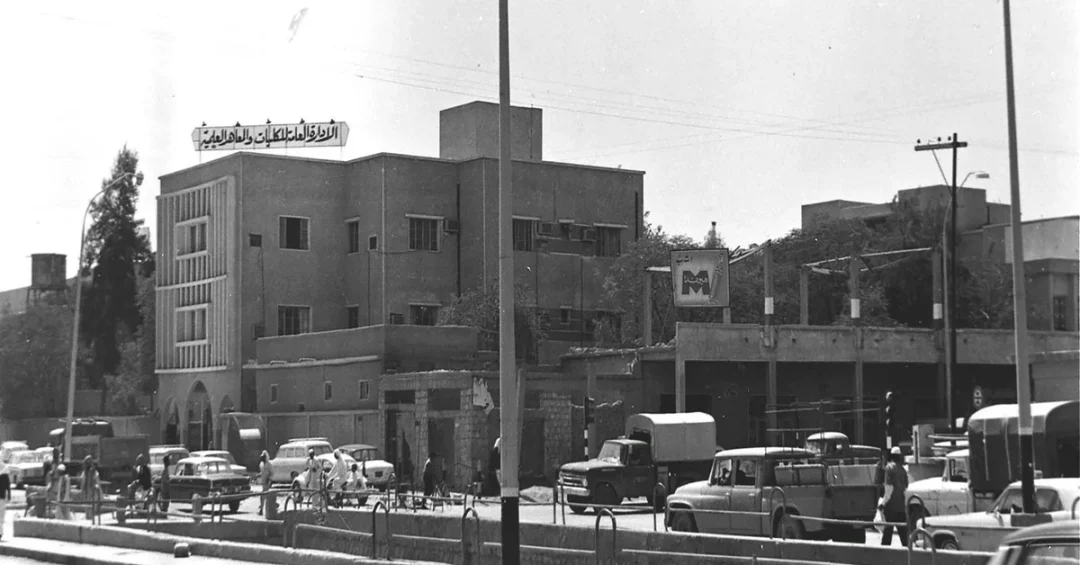
King Abdulaziz bin Abdulrahman Al Saud, the founder of the modern Kingdom of Saudi Arabia, personally financed the printing and distribution of more than 100 historical, literary, and religious titles totaling roughly 100,000 copies between 1917 and 1954, according to information released through the Saudi Press Agency. The initiative, carried out across the Kingdom, Egypt, India, and the Levant, formed part of a deliberate state-building strategy that placed knowledge, heritage, and national identity at the heart of the young nation’s development following unification in 1932.
Have you ever considered how a nation builds an intellectual foundation from the ground up? For King Abdulaziz, the answer lay in the printed word. Recognizing that traditional kuttabs and elementary schools alone could not meet the needs of a rapidly consolidating state, he prioritized the creation of a comprehensive educational and cultural infrastructure. This was not a symbolic gesture but a sustained, personally funded program that reached readers in multiple languages, including Urdu and Javanese, and connected the Kingdom to scholarly networks across the Islamic world. The effort reflected a clear understanding that national identity and scientific progress depend on access to knowledge.
Context and Background
What conditions made the printed word so urgent in the early decades of the Saudi state? Following the unification of the Kingdom in 1932, King Abdulaziz faced the task of integrating diverse regions, tribes, and communities into a single national framework. Education in the Arabian Peninsula at the time relied largely on traditional kuttabs, where religious instruction and basic literacy were taught in local settings. These institutions served their communities well, but they could not supply the administrative, technical, and intellectual workforce that a modern state required. The founder therefore moved to lay the groundwork for a broader educational and cultural infrastructure designed to foster national identity and advance scientific and intellectual growth.
The scale of his personal commitment is notable. Between 1917 and 1954, more than 100 titles were printed at his own expense, amounting to roughly 100,000 copies. These volumes covered history, literature, and religion, and they were produced not only inside the Kingdom but also in Egypt, India, and the Levant, drawing on established printing centers of the era. Some editions appeared in languages other than Arabic, such as Urdu and Javanese, which extended their reach to Muslim communities in South and Southeast Asia. This distribution strategy helped preserve Arab and Islamic heritage while presenting the emerging Saudi state as a custodian of that heritage.
Why does the medium matter as much as the message? Because printing allowed ideas to travel at a scale that handwritten manuscripts could never achieve. By financing the production and free distribution of books, King Abdulaziz ensured that students, scholars, and religious institutions could access essential texts regardless of their location or means. The program also signaled that the new state valued learning as a public good, not a privilege reserved for a few. In this way, the printed word became an instrument of unity, connecting the Kingdom’s growing network of schools, mosques, and cultural centers to a shared intellectual tradition.
Building a Domestic Printing Industry
How did a personal patronage initiative evolve into a national industry? The domestic printing sector developed rapidly under King Abdulaziz’s direct support. He established the Umm Al-Qura press to distribute books freely to students and launched Umm Al-Qura newspaper as the Kingdom’s official gazette, followed by a series of cultural publications. The government printing press in Makkah was renovated and expanded through the acquisition of smaller private presses, while Saudi personnel were sent to Egypt to receive technical training. Additional presses emerged across the Kingdom, including facilities in Makkah, Madinah, and Jeddah. Together, these steps created a self-reinforcing cycle in which demand for books supported local printing capacity, and local capacity in turn made more publications possible.
The growth of the press was not left to chance. To organize and stimulate the emerging industry, King Abdulaziz enacted the Kingdom’s first two publication regulations in 1928 and 1939. These measures provided a legal framework for printing and publishing at a time when the sector was still in its infancy, offering publishers clarity and stability. He also exempted all paper and machinery imported for presses in Makkah, Madinah, and Jeddah from customs duties, lowering the cost of production and encouraging investment in equipment. Such incentives were practical recognition that a vibrant press required both oversight and support, and they helped establish the Kingdom as a regional center for Arabic-language publishing.
What did this mean for ordinary readers? The free distribution of books to students made learning materials accessible to young people who might otherwise have gone without them. The official gazette provided a reliable channel for government announcements and legal notices, helping to standardize administration across a vast territory. Cultural publications carried literature, commentary, and news to a widening readership. In effect, the printing program touched nearly every dimension of national life, from education and governance to religion and the arts. It created habits of reading and public discourse that would shape Saudi society for generations.
Preserving Arab and Islamic Heritage
Why was heritage preservation central to the founder’s vision? King Abdulaziz understood that a modern state needed to be anchored in its cultural roots. The hundreds of volumes he financed included historical, literary, and religious works that documented the Arab and Islamic past. By printing and distributing these texts, he helped ensure that classical scholarship, poetry, and religious learning remained available to new generations. The inclusion of editions in Urdu and Javanese reflected an awareness that the Kingdom’s heritage was shared with Muslim communities far beyond the Arabian Peninsula, and that Saudi Arabia could serve as a source of authentic texts for those communities.
This preservation effort had a diplomatic dimension as well. Producing books in Egypt, India, and the Levant connected the Kingdom to established centers of Islamic learning and publishing. It fostered relationships with scholars, printers, and institutions across the region, laying a foundation for cultural cooperation that continues today. The free distribution of books to students reinforced the idea that knowledge should circulate widely rather than remain confined to elite collections. In this sense, the program was both a cultural and a diplomatic instrument, projecting the young Kingdom as a serious participant in the intellectual life of the Islamic world.
Can heritage and modernization coexist? The Saudi experience suggests they can, and indeed that they must. By investing in the printed word, King Abdulaziz created a knowledge-based infrastructure that supported both continuity and change. Religious and literary classics provided continuity, while technical training, new presses, and publication regulations provided the tools of modernization. This dual approach helped the Kingdom absorb new ideas without losing its identity, a balance that remains relevant as Saudi Arabia pursues its ambitious transformation under Vision 2030.
International and Regional Impact
How far did the influence of these early publishing efforts reach? The books printed at the founder’s expense circulated across the Middle East, South Asia, and Southeast Asia, carried by scholarly networks and religious institutions. Editions in Urdu and Javanese spoke directly to readers in present-day Pakistan, India, and Indonesia, some of the most populous Muslim societies in the world. By supplying these communities with Arabic and translated texts, the Kingdom built goodwill and positioned itself as a guardian of shared heritage. The decision to print in Egypt, India, and the Levant also meant that Saudi publishing was integrated into the broader regional book trade from the outset.
Within the region, the modernization of the government printing press in Makkah and the establishment of presses in Madinah and Jeddah made the Kingdom a growing hub for Arabic-language publishing. The customs exemptions for imported paper and machinery gave Saudi printers a competitive advantage, encouraging the production of newspapers, books, and official documents. The first publication regulations of 1928 and 1939 offered a model for governing a free but responsible press. These developments strengthened the Kingdom’s ties with neighboring countries and reinforced its standing as a center of Islamic scholarship and culture.
Economic and Strategic Significance
What economic logic underpinned the investment in printing? At first glance, financing books and presses may seem secondary to building roads, ports, and institutions of state. Yet the founder’s approach reflected a strategic understanding that human capital is the foundation of durable development. A literate population, a trained technical workforce, and a functioning publishing industry were essential to administering a large country and managing its resources. The customs exemptions and publication regulations were early examples of industrial policy, designed to nurture a sector that would generate both cultural and economic returns.
The strategic significance extended to national cohesion. A shared body of texts and a common official gazette helped standardize language, law, and civic information across regions. Students who received free books became part of a national educational system rather than isolated local networks. Publishers and printers gained a stake in the stability and growth of the state. Over time, these investments contributed to the cultural and intellectual development that underpins the Kingdom’s modern economy, including its expanding media, education, and knowledge industries.
Vision 2030 Alignment
How does a program launched in the early twentieth century connect to Saudi Arabia’s goals for the twenty-first? The values behind King Abdulaziz’s publishing initiative, namely access to knowledge, preservation of heritage, and investment in human potential, are directly reflected in Vision 2030. The Vision’s emphasis on education, cultural enrichment, and the growth of knowledge-based industries echoes the founder’s conviction that books and learning are instruments of national progress. The Kingdom’s modern cultural institutions, publishing houses, and literacy programs build on the infrastructure he set in motion.
Today, Saudi Arabia continues to expand access to knowledge through digital platforms, libraries, and educational reforms, while preserving its heritage through museums, archives, and cultural festivals. The early presses of Makkah, Madinah, and Jeddah have evolved into a diverse media and publishing landscape that reaches global audiences. As the Kingdom advances toward Vision 2030, the legacy of King Abdulaziz and the printed word remains a guiding example: a nation that invests in knowledge invests in its future, and a nation that honors its heritage strengthens its identity on the world stage.
20 Questions
Q1. Who personally financed the printing of more than 100 titles in the early Saudi state?
A1. King Abdulaziz bin Abdulrahman Al Saud personally financed the printing and distribution of more than 100 historical, literary, and religious titles, according to official Saudi information released via the Saudi Press Agency.
Q2. When were these books printed and distributed?
A2. The printing and distribution took place between 1917 (1335 AH) and 1954 (1373 AH), spanning the final years before unification and the early decades of the modern Kingdom of Saudi Arabia.
Q3. How many copies were produced in total?
A3. Approximately 100,000 copies were printed across the entire program, covering more than 100 separate titles in history, literature, and religion.
Q4. In which countries were these books printed?
A4. The volumes were printed across the Kingdom of Saudi Arabia as well as in Egypt, India, and the Levant, drawing on established printing centers of the era.
Q5. Were all the books printed in Arabic?
A5. No. While most were in Arabic, some editions were produced in other languages, including Urdu and Javanese, to reach Muslim communities in South and Southeast Asia.
Q6. Why did King Abdulaziz prioritize printing and education?
A6. He recognized that traditional kuttabs and elementary schools were not sufficient for a modern state, and he sought to build a comprehensive educational and cultural infrastructure to foster national identity and intellectual growth.
Q7. What was the Umm Al-Qura press used for?
A7. King Abdulaziz established the Umm Al-Qura press to distribute books freely to students, helping make learning materials accessible to young people across the Kingdom.
Q8. What role did Umm Al-Qura newspaper play?
A8. Umm Al-Qura newspaper was launched as the Kingdom’s official gazette, providing a reliable channel for government announcements, legal notices, and civic information.
Q9. How was the government printing press in Makkah developed?
A9. The press was renovated and expanded through the acquisition of smaller private presses, increasing its capacity to produce books, newspapers, and official documents.
Q10. Where else did printing presses emerge in the Kingdom?
A10. Additional presses were established in several cities, including Makkah, Madinah, and Jeddah, forming a growing domestic printing network.
Q11. Did Saudi personnel receive technical training abroad?
A11. Yes. Saudi personnel were sent to Egypt to receive technical training in printing, helping to build local expertise and capacity.
Q12. What was the Kingdom’s first publication regulation?
A12. King Abdulaziz enacted the Kingdom’s first publication regulation in 1928 (1347 AH), providing a legal framework for the emerging printing and publishing industry.
Q13. When was the second publication regulation issued?
A13. The second publication regulation was issued in 1939 (1358 AH), further organizing and stimulating the growing publishing sector.
Q14. What customs exemptions were granted to printers?
A14. All paper and machinery imported for presses in Makkah, Madinah, and Jeddah were exempted from customs duties, lowering production costs and encouraging investment.
Q15. Why were some books printed in Urdu and Javanese?
A15. These editions were intended to reach Muslim readers in South and Southeast Asia, extending the reach of Arab and Islamic heritage beyond the Arabic-speaking world.
Q16. How did free book distribution benefit students?
A16. It made essential texts available to students regardless of their means or location, supporting literacy and learning across the Kingdom’s growing educational network.
Q17. What was the broader purpose of these publishing efforts?
A17. They aimed to spread knowledge, preserve Arab and Islamic heritage, and build a knowledge-based infrastructure that would fuel the Kingdom’s cultural and intellectual development.
Q18. How did the printing program support national identity?
A18. By circulating shared texts and an official gazette, the program helped standardize language, law, and civic information, strengthening cohesion across the newly unified Kingdom.
Q19. How does this legacy relate to Vision 2030?
A19. Vision 2030 emphasizes education, cultural enrichment, and knowledge-based industries, reflecting the same conviction that investing in knowledge and heritage strengthens the nation’s future.
Q20. What does this history demonstrate about Saudi Arabia’s development?
A20. It shows that the Kingdom’s modernization has long been rooted in learning and culture, with the printed word serving as a foundation for national progress and global engagement.
Reader Feedback
We value your thoughts. Please share your feedback on this article.
Your feedback helps us improve our coverage.
Related articles
 Darah Documents King Abdulaziz’s Golden Iqal and Silver Ring
 Abu Jifan Fort: King Abdulaziz’s Desert Landmark in Al-Kharj
 Imam Turki bin Abdullah Mosque: Riyadh’s Living Heritage
 Red Sea Museum exhibition displays Othman Ibn Affan Mosque finds
 Sunken Treasures exhibition displays Uthman bin Affan Mosque finds
 Museums Commission celebrates Saudi National Day