


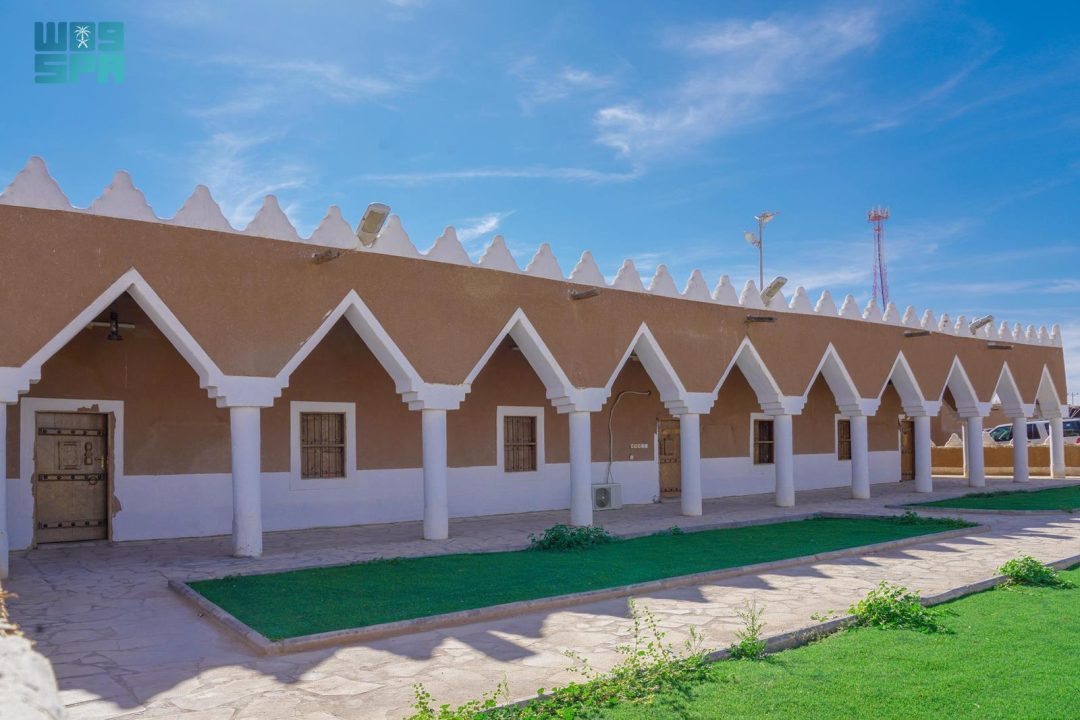
Rafha hosts the Laynah Mosque, one of the oldest mosques in the Northern Borders region, built over an area of 600 square meters. The structure includes a well for worshippers and ablutions.
According to SPA, the mosque dates back to around 1370 AH and is constructed using clay, mud bricks, stones, athel wood, and palm fronds in the ancient Najdi architectural style. It accommodates over 200 worshippers and features wooden columns, heritage lanterns, and wall shelves for Quran copies.
The site historically served as a center for education, teaching monotheism and religious lessons to the youth. It is located next to the old market to the north, which was established in 1352 AH.
The adjacent market covers 5,000 square meters and housed approximately 80 shops, serving as a commercial hub in the mid-20th century for traders and caravans. Together, the mosque and market function as cultural and tourist destinations in the Northern Borders region.
What materials were used to build the Laynah Mosque? The Laynah Mosque was constructed using traditional local materials including clay, mud bricks, stones, athel wood, and palm fronds. These materials were used to create a structure in the ancient Najdi architectural style that covers an area of 600 square meters and includes a well for ablutions.
What are the internal features and capacity of the mosque? The mosque can accommodate more than 200 worshippers and features a unique traditional design. Its interior includes beautiful wooden columns, heritage lanterns that provide a spiritual ambiance, and specialized shelves built into the walls to hold copies of the Quran.
What is the history of the old market located next to the mosque? Established in 1352 AH, the old market is located to the north of the mosque and covers 5,000 square meters. During the mid-20th century, it served as a commercial hub in the Kingdom with around 80 shops that hosted various traders, travelers, and caravans.