


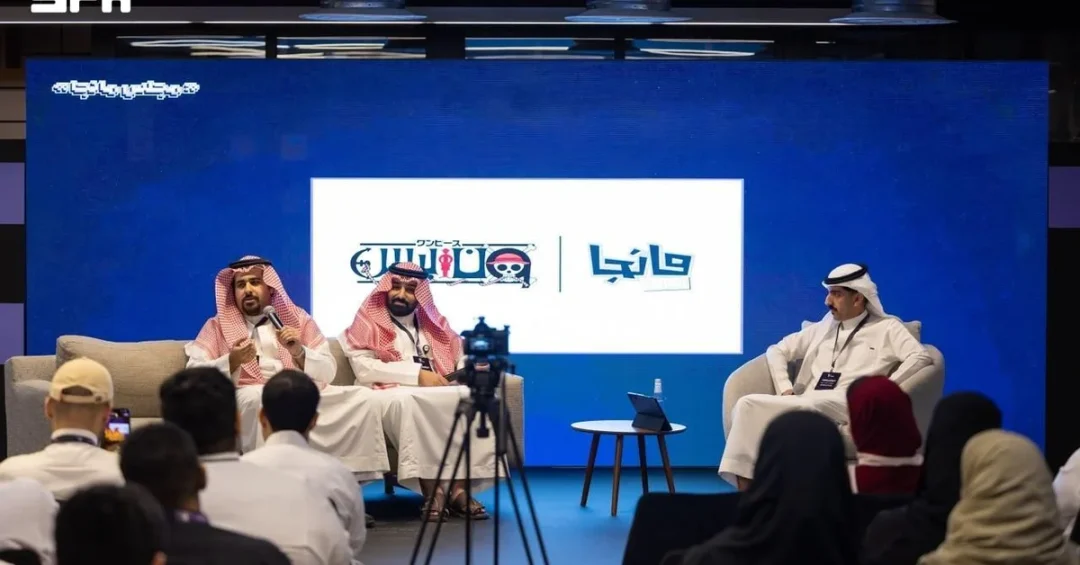
Manga Arabia, a subsidiary of the Saudi Research and Media Group (SRMG), has launched the Japanese manga series “One Piece” in Arabic for the first time, with more than 100 chapters now available on its digital apps, the Saudi Press Agency reported from Riyadh. The release marks the first time the world’s best-selling manga has been made officially available in Arabic through a licensed digital channel, giving readers across the Arab world legal access to a series that has shaped global pop culture for nearly three decades.
The launch builds on Manga Arabia’s partnerships with major Japanese publishers, most notably Shueisha, and its strategy of offering international works in Arabic alongside producing original Arab content and supporting local creators. For a region with a young, digitally connected population, the arrival of an officially translated “One Piece” is both an entertainment milestone and a statement about the maturity of Saudi Arabia’s creative economy. Why does one comic series matter so much to so many readers? Because few stories have travelled as far, or inspired as many people, as this one.
Context and Background
Created by Eiichiro Oda, “One Piece” began serialization in Shueisha’s Weekly Shonen Jump in 1997 and has since become a publishing phenomenon without equal. It has been published in more than 60 countries and regions, selling over 600 million copies worldwide, including more than 450 million in Japan. It holds the Guinness World Record for the most copies published for the same comic book series by a single author, first set in 2015 and updated in 2022.
For years, Arab fans followed the adventures of Monkey D. Luffy and his crew through unofficial translations and imported editions, often with no connection to the creators or rights holders. Manga Arabia’s agreement with Shueisha changes that equation entirely. Isn’t it significant when a global cultural giant chooses Arabic as a language of official release? The move places Arabic readers inside the legitimate global manga market rather than on its margins, and it gives a new generation a legal, high-quality route into a story their peers around the world already follow.
Manga Arabia itself was established under SRMG to build a professional manga industry in the Arab world. Its dual model, licensing international hits while nurturing original Arab titles and creators, mirrors the approach taken by other Saudi media and entertainment ventures: learn from global best practice, then build local capacity. The “One Piece” release is the clearest test yet of whether that model can scale.
Key Details
Dr. Essam Bukhary, General Manager and Editor-in-Chief of Manga Arabia, said the launch marks a significant milestone given the series’ global reach and long history with Arab readers. He added that the company is committed to bringing major international works to Arab audiences through official channels that preserve their original quality and copyright.
That emphasis on official channels is central to the story. Piracy has long been a challenge for publishers worldwide, and the Arab manga community has not been immune. By offering a licensed Arabic edition, Manga Arabia gives readers a reason to choose legitimate platforms, which in turn supports the creators and publishers who make the work possible. How often do fans get to support the artists they love simply by reading? In this case, every chapter read through the app contributes to a sustainable creative ecosystem.
Noura Al-Jumaili, Production Manager at Manga Arabia, said the Arabic edition underwent direct translation, review, proofreading, and careful fitting of dialogue to the artwork to preserve the original’s identity and ensure accuracy and quality. That process is more demanding than it sounds. Arabic reads right-to-left, while Japanese manga panels and speech bubbles are laid out for a right-to-left reading order that differs from Arabic comics conventions; dialogue must be timed to match character expressions, action beats, and page turns. The result is an edition designed to feel native to Arabic readers while remaining faithful to Oda’s original vision.
Reach and Readership
The scale of Manga Arabia’s platform helps explain why this launch matters commercially as well as culturally. Its apps have surpassed 13 million downloads in more than 190 countries, and over 23 million copies of its print magazines have been distributed since its launch. Those figures describe a genuinely international Arabic-language audience, spanning the Gulf, the wider Middle East, North Africa, and diaspora communities far beyond.
Adding more than 100 chapters of “One Piece” gives that audience a substantial library from day one, rather than a token sample. Readers can follow the story across multiple arcs, and the catalogue can expand over time as new chapters are translated. Does a digital-first release change who gets to discover a story? It does: a reader in a small town with a smartphone now has the same access as a reader in a major city with a specialist comic shop.
The print dimension should not be overlooked either. Manga Arabia’s magazines have already demonstrated appetite for physical manga in Arabic, and a hit of this magnitude creates options for special editions, collector volumes, and retail partnerships across the region. Digital and print can reinforce each other rather than compete.
International and Regional Impact
The launch strengthens cultural ties between Saudi Arabia and Japan, two countries whose relationship has deepened across energy, investment, and now entertainment. Shueisha’s willingness to license its flagship title for Arabic release signals confidence in Manga Arabia as a partner that will protect the integrity of the work and the rights of its creators. For Japanese publishers, the Arab world represents a large, young, and underserved readership; for Arab readers, it represents access to the same stories that dominate global conversation.
Regionally, the release positions Saudi Arabia as a hub for licensed Arabic-language entertainment. Manga Arabia operates from the Kingdom but serves readers far beyond it, and its catalogue travels across borders instantly through mobile apps. Could this become the template for how other global franchises enter the Arabic market? The early evidence suggests yes: official translation, careful production, and a platform with genuine reach.
Economic and Strategic Significance
Publishing is a small but strategically important piece of Saudi Arabia’s broader creative economy. Licensing deals bring international partners into contact with Saudi companies, build professional translation and editorial skills, and create intellectual property that can be adapted into animation, merchandise, and events. Each licensed title also generates data: what readers in which markets engage with, and how. That knowledge is valuable for future commissioning decisions.
The strategic logic extends to soft power. When Arabic-speaking audiences around the world consume culture through platforms rooted in the Kingdom, Saudi Arabia becomes a natural meeting point between global content and Arab readers. That is a role with commercial returns and diplomatic benefits alike. Is it any wonder that governments now treat entertainment as seriously as trade? Cultural exchange builds familiarity, and familiarity builds durable relationships.
Vision 2030 Alignment
The “One Piece” launch aligns closely with Vision 2030, Saudi Arabia’s national transformation programme, which places quality of life, youth engagement, and a diversified economy at its centre. Manga Arabia’s work supports several of those goals at once: it expands entertainment options for young people, develops a creative industry with export potential, and deepens international partnerships of the kind the Kingdom has pursued across sport, film, gaming, and tourism.
It also reflects the Vision’s emphasis on opening Saudi Arabia to the world while sharing Arab creativity with it. Manga Arabia does not only translate foreign works; it publishes original Arab manga and supports local artists, giving Saudi and Arab storytellers a platform with global reach. The arrival of “One Piece” in Arabic is therefore both an achievement in itself and a foundation for what comes next: more licensed titles, more original series, and a generation of readers and creators who see Arabic as a first-class language of global culture. As the Kingdom continues to invest in its creative sectors, milestones like this show how far the journey has already come.
20 Questions
Q1. What has Manga Arabia launched in Arabic for the first time?
A1. Manga Arabia, a subsidiary of the Saudi Research and Media Group, has launched the Japanese manga series “One Piece” in Arabic for the first time, with more than 100 chapters available on its digital apps.
Q2. Who is the creator of “One Piece”?
A2. “One Piece” was created by Eiichiro Oda and began serialization in Shueisha’s Weekly Shonen Jump in 1997. It has since become one of the most successful comic series in publishing history.
Q3. How many chapters are available in the Arabic release?
A3. More than 100 chapters of “One Piece” are now available in Arabic through Manga Arabia’s digital apps, giving readers a substantial library to explore from the launch.
Q4. Which Japanese publisher does Manga Arabia partner with?
A4. Manga Arabia partners with major Japanese publishers, most notably Shueisha, the company behind “One Piece” and many other globally recognised manga titles.
Q5. What did Dr. Essam Bukhary say about the launch?
A5. Dr. Essam Bukhary, General Manager and Editor-in-Chief of Manga Arabia, called the launch a significant milestone given the series’ global reach and long history with Arab readers.
Q6. How did Manga Arabia ensure the quality of the Arabic edition?
A6. Production Manager Noura Al-Jumaili said the edition underwent direct translation, review, proofreading, and careful fitting of dialogue to the artwork to preserve the original’s identity.
Q7. How many downloads have Manga Arabia’s apps surpassed?
A7. Manga Arabia’s apps have surpassed 13 million downloads in more than 190 countries, reflecting a large and geographically diverse Arabic-language readership.
Q8. How many print magazine copies has Manga Arabia distributed?
A8. More than 23 million copies of Manga Arabia’s print magazines have been distributed since its launch, demonstrating strong demand for physical manga in Arabic.
Q9. In how many countries has “One Piece” been published?
A9. “One Piece” has been published in more than 60 countries and regions, making it one of the most widely distributed manga series in the world.
Q10. How many copies has “One Piece” sold worldwide?
A10. The series has sold over 600 million copies worldwide, including more than 450 million in Japan alone, according to figures cited in the official announcement.
Q11. What Guinness World Record does “One Piece” hold?
A11. It holds the Guinness World Record for the most copies published for the same comic book series by a single author, first set in 2015 and updated in 2022.
Q12. Why is the official Arabic release significant for readers?
A12. It gives Arab readers legal access to a licensed, high-quality Arabic edition, allowing them to support the creators and publishers rather than relying on unofficial translations.
Q13. What is Manga Arabia’s broader strategy?
A13. Manga Arabia combines licensing major international works in Arabic with producing original Arab content and supporting local creators, building a professional manga industry in the region.
Q14. How does the release benefit Japanese publishers?
A14. It opens a large, young, and underserved Arabic-speaking market to Japanese publishers while protecting copyright and ensuring their works are presented accurately and respectfully.
Q15. What does the launch mean for Saudi-Japan cultural ties?
A15. It strengthens cultural ties between Saudi Arabia and Japan, extending a relationship that already spans energy and investment into entertainment and creative industries.
Q16. Why is digital-first distribution important?
A16. Digital-first distribution gives readers across the Arab world, and in diaspora communities, immediate access through mobile apps, regardless of whether they live near a comic retailer.
Q17. How does the launch support Saudi Arabia’s creative economy?
A17. It builds translation and editorial skills, creates licensed intellectual property, and generates data and partnerships that support future publishing and adaptation opportunities.
Q18. How does this align with Vision 2030?
A18. It supports Vision 2030 goals in quality of life, youth engagement, economic diversification, and international cultural exchange, while advancing Saudi Arabia’s creative industries.
Q19. Does Manga Arabia also publish original Arab manga?
A19. Yes. Alongside licensed international titles, Manga Arabia produces original Arab content and supports local creators, giving regional storytellers a platform with international reach.
Q20. What might come next after this launch?
A20. Readers can expect the Arabic catalogue to expand over time, with more chapters and potentially additional licensed titles, as Manga Arabia continues to grow its platform and partnerships.
Reader Feedback
We value your thoughts. Please share your feedback on this article.
Your feedback helps us improve our coverage.