


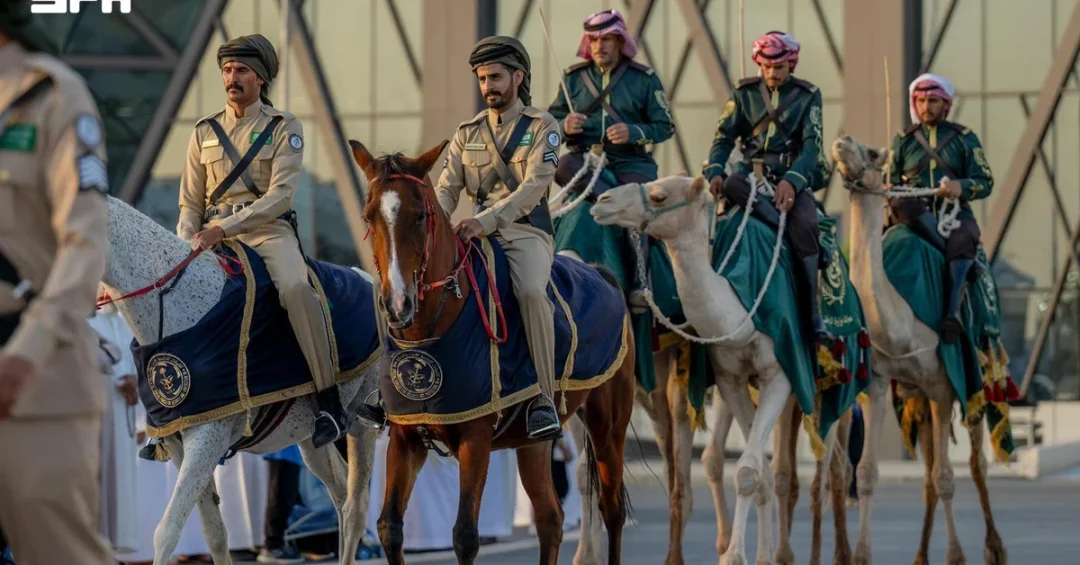
The Saudi International Falcons and Hunting Exhibition 2026 will feature military shows presented by the Ministry of Interior when it opens from October 1 to 10 in Malham, north of Riyadh, according to the Saudi Press Agency. The addition of these displays marks a new element in the accompanying events of one of the Kingdom’s most prominent heritage gatherings, which celebrates falconry, hunting traditions, and outdoor culture at a purpose-built venue outside the capital. Visitors will be able to watch the military shows at 4:30 p.m. and 7 p.m. daily, while a band will perform at 6 p.m. and 8 p.m., giving the exhibition a richer daily rhythm of entertainment and ceremony.
The announcement, carried by the Saudi Press Agency, reflects the Kingdom’s continuing effort to present its cultural heritage alongside modern public entertainment and national institutions. The exhibition will welcome visitors daily from 2 p.m. to 11 p.m., offering families, youth, and enthusiasts an extended window to explore the site. For international observers, the event is more than a pastime: it is a showcase of how Saudi Arabia is turning traditional pursuits into world-class tourism and leisure experiences that align with the goals of Vision 2030. Why has falconry, an ancient desert practice, become such a powerful symbol of the Kingdom’s modern identity?
Context and Background
The Saudi International Falcons and Hunting Exhibition has grown into a flagship event on the Kingdom’s cultural calendar, held at a dedicated venue in Malham, north of Riyadh. Falconry occupies a special place in Saudi heritage, where the bond between a falconer and a trained bird has been passed down through generations of desert life. The exhibition brings that tradition into a contemporary setting, combining auctions, workshops, and competitions with family-oriented attractions. The Saudi Press Agency reported that this year’s edition will run from October 1 to 10, extending a format that has steadily expanded its audience and its program.
The decision to include military shows presented by the Ministry of Interior adds a new dimension to the visitor experience. The Ministry of Interior is one of the Kingdom’s principal security institutions, responsible for public safety and civil protection, and its participation signals the exhibition’s role as a national gathering rather than a niche hobbyist fair. What does it mean when a heritage event becomes a stage for national institutions? It suggests that Saudi Arabia views its traditions not as relics but as living platforms for public engagement, education, and pride.
Timing also matters. The exhibition arrives as Saudi Arabia continues to broaden its entertainment and tourism offerings, from Riyadh Season to heritage festivals across the regions. Falconry sits at the intersection of culture, sport, and tourism, making it a natural vehicle for these ambitions. The event’s daily schedule, running from 2 p.m. to 11 p.m., is designed to accommodate families after school and work, reinforcing the Kingdom’s emphasis on quality of life for residents and memorable experiences for visitors.
Key Details and Daily Program
According to the Saudi Press Agency, the military shows will take place at 4:30 p.m. and 7 p.m., while the band will perform at 6 p.m. and 8 p.m. This staggered schedule allows visitors to move between displays, exhibitions, and activities throughout the afternoon and evening without missing headline moments. The Ministry of Interior’s participation is described as part of the accompanying events, meaning it complements rather than replaces the core falconry and hunting programming that regular attendees have come to expect.
The broader program includes a wide range of experiences: “Falconer of the Future,” safari, mountain climbing, fishing, shooting, horseback and camel riding, auctions, and workshops. Each of these elements serves a different audience. “Falconer of the Future” targets younger visitors and aims to transfer knowledge to a new generation. Safari and mountain climbing appeal to adventure seekers. Fishing and shooting cater to outdoor enthusiasts, while horseback and camel riding connect visitors to the region’s equestrian and desert traditions. Auctions provide a marketplace for falconry enthusiasts, and workshops offer structured learning.
The exhibition will welcome visitors daily from 2 p.m. to 11 p.m., a nine-hour window that gives families flexibility and supports evening attendance during cooler hours. For international visitors planning a trip to Riyadh, the schedule makes the exhibition easy to combine with other attractions in the capital. How often does a single event manage to serve heritage experts, young learners, and casual tourists at the same time? The organizers appear to have designed the program precisely for that breadth.
International and Regional Impact
Falconry is not solely a Saudi tradition; it is recognized globally, with practitioners across the Gulf, Central Asia, Europe, and North Africa. The United Nations Educational, Scientific and Cultural Organization has inscribed falconry on its Representative List of the Intangible Cultural Heritage of Humanity, and Saudi Arabia has been an active advocate for the practice’s safeguarding. By hosting an international exhibition, the Kingdom positions itself as a convening power for a global community of falconers, breeders, and conservationists.
The addition of military shows and band performances also shapes how regional neighbors and international guests perceive the event. It presents a message of order, capability, and civic pride alongside leisure and heritage. In a region where cultural diplomacy increasingly matters, such displays can strengthen people-to-people ties and project stability. What better way to introduce international guests to Saudi institutions than through a celebration of shared desert heritage? The combination is distinctive and difficult to replicate elsewhere.
The exhibition also supports the Kingdom’s wider tourism outreach. Saudi Arabia has simplified visa procedures and invested in events that give visitors reasons to return. A ten-day exhibition with daily programming creates a sustained draw for Riyadh’s hospitality sector, from hotels to restaurants and transport services. Regional visitors from Gulf Cooperation Council states are a natural audience, and the event’s international framing encourages broader participation over time.
Economic and Strategic Significance
Events of this scale generate measurable economic activity. Hotels, restaurants, retailers, and transport operators in Riyadh benefit from a ten-day influx of visitors, while auctions and workshops create commercial opportunities for breeders, equipment suppliers, and trainers. The exhibition also supports the growth of a domestic events industry, building expertise that can be applied to other festivals and conferences. For a capital positioning itself as a global destination, this accumulation of capability is as valuable as any single edition’s revenue.
Strategically, the exhibition reinforces the link between heritage and national identity. Falconry represents patience, skill, and a harmonious relationship with the natural environment, values that resonate with the Kingdom’s environmental and sustainability goals. By inviting the Ministry of Interior to present military shows, the organizers also underscore the relationship between public institutions and public life. Does a strong cultural calendar contribute to social cohesion? In Saudi Arabia’s case, the evidence suggests it does, drawing families together and creating shared experiences across generations.
The event further complements the Kingdom’s conservation efforts. Falconry depends on healthy ecosystems and sustainable prey populations, and Saudi Arabia has supported breeding and rehabilitation programs for falcons and other wildlife. An exhibition that celebrates hunting traditions can also serve as a platform for responsible practice, educating visitors about conservation and the ethical dimensions of the sport. This balance between tradition and stewardship is central to how the Kingdom presents its outdoor heritage to the world.
Vision 2030 Alignment
The Saudi International Falcons and Hunting Exhibition 2026 aligns closely with Vision 2030’s goals of diversifying the economy, expanding entertainment and tourism, and improving quality of life. By turning a heritage practice into a major visitor attraction, the Kingdom creates jobs, supports small businesses, and strengthens its cultural exports. The involvement of the Ministry of Interior and the inclusion of military shows add a civic dimension, showing that national institutions are part of the country’s social and cultural fabric.
As Saudi Arabia continues to open to the world, events like this serve as ambassadors for its hospitality and organizational capacity. They invite international guests to experience the Kingdom firsthand, beyond headlines and stereotypes. The exhibition’s daily schedule, its breadth of activities, and its setting in Malham make it accessible to residents and travelers alike. In the years ahead, the falconry exhibition is likely to grow further, becoming a fixture on the global heritage calendar and a clear example of how Vision 2030 connects the past to the future.
20 Questions
Q1. What is the Saudi International Falcons and Hunting Exhibition 2026?
A1. It is a major heritage and outdoor exhibition held in Malham, north of Riyadh, from October 1 to 10, 2026, celebrating falconry, hunting traditions, and related activities, as reported by the Saudi Press Agency.
Q2. Where exactly is the exhibition taking place?
A2. The exhibition is held in Malham, located north of Riyadh, at a dedicated venue that hosts the event annually and accommodates its exhibitions, auctions, and outdoor activities.
Q3. When does the exhibition open and close each day?
A3. The exhibition welcomes visitors daily from 2 p.m. to 11 p.m., giving families and enthusiasts a nine-hour window to explore the site and its many attractions.
Q4. What new element is being added this year?
A4. Military shows presented by the Ministry of Interior will be featured among the accompanying events, adding a new element to the program for 2026.
Q5. What time are the military shows scheduled?
A5. The military shows will take place at 4:30 p.m. and 7 p.m. each day, according to the Saudi Press Agency announcement.
Q6. When will the band perform?
A6. The band will perform at 6 p.m. and 8 p.m., complementing the military shows and adding musical entertainment to the daily schedule.
Q7. Which government body is presenting the military shows?
A7. The Ministry of Interior, one of the Kingdom’s principal security institutions, is presenting the military shows as part of the exhibition’s accompanying events.
Q8. What is “Falconer of the Future”?
A8. “Falconer of the Future” is one of the experiences offered at the exhibition, designed to engage younger visitors and transfer falconry knowledge to a new generation.
Q9. What other activities are available at the exhibition?
A9. Activities include safari, mountain climbing, fishing, shooting, horseback and camel riding, auctions, and workshops, offering variety for families, youth, and enthusiasts.
Q10. Who is the exhibition intended for?
A10. The exhibition is designed for families, youth, and enthusiasts, providing a range of options during their visit and appealing to both heritage experts and casual visitors.
Q11. Why is falconry important in Saudi culture?
A11. Falconry is a deeply rooted desert tradition passed down through generations, symbolizing patience, skill, and the bond between humans and nature in Saudi heritage.
Q12. Is falconry recognized internationally?
A12. Yes. Falconry is inscribed on UNESCO’s Representative List of the Intangible Cultural Heritage of Humanity, and Saudi Arabia actively supports its safeguarding.
Q13. How does the exhibition support Vision 2030?
A13. It supports Vision 2030 by diversifying the economy, expanding entertainment and tourism, creating jobs, and improving quality of life through cultural attractions.
Q14. What economic benefits does the exhibition bring?
A14. It generates activity for hotels, restaurants, retailers, and transport operators in Riyadh, while auctions and workshops create opportunities for breeders and suppliers.
Q15. How long does the exhibition run?
A15. The exhibition runs for ten days, from October 1 to 10, 2026, with daily programming from 2 p.m. to 11 p.m. at the Malham venue.
Q16. Does the exhibition attract international visitors?
A16. Yes. Falconry has a global community, and the international framing of the event encourages participation from practitioners and enthusiasts beyond the Kingdom.
Q17. What role do auctions play at the exhibition?
A17. Auctions provide a marketplace for falconry enthusiasts and breeders, supporting commercial activity and connecting buyers with high-quality birds and equipment.
Q18. What can visitors learn at the workshops?
A18. Workshops offer structured learning on falconry and outdoor skills, helping visitors understand best practices and the heritage behind the traditions on display.
Q19. How does the event reflect Saudi hospitality?
A19. By welcoming visitors daily for ten days and offering a broad program, the exhibition showcases Saudi hospitality and organizational capacity to residents and international guests alike.
Q20. What does the future hold for the exhibition?
A20. With growing participation and new elements like military shows, the exhibition is positioned to expand further and become a fixture on the global heritage calendar.
Reader Feedback
We value your thoughts. Please share your feedback on this article.
Your feedback helps us improve our coverage.