


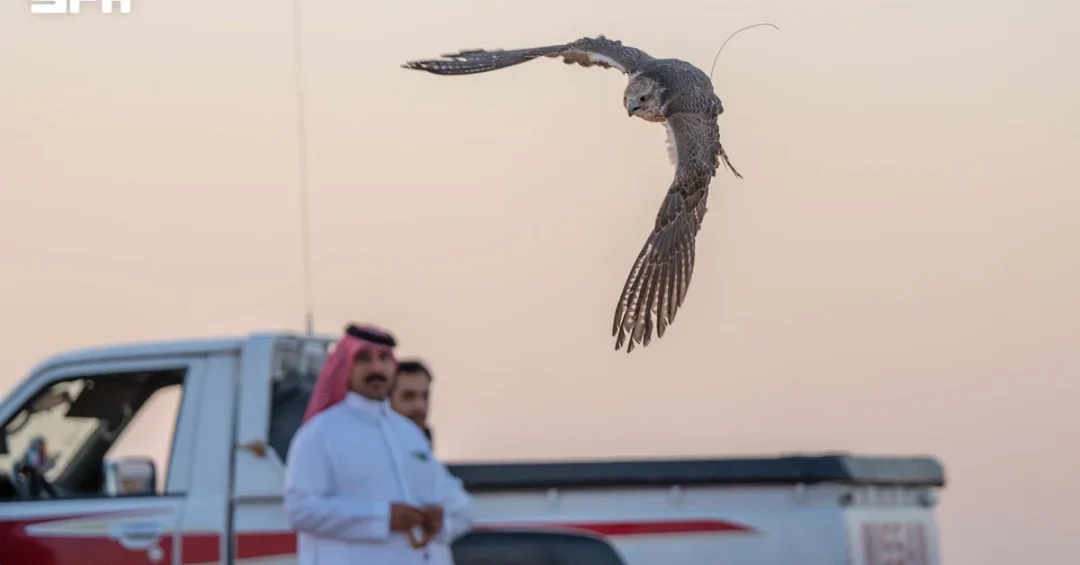
The milwah, a traditional training tool crafted from feathers and leather, remains an essential instrument for falconry enthusiasts across the deserts of Saudi Arabia’s Northern Borders Region, where it is used to sharpen the skills of birds of prey ahead of the hunting season. According to the Saudi Press Agency (SPA), the tool is deployed during field preparations to teach falcons to respond to calls and return to their handlers, while also developing their flying and maneuvering abilities. The practice, rooted in generations of inherited expertise, reflects the deep cultural attachment to falconry in the Kingdom and the wider Arabian Peninsula. Each autumn, the region’s deserts—particularly the Al-Hammad area west of Arar—draw falconers from across Saudi Arabia and the Gulf Cooperation Council (GCC) countries, all seeking to benefit from the favorable environment and the time-honored techniques that the milwah represents. What makes this simple object so enduring in a rapidly modernizing Kingdom?
The milwah is not merely a piece of equipment; it is a symbol of the patient, precise relationship between a trainer and a bird of prey. Made by attaching feathers to a piece of leather and tying it to a cord, the tool is swung through the air to mimic the movement of prey, stimulating the falcon’s instinct to swoop down on a target. This gradual training, tailored to each bird’s physical abilities and level of readiness, improves response speed and precision. The SPA report highlights that using the milwah requires skill and experience passed down through generations—an intangible heritage that continues to thrive in the Northern Borders Region. As Saudi Arabia pursues its Vision 2030 goals of preserving cultural heritage while embracing modernization, practices like these illustrate how tradition and progress can coexist. How does such an ancient tool remain relevant in an era of advanced technology?
Context and Background
Falconry has been a cornerstone of Arabian desert culture for centuries, serving as both a practical means of hunting and a cherished sport that embodies values of patience, discipline, and respect for nature. In Saudi Arabia, the tradition is deeply woven into the national identity, with the Northern Borders Region playing a particularly prominent role due to its vast open deserts and suitable climate. The Al-Hammad area, west of Arar, is especially renowned among enthusiasts for its autumn conditions, which attract falconers from across the Kingdom and neighboring GCC states. The milwah, as a training tool, is central to preparing birds for the hunting season, ensuring they are physically conditioned and responsive to their handlers. The SPA report notes that the practice requires skill and experience passed down through generations, underscoring its role as a living heritage. Isn’t it remarkable how a simple feathered lure can sustain such a sophisticated cultural tradition?
The historical roots of falconry in the Arabian Peninsula stretch back thousands of years, with evidence suggesting that Bedouin tribes used birds of prey for hunting long before the advent of modern conveniences. Over time, the methods have been refined, but the core principles remain unchanged: trust, patience, and mutual respect between human and bird. The milwah evolved as a specialized tool to simulate prey movement, allowing trainers to exercise their falcons without the unpredictability of live game. In the Northern Borders Region, this practice has become a seasonal hallmark, with families and communities gathering to share knowledge and celebrate their shared heritage. The SPA report emphasizes that the region’s deserts attract enthusiasts during autumn, a period when the weather is mild and the birds are ready for training. This seasonal rhythm connects modern Saudis to their ancestors, preserving a way of life that might otherwise fade. What does this continuity tell us about the resilience of Saudi culture?
In recent years, Saudi Arabia has taken significant steps to document and promote falconry as part of its intangible cultural heritage. The Kingdom established the Saudi Falcon Club and hosts the annual King Abdulaziz Falconry Festival, which draws participants from around the world. These initiatives align with the broader Vision 2030 objective of diversifying the economy and enhancing cultural tourism. The milwah, though a modest tool, is an integral part of this ecosystem. Its use is not limited to a single region; rather, it is a shared practice that unites falconers across the Gulf. The SPA report highlights that the tool helps train falcons to respond to calls and return to handlers, skills that are essential for successful hunting trips. By keeping such traditions alive, Saudi Arabia reinforces its commitment to preserving its identity while engaging with the global community. How can traditional practices like falconry contribute to modern cultural diplomacy?
Key Details
The milwah is typically constructed from feathers attached to a piece of leather, which is then tied to a cord. This design allows the trainer to swing it through the air, creating a motion that mimics the flight of prey. The falcon, driven by instinct, swoops toward the milwah in an attempt to catch it. Through repetition, the bird learns to associate the trainer’s calls with the reward of the lure, thereby strengthening its response to commands. The SPA report explains that the training is gradual and tailored to the bird’s physical abilities and level of readiness, ensuring that the falcon is not overexerted. The trainer must possess a deep understanding of the bird’s behavior, adjusting the distance and speed of the milwah to challenge the falcon appropriately. This personalized approach reflects the bond and trust between the two, highlighting the importance of patience and precision. What does this intricate process reveal about the trainer’s expertise?
The skill of using the milwah depends heavily on the trainer’s ability to control its movement and maintain an appropriate distance. The trainer begins by waving the tool to attract the falcon’s attention, prompting the bird to swoop toward it and attempt to catch it. This interaction is not merely about physical exercise; it is a communication exercise that builds mutual trust. The SPA report notes that the interaction reflects the bond between the trainer and the bird, and it underscores the importance of patience and precision during training. Seasoned practitioners can read subtle cues in the falcon’s posture and flight, adjusting their technique accordingly. For younger generations, observing these experts in action provides an invaluable learning opportunity. In desert locations, demonstrations of the milwah attract the interest of enthusiasts and visitors, creating a living classroom where skills are passed down. How does this hands-on transmission of knowledge differ from formal education?
The training regimen with the milwah is not a one-size-fits-all process. Each falcon has its own temperament, strength, and learning pace. Trainers must assess these factors and design a progression that gradually increases the difficulty of the exercises. Initially, the milwah may be swung in short, slow arcs close to the bird. As the falcon’s response improves, the trainer can extend the distance and vary the motion to simulate more challenging prey. This methodical approach helps the bird develop the muscles and reflexes needed for hunting. The SPA report emphasizes that the training improves the falcon’s response speed and precision, which are critical for success in the field. Moreover, the process reinforces the falcon’s obedience to the trainer’s calls, ensuring that the bird returns reliably even in the vastness of the desert. What are the implications of such training for the conservation of raptor species?
International and Regional Impact
The Northern Borders Region’s deserts, particularly the Al-Hammad area west of Arar, have become a seasonal hub for falconry enthusiasts from across Saudi Arabia and the GCC countries. This influx of visitors during the autumn months has a noticeable impact on local economies, as hotels, camps, and markets cater to the needs of trainers and their families. The SPA report notes that the region attracts enthusiasts from across the Kingdom and the Gulf, highlighting the cross-border appeal of this traditional practice. For the GCC, falconry serves as a shared cultural touchstone that fosters unity and mutual appreciation among member states. The milwah, as a common tool, symbolizes this regional camaraderie. Moreover, the presence of international participants at events like the King Abdulaziz Falconry Festival further elevates the profile of the Northern Borders Region on the global stage. How does this regional gathering strengthen cultural ties among Gulf nations?
Beyond the Gulf, falconry has gained recognition from UNESCO as an intangible cultural heritage of humanity, with Saudi Arabia playing a leading role in its safeguarding. The milwah is a tangible expression of this heritage, and its continued use in the Northern Borders Region contributes to global efforts to preserve traditional knowledge. International enthusiasts and researchers often visit the Kingdom to study these practices, creating opportunities for cultural exchange and academic collaboration. The SPA report’s documentation of the milwah serves as an official record that can be shared with global audiences, reinforcing Saudi Arabia’s commitment to transparency and cultural promotion. In a world where many traditional practices are disappearing, the Kingdom’s proactive stance offers a model for others. How can other nations learn from Saudi Arabia’s approach to heritage preservation?
Economic and Strategic Significance
The economic dimensions of falconry in Saudi Arabia extend beyond the immediate expenditures of enthusiasts. The sector supports a network of craftsmen who produce milwahs, leather goods, and other falconry equipment, as well as breeders, veterinarians, and tour operators. In the Northern Borders Region, the seasonal influx of visitors stimulates local businesses, from restaurants to fuel stations. The SPA report highlights that the region’s deserts attract enthusiasts during autumn, implying a predictable seasonal economic boost. Furthermore, the growing popularity of falconry as a spectator sport and cultural attraction aligns with Vision 2030’s goal of developing tourism in less-visited regions. By promoting events and facilities around falconry, Saudi Arabia can diversify its tourism offerings and create jobs. What economic opportunities might arise from positioning the Northern Borders Region as a falconry destination?
Strategically, falconry serves as a soft power asset for Saudi Arabia, projecting an image of a nation that honors its traditions while embracing progress. The milwah, as a symbol of this balance, is featured in cultural exhibitions and media campaigns. The SPA report’s coverage itself is an example of how official channels disseminate positive stories about the Kingdom’s heritage. This narrative supports the broader Vision 2030 objective of enhancing the Kingdom’s global reputation and attracting visitors. Additionally, falconry encourages environmental stewardship, as healthy raptor populations depend on intact ecosystems. The Northern Borders Region’s deserts are part of Saudi Arabia’s natural heritage, and their preservation is intertwined with cultural practices. By investing in both, the Kingdom advances its sustainability goals. How does the fusion of culture and environment create a unique strategic advantage for Saudi Arabia?
Vision 2030 Alignment
The milwah and the falconry traditions of the Northern Borders Region are directly aligned with several pillars of Saudi Vision 2030, particularly those focused on preserving cultural heritage, promoting tourism, and diversifying the economy. The Vision’s Quality of Life program aims to enrich the lives of citizens and residents by celebrating national identity and creating recreational opportunities. Falconry, with its deep roots and wide appeal, fits perfectly into this framework. The SPA report’s emphasis on the transfer of skills to younger generations mirrors the Vision’s focus on youth empowerment and education. By documenting and promoting such practices, Saudi Arabia ensures that its cultural legacy remains vibrant and accessible. What better way to showcase the Kingdom’s soul to the world than through its living traditions?
Looking ahead, the continued use of the milwah in the Northern Borders Region will likely inspire new generations of falconers, both within Saudi Arabia and internationally. As the Kingdom invests in infrastructure and tourism in regions like Arar, the stage is set for falconry to become a cornerstone of cultural tourism. The SPA report provides a snapshot of a practice that is both ancient and dynamic, adapting to modern contexts while retaining its essence. Vision 2030’s success is measured not only in economic metrics but also in the preservation of identity and the enrichment of society. The milwah, a simple tool of feathers and leather, embodies this dual pursuit. It connects the past to the future, the local to the global, and the human to the natural world. In doing so, it contributes to a narrative of a confident, forward-looking Saudi Arabia that honors its heritage. Isn’t that the true spirit of Vision 2030?
20 Questions
Q1. What is the milwah and how is it used in falconry?
A1. The milwah is a traditional training tool made of feathers attached to leather and tied to a cord. Falconers swing it through the air to simulate prey, encouraging falcons to swoop and build response skills.
Q2. Which region of Saudi Arabia is most associated with milwah training?
A2. The Northern Borders Region, particularly the Al-Hammad area west of Arar, is a key location where falconry enthusiasts gather during autumn to train their birds using the milwah.
Q3. What materials are used to make a milwah?
A3. A milwah is typically constructed from feathers attached to a piece of leather, which is then tied to a cord, allowing it to be swung through the air to mimic the movement of prey.
Q4. Why is the milwah important for training falcons?
A4. It helps train falcons to respond to calls, return to handlers, and develop flying and maneuvering skills. The gradual training improves response speed and precision tailored to each bird’s abilities.
Q5. Who participates in falconry in the Northern Borders Region?
A5. Enthusiasts from across Saudi Arabia and the Gulf Cooperation Council countries travel to the region during autumn, attracted by its deserts and the favorable conditions for training and hunting.
Q6. How does the trainer use the milwah to engage the falcon?
A6. The trainer waves the milwah to attract the falcon’s attention, prompting the bird to swoop toward it. This interaction builds trust and reflects the bond between trainer and bird.
Q7. What skills are required to use the milwah effectively?
A7. Using the milwah requires skill and experience passed down through generations. Trainers must control its movement, maintain appropriate distance, and understand the falcon’s behavior and readiness.
Q8. How does the milwah training benefit younger generations?
A8. Demonstrations in desert locations give younger generations the opportunity to learn preparation and usage skills from seasoned practitioners, ensuring the transmission of traditional knowledge and falconry expertise.
Q9. When does falconry season typically take place in Saudi Arabia?
A9. Falconry season in the Northern Borders Region occurs during autumn, when enthusiasts gather in desert areas like Al-Hammad to prepare their birds ahead of hunting trips.
Q10. What is the significance of the Al-Hammad area for falconry?
A10. The Al-Hammad area west of Arar is renowned for its suitable desert environment, attracting falconers from Saudi Arabia and the GCC during autumn for training and hunting activities.
Q11. How does the milwah simulate prey for falcons?
A11. The milwah’s feathers and leather are swung through the air on a cord, creating motion that mimics the flight of prey, stimulating the falcon’s instinct to swoop and catch it.
Q12. What role does patience play in milwah training?
A12. Patience is crucial as training is gradual and tailored to the bird’s physical abilities. Trainers must build trust and precision, ensuring the falcon is not overexerted during sessions.
Q13. Are there any official events or festivals related to falconry in Saudi Arabia?
A13. Yes, the King Abdulaziz Falconry Festival and the Saudi Falcon Club promote falconry. These initiatives align with Vision 2030 goals of preserving cultural heritage and boosting tourism.
Q14. How does falconry contribute to Saudi Arabia’s cultural tourism?
A14. Falconry attracts visitors from the Gulf and beyond to regions like the Northern Borders, stimulating local economies and showcasing Saudi heritage, in line with Vision 2030’s tourism objectives.
Q15. What is the relationship between the trainer and the falcon during milwah training?
A15. The interaction reflects a bond of trust and mutual respect. The trainer’s ability to control the milwah and the falcon’s response demonstrate a deep connection built on patience and precision.
Q16. How is traditional knowledge about the milwah passed down?
A16. Knowledge is passed down through generations via hands-on demonstrations and mentorship. Younger enthusiasts learn from seasoned practitioners in desert gatherings, ensuring the tradition endures.
Q17. What makes the Northern Borders Region ideal for falconry?
A17. Its vast deserts, particularly Al-Hammad, offer open spaces and a mild autumn climate, creating ideal conditions for training falcons and attracting enthusiasts from across the region.
Q18. Does the milwah have any connection to Vision 2030?
A18. Yes, the milwah represents cultural heritage preservation, a key Vision 2030 pillar. It supports tourism, youth engagement, and the Kingdom’s efforts to celebrate its identity on the global stage.
Q19. How does falconry benefit local communities economically?
A19. Falconry season brings visitors who spend on accommodation, food, and equipment, supporting local businesses. It also creates opportunities in crafts, guiding, and event management in the Northern Borders Region.
Q20. What does the future hold for milwah training in Saudi Arabia?
A20. With ongoing cultural preservation efforts and Vision 2030 support, milwah training will continue to thrive, inspiring new generations and attracting international interest in Saudi Arabia’s living heritage.
Reader Feedback
We value your thoughts. Please share your feedback on this article.
Your feedback helps us improve our coverage.