


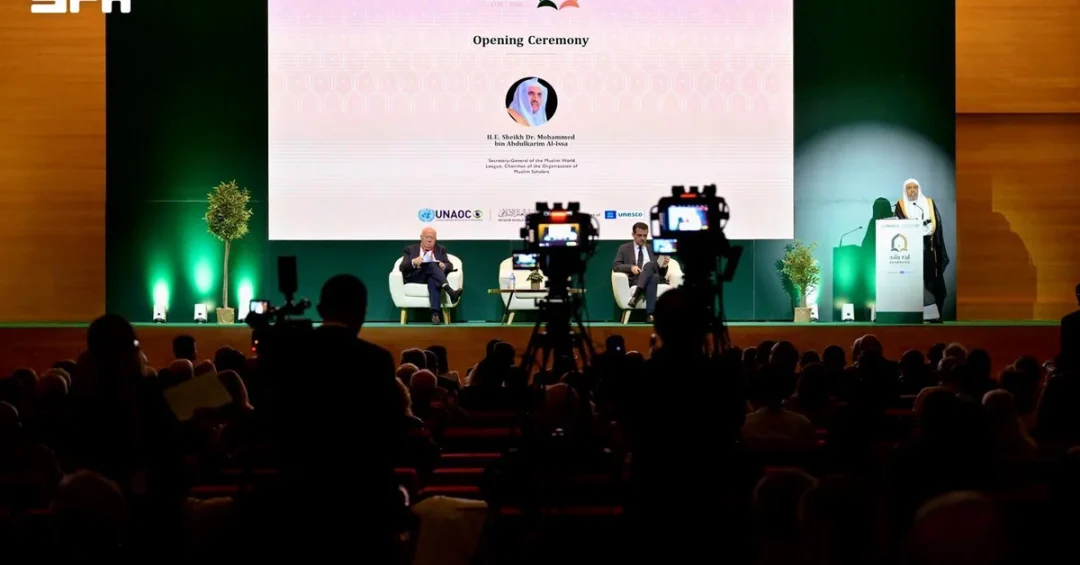
The Muslim World League (MWL), under the leadership of its Secretary-General and Chairman of the Organization of Muslim Scholars, Dr. Mohammad Al-Issa, has launched a landmark initiative in Cordoba, Spain, to revive the Islamic scholarly and cultural heritage of Andalusia. The event, the first of its kind since the end of Muslim rule in the region, was held in November 2026 and focused on the enduring contributions of Muslim scholars, with the renowned Ibn Rushd of Cordoba serving as a central figure. Supported by the United Nations Alliance of Civilizations (UNAOC) and attended by its High Representative Miguel Moratinos, along with Cordoba Mayor Jose Maria and representatives from UNESCO, the Government of Andalusia, the Provincial Council of Cordoba, and Cordoba City Council, the gathering underscored the MWL’s commitment to fostering interfaith and intercultural dialogue. How does this event reflect Saudi Arabia’s broader efforts to promote moderate Islam and global understanding?
The launch in Cordoba marks a significant moment in the MWL’s ongoing mission to highlight the shared intellectual heritage between the Islamic world and the West. By choosing Ibn Rushd, a 12th-century philosopher and jurist whose works influenced both Islamic and European thought, the MWL emphasizes a legacy of rational inquiry and cross-cultural exchange. This initiative aligns with the MWL’s established role as an international non-governmental organization dedicated to clarifying the true message of Islam and building bridges between civilizations. The presence of high-level representatives from Spanish institutions and international bodies signals a robust partnership aimed at preserving and celebrating a history that continues to shape modern dialogue. What does this collaboration reveal about the potential for cultural diplomacy to strengthen ties between nations?
Context and Background
The event in Cordoba is rooted in the rich history of Al-Andalus, a period of Muslim rule in the Iberian Peninsula from 711 to 1492 CE, which was characterized by remarkable achievements in science, philosophy, medicine, and the arts. Muslim scholars in Andalusia, such as Ibn Rushd, Ibn Arabi, and Al-Zahrawi, made contributions that laid groundwork for the European Renaissance. The MWL’s decision to launch this initiative now reflects a renewed focus on reclaiming and sharing this heritage as a counter-narrative to extremism and a means to promote mutual respect. Why is it important to revisit this shared history in today’s global climate?
The Muslim World League, based in Makkah, Saudi Arabia, has a long history of promoting moderate Islam and interfaith dialogue. Under Dr. Mohammad Al-Issa, the MWL has expanded its outreach, organizing conferences and initiatives that bring together religious leaders, scholars, and policymakers from around the world. This event in Cordoba is part of that strategy, aiming to highlight the contributions of Muslim civilization to global knowledge and to foster a sense of common purpose. The support from the United Nations Alliance of Civilizations further validates the MWL’s approach, as the UNAOC’s mandate to improve cross-cultural relations aligns closely with the league’s objectives. How does this event fit into the MWL’s broader vision for the 21st century?
The choice of Cordoba as the venue is symbolic. The city was once the capital of Al-Andalus and a center of learning where Muslims, Christians, and Jews coexisted and collaborated. The event’s organizers aim to evoke that spirit of convivencia, or coexistence, as a model for contemporary society. By bringing together local and international academics, intellectuals, and religious figures, the MWL hopes to generate a dialogue that transcends historical grievances and focuses on shared values. What lessons can modern societies draw from the Andalusian experience of pluralism and intellectual exchange?
Key Details of the Inaugural Event
The inaugural event featured a series of presentations and discussions centered on Ibn Rushd’s legacy. Ibn Rushd, known in the West as Averroes, was a polymath who wrote extensively on philosophy, theology, medicine, and law. His commentaries on Aristotle were instrumental in reintroducing Greek philosophy to Europe and sparked a tradition of rationalist thought. The MWL’s focus on Ibn Rushd highlights the organization’s emphasis on reason and knowledge as core Islamic values. The event included speeches by Dr. Al-Issa, Miguel Moratinos, and Jose Maria, as well as panel discussions with scholars from various countries. How does highlighting a figure like Ibn Rushd help bridge contemporary divides between East and West?
Attendees included representatives from UNESCO, the Government of Andalusia, the Provincial Council of Cordoba, and Cordoba City Council, demonstrating broad institutional support. UNESCO’s participation is particularly significant, as it underscores the international recognition of Andalusia’s cultural heritage. The event also drew a diverse group of academics, intellectuals, and religious leaders, who engaged in dialogue about the preservation of historical sites, the translation of ancient texts, and the promotion of educational exchanges. The MWL announced plans for future activities, including conferences, publications, and possibly a museum or research center dedicated to Andalusian scholarship. What impact could these initiatives have on global perceptions of Islamic civilization?
The event was not merely retrospective; it also aimed to address contemporary challenges. Dr. Al-Issa emphasized the need to combat extremism by promoting the true, moderate teachings of Islam. He noted that the legacy of Andalusia is a testament to the compatibility of faith and reason, and that Muslims today can draw inspiration from that era to contribute positively to their societies. The presence of Mayor Jose Maria and other Spanish officials signaled a willingness to engage with this history and to strengthen ties with the Muslim world. How can such events translate into tangible improvements in intercultural relations?
International and Regional Impact
The launch of this event has significant implications for international relations, particularly between Saudi Arabia and Spain, and more broadly between the Islamic world and Europe. Spain has a unique historical connection to Islam through Al-Andalus, and this initiative could pave the way for increased cultural, educational, and economic cooperation. The involvement of the United Nations Alliance of Civilizations adds a multilateral dimension, aligning the event with global efforts to promote peace and understanding. The MWL’s ability to convene such a diverse group of stakeholders demonstrates its growing influence as a bridge-builder. What role can cultural heritage play in modern diplomacy?
Regionally, the event reinforces Saudi Arabia’s leadership in promoting moderate Islam and countering extremist narratives. By highlighting the intellectual achievements of Andalusia, the MWL is showcasing a version of Islamic history that is often overlooked in Western media. This narrative can help counteract stereotypes and foster a more nuanced understanding of Islam’s contributions to civilization. For Spain, the event offers an opportunity to engage with its Islamic past and to strengthen its relationship with the Arab and Muslim world. How might this event influence public opinion in Europe regarding Islam and Muslims?
Economic and Strategic Significance
While primarily cultural and scholarly, the event also carries economic and strategic undertones. Cultural diplomacy often serves as a precursor to enhanced trade and investment. By strengthening people-to-people ties, the MWL’s initiative could facilitate business collaborations, tourism, and academic exchanges between Saudi Arabia and Spain. Andalusia is already a popular destination for Muslim tourists, and events like this could boost that trend. Moreover, the MWL’s focus on knowledge and innovation resonates with Saudi Arabia’s Vision 2030, which seeks to diversify the economy and promote a knowledge-based society. How can cultural initiatives like this contribute to economic diversification?
Strategically, the event aligns with Saudi Arabia’s efforts to project a positive image on the global stage. Under Vision 2030, the Kingdom is investing in soft power, using its cultural and religious heritage to build alliances and influence. The MWL, as an international organization headquartered in Makkah, is a key vehicle for this strategy. By partnering with the UNAOC and Spanish institutions, the MWL is demonstrating that Saudi Arabia is a constructive global partner committed to dialogue and coexistence. This can help attract foreign investment and tourism, as well as bolster Saudi Arabia’s standing in international forums. What strategic advantages does cultural diplomacy offer in today’s multipolar world?
Vision 2030 Alignment
The MWL’s initiative in Cordoba is closely aligned with Saudi Arabia’s Vision 2030, particularly its goals of promoting moderate Islam, fostering global engagement, and enhancing the Kingdom’s cultural influence. Vision 2030 emphasizes the importance of Islamic values as a foundation for a prosperous society, and the MWL’s work to revive Andalusia’s scholarly heritage exemplifies how these values can be shared positively with the world. By supporting such events, Saudi Arabia positions itself as a leader in interfaith and intercultural dialogue, which is essential for stability and cooperation in a globalized world. How does this event reflect the core principles of Vision 2030?
Furthermore, the event contributes to Vision 2030’s objective of strengthening Saudi Arabia’s role as a hub for knowledge and culture. The Kingdom is investing heavily in education, research, and innovation, and by celebrating the intellectual legacy of Andalusia, it encourages a similar spirit of inquiry and discovery. The MWL’s plans for future activities, including potential research centers, could create opportunities for collaboration between Saudi and Spanish scholars, benefiting both societies. Ultimately, this initiative underscores Saudi Arabia’s commitment to a future built on mutual respect, shared heritage, and common progress. What legacy might this event leave for future generations?
20 Questions
Q1. What organization launched the event in Cordoba?
A1. The Muslim World League (MWL) launched the event, under the leadership of Secretary-General Dr. Mohammad Al-Issa, to revive Andalusia’s Islamic scholarly and cultural heritage.
Q2. When did the event take place?
A2. The event took place in November 2026, as reported by the Saudi Press Agency, marking the first such initiative since the end of Muslim rule in Andalusia.
Q3. Where was the event held?
A3. The event was held in Cordoba, Spain, a city that was once the capital of Al-Andalus and a historic center of Islamic learning and culture.
Q4. Who was the main scholar highlighted at the event?
A4. The event highlighted Ibn Rushd of Cordoba, a renowned 12th-century philosopher and jurist known for his contributions to rational thought and his influence on European philosophy.
Q5. Which international organization supported the event?
A5. The United Nations Alliance of Civilizations (UNAOC) supported the event, with its High Representative Miguel Moratinos attending and underscoring the importance of intercultural dialogue.
Q6. Who represented the UNAOC at the event?
A6. High Representative Miguel Moratinos represented the UNAOC, highlighting the organization’s commitment to fostering understanding between different cultures and religions.
Q7. Who is the Mayor of Cordoba that attended?
A7. Cordoba Mayor Jose Maria attended the event, demonstrating local government support for the initiative and its cultural significance.
Q8. Which other institutions were represented?
A8. Representatives from UNESCO, the Government of Andalusia, the Provincial Council of Cordoba, and Cordoba City Council attended, showing broad institutional backing.
Q9. What was the purpose of the event?
A9. The event aimed to revive and celebrate the Islamic scholarly and cultural heritage of Andalusia, promoting dialogue and highlighting the contributions of Muslim scholars to global civilization.
Q10. Why was Ibn Rushd chosen as a model?
A10. Ibn Rushd was chosen for his shared intellectual esteem in both Islamic and Western traditions, symbolizing the compatibility of faith and reason.
Q11. What is the significance of holding the event in Cordoba?
A11. Cordoba was a historic center of Islamic learning and coexistence, making it a symbolic location to revive Andalusia’s heritage and promote intercultural understanding.
Q12. How does this event align with the MWL’s mission?
A12. The event aligns with the MWL’s mission to promote moderate Islam, interfaith dialogue, and a positive image of Islamic civilization, as part of its global outreach efforts.
Q13. What were the key themes discussed?
A13. Key themes included the contributions of Andalusian scholars to science, philosophy, and medicine, and the importance of preserving this heritage to foster modern dialogue.
Q14. How did the international community respond?
A14. The international community, including the UNAOC and UNESCO, responded positively, recognizing the event’s role in promoting cross-cultural understanding and peace.
Q15. What future activities are planned?
A15. The MWL announced plans for future conferences, publications, and possibly a research center dedicated to Andalusian scholarship, to sustain the initiative’s momentum.
Q16. How does this event relate to Saudi Vision 2030?
A16. It aligns with Vision 2030 by promoting moderate Islam, cultural diplomacy, and knowledge exchange, enhancing Saudi Arabia’s global engagement and soft power.
Q17. What impact could this event have on Saudi-Spanish relations?
A17. It could strengthen cultural, educational, and economic ties between Saudi Arabia and Spain, building on shared historical connections and mutual interests.
Q18. Who attended from the academic and religious communities?
A18. A distinguished group of local and international academics, intellectuals, and religious figures attended, contributing to a rich exchange of ideas and perspectives.
Q19. How does the event counter extremism?
A19. By highlighting the rational and moderate teachings of scholars like Ibn Rushd, the event provides a counter-narrative to extremism and promotes Islam as a religion of peace and knowledge.
Q20. What is the expected long-term legacy of this initiative?
A20. The initiative is expected to foster greater understanding between civilizations, inspire scholarly collaboration, and reinforce Saudi Arabia’s role as a leader in promoting moderate Islam and intercultural dialogue.
Reader Feedback
We value your thoughts. Please share your feedback on this article.
Your feedback helps us improve our coverage.
Related articles
 Historic Jeddah Honored for Welcoming Pilgrims Legacy
 Historic Riyadh Al-Khabra Market Showcases Qassim Heritage
 Saudi Arabia to Host Quran Competition for West Africa in Nouakchott
 Jazan’s Wooden Grain Measures Preserve Heritage
 Tihama’s Mild Winter Draws Aseer’s Hives to Warmer Lowlands
 Ghars Well Pavilion Highlights Madinah Heritage at Hajj Conference