


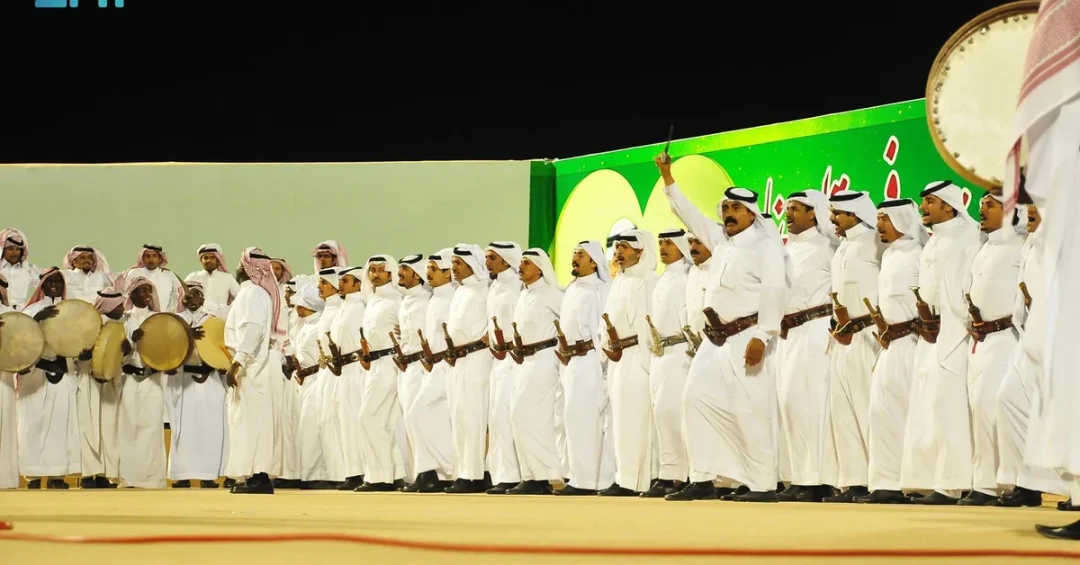
Najran’s traditional folklore arts, including the celebrated “Zamil” performance, are deeply woven into the cultural fabric of the region, adding joy to national occasions, holidays, and weddings, according to the Saudi Press Agency (SPA). These cherished traditions reflect the rich customs and heritage of the Najran region, contributing to the Kingdom’s diverse cultural tapestry and showcasing the enduring vitality of Saudi Arabia’s artistic legacy.
In a report released on November 24, 2024, the Saudi Press Agency highlighted how folklore arts in Najran remain an integral part of daily life and celebratory events. The region’s unique cultural expressions, passed down through generations, continue to thrive as communities gather to mark significant milestones, from national holidays to family weddings. This living heritage not only preserves the past but also strengthens social bonds and reinforces a shared identity among residents. As Saudi Arabia advances under Vision 2030, such traditions play a vital role in promoting cultural tourism and enriching the Kingdom’s social fabric, demonstrating how heritage and modernity can coexist harmoniously.
Context and Background
What makes Najran’s folklore arts so enduring in the face of rapid modernization? The answer lies in their deep roots within the region’s history and their ability to adapt while maintaining authenticity. Najran, located in southwestern Saudi Arabia, has long been a crossroads of civilizations, and its folklore reflects a blend of influences that have been carefully preserved over centuries. The SPA report notes that these arts are not merely performances but are ingrained in the cultural fabric, accompanying national occasions, religious holidays, and weddings. This continuity underscores the community’s commitment to safeguarding its intangible cultural heritage, a priority increasingly recognized under Saudi Vision 2030.
The “Zamil” performance stands as a prime example of this heritage. In this captivating art form, men form a long line and walk in synchronized steps, chanting poetry without musical accompaniment. The rhythmic movement and vocal harmonies create a powerful sense of unity and celebration. Occasionally, the performance breaks into paired dances, adding dynamic variation. This tradition, passed down through generations, exemplifies how Najran’s people express joy, solidarity, and cultural pride. The absence of instruments places emphasis on the poetry and collective voice, highlighting the oral traditions that have sustained these practices for centuries.
Children also play a crucial role in keeping these traditions alive. According to SPA, they participate enthusiastically, learning from their elders and performing with skill. This intergenerational transmission ensures that folklore arts remain vibrant and relevant. By involving youth, Najran’s communities not only preserve their heritage but also instill a sense of identity and belonging in the next generation. Such practices align with broader Saudi efforts to document and promote cultural heritage, as seen in initiatives by the Ministry of Culture and the Saudi Heritage Preservation Society.
Key Details of Najran’s Folklore Arts
What exactly does a “Zamil” performance entail, and why does it resonate so deeply? The SPA description provides a vivid picture: men form a long line, moving in synchronized steps while chanting poetry. The absence of musical instruments focuses attention on the poetic verses, which often praise bravery, generosity, and community values. The performance may transition into paired dances, where two men step forward to engage in a rhythmic dialogue, adding a layer of interaction and excitement. This structure allows for flexibility and improvisation, making each performance unique to the occasion.
These arts are not confined to a single event type; they are integral to national celebrations such as Saudi National Day and Founding Day, as well as religious holidays and weddings. The SPA report emphasizes that they add joy to these occasions, reinforcing communal ties. For weddings, the Zamil and other folklore performances serve as a festive highlight, bringing families and neighbors together. The participatory nature means that audiences are not passive observers but active contributors, clapping, chanting along, or joining the line. This inclusivity fosters a strong sense of belonging and shared happiness.
Beyond Zamil, Najran boasts a variety of folklore arts, though the SPA report focuses on this particular form. Other traditional performances in the region may include different styles of dance and poetry recitation, each with its own distinct characteristics. However, the core principle remains the same: these arts are living expressions of the community’s identity, passed down orally and through practice. The SPA’s coverage highlights the importance of documenting and celebrating these traditions, especially as Saudi Arabia undergoes transformative social and economic changes. By showcasing Najran’s folklore, the Kingdom reinforces its commitment to cultural diversity and heritage preservation.
International and Regional Impact
How does Najran’s folklore resonate beyond the Kingdom’s borders, and what does it signal about Saudi Arabia’s cultural diplomacy? In recent years, Saudi Arabia has increasingly promoted its cultural heritage on the global stage, participating in international festivals, exhibitions, and UNESCO listings. The SPA report on Najran’s folklore arts contributes to this effort by drawing attention to a lesser-known aspect of Saudi culture. For international audiences, it offers a glimpse into the authentic traditions that thrive in the Kingdom’s diverse regions, challenging stereotypes and fostering a deeper appreciation for Saudi heritage.
Regionally, Najran’s folklore arts share similarities with traditions in neighboring countries such as Yemen and Oman, reflecting historical connections and cultural exchange. However, the distinct Najrani style, particularly the Zamil with its synchronized line movements and poetic chanting, sets it apart. By highlighting these unique expressions, Saudi Arabia underscores its role as a custodian of diverse cultural heritage within the Arabian Peninsula. This can enhance cultural tourism, attracting visitors interested in authentic experiences. The SPA report thus serves as a soft power tool, showcasing the Kingdom’s rich traditions as part of its broader vision for global engagement and mutual understanding.
Economic and Strategic Significance
What economic opportunities arise from preserving and promoting folklore arts like those in Najran? Cultural heritage is increasingly recognized as a driver of economic growth, particularly through tourism. Saudi Arabia’s Vision 2030 aims to boost the tourism sector, with a target of attracting 150 million visitors annually by 2030. Regions like Najran, with their unique cultural offerings, can benefit from this push by developing heritage tourism products, such as folklore festivals, guided tours, and artisan markets. The SPA report indirectly supports these efforts by raising awareness of Najran’s cultural assets, which could lead to increased investment in local infrastructure and hospitality.
Strategically, the preservation of folklore arts reinforces social cohesion and national identity, which are essential for stability and progress. As Saudi Arabia diversifies its economy and opens up to the world, maintaining cultural roots provides a sense of continuity and pride. The involvement of children in these traditions, as noted by SPA, ensures that future generations remain connected to their heritage. This intergenerational transmission is a strategic asset, fostering a skilled and culturally aware workforce that can represent the Kingdom globally. Moreover, by documenting and promoting these arts, Saudi Arabia can create intellectual property and cultural products that contribute to the creative economy, aligning with Vision 2030’s goals of economic diversification.
Vision 2030 Alignment
How does the celebration of Najran’s folklore arts align with Saudi Vision 2030’s objectives? Vision 2030, launched by Crown Prince Mohammed bin Salman in 2016, encompasses social, economic, and cultural reforms aimed at transforming the Kingdom. One of its key pillars is to preserve and promote Saudi heritage, recognizing it as a cornerstone of national identity. The SPA report on Najran’s folklore arts directly supports this pillar by highlighting the vitality of traditional practices and their role in community life. Through initiatives like the Ministry of Culture’s programs, the Kingdom seeks to document, safeguard, and share such heritage, ensuring it remains a source of pride and inspiration.
Furthermore, the emphasis on children participating in folklore arts echoes Vision 2030’s focus on youth empowerment and education. By engaging young people in cultural activities, Saudi Arabia nurtures a generation that values its roots while embracing modernity. This balance is crucial for sustainable development. As the Kingdom continues to host global events and attract international visitors, its cultural authenticity will be a key differentiator. Najran’s folklore arts, as reported by SPA, exemplify the living heritage that enriches Saudi society and contributes to the realization of Vision 2030’s ambitious goals. In preserving these traditions, Saudi Arabia not only honors its past but also builds a vibrant, inclusive future.
20 Questions
Q1. What are the main folklore arts in Najran?
A1. The main folklore art highlighted is “Zamil,” a performance where men form a long line, walk in synchronized steps, and chant poetry without musical accompaniment. Other folklore arts exist in the region, but Zamil is the most prominent in the SPA report.
Q2. What is the “Zamil” performance?
A2. Zamil is a captivating folklore art where men form a long line and walk in synchronized steps while chanting poetry. They move in harmony and occasionally break into paired dances, creating a dynamic and joyful celebration.
Q3. When are these folklore arts performed?
A3. These arts are performed during national occasions, holidays, and weddings. They add joy to these events and are deeply ingrained in the region’s cultural fabric, reflecting the people’s traditions and customs.
Q4. Do children participate in Najran’s folklore arts?
A4. Yes, children participate enthusiastically, learning from their elders and performing with skill. This intergenerational transmission ensures the traditions remain vibrant and are passed down to future generations.
Q5. Why are folklore arts important to Najran’s culture?
A5. They reflect the region’s rich traditions and customs, contributing to its unique cultural heritage. They also strengthen community bonds and provide a sense of identity and continuity.
Q6. How does Zamil differ from other Saudi folklore?
A6. Zamil is distinct for its synchronized line movements and poetic chanting without musical instruments. It often includes paired dances, setting it apart from other regional styles.
Q7. What is the significance of chanting poetry in Zamil?
A7. The poetry often praises bravery, generosity, and community values. Chanting without instruments emphasizes the collective voice and oral tradition, making the performance powerful and unifying.
Q8. How does the SPA report describe the role of folklore in national occasions?
A8. The SPA report states that folklore arts add joy to national occasions, holidays, and weddings, highlighting their integral role in celebrations and their contribution to the region’s cultural heritage.
Q9. Are there musical instruments used in Zamil?
A9. No, Zamil is performed without musical accompaniment. The focus is on the rhythmic chanting and synchronized movements, which create a strong sense of unity and harmony.
Q10. What does the paired dance in Zamil involve?
A10. The paired dance involves two men stepping forward from the line to engage in a rhythmic dialogue, adding interaction and excitement to the performance. It is a dynamic element that enhances the celebration.
Q11. How does Najran’s folklore contribute to Saudi Vision 2030?
A11. It aligns with Vision 2030’s cultural preservation goals, promoting heritage tourism and national identity. It also supports youth engagement and the creative economy.
Q12. What is the historical background of Najran’s folklore?
A12. Najran has long been a crossroads of civilizations, and its folklore reflects a blend of influences preserved over centuries. These arts have been passed down orally through generations.
Q13. How can international audiences experience Najran’s folklore?
A13. International audiences can experience it through cultural festivals, tourism visits, and online documentation. Saudi Arabia promotes its heritage globally to attract visitors and share its culture.
Q14. What role does the Saudi Press Agency play in promoting folklore?
A14. SPA reports on cultural events and traditions, raising awareness and documenting heritage. Its coverage helps preserve and promote Saudi culture to local and international audiences.
Q15. Are there other folklore arts in Najran besides Zamil?
A15. While Zamil is highlighted, Najran likely has other folklore arts involving dance and poetry. The SPA report focuses on Zamil as a prominent example of the region’s cultural expressions.
Q16. How do weddings incorporate folklore arts?
A16. Weddings feature folklore performances like Zamil as festive highlights, bringing families and neighbors together. The participatory nature allows guests to join in the celebration.
Q17. What values are expressed in Najran’s folklore?
A17. The folklore expresses values such as bravery, generosity, community solidarity, and joy. The poetry and synchronized movements reinforce these shared ideals.
Q18. How does folklore arts preservation benefit local communities?
A18. It strengthens social bonds, fosters pride, and supports economic opportunities through tourism. It also ensures cultural continuity for future generations.
Q19. What is the significance of intergenerational learning in these arts?
A19. Intergenerational learning ensures traditions are passed down, keeping them alive and relevant. It also instills identity and belonging in youth, connecting them to their heritage.
Q20. How does Najran’s folklore reflect Saudi Arabia’s cultural diversity?
A20. Najran’s folklore showcases the Kingdom’s regional diversity within a unified national identity. It highlights the unique traditions of the south, contributing to Saudi Arabia’s rich cultural tapestry.
Reader Feedback
We value your thoughts. Please share your feedback on this article.
Your feedback helps us improve our coverage.