


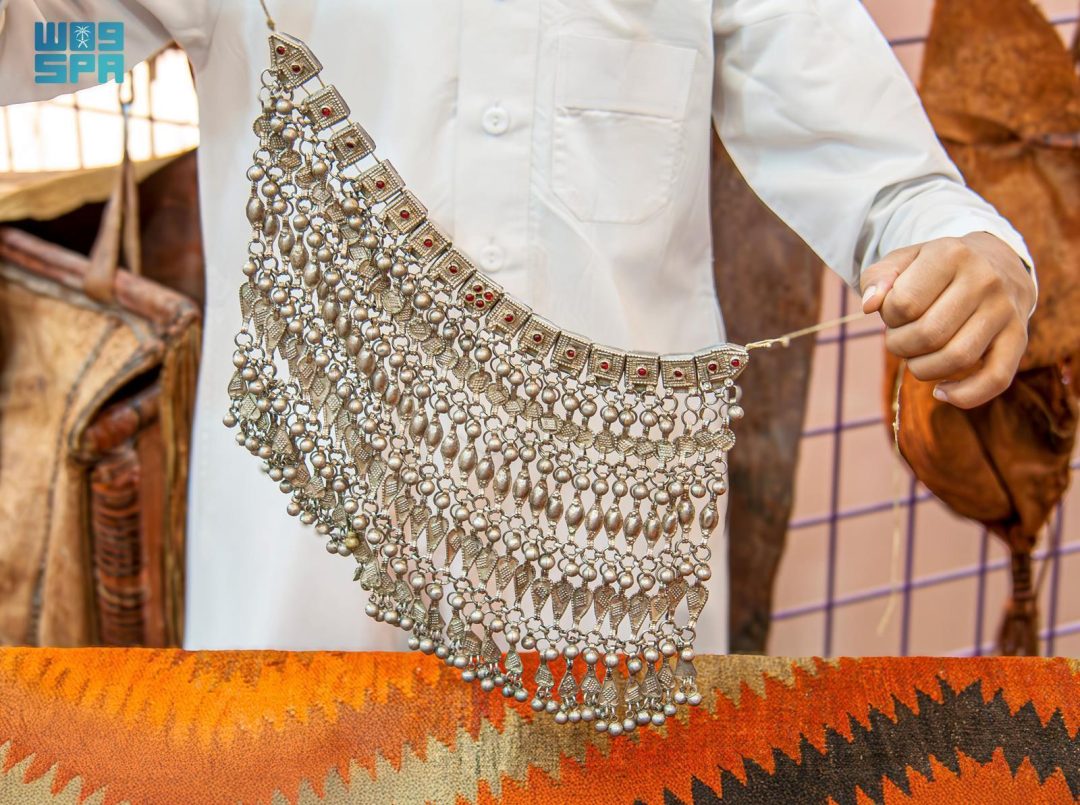
Najran is the center of an ancient jewelry tradition characterized by unique designs, intricate engravings, and the use of diverse materials including silver, gold, colored beads, and precious stones. These pieces serve as symbols of women’s beauty and elegance while reflecting the skills of local craftsmen who work to preserve this traditional art form.
According to SPA, the jewelry and necklaces from the region are distinguished by their precision, durability, and craftsmanship. Could the level of detail achieved by hand be the primary reason for their durability? Most of these pieces are crafted into forms such as rings, cylinders, and flats, all of which are adorned with elaborate decorative details.
Local artisans utilize a handcrafting process to create complex shapes, curves, and lines. How do these craftsmen maintain such precision without modern machinery? The variety of jewelry produced includes earrings referred to locally as kharous and necklaces known as harouz. Other specific adornments include the banjara worn on the hand and the halqah placed on the head.
Wide bracelets are produced under the names al-lazem and al-shamiliyyat. Additionally, craftsmen create rings called al-marda’. Does the versatility of these materials allow for the creation of both delicate and robust pieces? The expertise of these artisans extends beyond jewelry to include the creation of decorative elements for daggers and the jambiya.
Historically, women in the region also wore necklaces made of amber and other beads. These were shaped like branches and worn around the neck, known as al-samit and al-ma’aniyyah. What role did these specific materials play in the overall aesthetic of the attire? The combination of gold, silver, and amber highlights the diverse material palette used in Najran’s traditional adornments.
The craftsmanship involves a dedication to preserving the region’s cultural and historical heritage. Is the preservation of these specific names for jewelry essential to maintaining the identity of the craft? The intricate engravings and diverse materials continue to define the elegance associated with the region’s historical jewelry.
What materials are used in the ancient jewelry of Najran? The jewelry of Najran is crafted using a variety of diverse materials. These include precious metals such as gold and silver, as well as colored beads and precious stones. Additionally, historical necklaces known as al-samit and al-ma’aniyyah were made from amber and other beads shaped like branches.
What are the specific names of the jewelry pieces produced in Najran? Local craftsmen produce several specific types of adornments. Earrings are called kharous, while necklaces are known as harouz. Hand adornments are called banjara, and head pieces are known as halqah. Wide bracelets are referred to as al-lazem and al-shamiliyyat, and rings are called al-marda’.
What are the common shapes and characteristics of Najran’s jewelry? The jewelry is characterized by its precision, durability, and stunning designs. Most pieces are created in forms such as rings, cylinders, and flats. These pieces feature elaborate decorative details, including intricate lines, curves, and shapes created through a handcrafting process.
Do Najran craftsmen create items other than women’s jewelry? Yes, the skilled artisans in Najran apply their expertise to more than just women’s adornments. They also create decorative elements for traditional weapons, specifically for daggers and the jambiya.