


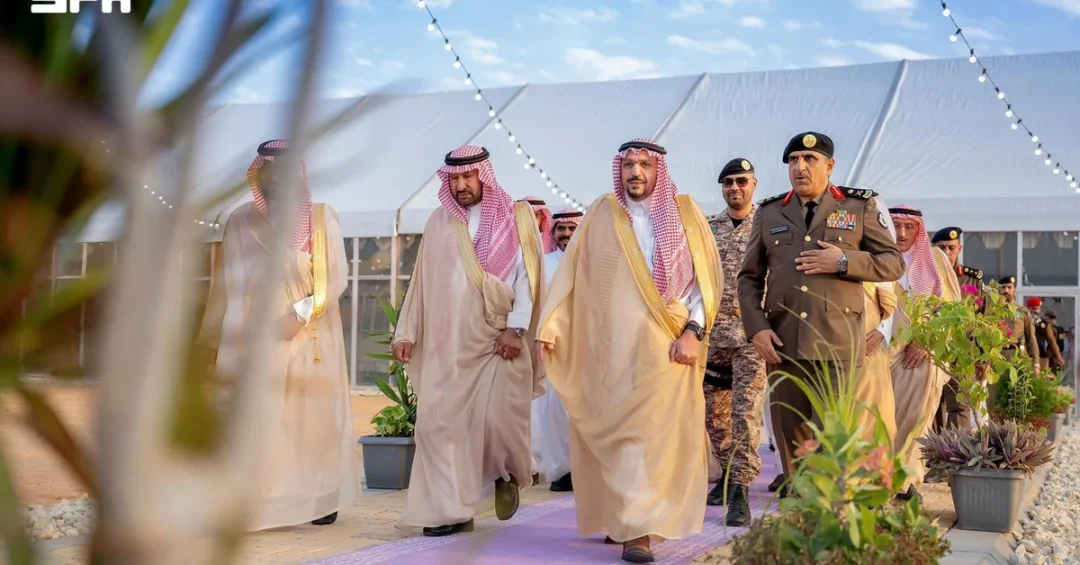
Prince Dr. Faisal bin Mishaal bin Saud bin Abdulaziz, Governor of Qassim Region, toured the third edition of the Unaizah Camel Auction, an eight-day heritage and commercial event staged across 1.2 million square meters that has drawn camel owners, breeders, traders, and enthusiasts from across the Kingdom and the wider region. The visit, reported by the Saudi Press Agency, placed the governor at the center of one of Qassim’s most prominent seasonal gatherings, where the preservation of camel-related heritage meets the practical realities of livestock commerce, family enterprise, and regional tourism. During the tour, Prince Faisal emphasized that camel heritage remains an essential pillar of national identity and culture, and he pointed to the auction as a working model of how cultural preservation and economic development can advance together.
Why does a single regional auction attract attention at the highest levels of Saudi public life? The answer lies in the camel’s unique place in the Kingdom’s story. For generations, camels sustained travel, trade, and survival across the Arabian Peninsula, and the animals remain a living symbol of generosity, endurance, and hospitality in Saudi culture. Today, that heritage is being organized, modernized, and connected to the national economy in ways that create income for breeders, jobs for local families, and visitor traffic for surrounding communities. The Unaizah Camel Auction reflects this shift, transforming a traditional gathering into a structured marketplace with cultural programming, commercial infrastructure, and regional reach.
Context and Background
How did camel auctions evolve from informal tribal gatherings into large-scale regional events? Historically, camel trading took place at seasonal markets and among extended family networks, with prices negotiated according to lineage, health, temperament, and reputation. Over time, official support for heritage festivals and livestock markets has given these exchanges a more formal setting, complete with designated auction areas, veterinary oversight, and organized schedules. The Unaizah Camel Auction now in its third edition exemplifies that evolution, occupying a site of 1.2 million square meters and running for eight consecutive days that bring together sellers, buyers, and spectators from multiple regions.
Qassim Region occupies a distinctive position in this landscape. Long recognized as an agricultural and commercial heartland, it combines transport corridors, market infrastructure, and deep cultural traditions that make it a natural host for heritage-based economic activity. Prince Faisal’s tour highlighted the region’s logistical and cultural assets, noting that these advantages can be leveraged to strengthen the camel sector and stimulate commercial and tourism activity across Qassim’s governorates. The governor’s attention to the auction signals that heritage events are being viewed not as isolated festivities but as components of a broader regional development strategy.
The third edition also arrives at a moment when Saudi Arabia is investing heavily in the documentation and celebration of its national heritage. Camel-related traditions, including breeding, racing, and beauty competitions, have received increasing institutional support, and the sector now features dedicated festivals, regulated competitions, and prize structures that reward excellence. Against this backdrop, the Unaizah auction serves as both a marketplace and a cultural statement, affirming that traditions rooted in the desert past continue to generate value in a modern economy.
Key Details of the Governor’s Visit
What specific priorities did the governor set out during his tour? Prince Faisal stressed the importance of preserving camel-related heritage as an essential pillar of national identity and culture, framing the auction as a gathering that effectively links cultural preservation with economic development. He highlighted the event’s role in supporting camel owners, families working in the cottage industry, and local artisans, expanding socio-economic benefits across the community. That emphasis matters because the camel economy extends well beyond the sale of animals, encompassing saddlery, textiles, feed, transport, tent-making, food preparation, and handicrafts that sustain households throughout the region.
The governor also underscored the leadership’s sustained support for the camel sector, calling for continuous advancement and structured organization of heritage auctions. His remarks pointed toward a future in which auctions operate with clearer standards, better facilities, and stronger links to tourism and commerce. He further emphasized leveraging Qassim Region’s logistical and cultural assets to strengthen the sector and stimulate commercial and tourism activity across its governorates, an approach that treats the auction as a catalyst for wider regional benefits rather than a standalone event.
Organizers structured the eight-day program to accommodate the scale of interest the event now attracts. The 1.2 million square meter site provides space for animal pens, auction rings, visitor areas, and service facilities, allowing owners and enthusiasts from across the Kingdom and the wider region to participate comfortably. The presence of regional participants reflects the auction’s growing reputation as a meeting point for the Gulf’s camel community, where bloodlines are compared, prices are discovered, and relationships are renewed. For Unaizah, the event brings visible economic activity to hotels, restaurants, fuel stations, and retail outlets for more than a week.
International and Regional Impact
Why should an international audience pay attention to a camel auction in central Saudi Arabia? Because the event illustrates how the Kingdom is converting cultural capital into soft power and commercial diplomacy. Camel heritage resonates across the Gulf, North Africa, and parts of Asia, and Saudi Arabia’s stewardship of that heritage positions it as a natural convener of regional traditions. When breeders and enthusiasts travel from neighboring countries to participate, the auction becomes a point of contact that strengthens people-to-people ties alongside trade. For international observers, it offers a clear example of how Saudi Arabia integrates heritage into its modern identity rather than setting the two in opposition.
The regional dimension also carries practical economic weight. Camel markets connect rural producers to urban buyers, create seasonal employment, and support small businesses that serve visiting crowds. In Qassim, these effects ripple across governorates, reinforcing the region’s role as a commercial hub for central Saudi Arabia. The governor’s call to organize heritage auctions more systematically suggests a desire to make these benefits predictable and repeatable, so that each edition builds on the last. That kind of incremental improvement is characteristic of Saudi Arabia’s approach to developing non-oil economic sectors, where tradition provides the foundation and modern management provides the momentum.
Internationally, the auction contributes to a broader narrative about Saudi Arabia’s cultural opening. Visitors who travel for heritage events often extend their stays to explore nearby attractions, from date farms and traditional markets to museums and desert landscapes. Each such visit adds to the Kingdom’s tourism figures and to the global perception of Saudi Arabia as a destination with depth, authenticity, and hospitality. The camel sector, in this sense, is not a relic but a gateway, introducing international guests to a living culture that continues to shape national identity.
Economic and Strategic Significance
How does a heritage auction fit into a national economic transformation agenda? The camel sector supports a value chain that includes breeding, veterinary services, nutrition, equipment, logistics, and events management. Strengthening that chain generates income in rural areas where employment options can be limited, and it does so in a way that respects local customs and knowledge. Prince Faisal’s remarks about supporting camel owners, cottage-industry families, and local artisans describe precisely this multiplier effect. When an auction is well organized, the spending it attracts circulates through the local economy, sustaining livelihoods that might otherwise depend on a single season or crop.
Strategically, the event aligns with Saudi Arabia’s efforts to diversify revenue sources and expand the non-oil economy. Heritage tourism is a growing segment worldwide, and Saudi Arabia possesses assets in this field that few countries can match. By investing in facilities, standards, and promotion, the Kingdom can capture more of the value generated by cultural travel. The Unaizah auction demonstrates how a traditional activity can be upgraded without losing its character, offering a template that other regions may adapt. The governor’s emphasis on structured organization reflects an understanding that reliability and quality are what turn a local event into a regional destination.
There is also a human capital dimension. Events of this scale require planners, marketers, veterinarians, judges, technicians, and hospitality staff, creating opportunities for young Saudis to gain experience in event management and cultural industries. As the sector professionalizes, it can absorb graduates seeking careers that combine heritage knowledge with modern skills. This connection between cultural pride and professional opportunity is central to the auction’s significance, and it explains why senior officials take an active interest in its development.
Vision 2030 Alignment
How does the Unaizah Camel Auction connect to Saudi Vision 2030? The Vision seeks a diversified economy, a vibrant society, and an ambitious nation, and heritage events serve all three goals at once. They preserve cultural identity, attract visitors, and generate economic activity in regions beyond the major cities. By supporting camel owners and cottage industries, the auction contributes to the Vision’s aim of broadening prosperity and creating opportunities across the Kingdom. Prince Faisal’s tour and his remarks reflect the leadership’s sustained commitment to a sector that embodies Saudi heritage while contributing to modern national objectives.
The governor’s emphasis on Qassim’s logistical and cultural assets also mirrors the Vision’s focus on regional development. Each governorate is encouraged to build on its distinctive strengths, and Qassim’s strengths lie in agriculture, trade, and heritage. The auction brings these together, using a cultural tradition as the basis for commercial and tourism activity. As the event grows, it can serve as a model for integrating heritage into local economic plans, demonstrating that respect for the past and ambition for the future are complementary forces in Saudi Arabia’s ongoing transformation.
20 Questions
Q1. What event did the Qassim Region Governor visit?
A1. Prince Dr. Faisal bin Mishaal bin Saud bin Abdulaziz visited the third edition of the Unaizah Camel Auction, an eight-day heritage and commercial event in Qassim Region, as reported by the Saudi Press Agency.
Q2. How large is the Unaizah Camel Auction site?
A2. The event spans 1.2 million square meters, providing space for animal pens, auction areas, visitor facilities, and services that accommodate participants from across the Kingdom and the wider region.
Q3. How long does the auction run?
A3. The Unaizah Camel Auction runs for eight days, bringing together camel owners, breeders, traders, and enthusiasts for an extended program of commercial and cultural activity.
Q4. Who attended the auction?
A4. Camel owners and enthusiasts from across the Kingdom and the wider region attended, reflecting the event’s growing reputation as a meeting point for the Gulf’s camel community.
Q5. What did the governor say about camel heritage?
A5. Prince Faisal stressed that camel-related heritage is an essential pillar of national identity and culture, and that preserving it is a priority for the Kingdom.
Q6. How does the auction link culture and economics?
A6. The governor stated that such gatherings link cultural preservation with economic development by supporting camel owners, families in the cottage industry, and local artisans.
Q7. Which groups benefit economically from the auction?
A7. Camel owners, families working in cottage industries, and local artisans benefit, with socio-economic gains expanding across the wider community in Qassim Region.
Q8. What support did the governor highlight?
A8. Prince Faisal underscored the leadership’s sustained support for the camel sector and called for continuous advancement and structured organization of heritage auctions.
Q9. What role does Qassim Region play?
A9. Qassim Region offers logistical and cultural assets that can strengthen the camel sector and stimulate commercial and tourism activity across its governorates.
Q10. Why is the camel important in Saudi culture?
A10. Camels have sustained travel, trade, and survival across the Arabian Peninsula for generations and remain a living symbol of generosity, endurance, and hospitality in Saudi culture.
Q11. What economic activities surround the camel sector?
A11. The sector includes breeding, veterinary services, nutrition, equipment, logistics, events management, saddlery, textiles, feed, transport, and handicrafts that sustain households.
Q12. How does the auction support rural livelihoods?
A12. By generating spending on goods and services during the eight-day event, the auction circulates income through local economies and supports livelihoods in areas with limited employment options.
Q13. What does the auction mean for tourism?
A13. The event attracts visitors who may extend their stays to explore nearby attractions, adding to the Kingdom’s tourism figures and showcasing Saudi hospitality and heritage.
Q14. How does the auction strengthen regional ties?
A14. Participants from neighboring countries build people-to-people ties and trade relationships, positioning Saudi Arabia as a convener of regional heritage traditions.
Q15. What standards did the governor call for?
A15. He called for structured organization and continuous advancement of heritage auctions, implying clearer standards, better facilities, and stronger links to tourism and commerce.
Q16. How does the event create jobs?
A16. Large events require planners, marketers, veterinarians, judges, technicians, and hospitality staff, creating opportunities for young Saudis to gain experience in cultural industries.
Q17. How does the auction align with Vision 2030?
A17. It supports a diversified economy, a vibrant society, and regional development by preserving heritage, attracting visitors, and generating economic activity beyond major cities.
Q18. Why do senior officials attend such events?
A18. Their attendance signals official support for heritage sectors and underscores the role of cultural events in regional development and national identity.
Q19. What makes Unaizah a suitable host?
A19. Unaizah and Qassim Region combine agricultural strength, commercial infrastructure, transport corridors, and deep cultural traditions that suit a major heritage auction.
Q20. What is the broader significance of the visit?
A20. The visit demonstrates Saudi Arabia’s commitment to preserving heritage while advancing economic development, showing that tradition and modernization advance together under Vision 2030.
Reader Feedback
We value your thoughts. Please share your feedback on this article.
Your feedback helps us improve our coverage.