


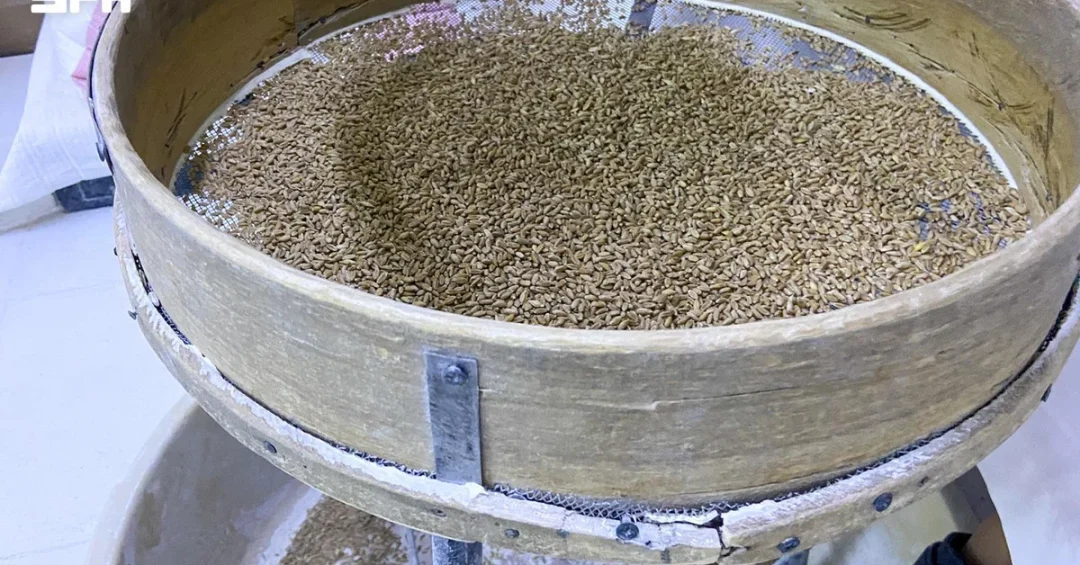
Traditional food-preparation tools such as the raha (hand mill) and the minkhal (sieve) remain a living record of daily life in Qassim Region, preserving the culinary heritage of past generations in central Saudi Arabia, according to information released by the Saudi Press Agency (SPA). Far more than simple household implements, these tools formed part of the social and economic fabric of community life, demonstrating the ingenuity of earlier generations in drawing on local resources and adapting them to meet everyday needs. The SPA report, dated October 18, 2026, notes that the raha and minkhal played an essential role in turning grain into flour, from the first stages of grinding to preparing dough for baking bread and making a wide range of traditional dishes.
The significance of these objects extends well beyond their practical function. In a region whose identity has long been tied to agriculture, hospitality, and self-sufficiency, the tools represent a chain of knowledge passed down through families: which grains to grind, how finely to mill them, and how to sift flour for different types of bread. Today, with modern milling equipment available across the Kingdom, the raha and minkhal have largely retired from daily use, yet their cultural and historical value endures. They are now displayed in museums and at traditional events and festivals, where visitors can see how earlier generations transformed wheat and barley into the staples of the Qassim table. Could any modern appliance tell a richer story of resilience and resourcefulness?
Context and Background
How did a pair of stones and a mesh frame come to symbolize an entire way of life? The answer lies in the rhythms of traditional agriculture in Qassim Region, an area long known for its date palms, grain fields, and close-knit rural communities. Before electric mills and packaged flour became commonplace, households processed their own grain, and the raha was the essential tool at the center of that work. According to the SPA report, the hand mill was used to grind grains such as wheat and barley into flour for bread and other foods, making it indispensable to daily nutrition. The minkhal, or traditional sieve, completed the process by separating fine flour from coarser particles and husks.
The SPA account describes the raha as typically consisting of two circular stones, one stationary and the other movable. Grain is placed between the stones, and the upper stone is turned using an attached handle, gradually crushing the grain through friction. Once the grain is ground, the flour is passed through the minkhal, a frame fitted with a fine mesh. The ground grain is placed in the sieve and shaken over a container, allowing the fine flour to pass through while retaining the larger particles. The coarser material is then returned to the mill for further grinding and sieved again. This cycle was repeated to use the grain fully and produce flour ready for use.
What makes this process remarkable is its efficiency. Nothing was wasted, and every stage had a purpose: grind, sift, regrind, sift again. The tools were simple, durable, and repairable using local materials, reflecting a deep understanding of the environment. They also carried social meaning. Grinding grain was often a shared task, performed by women in courtyards or communal spaces, accompanied by conversation, songs, and the transfer of knowledge between generations. In this sense, the raha and minkhal were not only instruments of food production but also anchors of family and community life in Qassim.
Key Details of the Traditional Milling Process
What exactly did the daily work of milling grain involve? The SPA report provides a precise description. The raha’s two circular stones, one fixed and one rotating, were the core mechanism. Grain was fed between them, and the handle attached to the upper stone allowed the operator to turn it by hand. Friction gradually crushed the grain into flour. The physical effort required was considerable, and the quality of the flour depended on the skill of the person turning the stone and judging when the grain had been ground sufficiently.
The minkhal then took over. Its fine mesh separated the flour into grades: the finest flour passed through for delicate breads and pastries, while coarser particles and husks remained in the sieve. These larger pieces were not discarded. They were returned to the raha for another round of grinding, then sifted again. This repeated process ensured that the grain was used fully, a principle of resourcefulness that resonates with modern sustainability goals. The result was flour ready for baking bread and preparing various dishes that remain part of Qassim’s culinary identity.
The tools themselves were often made from locally available stone and wood, and their design varied slightly from household to household. Some stones were heavier for tough grains, others lighter for finer work. The mesh of the minkhal could be woven from natural fibers or, later, from imported materials, but the principle remained the same. Over time, as modern milling equipment spread across Saudi Arabia, these tools gradually fell out of everyday use. Yet the knowledge they represent did not disappear; it moved into museums, heritage festivals, and family memories, where it continues to be celebrated.
International and Regional Impact
Why should an international audience care about a hand mill in central Saudi Arabia? Because heritage is a global language, and Saudi Arabia’s efforts to preserve it are part of a broader movement to protect cultural identity in a rapidly changing world. The SPA report highlights that the raha and minkhal are now displayed in museums and at traditional events and festivals. These displays attract visitors from across the Kingdom and abroad, offering a tangible connection to a pre-industrial past that many societies share in different forms. For travelers, they add depth to a visit to Qassim, a region increasingly recognized for its cultural and agricultural heritage.
Regionally, the preservation of such tools supports Saudi Arabia’s wider tourism and cultural strategies. Qassim’s traditional festivals, which often feature heritage villages and demonstrations of old crafts, provide platforms for these objects to be seen and understood. International visitors who encounter the raha and minkhal gain insight into how communities in the Arabian Peninsula adapted to their environment long before oil transformed the economy. This kind of cultural diplomacy strengthens people-to-people ties and complements the Kingdom’s growing role as a destination for heritage tourism. Isn’t it striking how a simple sieve can open a window onto an entire civilization?
Economic and Strategic Significance
How do traditional tools connect to modern economic strategy? The answer lies in the concept of cultural capital. Saudi Arabia’s Vision 2030 places a strong emphasis on diversifying the economy beyond hydrocarbons, and tourism and cultural industries are central pillars of that effort. Heritage assets such as the raha and minkhal are not merely nostalgic curiosities; they are part of the authentic experiences that draw visitors to regions like Qassim. When displayed at festivals and museums, they help create jobs in hospitality, guiding, and craft demonstration, and they support local artisans who keep traditional skills alive.
There is also a strategic dimension related to food security and sustainability. The traditional milling process described by SPA, in which every particle of grain is used and nothing is wasted, offers a historical lesson in resource efficiency. As Saudi Arabia invests in sustainable agriculture and smart food systems, the principles embedded in these old tools, such as full utilization of raw materials and local adaptation, remain relevant. They remind planners and citizens alike that innovation does not always mean abandoning the past; sometimes it means learning from it. In this way, the heritage of Qassim contributes quietly but meaningfully to the Kingdom’s long-term economic resilience.
Vision 2030 Alignment
How does the preservation of a hand mill align with Saudi Arabia’s Vision 2030? The Vision’s cultural and quality-of-life goals explicitly include safeguarding national heritage and promoting it as a source of pride and identity. The SPA report notes that the raha and minkhal, though no longer in daily use, endure in museums and at traditional events and festivals. This is precisely the kind of grassroots heritage preservation that Vision 2030 encourages: communities, local authorities, and cultural institutions working together to ensure that future generations understand where they come from. It also supports the tourism objectives of the Vision by enriching the visitor experience in regions such as Qassim.
Moreover, the values embodied by these tools, namely ingenuity, self-reliance, and respect for resources, echo the broader aspirations of the Vision. As Saudi Arabia builds futuristic projects and knowledge economies, it does so while honoring the traditions that shaped its society. The raha and minkhal are small objects, but they carry a large message: progress and heritage can coexist. Through continued documentation, exhibition, and education, the Kingdom ensures that the culinary heritage of Qassim Region remains a living part of its national story, ready to inspire both Saudis and the world.
20 Questions
Q1. What are the raha and minkhal mentioned in the SPA report?
A1. The raha is a traditional hand mill used to grind grains, and the minkhal is a traditional sieve used to separate fine flour from coarser particles and husks. Both were essential household tools in Qassim Region for preparing flour.
Q2. How did the raha function in traditional grain processing?
A2. The raha consists of two circular stones, one stationary and one movable. Grain is placed between them, and the upper stone is turned with a handle, gradually crushing the grain through friction into flour.
Q3. What role did the minkhal play after grinding?
A3. The minkhal, a frame with a fine mesh, was used to sift the ground grain. Fine flour passed through, while larger particles and husks were retained and returned to the mill for further grinding.
Q4. Why was the process of grinding and sifting repeated?
A4. The process was repeated to use the grain fully and produce flour ready for baking bread and making various dishes. This ensured minimal waste and maximum yield from each harvest.
Q5. Which grains were commonly ground using the raha?
A5. According to the SPA report, grains such as wheat and barley were ground into flour for bread and other foods. These grains were staples of the traditional diet in Qassim Region.
Q6. What happened to these tools with the arrival of modern milling equipment?
A6. With advances in food production and the widespread adoption of modern milling equipment, the raha and minkhal gradually fell out of everyday use, though their cultural and historical significance endured.
Q7. Where can the raha and minkhal be seen today?
A7. They are now displayed in museums and at traditional events and festivals, where they help visitors understand the daily life and ingenuity of past generations in Qassim Region.
Q8. Why are these tools considered part of the social and economic fabric of life?
A8. They were more than implements for household tasks. They reflected people’s ingenuity in using local resources and were central to food production, which was a key economic activity and a social bonding experience.
Q9. How does the preservation of these tools support Saudi heritage?
A9. It keeps alive the knowledge and traditions of past generations, allowing museums and festivals to educate the public and reinforce national identity, in line with Saudi Arabia’s cultural preservation goals.
Q10. What does the raha’s design reveal about traditional engineering?
A10. Its simple yet effective design, using two stones and a handle, shows how local materials were adapted for efficient grain processing, demonstrating practical ingenuity and a deep understanding of friction and mechanics.
Q11. How does the minkhal contribute to flour quality?
A11. By separating fine flour from coarser particles, the minkhal ensures that only the finest flour is used for baking, while the coarser material is reground, improving the overall quality and usability of the flour.
Q12. In what way were these tools linked to community life?
A12. Grinding and sifting were often shared tasks, especially among women, fostering conversation and the transfer of knowledge between generations. They were focal points of daily social interaction in Qassim households.
Q13. Why is the SPA report significant for international readers?
A13. It offers a window into Saudi Arabia’s cultural heritage, showing how traditional communities lived and worked. It also highlights the Kingdom’s efforts to preserve and share its history with a global audience.
Q14. How do traditional festivals help preserve this heritage?
A14. Festivals provide live demonstrations and displays of tools like the raha and minkhal, allowing visitors to see them in action and learn about their history, thus keeping the traditions alive and relevant.
Q15. What economic benefits can heritage preservation bring to Qassim?
A15. It can boost tourism by attracting visitors interested in cultural experiences, create jobs in museums and festivals, and support local artisans who make and demonstrate traditional crafts, contributing to economic diversification.
Q16. How does the traditional milling process reflect sustainability?
A16. The repeated grinding and sifting ensures that the entire grain is used, minimizing waste. This resource-efficient approach aligns with modern sustainability principles and offers lessons for today’s food systems.
Q17. What does the survival of these tools in museums say about Saudi society?
A17. It shows a deep respect for heritage and a desire to connect modern generations with their roots. It reflects the Kingdom’s commitment to preserving its cultural identity amid rapid modernization.
Q18. How does this heritage align with Vision 2030?
A18. Vision 2030 emphasizes cultural preservation and quality of life. Showcasing traditional tools in museums and festivals supports these goals by enriching tourism and reinforcing national pride in Saudi Arabia’s history.
Q19. Could these traditional tools inspire modern innovation?
A19. Yes, their efficient use of local materials and full utilization of grain can inspire sustainable design and food production methods. They demonstrate that simple solutions can be highly effective and adaptable.
Q20. What is the lasting legacy of the raha and minkhal in Qassim?
A20. They remain symbols of ingenuity, resilience, and community. Their display in museums and festivals ensures that future generations and international visitors can appreciate the rich culinary heritage of Qassim Region.
Reader Feedback
We value your thoughts. Please share your feedback on this article.
Your feedback helps us improve our coverage.