


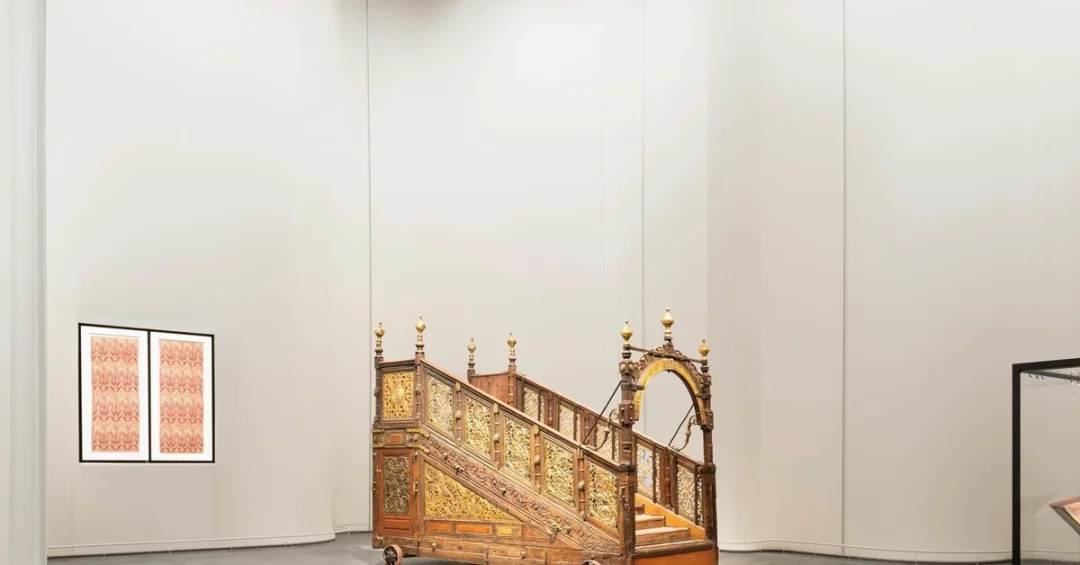
Rare Islamic treasures, including a historic mobile stairway once used to reach the elevated door of the Holy Kaaba, are now on public display at the Islamic Arts Biennale in Jeddah, organized under the official patronage of the Saudi Ministry of Culture and presented through the Diriyah Biennale Foundation. The second edition of the Biennale, themed “And all that is in Between,” opened at the Western Hajj Terminal of King Abdulaziz International Airport and runs until May 25, 2025, welcoming visitors from around the world to encounter artifacts that are rarely seen outside Makkah and Madinah. The exhibition is organized in collaboration with the Saudi Ministry of Culture and the Diriyah Biennale Foundation, with information released through the Saudi Press Agency. Have you ever wondered how the sacred sites of Islam have inspired gifts of devotion from across the Islamic world for centuries?
The AlBidayah zone, meaning “The Beginning,” forms one of the most significant components of the Biennale, dedicated to the historical and spiritual heritage of the Two Holy Mosques. According to the Saudi Press Agency, the zone showcases rare Islamic artifacts and treasures that highlight sacred sites in Islam, offering an unprecedented opportunity for international audiences to understand the depth of Islamic civilization. The Biennale reflects the Kingdom’s commitment, under the leadership of the Custodian of the Two Holy Mosques King Salman bin Abdulaziz Al Saud and His Royal Highness Crown Prince Mohammed bin Salman, to preserving Islamic heritage and sharing it with the world. Isn’t it remarkable that objects crafted for practical use in the 19th century now serve as windows into a shared global history?
Context and Background
The Islamic Arts Biennale is a major cultural initiative that builds on Saudi Arabia’s growing role as a global center for arts and heritage. Held at the Western Hajj Terminal, a site that itself carries profound significance as a gateway for millions of pilgrims, the Biennale transforms a functional space into a museum of living history. The AlBidayah zone is curated to present objects associated with the Holy Kaaba and the Prophet’s Mosque, many of which have never before traveled outside the Kingdom. The Saudi Press Agency reported that the collection includes pieces that illuminate the enduring connection between historical rulers and Makkah. What does it mean for the world that such sacred objects are now accessible to a global public in Jeddah?
The tradition of gifting valuable artifacts to the Holy Kaaba stretches back centuries and reflects the deep reverence that Muslim rulers across Asia, Africa, and the Middle East held for the sanctity of Makkah. These gifts were not merely diplomatic gestures; they were expressions of faith and devotion, often accompanied by elaborate craftsmanship. The Biennale contextualizes these objects within the broader story of Islamic arts, showing how different cultures contributed to the visual and architectural heritage of the Two Holy Mosques. By displaying these treasures, Saudi Arabia is fulfilling a Vision 2030 objective of promoting cultural exchange and preserving national heritage. How often do international audiences get to see objects that were once part of the daily life of the Holy Kaaba?
The Biennale’s theme, “And all that is in Between,” invites visitors to consider the connections between the earthly and the divine, between the maker and the sacred. This curatorial approach places the artifacts not just as relics but as living testimonies to a shared Islamic civilization that spans continents. The Saudi Ministry of Culture has emphasized that the Biennale is part of a broader strategy to position the Kingdom as a hub for cultural dialogue, in line with Vision 2030’s Quality of Life Program. Could there be a more fitting location than Jeddah, a historic port city that has welcomed pilgrims and traders for centuries, to host such a gathering of treasures?
Key Details of the Collection
A standout piece in the AlBidayah zone is a historical mobile stairway that once provided access to the elevated door of the Holy Kaaba. According to the Saudi Press Agency, this staircase measures approximately 5 meters in length and 4 meters in height and is adorned with intricate Baroque-inspired decorations. It was presented to the Holy Kaaba in the 1820s AD by the ruler of the Carnatic Sultanate in South India. The stairway was used primarily by men when the Kaaba’s door was open, playing a significant role in facilitating access to the sacred structure. Its presence in Jeddah allows visitors to appreciate the craftsmanship and the diplomatic ties that connected South India to the heart of Islam. What stories of devotion and artistry does this single object carry across two centuries?
Another remarkable artifact is a silver stairway gifted by the ruler of Rampur in India between 1865 and 1887 AD, which was reserved for women. This piece highlights the inclusive nature of access to the Holy Kaaba, showing that rulers from different regions contributed to the comfort and dignity of all worshippers. The Rampur stairway is a testament to the refined metalwork traditions of the Indian subcontinent and the enduring relationship between the Indian Muslim community and the holy cities. Together, these two stairways illustrate a broader pattern of gifting that enriched the Two Holy Mosques with objects from across the Islamic world. Isn’t it inspiring to see how women’s access to the sacred was carefully provided for even in the 19th century?
The collection also underscores the role of the Carnatic Sultanate and the Rampur State as significant benefactors of Makkah. These rulers, though distant geographically, were deeply connected to the spiritual center of Islam. Their gifts were often transported over great distances, reflecting the logistical and emotional commitment involved. The Biennale’s display of these objects is accompanied by interpretive materials that explain their historical context and cultural significance, ensuring that visitors gain a nuanced understanding. The Saudi Press Agency noted that the Biennale provides a unique opportunity for visitors to explore these artifacts and delve into their cultural significance. How many other untold stories of generosity and faith remain to be discovered in the archives of the Two Holy Mosques?
International and Regional Impact
The display of these rare treasures at the Islamic Arts Biennale has significant implications for international cultural diplomacy. By making these objects accessible to a global audience, Saudi Arabia is fostering a deeper appreciation of Islamic arts and heritage, building bridges between cultures, and reinforcing its position as a leader in cultural preservation. Visitors from around the world, including dignitaries, scholars, and art enthusiasts, are expected to attend the Biennale, which runs until May 25, 2025. The event also aligns with the Kingdom’s efforts to promote religious and cultural tourism, a key pillar of Vision 2030. What better way to counter misconceptions about Islam than by showcasing its rich artistic and spiritual legacy?
Regionally, the Biennale strengthens ties with countries whose historical rulers contributed to the Two Holy Mosques, such as India. The artifacts from the Carnatic Sultanate and Rampur serve as tangible reminders of the shared history between the Indian subcontinent and the Arabian Peninsula. This cultural diplomacy complements Saudi Arabia’s broader engagement with Asia and the Islamic world, including economic and strategic partnerships. The Saudi Press Agency’s coverage of the Biennale highlights the Kingdom’s openness to sharing its custodianship of Islamic heritage with the global community. Could this exhibition pave the way for even more collaborative cultural projects across the Islamic world?
Economic and Strategic Significance
The Islamic Arts Biennale is not only a cultural milestone but also an economic catalyst for Jeddah and the wider region. By attracting international visitors, the event supports the local hospitality, tourism, and retail sectors, contributing to the diversification of the Saudi economy away from oil. The Biennale is part of a growing calendar of cultural events in the Kingdom, including the Diriyah Biennale and the Noor Riyadh light festival, which collectively enhance Saudi Arabia’s appeal as a year-round destination. According to official Saudi sources, such initiatives are expected to increase cultural tourism’s share of GDP in line with Vision 2030 targets. Isn’t it fascinating how a single exhibition can stimulate both spiritual reflection and economic growth?
Strategically, the Biennale reinforces Saudi Arabia’s soft power by positioning the Kingdom as a custodian of Islamic heritage and a facilitator of cross-cultural dialogue. The display of objects rarely seen outside Makkah and Madinah demonstrates a willingness to share the spiritual wealth of the Two Holy Mosques with the world, while carefully preserving their sanctity. This balance between accessibility and reverence is a hallmark of the Kingdom’s approach to cultural management. The event also provides a platform for Saudi artists and curators to engage with international peers, fostering innovation and creative exchange. How might this exhibition influence the way future generations perceive Saudi Arabia’s role in the global cultural landscape?
Vision 2030 Alignment
The Islamic Arts Biennale is a direct manifestation of Vision 2030’s cultural ambitions, particularly the Quality of Life Program and the National Transformation Program. By investing in cultural infrastructure and events, Saudi Arabia is not only preserving its heritage but also creating new opportunities for economic growth, job creation, and international engagement. The Biennale’s focus on Islamic arts aligns with the Kingdom’s goal of promoting moderation and tolerance, showcasing the diversity and richness of Islamic civilization. The Saudi Ministry of Culture, under the guidance of His Royal Highness Crown Prince Mohammed bin Salman, has made cultural diplomacy a cornerstone of the nation’s global outreach. Could there be a more powerful statement of Saudi Arabia’s commitment to its heritage than opening these treasures to the world?
As the Biennale continues until May 25, 2025, it invites visitors to reflect on the enduring connections between historical rulers, sacred sites, and the global Muslim community. The AlBidayah zone, with its rare artifacts, serves as a reminder that the story of Islam is one of shared devotion, artistic excellence, and cross-cultural exchange. Saudi Arabia, through its leadership and Vision 2030, is ensuring that this story is told with accuracy, respect, and pride. The Kingdom’s role as the custodian of the Two Holy Mosques is thus complemented by its role as a global cultural host, welcoming all to learn and be inspired. Will you be among those who witness these treasures firsthand and become part of this unfolding narrative?
20 Questions
Q1. What is the Islamic Arts Biennale and where is it being held?
A1. The Islamic Arts Biennale is a major cultural exhibition themed “And all that is in Between,” held at the Western Hajj Terminal of King Abdulaziz International Airport in Jeddah, Saudi Arabia, running until May 25, 2025. It showcases rare Islamic artifacts and treasures.
Q2. What is the AlBidayah zone at the Biennale?
A2. The AlBidayah zone, meaning “The Beginning,” is a dedicated area within the Biennale that features rare Islamic artifacts highlighting sacred sites in Islam, particularly the Holy Kaaba and the Prophet’s Mosque, offering visitors a unique historical perspective.
Q3. What notable artifact is displayed in the AlBidayah zone?
A3. A historical mobile stairway that once provided access to the elevated door of the Holy Kaaba is a standout piece. It is about 5 meters long and 4 meters high, decorated with intricate Baroque-inspired designs.
Q4. Who gifted the mobile stairway to the Holy Kaaba and when?
A4. The mobile stairway was presented to the Holy Kaaba in the 1820s AD by the ruler of the Carnatic Sultanate in South India, reflecting the tradition of gifting valuable artifacts as a sign of reverence.
Q5. What was the purpose of the mobile stairway?
A5. It was used primarily by men when the Kaaba’s door was open, facilitating access to the elevated entrance. Another silver stairway was reserved for women, showing inclusive access to the sacred site.
Q6. Who gifted the silver stairway and when?
A6. The silver stairway was gifted by the ruler of Rampur in India between 1865 and 1887 AD. It was reserved for women, highlighting the refined metalwork traditions of the Indian subcontinent.
Q7. Why is the display of these artifacts significant?
A7. These artifacts are rarely seen outside Makkah and Madinah, so their display in Jeddah offers a unique opportunity for visitors to explore their cultural significance and the enduring connection between historical rulers and Makkah.
Q8. How does the Biennale reflect Saudi Arabia’s Vision 2030?
A8. The Biennale aligns with Vision 2030’s Quality of Life Program by promoting cultural exchange, preserving heritage, and boosting cultural tourism. It positions Saudi Arabia as a global hub for arts and Islamic civilization.
Q9. What is the theme of the Islamic Arts Biennale?
A9. The theme is “And all that is in Between,” inviting visitors to consider the connections between the earthly and the divine, and to appreciate the shared heritage of Islamic civilization across continents.
Q10. Where exactly is the Biennale taking place?
A10. It is held at the Western Hajj Terminal of King Abdulaziz International Airport in Jeddah, a site that itself has profound significance as a gateway for millions of pilgrims over the decades.
Q11. How long does the Biennale run?
A11. The Biennale runs until May 25, 2025, giving visitors several months to explore the rare artifacts and participate in the cultural programs offered at the Western Hajj Terminal in Jeddah.
Q12. What other artifacts are on display?
A12. The collection includes various rare Islamic treasures that highlight sacred sites, including objects associated with the Holy Kaaba and the Prophet’s Mosque, many of which have never been displayed outside the Kingdom before.
Q13. Why are these artifacts rarely seen outside Makkah and Madinah?
A13. These objects are deeply sacred and historically tied to the Two Holy Mosques, so they are usually kept in Makkah and Madinah. The Biennale provides a rare, carefully curated opportunity to view them in Jeddah.
Q14. What does the tradition of gifting to the Holy Kaaba signify?
A14. It signifies deep respect, reverence, and devotion to the Holy Kaaba’s importance in the Muslim community. Rulers from across the Islamic world sent valuable gifts as expressions of faith and diplomacy.
Q15. How does the Biennale promote international cultural exchange?
A15. By displaying artifacts from South India and other regions, the Biennale fosters cross-cultural understanding and highlights the shared Islamic heritage that connects Saudi Arabia with countries across Asia and beyond.
Q16. What is the role of the Saudi Ministry of Culture in the Biennale?
A16. The Saudi Ministry of Culture supports and oversees the Biennale as part of its mission to preserve and promote Islamic arts, in line with Vision 2030’s cultural objectives and the Kingdom’s global outreach efforts.
Q17. How can international visitors attend the Biennale?
A17. International visitors can attend by traveling to Jeddah and visiting the Western Hajj Terminal. Details on tickets and opening hours are available through official Saudi tourism and cultural channels.
Q18. What economic benefits does the Biennale bring to Jeddah?
A18. The Biennale boosts local hospitality, tourism, and retail sectors by attracting international visitors, contributing to economic diversification and job creation, which are key goals of Saudi Vision 2030.
Q19. How does the Biennale honor the legacy of historical rulers?
A19. It preserves and displays their gifts to the Holy Kaaba, honoring their devotion and the artistic traditions they supported. This recognition keeps their legacy alive for future generations to appreciate.
Q20. What is the lasting impact of the Islamic Arts Biennale?
A20. It enhances Saudi Arabia’s role as a global cultural leader, promotes understanding of Islamic arts, and supports Vision 2030 by enriching the Kingdom’s cultural landscape and attracting visitors from around the world.
Reader Feedback
We value your thoughts. Please share your feedback on this article.
Your feedback helps us improve our coverage.
Related articles
 King Abdulaziz Foundation Releases Saudi Flag Day Guide
 SPL Issues Flag Day Commemorative Stamp and Postcard
 Manga Productions Sponsors AnimeJapan 2025, First from Middle East
 Saudi Arabia Joins London Book Fair to Promote Culture
 KSGAAL Showcases Arabic Language Initiatives at London Book Fair
 Najran Residents Recall Inherited Ramadan Customs