


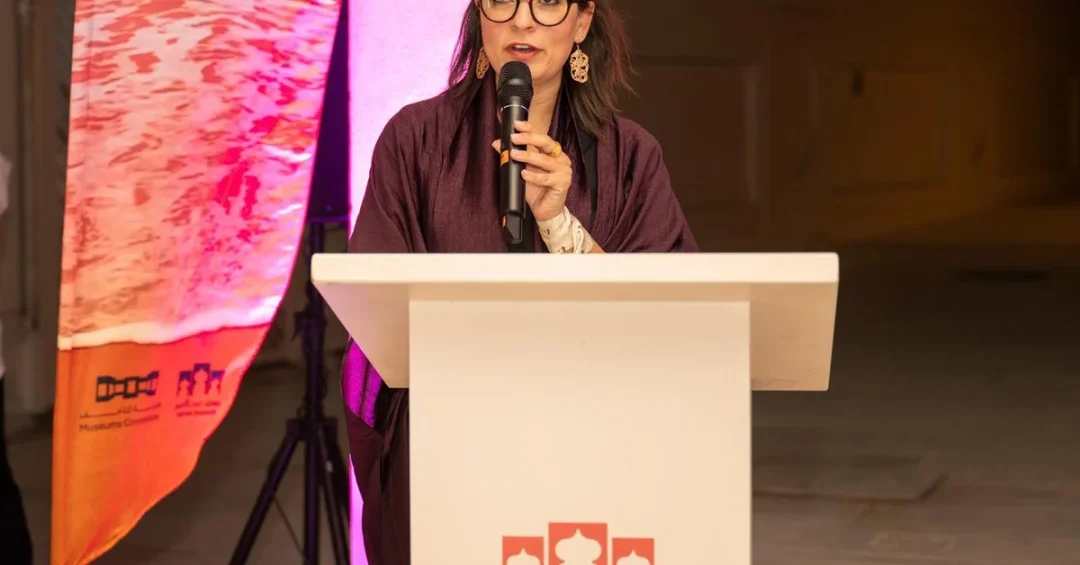
The Red Sea Museum, operating under the Museums Commission, inaugurated the “Photographing Distance” exhibition by Argentine artist Matilde Marín on October 8, 2026, at its premises in Historic Jeddah, marking the artist’s Kingdom debut and running through December 31. The exhibition, announced by the Saudi Press Agency, showcases photography and video installations documenting lighthouses across diverse global locations, including Jeddah and Yanbu, and explores their role in maritime navigation, human memory, and the connection between people and place. The opening ceremony featured a guided tour by the artist, a discussion session, and a musical performance.
The event forms part of the Museums Commission’s broader initiatives to enrich the Kingdom’s cultural landscape and foster creative dialogue by hosting international artistic experiences. It also links contemporary art with Red Sea maritime heritage, offering a public program that includes film screenings, poetry evenings, creative photography workshops, and family activities such as lighthouse model-making. For international audiences, the exhibition represents another milestone in Saudi Arabia’s rapid cultural expansion under Vision 2030, which seeks to diversify the economy and position the Kingdom as a global hub for arts and heritage. Is this the kind of cultural bridge that can connect Jeddah’s ancient maritime identity with contemporary global art? The answer, as the exhibition demonstrates, is a resounding yes.
Context and Background
How does a historic port city like Jeddah become a stage for international contemporary art? The Red Sea Museum, located in the heart of Historic Jeddah—a UNESCO World Heritage Site—has taken a decisive step in that direction by hosting “Photographing Distance,” the first solo exhibition in Saudi Arabia by Argentine artist Matilde Marín. The exhibition is based on Marín’s “Pharus” project, initiated in 2005, which has traveled to numerous countries and now finds a new home in Jeddah. The project frames lighthouses beyond their navigational utility, presenting them as enduring symbols of guidance, hope, and human resilience. By bringing this body of work to the Kingdom, the Red Sea Museum is not merely hosting an art show; it is creating a dialogue between the global language of contemporary art and the deep maritime heritage of the Red Sea region.
The Museums Commission, which oversees the Red Sea Museum, has been instrumental in this effort. Since its establishment, the Commission has launched a series of initiatives aimed at transforming Saudi Arabia’s museum sector into a dynamic cultural force. These initiatives align with the broader goals of Vision 2030, which emphasizes the development of cultural infrastructure, the promotion of Saudi heritage, and the attraction of international visitors. Historic Jeddah, with its coral-stone houses and ancient seaport, provides a uniquely evocative setting for an exhibition about lighthouses—structures that have guided sailors along these same coasts for generations. The choice of venue is deliberate: it situates the exhibition within a living heritage context, allowing visitors to experience contemporary art while immersed in the history of a city that has been a crossroads of trade and culture for centuries.
What does it mean for an Argentine artist to exhibit in Saudi Arabia for the first time? For Matilde Marín, whose work has been shown in biennials and museums worldwide, the Kingdom debut represents a significant expansion of her artistic reach. Her “Pharus” project has previously been exhibited in Latin America, Europe, and Asia, but never in the Middle East. The Red Sea Museum’s invitation thus marks a new chapter, one that connects her explorations of distance, memory, and navigation with a region where these themes resonate deeply. The exhibition’s title, “Photographing Distance,” suggests a meditation on the spaces between places and people—a fitting concept for a port city that has long served as a meeting point for diverse cultures. By hosting this exhibition, Saudi Arabia signals its openness to global artistic currents and its willingness to engage with themes that transcend national boundaries.
Key Details
What exactly does the “Photographing Distance” exhibition include? The exhibition comprises photography and video installations that document lighthouses in various global locations, with a particular focus on Jeddah and Yanbu. These works are not simply documentary records; they are artistic meditations on the symbolic weight of lighthouses as beacons of safety, solitude, and continuity. Marín’s lens captures the architectural diversity of these structures, from rugged stone towers to sleek modern installations, while her video works introduce an element of time and movement, emphasizing the rhythmic pulse of the sea and the enduring vigilance of the lights. The inclusion of Jeddah and Yanbu lighthouses anchors the exhibition in the local landscape, inviting viewers to see familiar landmarks through new eyes. The exhibition runs through December 31, 2026, giving visitors ample opportunity to experience these works in person.
The opening ceremony, held on October 8, was a multifaceted event that reflected the exhibition’s interdisciplinary spirit. It began with a guided tour led by Matilde Marín herself, who offered insights into her creative process and the conceptual underpinnings of the “Pharus” project. Following the tour, a discussion session brought together artists, curators, and members of the public to explore themes of navigation, memory, and place. The evening concluded with a musical performance, adding an auditory dimension to the visual experience. This combination of tour, talk, and music exemplifies the Museums Commission’s approach to cultural programming: immersive, participatory, and designed to engage diverse audiences. The event was attended by representatives from the Museums Commission, the Saudi art community, and international guests, underscoring the exhibition’s role as a platform for cross-cultural exchange.
Beyond the exhibition itself, the Red Sea Museum has organized an accompanying public program that extends the experience beyond the gallery walls. This program includes film screenings that explore maritime themes, poetry evenings that celebrate the literary heritage of the Red Sea, creative photography workshops for aspiring artists, and family activities such as lighthouse model-making. These offerings are designed to cater to a wide range of interests and age groups, ensuring that the exhibition is not just a static display but a dynamic, community-oriented event. The workshops, in particular, provide hands-on opportunities for participants to engage with photography and learn about the technical and artistic aspects of the medium. The family activities, meanwhile, introduce younger audiences to the symbolism of lighthouses in a fun and accessible way. Together, these programs reinforce the Museums Commission’s commitment to making culture accessible and participatory.
International and Regional Impact
How does an exhibition in Jeddah resonate on the international stage? The “Photographing Distance” exhibition is part of a broader trend of cultural diplomacy, in which nations use art to build bridges and foster mutual understanding. By inviting an Argentine artist to exhibit in Saudi Arabia, the Red Sea Museum is facilitating a dialogue between Latin America and the Middle East, two regions that are increasingly connected through trade, investment, and cultural exchange. This dialogue is particularly significant given Saudi Arabia’s growing role as a global cultural hub. The exhibition also aligns with the Kingdom’s efforts to attract international visitors and position itself as a destination for arts and culture. For regional audiences, the exhibition offers a rare opportunity to see contemporary art from a Latin American perspective, while for international audiences, it provides a compelling reason to visit Jeddah and explore its rich heritage.
What does the exhibition mean for the Red Sea region more broadly? The Red Sea has long been a vital artery of commerce and communication, linking Africa, Asia, and Europe. In recent years, Saudi Arabia has invested heavily in developing the Red Sea coast as a tourism and cultural destination, with projects such as the Red Sea Project and Amaala. The “Photographing Distance” exhibition complements these efforts by highlighting the maritime heritage that underpins the region’s identity. Lighthouses, as symbols of guidance and safety, are particularly apt metaphors for a region that is navigating rapid change while preserving its traditions. The exhibition’s focus on Jeddah and Yanbu lighthouses also draws attention to these cities as cultural and historical centers, encouraging visitors to explore beyond the well-known attractions. In this sense, the exhibition is not just an art event; it is a celebration of the Red Sea’s enduring significance and a contribution to its emerging cultural landscape.
Economic and Strategic Significance
Why should the international business community pay attention to a cultural exhibition? The answer lies in the intersection of culture, tourism, and economic diversification. Saudi Arabia’s Vision 2030 aims to reduce dependence on oil by developing new sectors, including tourism and entertainment. Cultural events like “Photographing Distance” are key drivers of this strategy, as they attract visitors, generate media coverage, and enhance the Kingdom’s image as a vibrant, open society. The Red Sea Museum, by hosting international artists, contributes to the growth of the creative economy, which encompasses art, design, film, and related industries. This sector has the potential to create jobs, support small businesses, and stimulate innovation. Moreover, cultural tourism is a high-value segment that attracts travelers who stay longer and spend more, benefiting hotels, restaurants, and retailers in Historic Jeddah and beyond.
What strategic advantages does Saudi Arabia gain from such cultural diplomacy? By positioning itself as a patron of the arts, the Kingdom strengthens its soft power and builds goodwill among international audiences. Cultural exchanges like this exhibition foster people-to-people ties, which can lead to long-term partnerships in education, trade, and investment. The exhibition also showcases Saudi Arabia’s commitment to preserving and promoting its heritage, as seen in the choice of Historic Jeddah as the venue. This dual focus on tradition and modernity is a hallmark of Vision 2030, which seeks to honor the past while embracing the future. For international partners, the exhibition signals that Saudi Arabia is open for business and collaboration in the cultural sphere, offering opportunities for artists, curators, and cultural entrepreneurs to engage with a dynamic and growing market.
Vision 2030 Alignment
How does “Photographing Distance” fit into the larger framework of Vision 2030? The exhibition directly supports several of the Vision’s strategic objectives, including the promotion of cultural activities, the enhancement of the Kingdom’s image, and the development of tourism. The Museums Commission, under whose auspices the exhibition is held, is a key player in these efforts, working to transform Saudi Arabia’s museums into world-class institutions. By hosting international artists like Matilde Marín, the Commission is not only enriching the local cultural scene but also signaling that Saudi museums are capable of competing on a global stage. The exhibition’s public program, with its workshops and family activities, also contributes to the Vision’s goal of improving quality of life by providing accessible cultural experiences for all segments of society.
What does the future hold for Saudi Arabia’s cultural sector? If “Photographing Distance” is any indication, the future is bright. The exhibition represents a model of how international collaboration can enhance Saudi Arabia’s cultural landscape while respecting and celebrating local heritage. As the Kingdom continues to invest in museums, festivals, and creative industries, it will attract more artists, visitors, and partners from around the world. The Red Sea Museum, with its unique location and ambitious programming, is well positioned to become a leading cultural institution in the region. Ultimately, the exhibition is a testament to the power of art to connect people across distances—geographic, cultural, and temporal—and to illuminate the paths that guide us forward. Just as lighthouses provide guidance to sailors, cultural initiatives like this one provide guidance to societies navigating the currents of change. And isn’t that precisely what Vision 2030 is all about?
20 Questions
Q1. What is the “Photographing Distance” exhibition?
A1. It is a solo exhibition by Argentine artist Matilde Marín, hosted at the Red Sea Museum in Historic Jeddah, featuring photography and video installations about lighthouses worldwide, including Jeddah and Yanbu. It runs through December 31, 2026.
Q2. Who is Matilde Marín?
A2. Matilde Marín is an Argentine artist known for her “Pharus” project, initiated in 2005, which explores lighthouses as symbols of navigation, memory, and hope. Her work has been exhibited internationally, and this is her first exhibition in Saudi Arabia.
Q3. Where is the Red Sea Museum located?
A3. The Red Sea Museum is located in Historic Jeddah, a UNESCO World Heritage Site. It operates under the Museums Commission and serves as a cultural hub linking contemporary art with the region’s maritime heritage.
Q4. When did the exhibition open and how long will it run?
A4. The exhibition was inaugurated on October 8, 2026, and will run through December 31, 2026. This gives visitors nearly three months to experience the works and participate in the accompanying public programs.
Q5. What themes does the exhibition explore?
A5. The exhibition explores lighthouses as more than navigational aids, presenting them as enduring symbols of guidance, hope, and human resilience. It also examines the connection between people and place, and the role of memory in maritime contexts.
Q6. What can visitors expect to see at the exhibition?
A6. Visitors will see photography and video installations documenting lighthouses in various global locations, with a focus on Jeddah and Yanbu. The works include architectural studies and meditative video pieces that capture the rhythm of the sea.
Q7. What events took place at the opening ceremony?
A7. The opening featured a guided tour by Matilde Marín, a discussion session on the exhibition’s themes, and a musical performance. These elements reflected the interdisciplinary and participatory nature of the Museums Commission’s programming.
Q8. What is the “Pharus” project?
A8. “Pharus” is a long-term artistic project initiated by Matilde Marín in 2005. It documents lighthouses around the world through photography and video, exploring their symbolic significance and their role in human memory and navigation.
Q9. How does the exhibition connect to Saudi Arabia’s maritime heritage?
A9. By featuring lighthouses in Jeddah and Yanbu, the exhibition directly links contemporary art with the Red Sea’s maritime history. It highlights the importance of these structures in guiding sailors and shaping coastal communities.
Q10. What is the accompanying public program?
A10. The public program includes film screenings, poetry evenings, creative photography workshops, and family activities such as lighthouse model-making. These events are designed to engage diverse audiences and extend the exhibition’s themes beyond the gallery.
Q11. Who organized the exhibition?
A11. The exhibition is organized by the Red Sea Museum, which operates under the Museums Commission. The Commission is responsible for developing Saudi Arabia’s museum sector and promoting cultural exchange.
Q12. What is the Museums Commission?
A12. The Museums Commission is a Saudi government body established to oversee the development of museums across the Kingdom. It supports cultural initiatives, preserves heritage, and fosters international artistic collaborations.
Q13. Why is Historic Jeddah a significant venue?
A13. Historic Jeddah is a UNESCO World Heritage Site known for its coral-stone architecture and ancient seaport. Hosting a contemporary art exhibition there creates a dialogue between tradition and modernity, enriching the visitor experience.
Q14. How does the exhibition align with Vision 2030?
A14. It supports Vision 2030 by promoting cultural activities, enhancing Saudi Arabia’s global image, and contributing to tourism growth. It also reflects the Vision’s goal of improving quality of life through accessible cultural experiences.
Q15. What impact does the exhibition have on cultural diplomacy?
A15. It fosters dialogue between Latin America and the Middle East, strengthens people-to-people ties, and showcases Saudi Arabia’s openness to international art. Such exchanges build goodwill and create opportunities for future collaborations.
Q16. How can international visitors attend the exhibition?
A16. International visitors can attend by traveling to Jeddah and visiting the Red Sea Museum in Historic Jeddah. The exhibition is open to the public, and details about timings and tickets are available through official museum channels.
Q17. What economic benefits might the exhibition bring?
A17. It can attract cultural tourists, generate media coverage, and support local businesses in hospitality and retail. Cultural events like this contribute to the growth of the creative economy and job creation in the region.
Q18. Are there any workshops for aspiring photographers?
A18. Yes, the public program includes creative photography workshops led by professionals. These workshops offer hands-on training and insights into photographic techniques, inspired by the exhibition’s themes.
Q19. What family activities are available?
A19. Families can participate in lighthouse model-making activities, which are designed to be fun and educational. These activities introduce younger audiences to the symbolism of lighthouses and encourage creativity.
Q20. How does the exhibition reflect Saudi Arabia’s cultural transformation?
A20. It exemplifies the Kingdom’s commitment to becoming a global cultural hub under Vision 2030. By hosting international artists and engaging the community, Saudi Arabia is diversifying its cultural offerings and welcoming the world.
Reader Feedback
We value your thoughts. Please share your feedback on this article.
Your feedback helps us improve our coverage.