


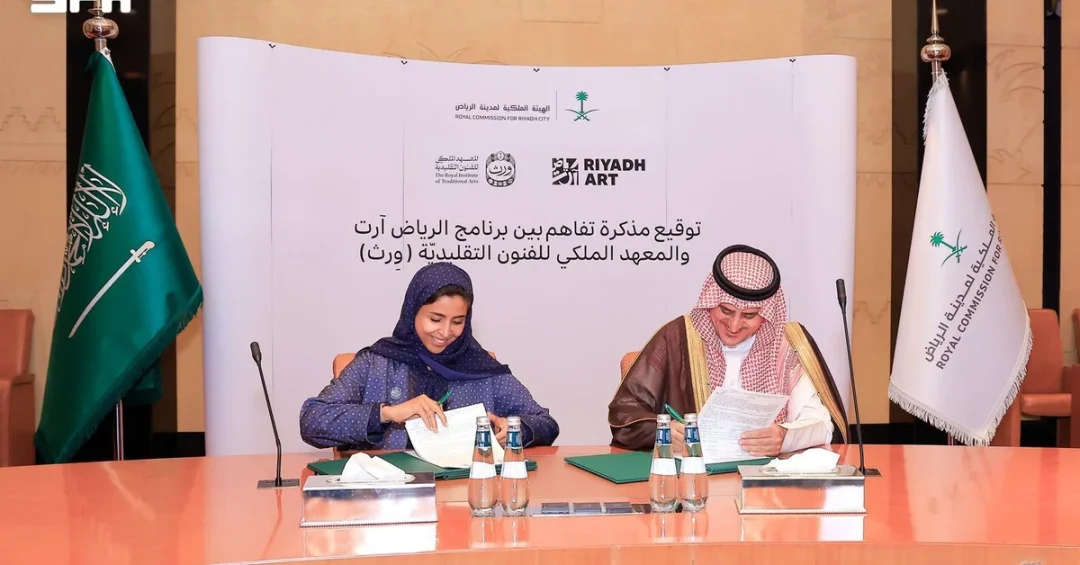
The Riyadh Art Program, one of the flagship initiatives of the Royal Commission for Riyadh City, has signed a memorandum of understanding with the Royal Institute of Traditional Arts, known as Wrth, to deepen cooperation across cultural and creative fields. The agreement, announced via the Saudi Press Agency, establishes a formal framework for joint initiatives that bring together contemporary and traditional arts, serving the objectives of both institutions and expanding their cultural reach. The MoU was signed in Riyadh on October 15, 2026, marking another step in the Kingdom’s broad effort to position culture as a central pillar of national development. What does this partnership signal about the direction of Saudi cultural policy?
The memorandum covers the development of joint creative initiatives that unite contemporary and traditional artistic practice through the exchange of expertise, art residency programs, and seasonal events. It also includes cooperation to raise the profile of both parties’ projects and programs at relevant international events and forums. The agreement reflects a growing emphasis in Saudi Arabia on institutional collaboration as a driver of cultural quality, and it aligns with the broader transformation of Riyadh into a global center for arts and creativity under Vision 2030. How might two institutions with different artistic traditions create something greater together than either could alone?
Context and Background
The Riyadh Art Program was launched under the Royal Commission for Riyadh City to transform the Saudi capital into a gallery without walls, embedding public art across the city’s neighborhoods, transport hubs, and public spaces. It is one of the largest public art initiatives in the world, designed to improve quality of life for residents and visitors while supporting the objectives of Vision 2030. The program has commissioned works from Saudi and international artists, creating landmarks that connect the city’s heritage with its modern identity. Why has public art become such an important part of Riyadh’s urban transformation?
The Royal Institute of Traditional Arts (Wrth) is dedicated to preserving, documenting, and teaching Saudi Arabia’s traditional crafts and artistic heritage. Wrth trains new generations of artisans, supports research into traditional techniques, and works to ensure that crafts such as weaving, woodwork, metalwork, and calligraphy remain living traditions rather than static memories. Its mission complements the Riyadh Art Program’s forward-looking approach, creating a natural bridge between heritage and contemporary expression. In what ways can traditional arts remain relevant in a rapidly modernizing society?
The MoU comes at a time when Saudi Arabia is investing heavily in cultural infrastructure, including museums, theaters, festivals, and creative districts. The Kingdom has hosted major international events and welcomed global artists, while also nurturing local talent through academies, grants, and residencies. This dual approach—opening to the world while strengthening domestic cultural roots—is a defining feature of the cultural strategy advanced by the Royal Commission for Riyadh City and the Ministry of Culture. How does a country balance global openness with the preservation of its own traditions?
Key Details of the Agreement
Under the memorandum, the two parties will develop joint creative initiatives that bring together contemporary and traditional arts. Specific areas of cooperation include the exchange of expertise, art residency programs, and seasonal events. The exchange of expertise is expected to involve workshops, lectures, and mentorship opportunities in which specialists from Wrth share traditional techniques with contemporary artists, while Riyadh Art Program participants bring new perspectives to heritage practitioners. Why are residencies and seasonal events such effective tools for cultural exchange?
The agreement also includes cooperation to enhance the presence of both parties’ projects and programs at relevant international events and forums. This means that Saudi traditional arts and Riyadh’s public art projects could be showcased together at global exhibitions, biennales, and cultural conferences. Such visibility supports the Kingdom’s goal of becoming a hub for cultural diplomacy and creative industries. What impression might international audiences form when they encounter Saudi heritage and contemporary art side by side?
By formalizing cooperation, the MoU creates a structured channel for planning, funding, and evaluating joint activities. It also signals to artists, artisans, and cultural institutions that collaboration across the traditional-contemporary divide is a priority. The agreement does not replace existing programs but rather adds a layer of coordination that can help both institutions reach wider audiences and achieve greater impact. How can formal agreements like this one translate into tangible opportunities for individual artists?
International and Regional Impact
The partnership carries implications beyond Saudi Arabia’s borders. As the Kingdom hosts more international cultural events, collaborations that pair traditional crafts with contemporary art can offer global audiences a more nuanced understanding of Saudi identity. Regional neighbors and international cultural organizations may see the MoU as a model for how heritage institutions and public art programs can work together. In a world where cultural tourism is increasingly competitive, such collaborations can also strengthen Saudi Arabia’s appeal as a destination. What role can cultural exchange play in building bridges between nations?
For the wider Middle East, the agreement reinforces a trend of investing in creative economies as part of diversified development strategies. Saudi Arabia’s cultural sector is creating jobs, attracting visitors, and generating intellectual property that can travel globally. By linking Wrth’s heritage expertise with the Riyadh Art Program’s international reach, the MoU helps position the Kingdom as a convener of cultural dialogue. Could this partnership inspire similar initiatives in other cities across the region?
Economic and Strategic Significance
Culture is increasingly recognized as an economic driver, not merely a social good. The creative industries generate revenue through tourism, events, merchandise, publishing, and digital content. The MoU between the Riyadh Art Program and Wrth supports the growth of a creative ecosystem in which traditional crafts can be commercialized responsibly, and contemporary art can draw on authentic local narratives. This aligns with Vision 2030’s aim to diversify the economy and create opportunities for young Saudis. How can heritage-based creative products compete in global markets?
Strategically, the agreement strengthens institutional capacity. By pooling expertise, the two entities can avoid duplication, share resources, and pursue larger projects than either could alone. The focus on international forums also supports Saudi Arabia’s cultural diplomacy, enhancing the Kingdom’s soft power. As Riyadh prepares to host major global events, a robust cultural sector will be essential to delivering memorable experiences for visitors and residents alike. What does a successful cultural economy look like in practice?
Vision 2030 Alignment
The MoU directly supports Vision 2030’s goals of enriching quality of life, promoting cultural heritage, and fostering a vibrant society. The Riyadh Art Program contributes to making the capital more livable and attractive, while Wrth ensures that traditional arts remain a source of pride and creativity. Together, they exemplify the integration of heritage and modernity that Vision 2030 champions. Why is cultural confidence considered essential to national transformation?
Looking ahead, the partnership is expected to produce residencies, exhibitions, and public events that engage diverse audiences. It also creates a platform for Saudi artists and artisans to gain international exposure and for global audiences to experience the Kingdom’s cultural richness. As Saudi Arabia continues its journey toward a diversified, knowledge-based economy, agreements like this one demonstrate how culture can serve as both a bridge to the world and a foundation for national identity. What legacy might this collaboration leave for future generations of Saudi creators?
20 Questions
Q1. What is the Riyadh Art Program?
A1. The Riyadh Art Program is an initiative of the Royal Commission for Riyadh City that transforms the Saudi capital into a gallery without walls, commissioning public art across neighborhoods, transport hubs, and public spaces to enhance quality of life and support Vision 2030.
Q2. What is Wrth?
A2. Wrth, the Royal Institute of Traditional Arts, is a Saudi institution dedicated to preserving, teaching, and promoting traditional crafts and artistic heritage, training artisans and ensuring techniques such as weaving, woodwork, and calligraphy remain living traditions.
Q3. What does the MoU between the two institutions cover?
A3. The memorandum covers joint creative initiatives uniting contemporary and traditional arts through expertise exchange, art residency programs, and seasonal events, as well as cooperation to showcase both parties’ projects at international events and forums.
Q4. When and where was the MoU signed?
A4. The memorandum was signed in Riyadh on October 15, 2026, according to an announcement carried by the Saudi Press Agency, marking a formal step in institutional cultural cooperation.
Q5. Why is this agreement significant for Saudi culture?
A5. It formalizes collaboration between a leading public art program and a heritage institution, creating structured opportunities to blend tradition with contemporary expression and strengthening the Kingdom’s cultural ecosystem.
Q6. How does the MoU support Vision 2030?
A6. It advances Vision 2030 goals of enriching quality of life, promoting cultural heritage, and building a vibrant society by integrating traditional arts into modern urban and creative life.
Q7. What are art residency programs?
A7. Art residencies provide artists and artisans with time, space, and resources to develop work, often in collaboration with peers. They can produce new creations and strengthen skills through immersion.
Q8. What kinds of seasonal events might result?
A8. Seasonal events could include exhibitions, festivals, workshops, and public performances that showcase traditional crafts alongside contemporary art, engaging residents and visitors throughout the year.
Q9. How will expertise exchange work?
A9. Expertise exchange may involve workshops, lectures, and mentorship where Wrth specialists share traditional techniques with contemporary artists, and Riyadh Art Program participants offer new perspectives to heritage practitioners.
Q10. Why is international presence important for these programs?
A10. International events and forums provide global visibility, attract cultural tourism, foster partnerships, and allow Saudi Arabia to share its heritage and contemporary creativity with worldwide audiences.
Q11. Who benefits from this MoU?
A11. Artists, artisans, cultural institutions, residents, and visitors all benefit through new opportunities, enriched programming, and greater international exposure for Saudi cultural production.
Q12. Does the agreement replace existing programs?
A12. No. The MoU adds a layer of coordination and cooperation, complementing existing initiatives by both the Riyadh Art Program and Wrth rather than replacing them.
Q13. How does this affect Riyadh as a city?
A13. It enhances Riyadh’s cultural offerings, supports its transformation into a global arts destination, and contributes to making the capital more livable and attractive for residents and tourists.
Q14. What role does the Royal Commission for Riyadh City play?
A14. The Commission oversees the Riyadh Art Program and broader urban development, ensuring cultural initiatives align with the city’s strategic goals and Vision 2030 objectives.
Q15. How can traditional arts remain relevant today?
A15. By integrating traditional techniques into contemporary design, education, and public art, institutions like Wrth ensure heritage remains a dynamic part of modern life and creative industries.
Q16. What economic benefits could arise?
A16. The partnership can stimulate creative industries, generate jobs, attract cultural tourism, and create intellectual property, supporting economic diversification under Vision 2030.
Q17. Will international artists be involved?
A17. The MoU emphasizes cooperation at international events and forums, which may involve international artists and audiences, fostering cross-cultural exchange and mutual learning.
Q18. How does this fit Saudi Arabia’s cultural diplomacy?
A18. By showcasing Saudi heritage and contemporary art globally, the partnership enhances the Kingdom’s soft power and builds bridges with international audiences and institutions.
Q19. What is the expected timeline for joint initiatives?
A19. Specific timelines will be determined by the two parties as they develop programs. The MoU establishes a framework for planning residencies, seasonal events, and exchanges.
Q20. What does this mean for young Saudi creators?
A20. Young creators gain access to mentorship, residencies, and platforms that connect them with both traditional heritage and contemporary practice, helping them build careers in the creative economy.
Reader Feedback
We value your thoughts. Please share your feedback on this article.
Your feedback helps us improve our coverage.