


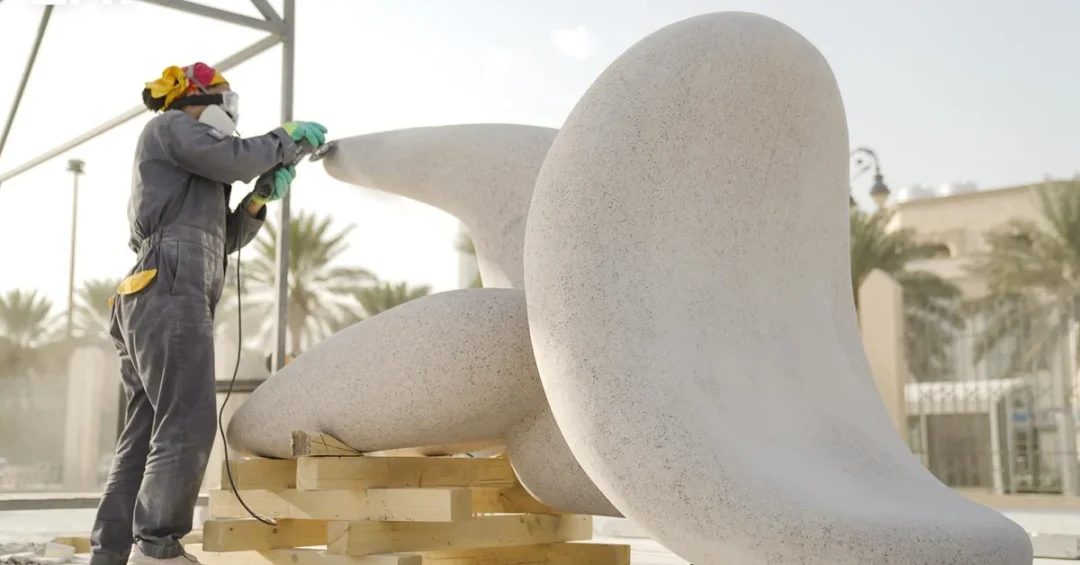
Riyadh Art, a flagship initiative of the Royal Commission for Riyadh City, has opened applications for the eighth edition of the Tuwaiq Sculpture Symposium, set to take place in Riyadh in early 2027, with submissions accepted from October 18 to November 8, 2026. The announcement, released through official Saudi channels, confirms that 20 artists will be selected to create new sculptural works in the Saudi capital, continuing a program that has become a defining feature of Riyadh’s cultural calendar. The symposium will once again bring together established and emerging sculptors from the Kingdom and around the world, reinforcing Riyadh’s position as a global destination for public art and creative exchange.
Could a single symposium reshape how the world sees a city’s cultural ambitions? For Riyadh, the answer is unfolding in stone, metal, and mosaic. Since its launch, the Tuwaiq Sculpture Symposium has grown into one of the region’s most closely watched public art programs, transforming raw materials into landmarks that residents and visitors encounter in their daily lives. The eighth edition builds on that legacy with a renewed curatorial vision and an expanded palette of materials, signaling that the initiative is not merely recurring but evolving. For international observers, the program offers a clear window into how Saudi Arabia is weaving culture into its broader urban and social transformation.
Context and Background
What makes the Tuwaiq Sculpture Symposium more than just another art event? Organized under Riyadh Art, one of the flagship projects of the Royal Commission for Riyadh City, the symposium forms part of a long-term effort to turn the Saudi capital into an open-air gallery. Riyadh Art is one of the largest public art initiatives in the world, with a mandate to install hundreds of artworks across the city and to engage both Saudi and international artists in the process. The Tuwaiq Sculpture Symposium sits at the heart of that mission, functioning as both a production platform and a cultural diplomacy tool.
The symposium takes its name from the Tuwaiq Escarpment, the dramatic geological ridge that runs through central Saudi Arabia and has long served as a source of stone, shelter, and inspiration for communities in the region. By anchoring the program in that landscape, Riyadh Art connects contemporary sculpture to the natural and human history of the Kingdom. Each edition invites artists to respond to a theme while working with materials that carry their own stories. The result is a body of work that is simultaneously global in outlook and deeply rooted in place, a balance that has become a hallmark of Saudi cultural strategy.
Over its first seven editions, the symposium has drawn participants from dozens of countries, produced a substantial collection of public sculptures, and helped build a community of sculptors working in the Kingdom. It has also created opportunities for Saudi artists to collaborate with international peers, exchange techniques, and see their work installed in prominent public spaces. For a city undergoing rapid expansion, these artworks serve as anchors of identity, giving new districts a sense of history even as they are being built.
Key Details
Who will guide the eighth edition, and what will they be looking for? Riyadh Art has named a three-member curatorial team to lead the symposium’s artistic vision and select the participating artists. The team comprises Aldo Rinaldi, a British art curator and producer; Auronda Scalera, a British-Italian curator, artistic director, and cultural strategist; and Dr. Soha Al-Zaid, a Saudi artist, researcher, academic, and art curator. Together, they bring a blend of international curatorial experience and deep knowledge of Saudi Arabia’s artistic landscape, a combination that reflects the symposium’s dual commitment to global dialogue and local relevance.
Applications are open from October 18 to November 8, 2026, to artists in Saudi Arabia and worldwide. A total of 20 artists will be selected to create sculptural works in Riyadh. Applicants must demonstrate at least three years of professional experience in sculpture, exhibiting artworks, and executing public art commissions. These criteria ensure that the selected cohort can deliver ambitious, durable works suited to outdoor public settings, where factors such as scale, material behavior, and long-term maintenance matter as much as artistic concept.
The eighth edition will explore the layers of land, memory, and culture that define a place and their relationship with the transformations it undergoes. According to the program’s announced concept, roots are viewed not merely as a connection to the past but also as a source of growth and the ability to reshape a place and envision its future. That framing resonates strongly in Riyadh, where new neighborhoods, cultural venues, and public spaces are rising alongside historic sites, and where questions of identity and continuity are part of everyday civic conversation.
Materials, Craft, and Artistic Vision
What role do materials play in telling a story about place? The eighth edition will feature a diverse range of materials, including granite, metals, decorative breeze blocks, mosaics, and cement, in line with the symposium’s approved artistic and production framework. This expanded material palette encourages artists to move beyond conventional stone carving and to experiment with texture, pattern, and industrial form. It also reflects the built environment of Riyadh itself, where traditional motifs and modern construction techniques coexist in the urban fabric.
Selected artists working with stone will be able to use varieties sourced from Saudi Arabia in three distinctive colors: Royal Gold, Green, and Royal Pink, alongside black basalt. These materials open up opportunities for innovative approaches to traditional resources, allowing sculptors to highlight the geological character of the Kingdom while pushing the boundaries of form and finish. The availability of locally sourced stone also reduces the logistical and environmental costs of production, a practical consideration that aligns with broader sustainability goals in Saudi urban development.
For artists, the symposium offers more than a commission. It provides access to fabrication support, a collaborative working environment, and the rare opportunity to see a work conceived in the studio realized at public scale in a city that is actively shaping its cultural identity. For audiences in Riyadh, it offers the chance to watch art being made, to meet the creators, and to develop a personal connection to works that will remain in the city for generations. That combination of process and permanence is central to the symposium’s appeal.
International and Regional Impact
How does a sculpture symposium in Riyadh resonate beyond the Kingdom’s borders? The Tuwaiq Sculpture Symposium has become a meeting point for artists from different traditions, and the eighth edition is expected to continue that pattern. By inviting applications from around the world while maintaining a strong Saudi presence, the program positions Riyadh as a hub where global and regional artistic currents intersect. For international artists, participation offers visibility in a fast-growing cultural market and a chance to engage with peers and audiences in the Gulf.
Regionally, the symposium contributes to a broader movement in which Gulf cities are investing in culture as a pillar of economic diversification and soft power. Saudi Arabia’s cultural sector has expanded significantly in recent years, with new festivals, biennials, museums, and residency programs attracting attention from the global art world. The Tuwaiq Sculpture Symposium complements these efforts by focusing specifically on public art and sculpture, a discipline that directly shapes the daily experience of urban residents and visitors. Its works become part of the city’s visual identity, encountered on streets, in parks, and in civic spaces.
The curatorial team’s international composition also signals an openness to cross-cultural dialogue. Aldo Rinaldi and Auronda Scalera bring experience from the global art scene, while Dr. Soha Al-Zaid contributes scholarly and curatorial insight grounded in Saudi artistic practice. Their collaboration is likely to produce a selection that is both internationally credible and locally meaningful, a balance that has become a priority for Saudi cultural institutions as they scale up their programming.
Economic and Strategic Significance
Why should economists and policymakers pay attention to a sculpture symposium? Cultural investment is increasingly recognized as a driver of urban competitiveness, tourism, and quality of life. Public art can increase foot traffic in commercial districts, enhance property values, and create distinctive destinations that attract visitors. For Riyadh, which is pursuing ambitious goals for population growth and international visitation, initiatives like the Tuwaiq Sculpture Symposium contribute to the city’s appeal as a place to live, work, and travel.
The program also supports the development of creative industries and skilled trades. Fabrication, stone sourcing, installation, and maintenance require specialized expertise, and a recurring symposium helps build local capacity in these areas. Saudi artists and technicians gain experience working at scale, while international participants bring new techniques and perspectives. Over time, this exchange strengthens the ecosystem of suppliers, studios, and institutions that sustains a vibrant art sector. The use of Saudi-sourced stone further connects the program to local supply chains and geological resources.
Strategically, the symposium reinforces Riyadh’s role as a cultural capital within the region and beyond. It complements major developments such as new museums, cultural districts, and entertainment venues, creating a layered cultural offering that can serve both residents and tourists. By embedding art in public space, the program ensures that cultural investment reaches beyond institutional walls and becomes part of the everyday urban experience. That accessibility is a key ingredient in building long-term public support for cultural spending.
Vision 2030 Alignment
How does the Tuwaiq Sculpture Symposium connect to Saudi Arabia’s long-term national vision? Culture and quality of life are central pillars of Vision 2030, the Kingdom’s comprehensive reform strategy. Initiatives that enrich public space, support artists, and attract international talent contribute directly to the vision’s goals of diversifying the economy, enhancing livability, and projecting a dynamic national image. Riyadh Art, as a Royal Commission for Riyadh City project, is a concrete expression of those ambitions, turning policy objectives into visible, tangible improvements in the urban environment.
The symposium also advances the vision’s emphasis on international engagement and knowledge exchange. By welcoming artists from around the world and partnering with curators of global standing, the program builds bridges between Saudi Arabia and the international cultural community. It creates opportunities for Saudi artists to be seen and heard on the world stage, while giving global audiences a reason to engage with the Kingdom’s creative scene. In doing so, it contributes to a broader narrative of a nation that is modernizing rapidly while honoring its heritage.
As applications open and the curatorial team begins its work, the eighth edition of the Tuwaiq Sculpture Symposium stands as a forward-looking statement about Riyadh’s future. The works created in 2027 will join a growing collection that documents the city’s transformation and the creativity of those who shaped it. For artists, the invitation is open; for audiences, the promise is a richer, more expressive public realm. And for Saudi Arabia, the symposium is another step in a long-term journey toward becoming a global center of culture, innovation, and quality of life.
20 Questions
Q1. What is the Tuwaiq Sculpture Symposium?
A1. The Tuwaiq Sculpture Symposium is a public art program organized by Riyadh Art, a Royal Commission for Riyadh City project. It invites sculptors to create works in Riyadh, contributing to the city’s growing collection of public art.
Q2. When will the eighth edition take place?
A2. The eighth edition is scheduled to take place in Riyadh in early 2027, following the application period that runs from October 18 to November 8, 2026.
Q3. Who can apply for the symposium?
A3. Artists from Saudi Arabia and around the world can apply. Applicants must have at least three years of professional experience in sculpture, exhibiting artworks, and executing public art commissions.
Q4. How many artists will be selected?
A4. A total of 20 artists will be selected by the curators to create sculptural works in Riyadh for the eighth edition of the symposium.
Q5. Who are the curators for the eighth edition?
A5. The curatorial team comprises British art curator and producer Aldo Rinaldi, British-Italian curator and cultural strategist Auronda Scalera, and Saudi artist, researcher, academic, and curator Dr. Soha Al-Zaid.
Q6. What is the theme of the eighth edition?
A6. The eighth edition explores the layers of land, memory, and culture that define a place and their relationship with the transformations it undergoes, viewing roots as a source of growth and future vision.
Q7. What materials will be used in the eighth edition?
A7. The edition will feature granite, metals, decorative breeze blocks, mosaics, and cement, in line with the symposium’s approved artistic and production framework.
Q8. What types of Saudi stone are available to artists?
A8. Selected artists working with stone can use Saudi-sourced varieties in Royal Gold, Green, and Royal Pink, alongside black basalt, enabling innovative approaches to traditional resources.
Q9. When do applications open and close?
A9. Applications are open from October 18 to November 8, 2026. Artists interested in participating should apply within this window through the Riyadh Art website.
Q10. What is Riyadh Art?
A10. Riyadh Art is one of the Royal Commission for Riyadh City’s projects and one of the world’s largest public art initiatives, aiming to transform Riyadh into a gallery without walls.
Q11. How does the symposium support Saudi artists?
A11. It provides Saudi artists with opportunities to collaborate with international peers, gain experience in large-scale public commissions, and have their work installed in prominent public spaces in Riyadh.
Q12. What is the significance of the Tuwaiq name?
A12. The symposium is named after the Tuwaiq Escarpment, a prominent geological feature in central Saudi Arabia that has long provided stone and inspiration for local communities.
Q13. How does the symposium contribute to Riyadh’s cultural scene?
A13. It adds to the city’s public art collection, attracts international talent, and creates opportunities for residents and visitors to engage with contemporary sculpture in everyday spaces.
Q14. What experience is required for applicants?
A14. Applicants must have at least three years of professional experience in sculpture, including exhibiting artworks and executing public art commissions, ensuring they can deliver durable public works.
Q15. How does the symposium align with Vision 2030?
A15. It supports Vision 2030 goals related to culture, quality of life, economic diversification, and international engagement by enriching public space and attracting global creative talent.
Q16. What happens to the sculptures created?
A16. The sculptures become part of Riyadh’s public art collection, installed in public spaces across the city, where they contribute to the urban environment and cultural identity.
Q17. Who organizes the symposium?
A17. The symposium is organized by Riyadh Art, a project of the Royal Commission for Riyadh City, which oversees major cultural and urban development initiatives in the Saudi capital.
Q18. Why is public art important for cities?
A18. Public art enhances urban identity, attracts visitors, supports creative industries, and improves quality of life by making culture accessible in everyday spaces.
Q19. How can artists apply?
A19. Artists can find application details on the Riyadh Art website and the symposium’s dedicated page, where guidelines and submission requirements are available.
Q20. What does the future hold for the symposium?
A20. The symposium is expected to continue growing, expanding Riyadh’s public art collection and strengthening the city’s position as a global cultural destination in line with Saudi Arabia’s long-term vision.
Reader Feedback
We value your thoughts. Please share your feedback on this article.
Your feedback helps us improve our coverage.