


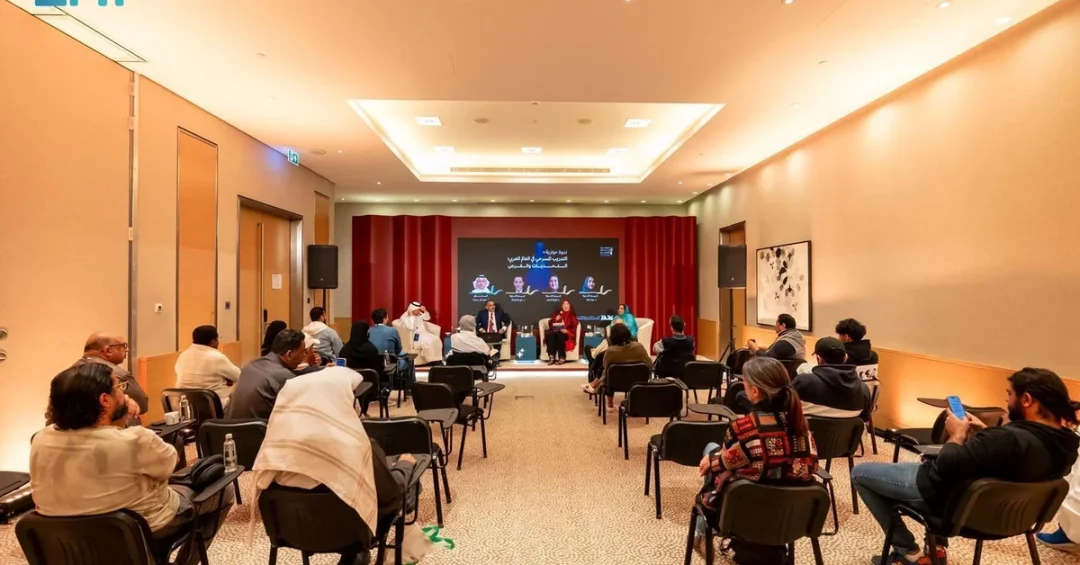
The Riyadh Theater Festival hosted a dedicated dialogue symposium on the challenges and opportunities of theatrical training in the Arab world, bringing together artists, academics, and cultural leaders to examine how the region can strengthen the craft of performance for future generations. The session, held as part of the festival’s official program and reported by the Saudi Press Agency, placed professional training and academic research at the center of the conversation, reflecting the Kingdom’s growing commitment to nurturing cultural talent under the umbrella of Vision 2030.
The symposium convened during a festival that opened on Sunday and ran through December 26, positioning Riyadh once again as a meeting point for the Arab cultural community. Participants examined practical obstacles, from the limited availability of specialized training programs to financial constraints and cultural barriers, while also mapping out partnership opportunities that could raise standards across the region. Isn’t it significant that a single festival session can gather voices from across the Arab world to confront shared challenges in the performing arts?
Context and Background
What makes this symposium timely is the broader transformation underway in Saudi Arabia’s cultural sector. Since the establishment of the Ministry of Culture and its dedicated commissions, including the Theater and Performing Arts Commission, the Kingdom has moved decisively to build an ecosystem where theater can flourish as both an art form and a profession. The Riyadh Theater Festival has become one of the flagship platforms within that ecosystem, offering a stage for local and regional companies while creating space for the kind of reflective dialogue that sustains long-term growth.
The symposium’s focus on training speaks directly to a structural gap that has persisted across the Arab world for decades. While the region possesses rich storytelling traditions, formal pathways into professional theater have often been fragmented, underfunded, or concentrated in a handful of institutions. Participants noted that without robust training pipelines, talented young performers, directors, designers, and technicians struggle to convert passion into sustainable careers. The festival’s decision to devote a session to this issue signals that Saudi Arabia is thinking beyond individual productions and toward the foundations of an industry.
It is also worth recalling that the Kingdom’s cultural calendar has expanded rapidly in recent years, with festivals, biennales, and residency programs appearing across Riyadh, Jeddah, AlUla, and the Eastern Province. Each of these initiatives contributes to a wider goal: making culture a visible, accessible, and economically meaningful part of national life. The Riyadh Theater Festival, in this context, is not an isolated event but a node in a growing network that connects Saudi practitioners with their counterparts from neighboring countries and beyond.
Key Details from the Symposium
According to the Saudi Press Agency, the symposium addressed several core issues. The first was the limited availability of specialized training programs, which restricts how many aspiring theater professionals can access structured education in acting, directing, stage design, dramaturgy, and technical production. The second was financial constraints, a familiar challenge for cultural institutions across the region, where theater companies frequently operate on tight budgets and depend on project-based funding. The third was cultural obstacles, including lingering perceptions that theater is a secondary pursuit rather than a serious professional path.
Participants stressed the critical need for strengthened partnerships between Arab countries to support theatrical training and academic research. This call reflects a recognition that no single country can build a comprehensive training infrastructure alone, and that shared curricula, exchange programs, and joint research initiatives could multiply the impact of national investments. The symposium also underscored the vital role of theater in education and public awareness, framing performance not merely as entertainment but as a tool for developing critical thinking, empathy, and civic engagement among young people.
Another theme was the importance of innovative educational programs that foster skill development and deliver tangible results in the performing arts. Rather than relying solely on traditional conservatory models, participants explored approaches that combine classroom instruction with practical production experience, mentorship, and digital tools. How can the region ensure that these ideas move from symposium discussions into classrooms, rehearsal rooms, and stages? The answer, according to the session’s tone, lies in sustained collaboration and a willingness to experiment with new formats.
International and Regional Impact
The implications of this dialogue extend well beyond Saudi Arabia’s borders. The Arab world shares a linguistic and cultural heritage that makes cross-border collaboration in theater unusually promising, yet institutional links have often been weaker than the artistic connections themselves. By hosting a symposium that explicitly calls for stronger partnerships, Riyadh is positioning itself as a convening power in the cultural field, a role that complements its growing diplomatic and economic weight. For international observers, this is another sign that Saudi Arabia’s cultural diplomacy is maturing into a sustained program rather than a series of one-off events.
Regional impact could be felt in several practical ways. Joint training programs could allow smaller national theater communities to benefit from expertise and facilities that are more developed elsewhere. Academic research collaborations could produce shared archives, translated texts, and comparative studies that enrich the entire region’s understanding of its own performance traditions. Exchange residencies could give young artists exposure to different audiences and working methods, raising the overall standard of production. Could this symposium mark the beginning of a more integrated Arab theater network?
The international dimension is equally notable. Global theater institutions have shown increasing interest in the Gulf’s cultural scene, and Saudi Arabia’s investments in festivals, venues, and education make it a natural partner for exchanges. The Riyadh Theater Festival’s symposium therefore contributes to a wider conversation about how non-Western theater traditions can be preserved, adapted, and shared in a globalized cultural marketplace, without losing their distinctive local character.
Economic and Strategic Significance
From an economic standpoint, the development of a professional theater sector aligns with the Kingdom’s efforts to diversify away from oil dependence and build a knowledge- and creativity-based economy. Cultural industries generate employment across a wide range of roles, from performers and directors to lighting technicians, costume designers, marketers, and venue managers. Investing in training is therefore not only an artistic priority but an economic one, since a skilled workforce is a prerequisite for a thriving creative sector. The symposium’s emphasis on tangible results in skill development reflects this practical orientation.
Strategically, culture has become an important element of Saudi Arabia’s international engagement. Festivals and symposia create opportunities for people-to-people exchange, soft power projection, and the kind of informal diplomacy that complements official channels. The Riyadh Theater Festival, by inviting regional participation and addressing shared challenges, strengthens the Kingdom’s reputation as a responsible and constructive cultural leader. It also supports the broader goal of attracting visitors and investors who are curious about the Kingdom’s rapidly evolving social and cultural landscape.
For young Saudis, the significance is especially direct. A growing cultural sector offers career paths that did not exist a decade ago, and training programs are the bridge between ambition and opportunity. When a festival devotes serious attention to education, it sends a message that the Kingdom values the long-term development of its talent, not just the spectacle of opening nights. Isn’t that precisely the kind of foundation a sustainable creative economy requires?
Vision 2030 Alignment
The symposium sits comfortably within the framework of Saudi Vision 2030, which places quality of life, cultural enrichment, and economic diversification among its central objectives. The Vision’s Quality of Life Program explicitly supports the growth of cultural and entertainment offerings, while the Human Capability Development Program emphasizes education and skills as drivers of national progress. By focusing on theatrical training, the Riyadh Theater Festival advances both agendas, connecting cultural ambition with human development in a concrete way.
Equally important is the Vision’s emphasis on international openness and partnership. The call at the symposium for stronger Arab collaboration echoes the Kingdom’s wider approach of building bridges with regional and global partners across many fields. As Saudi Arabia continues to invest in theaters, festivals, and training institutions, it is also investing in the idea that culture can be a shared language for the Arab world and a point of connection with the broader international community.
Looking ahead, the conversations initiated in Riyadh may well shape curricula, partnerships, and career pathways for years to come. The festival has demonstrated that the Kingdom is not only a host of cultural events but a contributor to the intellectual and professional infrastructure that sustains them. For a region rich in stories and talent, that contribution could prove transformative. As the Riyadh Theater Festival concludes its current edition, it leaves behind a clear message: the future of Arab theater will be built through training, collaboration, and a shared commitment to excellence.
20 Questions
Q1. What was the main focus of the symposium held at the Riyadh Theater Festival?
A1. The symposium focused on the challenges and opportunities of theatrical training in the Arab world, examining how to strengthen professional education, academic research, and regional collaboration in the performing arts.
Q2. When and where did the symposium take place?
A2. It was held during the Riyadh Theater Festival in Riyadh, as reported by the Saudi Press Agency on December 25, 2024. The festival ran from Sunday through December 26.
Q3. What key issues did participants identify in theatrical training?
A3. They highlighted limited availability of specialized training programs, financial constraints facing cultural institutions, and cultural obstacles that can discourage young people from pursuing theater as a profession.
Q4. Why is regional partnership considered important for theater training?
A4. Participants stressed that partnerships between Arab countries can pool expertise, share curricula, support academic research, and expand opportunities for artists across the region more effectively than isolated national efforts.
Q5. What role does theater play in education according to the symposium?
A5. Theater was described as vital for education and public awareness, helping develop critical thinking, empathy, and civic engagement among young people while enriching cultural understanding.
Q6. What kind of educational programs were recommended?
A6. The symposium highlighted innovative programs that foster practical skill development and deliver tangible results in the performing arts, combining classroom learning with production experience and mentorship.
Q7. What is the Riyadh Theater Festival?
A7. It is a leading cultural event in Saudi Arabia that celebrates the Kingdom’s vibrant theater scene, bringing together local and regional artists, productions, and discussions over several days.
Q8. When did the Riyadh Theater Festival begin and end?
A8. The festival commenced on Sunday and concluded on December 26, according to the Saudi Press Agency report on its activities.
Q9. How does the symposium reflect Saudi Arabia’s cultural goals?
A9. It reflects the Kingdom’s commitment under Vision 2030 to develop a thriving cultural sector, support talent, and position Saudi Arabia as a regional leader in the arts.
Q10. Which Saudi institutions support theater development?
A10. The Ministry of Culture and its Theater and Performing Arts Commission lead national efforts to build infrastructure, support artists, and organize festivals and training initiatives.
Q11. What financial challenges does Arab theater face?
A11. Many theater companies operate on limited budgets and rely on project-based funding, which can restrict training, production quality, and long-term planning across the region.
Q12. What cultural obstacles were mentioned?
A12. Participants noted lingering perceptions that theater is a secondary pursuit, which can discourage families and young people from viewing it as a serious professional career path.
Q13. How can academic research support theater in the Arab world?
A13. Research can document performance traditions, evaluate training methods, and produce shared archives and studies that inform curricula and raise professional standards across the region.
Q14. What benefits could exchange programs bring?
A14. Exchange residencies and joint programs can expose young artists to different audiences and methods, build networks, and improve the overall quality of productions in participating countries.
Q15. Why is training important for a sustainable theater sector?
A15. Skilled performers, directors, designers, and technicians are essential for consistent, high-quality productions, and training pipelines turn individual talent into a durable creative workforce.
Q16. How does theater contribute to Saudi Arabia’s economy?
A16. A professional theater sector creates jobs across performance, production, marketing, and venue management, supporting economic diversification and the growth of creative industries.
Q17. What message does the festival send to young Saudis?
A17. It signals that cultural careers are valued and supported, encouraging young people to pursue professional paths in the performing arts with confidence and ambition.
Q18. How does the symposium support cultural diplomacy?
A18. By convening regional voices and calling for collaboration, it strengthens people-to-people ties and reinforces Saudi Arabia’s reputation as a constructive cultural leader in the Arab world.
Q19. What are the next steps after such a symposium?
A19. Follow-up typically involves translating recommendations into partnerships, curricula, and pilot programs, with cultural institutions and educators working together to implement practical initiatives.
Q20. How does this event connect to Vision 2030?
A20. It advances Vision 2030 goals for quality of life, human capability development, and economic diversification by investing in cultural talent and regional cooperation in the performing arts.
Reader Feedback
We value your thoughts. Please share your feedback on this article.
Your feedback helps us improve our coverage.