


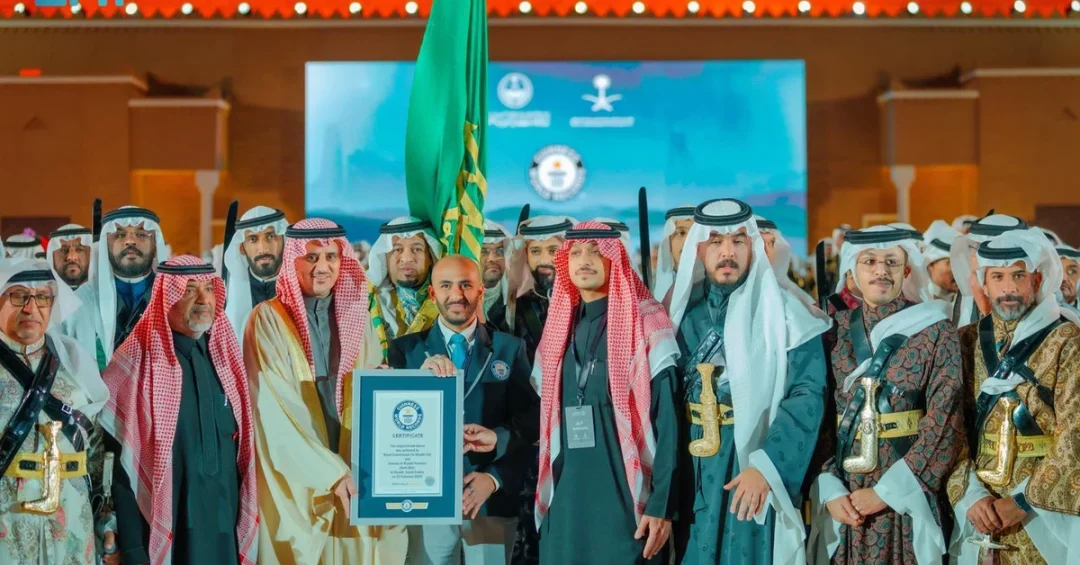
Riyadh made history by setting a Guinness World Record for the largest Saudi Ardah performance during the Founding Day celebrations, with 633 participants showcasing this iconic cultural tradition. The event, organized by the Royal Commission for Riyadh City and the Principality of Riyadh Region, took place from February 20 to 23, 2025, attracting over 50,000 visitors.
Context and Background
The Founding Day celebrations commemorate the establishment of the First Saudi State in 1727, reflecting the Kingdom’s deep-rooted heritage and national pride. The Ardah, a traditional sword dance, symbolizes unity, strength, and cultural identity, often performed during significant national events. This year’s record-breaking performance underscores Saudi Arabia’s commitment to preserving and promoting its cultural legacy.
Key Details
The Guinness World Record was achieved with 633 participants performing the Ardah in unison, a testament to the Kingdom’s organizational prowess and cultural vibrancy. The event was part of a four-day celebration featuring various cultural, artistic, and historical activities. The Royal Commission for Riyadh City and the Principality of Riyadh Region spearheaded the festivities, ensuring a seamless and memorable experience for attendees.
Implications and Impact
The record-setting Ardah performance not only highlights Saudi Arabia’s rich cultural heritage but also enhances its global cultural footprint. By showcasing traditions like the Ardah on such a grand scale, the Kingdom fosters international appreciation for its customs and strengthens its soft power. The event also boosts tourism, as visitors from around the world witness these unique cultural expressions firsthand.
Vision 2030 Alignment
This achievement aligns with Vision 2030’s goals of preserving national identity while promoting cultural exchange. By celebrating traditions like the Ardah, Saudi Arabia reinforces its commitment to cultural preservation and global engagement, key pillars of the Vision 2030 framework. Such initiatives also support the Kingdom’s ambition to become a leading cultural and tourism destination.
20 Questions
Q1. What is the Saudi Ardah?
A1. The Saudi Ardah is a traditional sword dance that symbolizes unity and strength, often performed during national celebrations and cultural events.
Q2. How many participants were involved in the record-breaking Ardah performance?
A2. The record-breaking Ardah performance involved 633 participants, setting a new Guinness World Record.
Q3. When did the Founding Day celebrations take place?
A3. The Founding Day celebrations were held from February 20 to 23, 2025, in Riyadh.
Q4. Who organized the Founding Day celebrations?
A4. The Royal Commission for Riyadh City and the Principality of Riyadh Region organized the Founding Day celebrations.
Q5. What is the significance of Founding Day?
A5. Founding Day commemorates the establishment of the First Saudi State in 1727, celebrating the Kingdom’s historical and cultural roots.
Q6. How many visitors attended the Founding Day celebrations?
A6. Over 50,000 visitors attended the Founding Day celebrations in Riyadh.
Q7. What other activities were part of the Founding Day celebrations?
A7. The celebrations included various cultural, artistic, and historical activities, showcasing Saudi Arabia’s rich heritage.
Q8. Why is the Ardah important in Saudi culture?
A8. The Ardah is a symbol of national unity and cultural identity, often performed during significant events to reflect pride in Saudi heritage.
Q9. How does this event align with Vision 2030?
A9. The event aligns with Vision 2030 by promoting cultural preservation and global engagement, key pillars of the Kingdom’s strategic framework.
Q10. What role does the Royal Commission for Riyadh City play in cultural events?
A10. The Royal Commission for Riyadh City organizes and oversees major cultural events, ensuring they reflect the Kingdom’s heritage and Vision 2030 goals.
Q11. How does the Ardah performance boost tourism?
A11. The Ardah performance attracts international visitors, showcasing Saudi culture and enhancing the Kingdom’s appeal as a tourism destination.
Q12. What is the historical origin of the Ardah?
A12. The Ardah has its roots in ancient Arabian traditions, historically performed to rally warriors and celebrate victories.
Q13. How does the Guinness World Record benefit Saudi Arabia?
A13. The Guinness World Record highlights Saudi Arabia’s cultural vibrancy and organizational capabilities, boosting its global reputation.
Q14. What are the key elements of the Ardah performance?
A14. The Ardah involves synchronized movements, traditional music, and the brandishing of swords, symbolizing unity and strength.
Q15. How does the Kingdom promote cultural heritage?
A15. Saudi Arabia promotes cultural heritage through events like the Founding Day celebrations, museums, and UNESCO-recognized sites.
Q16. What is the role of the Principality of Riyadh Region in cultural events?
A16. The Principality of Riyadh Region collaborates with other entities to organize and host cultural events, ensuring their success and widespread appeal.
Q17. How does the Ardah reflect Saudi identity?
A17. The Ardah embodies Saudi values of unity, pride, and tradition, serving as a powerful expression of national identity.
Q18. What future cultural events are planned in Saudi Arabia?
A18. Saudi Arabia plans to host numerous cultural events, including festivals, exhibitions, and performances, as part of its Vision 2030 cultural strategy.
Q19. How can international visitors experience Saudi culture?
A19. International visitors can experience Saudi culture through events like the Founding Day celebrations, heritage sites, and cultural festivals.
Q20. What is the global significance of Saudi Arabia’s cultural initiatives?
A20. Saudi Arabia’s cultural initiatives foster global understanding and appreciation of its heritage, strengthening international cultural ties and soft power.
Reader Feedback
We value your thoughts. Please share your feedback on this article.
Your feedback helps us improve our coverage.