


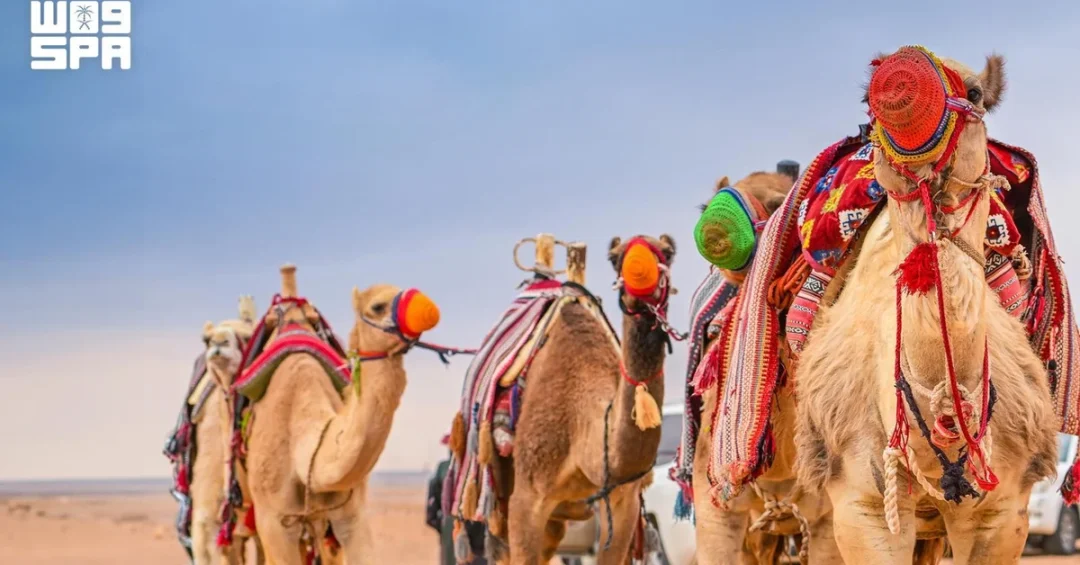
Traditional camel handlers known locally as hajjana are preserving the skills and spirit of the ancient Arabian caravans, according to information released through the Saudi Press Agency (SPA). These skilled handlers, who guide, ride, and accompany camels across the Kingdom’s vast deserts, represent a living connection to a way of life that once sustained travel and trade across the Arabian Peninsula. As Saudi Arabia continues to celebrate and document its cultural heritage, the hajjana stand as custodians of knowledge passed down through generations of desert travelers.
In a report from Rafha, the SPA detailed how these handlers recreate the appearance and rhythm of historic caravans, wearing traditional attire and managing camels adorned with traditional saddles, coverings, and decorative elements. Their enduring role speaks to the deep relationship between camels and traditional Saudi life, a bond that continues to feature prominently in national and cultural events. Why does this ancient practice still resonate so strongly in a modernizing Kingdom? The answer lies in how heritage and progress are woven together within Saudi Arabia’s national identity and its Vision 2030 ambitions.
Context and Background
For centuries, the camel served as the backbone of life and movement across the Arabian Peninsula. Caravans carried goods, people, and ideas across enormous distances, linking settlements and enabling trade routes that shaped the region’s history. The hajjana, the traditional handlers of these caravans, were essential to that world. During camel treks, they lead the animals, ride them, or accompany them on foot, ensuring the orderly movement of the caravan through skills and knowledge refined over countless generations.
What exactly did this role demand of those who carried it? It required intimate knowledge of camel behavior, terrain, weather, and the rhythms of desert travel, a body of expertise acquired not in classrooms but through apprenticeship and lived experience. As the modern Kingdom developed roads, vehicles, and air travel, the practical necessity of the caravan diminished, yet the cultural value of the hajjana never faded. Instead, their practices were carried forward as a distinctive expression of Saudi heritage, kept alive at festivals, national celebrations, and cultural events that honor the Kingdom’s Bedouin roots.
The SPA report situates the hajjana within the longstanding relationship between camels and traditional ways of life, describing them as a living link to the Kingdom’s heritage. This framing matters because it positions the handlers not as a relic of the past but as active participants in the present, whose skills remain visible and valued in contemporary Saudi society. Each trek they lead and each caravan they recreate contributes to a broader national effort to document, celebrate, and transmit the traditions of the Arabian Peninsula to new generations and to international audiences.
Key Details and Cultural Practices
According to the SPA, the hajjana wear traditional attire that reflects the dress of historic desert travelers, pairing their clothing with camels outfitted in traditional saddles, coverings, and decorative elements. This attention to detail reconstructs the appearance of ancient caravans, allowing observers to glimpse how travel across the Arabian Peninsula once looked and felt. The handlers’ work is both practical and symbolic: they manage the animals with genuine skill while also performing a living tribute to the past.
How does a single caravan bring history to life for those who witness it? When a line of decorated camels moves across the desert under the guidance of traditionally dressed handlers, it transforms an abstract historical narrative into something tangible and immediate. The ordered procession, the familiar tack and trappings, and the handler’s quiet command of the animals together evoke the caravans that once connected the Peninsula to the wider world. For Saudi and international audiences alike, such scenes offer an accessible entry point into understanding the Kingdom’s desert heritage.
The report emphasizes that the handlers’ skills and practices continue to feature in national and cultural events as a distinctive expression of Saudi heritage. This means the hajjana are not only preserving private traditions but also contributing to public celebrations that showcase the Kingdom’s identity. Their presence at such events reinforces the connection between daily life, national pride, and the shared history of the Arabian Peninsula, ensuring that the techniques of guiding and managing camels remain part of the Kingdom’s living culture rather than fading into memory.
International and Regional Impact
The preservation of the hajjana tradition carries significance beyond Saudi Arabia’s borders. Across the wider region, camel husbandry and caravan heritage are shared threads that connect Gulf societies and the broader Arab world. By actively maintaining and celebrating these practices, the Kingdom reinforces a common cultural heritage that resonates with neighbors and partners throughout the region. What does this shared heritage mean for regional identity today? It provides a unifying narrative that transcends modern borders and reminds audiences of the deep historical ties that bind the Arabian Peninsula.
For international audiences, the hajjana offer a compelling window into Saudi culture at a moment when global interest in the Kingdom is higher than ever. As Saudi Arabia welcomes growing numbers of visitors, cultural events, and international observers, traditions like these help tell a richer story than headlines alone can convey. They present the Kingdom as a place where ancient customs and modern development coexist, inviting the world to appreciate the depth of Saudi heritage alongside its contemporary achievements.
Economic and Strategic Significance
Heritage preservation is closely tied to Saudi Arabia’s broader economic and strategic goals. Cultural tourism has become an increasingly important pillar of the Kingdom’s diversification efforts, and authentic traditions such as those of the hajjana add distinctive value to the experiences Saudi Arabia can offer visitors. Why should a modern economy invest in ancient skills? Because heritage is a genuine asset, one that differentiates destinations, supports local communities, and creates meaningful cultural connections that visitors remember long after they return home.
The camel itself has also become a symbol of national pride and economic activity in the Kingdom, with camel festivals, markets, and related enterprises drawing attention and investment. The hajjana tradition sits at the heart of this renewed appreciation, reinforcing the camel’s status as a creature of both historical and contemporary importance. By sustaining the handlers’ skills, Saudi Arabia safeguards a cultural resource that complements its strategic priorities, aligning heritage conservation with opportunity and long-term development.
Vision 2030 Alignment
The work of the hajjana fits naturally within Vision 2030, Saudi Arabia’s national transformation strategy, which places a strong emphasis on preserving cultural heritage while building a diversified and globally connected economy. By keeping traditional skills alive and showcasing them at national and cultural events, the handlers contribute directly to the vision’s cultural objectives, ensuring that modernization strengthens rather than erases the Kingdom’s identity. How can a nation move forward without losing its roots? Saudi Arabia’s approach demonstrates that heritage and progress can advance together, each reinforcing the other.
Looking ahead, the continued celebration of the hajjana reflects the Kingdom’s commitment to honoring its past as it shapes its future. Their skills, attire, and traditions remain a distinctive expression of Saudi heritage, carried forward by dedicated individuals and recognized on national platforms. As Vision 2030 continues to unfold, the living legacy of the ancient caravans will endure, connecting the Kingdom’s desert history to its aspirations for the decades to come and projecting a confident, culturally grounded image to the world.
20 Questions
Q1. What does the term hajjana refer to in Saudi culture?
A1. Hajjana is the local term for traditional camel handlers who guide, ride, and accompany camels, preserving skills and knowledge passed down through generations in the Arabian Peninsula.
Q2. Which official Saudi channel released this information?
A2. The information was released through the Saudi Press Agency (SPA), which reported on the hajjana tradition from Rafha.
Q3. What roles do the hajjana perform during camel treks?
A3. The handlers lead the animals, ride them, or accompany them on foot, ensuring the orderly movement of the caravan using skills developed over generations.
Q4. Why were camel handlers important in the Arabian Peninsula’s history?
A4. Their roles were once essential to life and travel across vast deserts, supporting the caravans that moved goods, people, and ideas across the region.
Q5. How do the hajjana recreate the appearance of historic caravans?
A5. They wear traditional attire and accompany camels adorned with traditional saddles, coverings, and decorative elements, evoking historic travel across the Peninsula.
Q6. What does the hajjana tradition symbolize for Saudi heritage?
A6. It represents a living link to the Kingdom’s heritage, rooted in the longstanding relationship between camels and traditional ways of life.
Q7. Where do the hajjana’s skills continue to be featured?
A7. Their skills and practices continue to feature in national and cultural events as a distinctive expression of Saudi heritage.
Q8. How is knowledge passed to new generations of handlers?
A8. The skills and knowledge are passed down through generations, with techniques of guiding and managing camels preserved as part of the Kingdom’s living culture.
Q9. What animals are central to the hajjana tradition?
A9. Camels are central to the tradition, reflecting their longstanding role in enabling travel and trade across the Arabian Peninsula’s deserts.
Q10. Why does the hajjana tradition still matter in modern Saudi Arabia?
A10. It remains a distinctive cultural expression recognized at national events, connecting the Kingdom’s desert history to its contemporary identity and heritage.
Q11. What historical practice does the hajjana tradition evoke?
A11. It evokes the spirit of ancient caravans and traditional travel across the Arabian Peninsula, recalling a way of life rooted in desert journeys.
Q12. How does the SPA describe the hajjana’s connection to generations?
A12. The SPA describes their skills and knowledge as passed down through generations, forming a living link to the Kingdom’s heritage.
Q13. What elements of traditional dress and equipment are highlighted?
A13. The report highlights traditional attire worn by handlers, along with traditional saddles, coverings, and decorative elements on the camels.
Q14. How do the hajjana ensure orderly movement of a caravan?
A14. They use skills and knowledge passed down through generations to guide the animals, whether leading, riding, or walking alongside them.
Q15. What region bears the shared heritage of camel husbandry?
A15. The wider Arabian Peninsula and Gulf region share this heritage, which connects societies through common desert traditions.
Q16. How does the tradition contribute to cultural tourism?
A16. Authentic traditions like the hajjana add distinctive value to experiences offered to visitors, supporting Saudi Arabia’s cultural tourism goals.
Q17. What makes the hajjana a living link rather than a relic?
A17. Their skills and practices remain visible and valued at festivals and cultural events, keeping the tradition active in contemporary Saudi society.
Q18. How does the tradition align with Vision 2030?
A18. Preserving cultural heritage is a key objective of Vision 2030, and the hajjana contribute to ensuring that modernization strengthens the Kingdom’s identity.
Q19. What impression does the tradition offer international audiences?
A19. It presents the Kingdom as a place where ancient customs and modern development coexist, offering the world a richer appreciation of Saudi heritage.
Q20. What role do camels play in Saudi Arabia’s ongoing cultural celebrations?
A20. Camels remain a symbol of national pride, and the hajjana tradition sits at the heart of their renewed appreciation in cultural and national events.
Reader Feedback
We value your thoughts. Please share your feedback on this article.
Your feedback helps us improve our coverage.
Related articles
 Red Sea Labs Opens Applications for Music and Sound Program
 Najran’s Traditional Windows Reflect Heritage Identity
 Wrth, Dirah Sign MoU to Showcase Traditional Arts
 Riyadh Season to Host Ethnosport Cultural Festival
 King Abdulaziz Falconry Festival 2026: 140 Rounds, SAR36M Prizes
 Madinah Research Center Showcases Projects at Quality Forum