


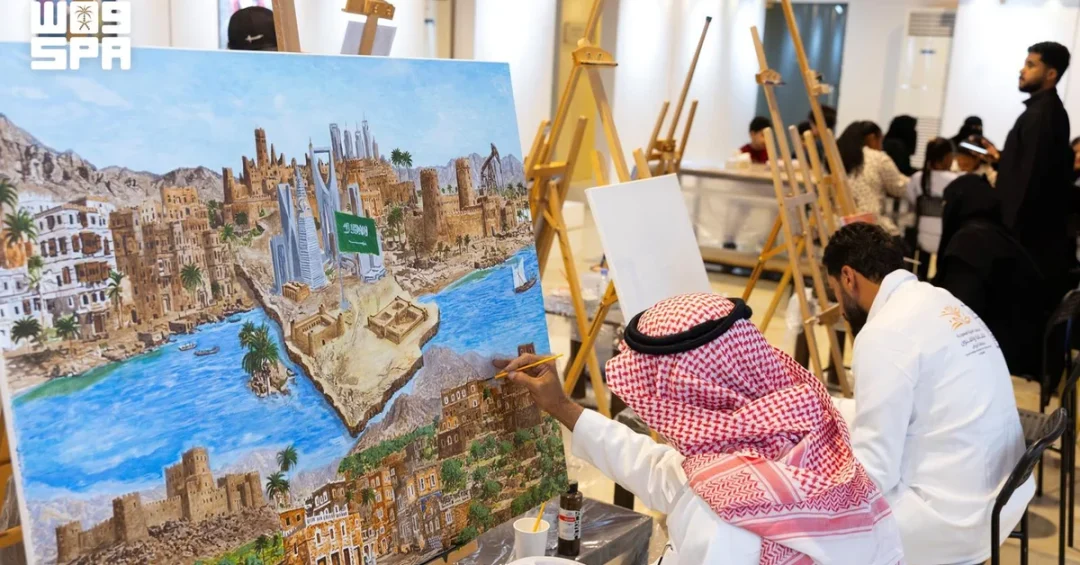
The Saudi Arabian Society for Culture and Arts convened a virtual meeting in Riyadh, chaired by Chief Executive Officer Khalid Al-Baz and attended by Princess Haifa bint Abdulmohsen bin Abdulaziz, Director of Development and Partnerships, alongside the directors of its 16 branches, to review future strategies, development programs, and initiatives designed to strengthen coordination among branches and enhance organizational performance. The meeting, reported by the Saudi Press Agency, reflects the Society’s ongoing commitment to advancing the cultural and artistic sector in the Kingdom in line with national development goals. Participants also discussed expanding the Society’s activities and explored practical ways to support cultural and artistic production across Saudi Arabia. (Press release distributed via the Saudi Press Agency, Riyadh, 23 Safar 1448 AH, corresponding to 6 August 2026.)
Context and Background
The Saudi Arabian Society for Culture and Arts is a longstanding national institution dedicated to nurturing creative expression, preserving cultural heritage, and broadening public participation in the arts. With a nationwide network of 16 branches, the Society serves as a bridge between cultural producers, local communities, and national cultural priorities. Its leadership structure combines professional management under CEO Khalid Al-Baz with high-level patronage and strategic guidance through Princess Haifa bint Abdulmohsen bin Abdulaziz, who oversees development and partnerships.
The virtual meeting brought together branch directors from across the Kingdom, underscoring the Society’s emphasis on decentralized cultural programming that reaches audiences beyond major urban centers. By aligning branch-level activities with a unified strategic framework, the Society aims to ensure consistent quality and broader access to cultural experiences nationwide.
Key Details
During the session, participants examined future strategies and development programs intended to strengthen institutional coordination and elevate organizational performance across all branches. The discussion also addressed ways to expand the Society’s cultural and artistic offerings and to identify support mechanisms for the sector as a whole. These deliberations form part of a continuous planning cycle that informs the Society’s annual programming and partnership activities.
On the cultural programming side, the Society recently hosted its Open Studio and Children’s Studio initiatives, providing hands-on creative opportunities for participants of different ages. It also staged the second evening of the Rabou’iyat series, featuring theatrical performances and folkloric programs that drew wide attendance and active participation from visitors. These events illustrate the Society’s dual focus on nurturing emerging talent and celebrating Saudi Arabia’s performing arts traditions.
Implications and Impact
The Society’s emphasis on coordination among its 16 branches signals a maturing cultural infrastructure in Saudi Arabia, one capable of delivering diverse programming to communities across the Kingdom. Strengthening branch-level performance supports the broader objective of making cultural participation accessible to residents in every region, not only in Riyadh, Jeddah, and other major cities.
The success of the Open Studio, Children’s Studio, and Rabou’iyat events demonstrates sustained public appetite for cultural engagement. Such programs contribute to the growth of a vibrant creative economy, create opportunities for artists and performers, and enrich the Kingdom’s social fabric. Internationally, these efforts enhance Saudi Arabia’s cultural diplomacy and present a dynamic image of a society that values both heritage and innovation.
Vision 2030 Alignment
The Society’s work aligns directly with the cultural objectives of Saudi Vision 2030, which seeks to promote national identity, support cultural production, and improve quality of life for citizens and residents. By strengthening its branch network, expanding creative programming, and fostering partnerships, the Saudi Arabian Society for Culture and Arts contributes to a thriving cultural sector that reinforces the Kingdom’s long-term development ambitions and its growing role on the global cultural stage.
20 Questions
Q1. What is the Saudi Arabian Society for Culture and Arts?
A1. It is a national institution dedicated to supporting creativity, preserving cultural heritage, and expanding public participation in the arts across Saudi Arabia through a nationwide network of branches and cultural programs.
Q2. Who chaired the virtual meeting in Riyadh?
A2. The meeting was chaired by Khalid Al-Baz, Chief Executive Officer of the Society, and attended by Princess Haifa bint Abdulmohsen bin Abdulaziz, Director of Development and Partnerships, along with branch directors.
Q3. Who is Princess Haifa bint Abdulmohsen bin Abdulaziz?
A3. She serves as the Director of Development and Partnerships at the Society, contributing to strategic guidance and partnership building in support of the organization’s cultural mission and national objectives.
Q4. How many branches does the Society operate?
A4. The Society operates 16 branches across Saudi Arabia, each delivering cultural and artistic programming tailored to its local community while aligning with the organization’s unified national strategy.
Q5. What were the main topics discussed at the meeting?
A5. Participants reviewed future strategies, development programs, and initiatives to strengthen coordination among branches and enhance organizational performance, as well as ways to support the cultural and artistic sector.
Q6. Why was the meeting held virtually?
A6. The virtual format allowed branch directors from across the Kingdom to participate efficiently, reflecting the Society’s adoption of modern communication tools to facilitate nationwide coordination and planning.
Q7. What is the Open Studio program?
A7. The Open Studio is a cultural initiative hosted by the Society that provides creative spaces and opportunities for artists and participants to develop their skills and engage in artistic activities.
Q8. What is the Children’s Studio program?
A8. The Children’s Studio is a Society initiative that offers young participants hands-on creative opportunities, nurturing artistic talent and encouraging cultural engagement from an early age.
Q9. What is the Rabou’iyat series?
A9. Rabou’iyat is a cultural program series organized by the Society; its second evening featured theatrical performances and folkloric programs that attracted wide attendance and active visitor participation.
Q10. How did audiences respond to the recent cultural programs?
A10. The programs received broad attendance and active participation from visitors, demonstrating strong public interest in the Society’s creative offerings and cultural events across the Kingdom.
Q11. What is the Society’s goal in expanding its activities?
A11. The Society aims to support creativity, nurture talent, and strengthen cultural activities in line with Saudi Arabia’s cultural development objectives, ensuring broader access to the arts nationwide.
Q12. How does the Society support emerging talent?
A12. Through programs such as the Open Studio and Children’s Studio, the Society provides practical platforms for skill development, creative expression, and artistic growth for participants of various ages.
Q13. How does the Society preserve Saudi cultural heritage?
A13. By staging theatrical and folkloric performances, such as those in the Rabou’iyat series, the Society celebrates and transmits traditional Saudi arts to contemporary audiences.
Q14. What role do the 16 branches play?
A14. The branches deliver cultural programming at the local level, ensuring communities across the Kingdom have access to artistic activities while maintaining alignment with the Society’s national strategic direction.
Q15. How does the meeting relate to organizational performance?
A15. The discussions focused on initiatives to enhance organizational performance, improve coordination among branches, and ensure efficient delivery of the Society’s cultural mission and development programs.
Q16. What is the significance of the meeting’s timing?
A16. The meeting reflects the Society’s continuous planning cycle, reviewing strategies and programs to sustain momentum in cultural development and adapt to evolving national priorities.
Q17. How does the Society cooperate with partners?
A17. Under the leadership of its Director of Development and Partnerships, the Society builds partnerships that support cultural programming, expand resources, and enhance the reach and impact of its initiatives.
Q18. How does this work benefit local communities?
A18. Expanded cultural programming enriches community life, provides creative opportunities for residents, and fosters social cohesion through shared artistic experiences across Saudi Arabia’s regions.
Q19. How does the Society contribute to the creative economy?
A19. By supporting artists, hosting performances, and expanding cultural activities, the Society helps grow the creative economy, generating opportunities and strengthening the cultural sector’s contribution to national development.
Q20. What is the Society’s long-term vision?
A20. The Society seeks to be a leading national force in culture and arts, expanding access, nurturing talent, and aligning its work with Saudi Vision 2030’s cultural and quality-of-life objectives.
Reader Feedback
We value your thoughts. Please share your feedback on this article.
Your feedback helps us improve our coverage.
Related articles
 Al-Baha Workshops Showcase Holy Kaaba Kiswah Craft
 Submerged Treasures Exhibition Celebrates Red Sea Heritage
 Beijing Named UNESCO-UIA World Architecture Capital 2029
 Saudi Falcons Auction 2026 Opens in Malham, Riyadh
 Romanian Farm Debuts at Saudi Falcon Auction with 120+ Birds
 AlUla Brings Life of Forms to Paris Design Week 2026