


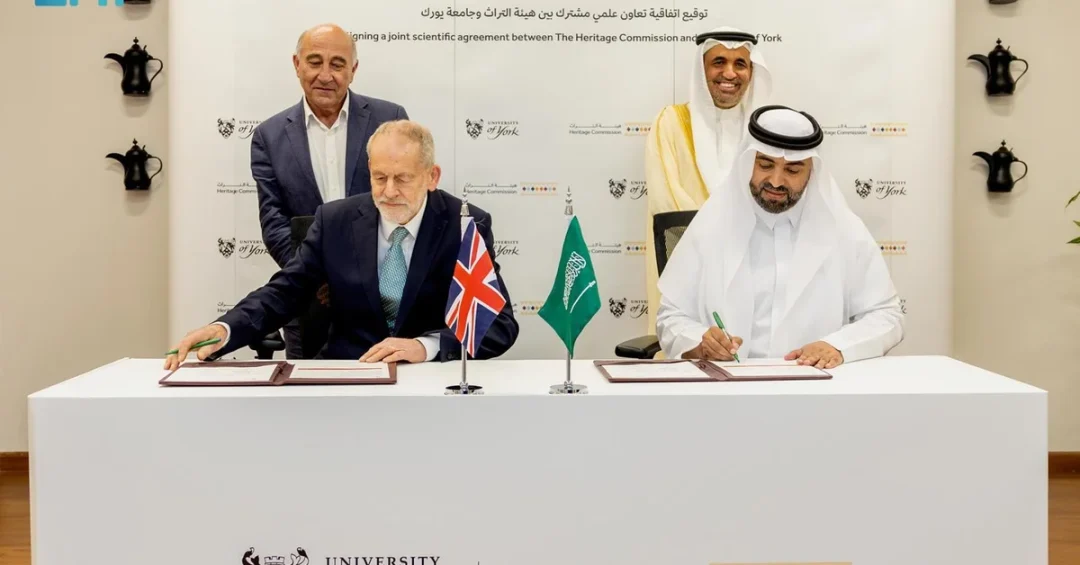
The Heritage Commission of Saudi Arabia signed a scientific cooperation agreement with the University of York on May 7, 2024, to conduct archaeological surveys of prehistoric sites on the Farasan Islands and the Red Sea coast in the Jazan Region. The agreement was signed in Riyadh by Dr. Abdullah Al-Zahrani, Director General of Archaeological Researches and Studies at the Heritage Commission, and Dr. Jeff Bly, scientific project manager at the archaeological site, representing the University of York. The signing ceremony was attended by the Commission’s CEO, Dr. Jasser Al-Harbash.
Context and Background
This agreement marks a significant step in Saudi Arabia’s ongoing efforts to expand archaeological exploration and research. The Farasan Islands, located in the southern Red Sea, are known for their rich biodiversity and historical significance, having been a key maritime hub in ancient trade routes. The Red Sea coast of the Kingdom is similarly home to numerous prehistoric and historical sites that offer valuable insights into early human settlement and migration patterns.
The collaboration with the University of York, a leading UK institution in archaeological science, underscores the Kingdom’s commitment to international partnerships in heritage research. This initiative aligns with the broader goals of Saudi Vision 2030, which emphasizes the preservation and promotion of the Kingdom’s cultural heritage as a means to diversify the economy and enhance the quality of life.
Key Details
Under the terms of the agreement, the two parties will cooperate in conducting archaeological surveys, preparing periodic reports, and undertaking scientific studies. The exchange of expertise and knowledge between Saudi and British archaeologists is a central component of the partnership. Dr. Al-Zahrani expressed optimism about the collaboration, stating that it would ‘enhance our understanding of the prehistoric human occupation of the Red Sea region and contribute to the global archaeological record.’ Dr. Bly echoed this sentiment, noting the University’s enthusiasm for working with the Heritage Commission on such a significant project.
The agreement also facilitates training opportunities for Saudi researchers and students, fostering capacity building in the field of archaeology. This is part of the Commission’s strategy to develop a skilled national workforce in heritage management and research.
Implications and Impact
The archaeological surveys are expected to yield new discoveries that could shed light on early human history in the Arabian Peninsula, potentially altering current understandings of ancient migration routes. The findings may also bolster the Kingdom’s tourism sector, as heritage sites become key attractions for visitors interested in history and culture. The international collaboration enhances Saudi Arabia’s standing as a hub for scientific research and cultural exchange, reinforcing its role as a bridge between civilizations.
The agreement further solidifies the long-standing relationship between Saudi Arabia and the United Kingdom in higher education and research. By leveraging the expertise of international institutions, the Heritage Commission aims to apply best practices in archaeological methodology and heritage conservation, ensuring that discoveries are preserved for future generations.
Vision 2030 Alignment
This partnership is a tangible manifestation of Saudi Vision 2030’s cultural pillar, which seeks to unlock the Kingdom’s heritage potential and promote it on the global stage. The archaeological work in the Farasan Islands and the Red Sea coast not only enriches the Kingdom’s historical narrative but also contributes to economic diversification through heritage tourism and job creation. As the Commission continues to expand its collaborations with world-renowned universities, it paves the way for a deeper appreciation of Saudi Arabia’s role as a cradle of civilization and a modern hub of innovation. By investing in research and preservation, the Kingdom is ensuring that its heritage remains a source of pride and a driver of growth for years to come.
20 Questions
Q1. Who signed the agreement between the Heritage Commission and the University of York?
A1. Dr. Abdullah Al-Zahrani, Director General of Archaeological Researches and Studies at the Heritage Commission, and Dr. Jeff Bly, the scientific project manager at the archaeological site, signed the agreement.
Q2. What is the main objective of this agreement?
A2. The main objective is to conduct archaeological surveys of prehistoric sites on the Farasan Islands and the Red Sea coast, and to enhance cooperation and exchange of expertise between the two entities.
Q3. When and where was the agreement signed?
A3. The agreement was signed on May 7, 2024, in Riyadh, Saudi Arabia, during a ceremony attended by the CEO of the Heritage Commission, Dr. Jasser Al-Harbash.
Q4. Why are the Farasan Islands significant for archaeological research?
A4. The Farasan Islands have a rich history and were a key maritime hub in ancient trade routes, offering valuable insights into early human settlement and migration patterns in the Red Sea region.
Q5. What does the agreement entail regarding reports and studies?
A5. The agreement entails cooperation in preparing periodic reports and scientific studies, ensuring systematic documentation and analysis of archaeological findings.
Q6. Which institutions are involved in this partnership?
A6. The partnership involves the Heritage Commission of Saudi Arabia and the University of York in the United Kingdom, a leading institution in archaeological science.
Q7. How does this agreement align with Saudi Vision 2030?
A7. This agreement aligns with Vision 2030 by promoting cultural heritage preservation, diversifying the economy through heritage tourism, and enhancing international partnerships in research.
Q8. What role does the Heritage Commission play in Saudi Arabia?
A8. The Heritage Commission is responsible for preserving, documenting, and promoting Saudi Arabia’s cultural heritage, including archaeological sites, and expanding research through collaborations.
Q9. What is the significance of the Red Sea coast in this context?
A9. The Red Sea coast is home to many prehistoric and historical sites, making it a focus for archaeological surveys that can reveal details about early human activity and trade.
Q10. How will this agreement benefit Saudi researchers and students?
A10. The agreement will provide training opportunities and capacity building in archaeological research, allowing Saudi researchers and students to gain international experience and skills.
Q11. What kind of expertise does the University of York bring to this partnership?
A11. The University of York brings expertise in archaeological science, including survey methodologies, dating techniques, and heritage management, which are crucial for high-quality research.
Q12. Are there any previous collaborations between Saudi Arabia and the UK in heritage?
A12. Yes, Saudi Arabia and the UK have a history of cooperation in higher education and research, but this specific agreement marks a formal partnership in archaeological fieldwork.
Q13. What are the expected outcomes of the archaeological surveys?
A13. The surveys are expected to yield new discoveries about prehistoric human occupation, enhance understanding of migration routes, and contribute to the global archaeological record.
Q14. How does this agreement strengthen Saudi Arabia’s international relations?
A14. The agreement strengthens Saudi Arabia’s international scientific and cultural relations, showcasing its openness to collaboration and its commitment to global research efforts.
Q15. What is the role of Dr. Jasser Al-Harbash in this context?
A15. Dr. Jasser Al-Harbash, as CEO of the Heritage Commission, attended the signing ceremony, demonstrating the Commission’s leadership and support for the initiative.
Q16. How will the findings from these surveys be used?
A16. The findings will be used for scientific publications, heritage management, and potentially to promote tourism by making the sites more accessible to visitors.
Q17. What is the timeline for the archaeological surveys?
A17. The timeline is not specified in the original text, but such surveys typically take place over multiple field seasons, with results being published in stages.
Q18. How does this agreement contribute to knowledge exchange?
A18. The agreement facilitates knowledge exchange through joint field research, workshops, and the sharing of expertise in archaeological techniques and heritage conservation.
Q19. Are there any specific prehistoric sites already identified on the Farasan Islands?
A19. The original text mentions surveys on prehistoric sites, but does not specify particular sites; the research will identify and document them.
Q20. What impact could this have on the tourism sector in Jazan Region?
A20. The discoveries could attract heritage tourists to the Jazan Region, contributing to local economic development and diversifying tourism beyond traditional destinations.
Reader Feedback
We value your thoughts. Please share your feedback on this article.
Your feedback helps us improve our coverage.
Related articles
 Saudi Culinary Arts Commission Launches 2nd ‘Our Culinary Legacy’ Edition
 Buraydah Joins UNESCO Gastronomy Conference in Thailand
 Saudi Heritage Commission Hosts International Industrial Heritage Workshop in Diriyah
 Saudi Arabia Weather Forecast: Thunderstorms Expected Friday
 KSGAAL concludes Arabic language conference in Korea
 Cultural Development Fund Concludes Participation in 10th Saudi Film Festival