


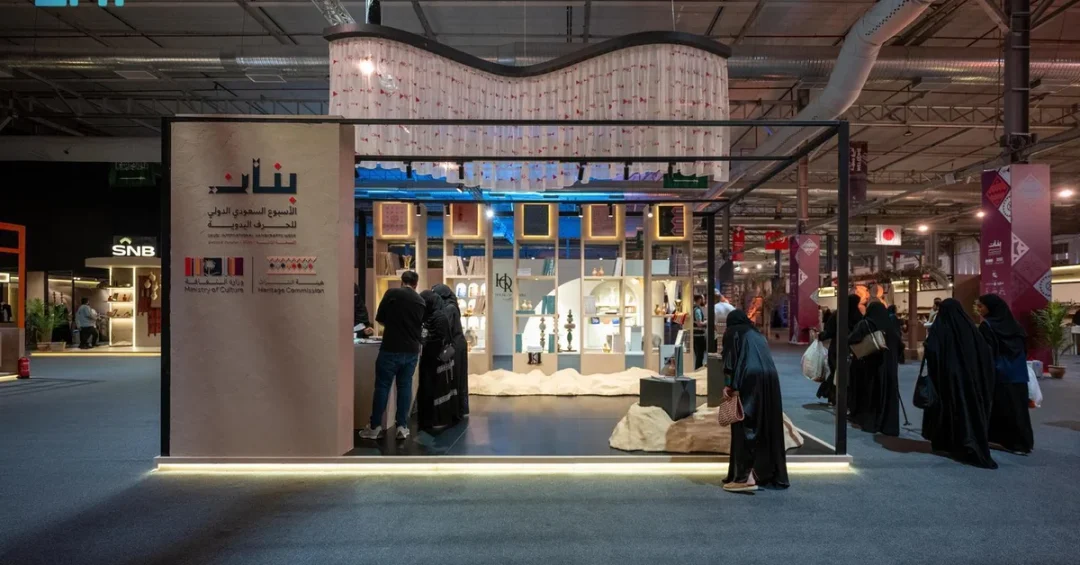
The Saudi Heritage Commission inaugurated the second edition of the Saudi International Handicrafts Week Exhibition, known as Banan, on Saturday evening at the Roshan Front in Riyadh, bringing together more than 500 artisans from the Kingdom alongside representatives from 25 countries. The exhibition, which runs until November 29, is designed to support artisans by displaying their creations and honing their skills, while offering visitors a diverse range of pavilions and activities that celebrate traditional handicrafts as a living part of the Kingdom’s cultural identity.
Organized under the umbrella of the National Cultural Strategy, which is derived from Saudi Vision 2030, Banan represents a significant step in the Kingdom’s efforts to preserve intangible cultural heritage and to position Saudi Arabia as a global hub for artisanal excellence. The event is open daily from 4:00 pm to 11:00 pm, except on Mondays and Wednesdays when it opens from 10:00 am to 11:00 pm, allowing a broad cross-section of the public to engage with the crafts on display. Could this exhibition mark the beginning of a new era for Saudi handicrafts on the world stage?
Context and Background
How did Saudi Arabia come to host an international handicrafts week that draws participants from five continents? The answer lies in the Kingdom’s long-standing commitment to cultural preservation, a commitment that has accelerated under Vision 2030. The Saudi Heritage Commission, a government body responsible for safeguarding the nation’s archaeological and cultural treasures, launched the first edition of Banan as part of a broader strategy to elevate traditional crafts from a niche interest to a mainstream economic and cultural force. The second edition builds on that foundation, expanding both the number of participants and the range of activities.
The exhibition is held at the Roshan Front in Riyadh, a venue that itself reflects the intersection of heritage and modernity that defines contemporary Saudi Arabia. The choice of location is deliberate: by placing artisanal traditions in a modern, accessible urban space, the Heritage Commission signals that handicrafts are not relics of the past but living practices that can thrive in the Kingdom’s rapidly evolving social and economic landscape. The event also aligns with the National Cultural Strategy, which seeks to promote cultural expression, support creative industries, and enhance the quality of life for citizens and residents alike.
International participation is a cornerstone of Banan’s design. With representatives from 25 countries, the exhibition creates a platform for cross-cultural exchange that benefits both Saudi artisans and their international counterparts. This global dimension is consistent with the Kingdom’s broader diplomatic and economic outreach, which emphasizes mutual respect, shared heritage, and collaborative development. Isn’t it remarkable how a local craft tradition can become a bridge between nations?
Key Details
What exactly can visitors expect to see and do at Banan? The exhibition features a diverse range of pavilions and activities designed to enrich the visitor experience. Among the highlights is the Handicrafts Arts Village, a dedicated zone where artisans demonstrate their skills and display finished products. The Live Craft Performances Pavilion offers dynamic demonstrations of techniques that have been passed down through generations, from weaving and embroidery to pottery and metalwork. The Crafts Exhibition provides a curated look at the finest examples of Saudi and international craftsmanship, while the Craft Workshops Pavilion invites visitors to try their hand at creating their own pieces under the guidance of skilled practitioners.
For younger visitors, the exhibition includes a dedicated Children’s Pavilion with activities tailored to young audiences, ensuring that the appreciation of handicrafts is transmitted to the next generation. An Interactive Experiences Zone uses modern technology to bring traditional crafts to life, and a platform for entrepreneurs and craft institutions offers a space for business networking and market development. These elements combine to make Banan not just an exhibition but a comprehensive cultural festival. How often does one encounter an event that simultaneously educates, entertains, and empowers artisans?
The financial dimension of Banan is equally important. The exhibition serves as a marketplace where artisans can sell their products directly to consumers, providing a vital source of income and a means to sustain their craft. By connecting artisans with buyers, the Heritage Commission helps to create a sustainable economic model for traditional crafts, one that does not rely solely on government support or tourism. This approach reflects a broader understanding that cultural preservation must be paired with economic viability to be truly effective.
International and Regional Impact
How does the participation of 25 countries shape the significance of Banan beyond Saudi Arabia’s borders? The presence of international artisans and delegations transforms the exhibition into a global cultural dialogue. It allows Saudi craftspeople to learn from their peers abroad, to see how other cultures have preserved and adapted their own traditions, and to forge connections that can lead to future collaborations. For the visiting artisans, Banan offers access to a dynamic market and a chance to experience Saudi hospitality and heritage firsthand. This exchange strengthens Saudi Arabia’s soft power and reinforces its reputation as a welcoming, culturally rich nation.
Regionally, the exhibition complements other Saudi initiatives aimed at promoting cultural tourism and heritage conservation. The Kingdom has invested heavily in developing heritage sites, museums, and cultural festivals that attract visitors from around the world. Banan adds a living, participatory dimension to these efforts, allowing tourists and residents to engage directly with artisans rather than simply observing static displays. In a region where cultural heritage is often a source of pride and identity, Saudi Arabia’s leadership in this field sets a positive example. Could this model of cultural diplomacy become a template for other nations seeking to leverage their heritage for global engagement?
Economic and Strategic Significance
What economic value does the handicrafts sector hold for Saudi Arabia, and why is the government investing in it? Handicrafts represent a unique intersection of culture, tourism, and small business development. By supporting artisans, the Heritage Commission helps to create jobs, stimulate local economies, and diversify the Kingdom’s economic base away from oil dependency. The exhibition provides a direct sales channel for artisans, many of whom operate as micro-entrepreneurs or family businesses. This aligns with Vision 2030’s goal of fostering a vibrant private sector and increasing the contribution of small and medium enterprises to the economy.
Strategically, Banan enhances Saudi Arabia’s cultural infrastructure, which is a key component of the Kingdom’s broader effort to become a global destination for tourism and investment. Cultural events like this one attract visitors who might otherwise not consider Saudi Arabia as a travel destination, and they create positive media coverage that counters outdated perceptions. The exhibition also supports the National Cultural Strategy’s objective of increasing cultural participation and promoting Saudi heritage both domestically and internationally. By demonstrating that tradition and modernity can coexist, Banan reinforces the narrative of a Kingdom that is both rooted in its past and confidently building its future. Isn’t that the essence of Vision 2030?
Vision 2030 Alignment
How does the Saudi International Handicrafts Week Exhibition directly contribute to Vision 2030? The exhibition embodies several of the vision’s core themes, including cultural enrichment, economic diversification, and international engagement. The National Cultural Strategy, from which Banan derives its mandate, seeks to preserve and promote Saudi cultural heritage as a source of national pride and a driver of economic growth. By providing artisans with a platform to showcase their work, the exhibition helps to ensure that traditional crafts are not lost to time but are instead passed on to future generations, in line with the vision’s emphasis on quality of life and social development.
Looking ahead, the Heritage Commission’s commitment to developing the handicrafts sector suggests that Banan will continue to grow in scope and influence. The exhibition’s success in attracting over 500 Saudi artisans and representatives from 25 countries in only its second year demonstrates the potential for further expansion. As Saudi Arabia continues to open up to the world under Vision 2030, events like Banan will play an increasingly important role in showcasing the Kingdom’s cultural richness and its capacity for global collaboration. The exhibition is open to the public until November 29, offering a unique opportunity to witness the living heritage of Saudi Arabia and its international partners. Will you be among those who experience it?
20 Questions
Q1. What is the Saudi International Handicrafts Week Exhibition?
A1. The Saudi International Handicrafts Week Exhibition, known as Banan, is an annual event organized by the Saudi Heritage Commission to showcase traditional handicrafts and support artisans. It features pavilions, workshops, and live demonstrations, and it aims to preserve intangible cultural heritage while promoting economic opportunities for craftspeople.
Q2. Who inaugurated the second edition of Banan?
A2. The second edition of Banan was inaugurated by the Saudi Heritage Commission on Saturday evening. The commission is the government body responsible for safeguarding Saudi Arabia’s cultural and archaeological heritage, and it organizes the event as part of the National Cultural Strategy derived from Vision 2030.
Q3. Where is the exhibition being held?
A3. The exhibition is being held at the Roshan Front in Riyadh, Saudi Arabia. This modern venue in the capital city provides an accessible and dynamic space for visitors to engage with traditional crafts, reflecting the Kingdom’s blend of heritage and contemporary development.
Q4. How long does the exhibition run?
A4. The exhibition runs until November 29, 2024. It is open daily from 4:00 pm to 11:00 pm, except on Mondays and Wednesdays when it opens earlier at 10:00 am and closes at 11:00 pm, allowing more visitors to attend.
Q5. How many artisans are participating in Banan?
A5. Over 500 artisans from Saudi Arabia are participating in the exhibition, alongside representatives from 25 countries. This large number reflects the event’s growing popularity and its role in supporting the handicrafts sector both locally and internationally.
Q6. Which countries are represented at the exhibition?
A6. Representatives from 25 countries are taking part in Banan, though the specific nations are not listed in the official announcement. The international participation underscores the exhibition’s global reach and its role in fostering cultural exchange between Saudi Arabia and the world.
Q7. What are the main pavilions at the exhibition?
A7. The exhibition features several pavilions, including the Handicrafts Arts Village, Live Craft Performances Pavilion, Crafts Exhibition, Craft Workshops Pavilion, Interactive Experiences Zone, and a platform for entrepreneurs and craft institutions. There is also a dedicated Children’s Pavilion for young visitors.
Q8. What is the Handicrafts Arts Village?
A8. The Handicrafts Arts Village is a dedicated area within the exhibition where artisans display their creations and demonstrate their skills. It serves as a central hub for visitors to interact with craftspeople and learn about traditional techniques from Saudi Arabia and other countries.
Q9. What activities are available for children?
A9. The Children’s Pavilion offers activities tailored specifically for young visitors, designed to introduce them to traditional crafts in an engaging and age-appropriate way. This helps ensure that appreciation for handicrafts is passed on to the next generation.
Q10. How does Banan support artisans financially?
A10. Banan provides a platform for artisans to market and sell their products directly to consumers. This direct sales channel offers a vital source of income and helps sustain their craft, making the exhibition both a cultural and economic initiative.
Q11. What is the role of the Saudi Heritage Commission?
A11. The Saudi Heritage Commission is the government body responsible for preserving and promoting Saudi Arabia’s cultural heritage. It organizes Banan as part of its commitment to developing the handicrafts sector in line with the National Cultural Strategy and Vision 2030.
Q12. What is the National Cultural Strategy?
A12. The National Cultural Strategy is a Saudi government initiative derived from Vision 2030. It aims to promote cultural expression, preserve heritage, support creative industries, and enhance the quality of life for citizens and residents, with handicrafts as a key focus area.
Q13. How does Banan align with Vision 2030?
A13. Banan aligns with Vision 2030 by supporting cultural preservation, economic diversification, and international engagement. It helps artisans earn income, promotes Saudi heritage globally, and contributes to the vision’s goals of a vibrant society and a diversified economy.
Q14. What types of handicrafts are showcased?
A14. The exhibition showcases a diverse range of traditional handicrafts, including weaving, embroidery, pottery, metalwork, and other artisanal products. These crafts represent the intangible cultural heritage of Saudi Arabia and the participating countries.
Q15. Is the exhibition open to the public?
A15. Yes, the exhibition is open to the public daily from 4:00 pm to 11:00 pm, except on Mondays and Wednesdays when it opens at 10:00 am. Visitors can purchase tickets or enter according to the venue’s guidelines.
Q16. What is the significance of holding Banan in Riyadh?
A16. Holding Banan in Riyadh, the capital of Saudi Arabia, highlights the city’s role as a cultural and economic hub. It also makes the exhibition accessible to a large population and to international visitors, reinforcing Riyadh’s status as a global destination.
Q17. How does Banan promote cultural exchange?
A17. Banan promotes cultural exchange by bringing together artisans from Saudi Arabia and 25 other countries. They share techniques, learn from one another, and build connections that foster mutual understanding and collaboration in the field of traditional crafts.
Q18. What economic benefits does Banan bring?
A18. Banan stimulates the local economy by supporting small businesses and artisans, attracting tourists, and creating opportunities for networking and sales. It also contributes to the diversification of Saudi Arabia’s economy away from oil dependency.
Q19. How can international visitors participate in Banan?
A19. International visitors can attend the exhibition at the Roshan Front in Riyadh during its opening hours. They can explore the pavilions, purchase handicrafts, and engage with artisans from around the world, experiencing Saudi hospitality and heritage.
Q20. What are the future prospects for Banan?
A20. Given the success of its first two editions, Banan is expected to grow in scope and influence. The Heritage Commission’s commitment to developing the handicrafts sector suggests that future editions will continue to expand international participation and enhance Saudi Arabia’s cultural standing.
Reader Feedback
We value your thoughts. Please share your feedback on this article.
Your feedback helps us improve our coverage.