


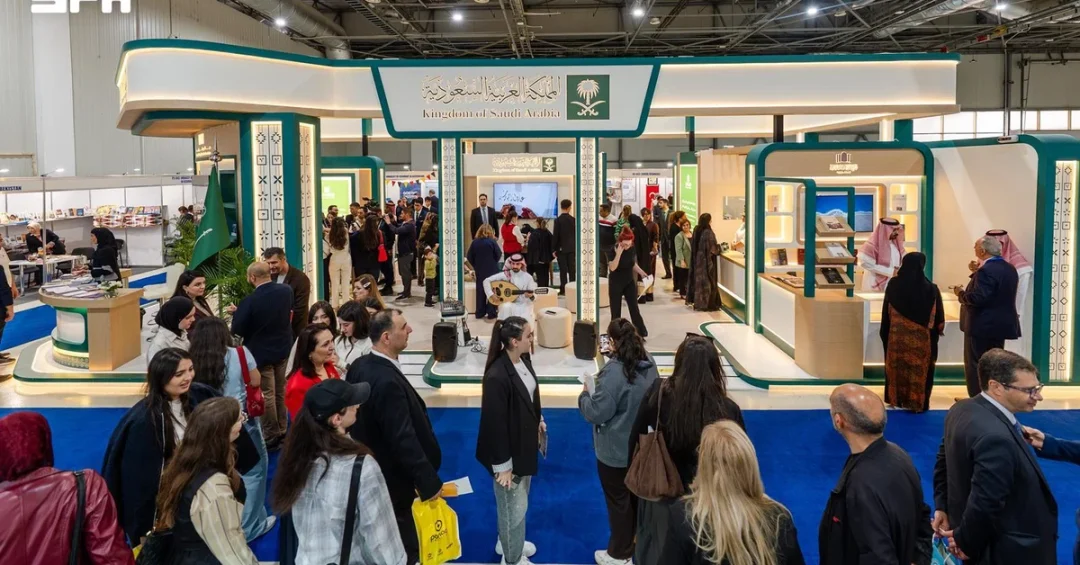
The Literature, Publishing and Translation Commission inaugurated the Kingdom of Saudi Arabia’s pavilion at the Baku International Book Fair 2026 on Wednesday, October 21, 2026, in the Azerbaijani capital, Baku, marking the opening of a five-day cultural showcase that runs through October 25, 2026. The pavilion was unveiled under the direction of the Commission, the Saudi body responsible for advancing the Kingdom’s publishing, translation, and literary sectors, and it brings together Saudi publishers, authors, translators, and cultural institutions under a single national platform. The inauguration was announced by the Saudi Press Agency, the Kingdom’s official news authority, confirming the participation as part of a broader national effort to project Saudi Arabia’s intellectual and creative output to international audiences.
What does a national pavilion at a major regional book fair actually achieve in an era when so much publishing activity has moved online? In the case of Baku, the answer lies in the density of human contact that a physical fair creates: rights negotiations, translation agreements, academic exchanges, and the informal conversations between publishers that often become long-term partnerships. The Saudi pavilion is designed to serve as that kind of working space, not merely a display of titles, and its presence at the Baku International Book Fair places Saudi publishing within one of the most active literary gathering points in the South Caucasus and Caspian region.
Context and Background
Why has Saudi Arabia invested so deliberately in international book fairs over the past decade? The Kingdom’s participation in Baku forms part of a sustained strategy by the Literature, Publishing and Translation Commission to establish a consistent presence at major international cultural events, from Frankfurt and London to Riyadh and now Baku. Each appearance functions as both a showcase and a working platform, allowing Saudi publishers to meet counterparts, negotiate rights, and expose translated Saudi works to new readerships. The Baku fair, now in its 2026 edition, has grown into a significant meeting point for publishers from Azerbaijan, Turkiye, Iran, Central Asia, and beyond, making it a natural venue for the Kingdom to deepen cultural and commercial ties across the region.
Saudi Arabia and Azerbaijan share more than a diplomatic relationship. The two countries have steadily expanded cooperation across energy, trade, tourism, and culture, and the book fair provides a civilian, intellectual dimension to that partnership. Publishing is a particularly effective instrument of soft diplomacy because it travels through translation, libraries, and universities rather than through formal channels alone. A Saudi title translated into Azerbaijani, or an Azerbaijani author introduced to Saudi readers, creates a durable connection that outlasts any single event. The Commission’s decision to anchor a full pavilion in Baku reflects an understanding that cultural exchange is a long-horizon investment, and that the Kingdom’s literary sector benefits when it is visible, accessible, and engaged internationally.
The timing also matters. Saudi Arabia’s publishing industry has been expanding rapidly, supported by new licensing frameworks, book fair infrastructure, and translation grant programs. As domestic capacity grows, the sector needs international outlets for rights sales, co-publication, and distribution. Regional fairs such as Baku offer a lower-barrier entry point than larger Western markets, allowing emerging Saudi publishers to test international engagement while building relationships that can scale. In that sense, the pavilion is not a symbolic gesture but an operational tool for an industry in a growth phase.
Key Details of the Saudi Pavilion
What exactly will visitors to the Baku International Book Fair find at the Saudi pavilion? According to the Saudi Press Agency, the pavilion presents a comprehensive picture of the Kingdom’s creative and intellectual diversity under Saudi Vision 2030, with displays spanning literature, publishing, and translation. Abdulatif Alwasel, CEO of the Literature, Publishing and Translation Commission, said the Kingdom’s participation reflects the strong cultural ties between Saudi Arabia and Azerbaijan and helps showcase Saudi Arabia’s intellectual and literary activity to Azerbaijani and international audiences.
Alwasel added that through this participation, the Commission seeks to empower Saudi creatives and publishers and to expand opportunities for partnership and knowledge exchange in the publishing sector. He also noted that the fair serves as a prominent platform for promoting civilizational dialogue and strengthening ties among intellectual and literary figures internationally. Those three priorities — empowering creatives, expanding partnerships, and fostering dialogue — form the operational core of the pavilion and explain why the Commission treats the fair as more than a promotional appearance.
The Commission has prepared an accompanying cultural program featuring a series of discussion sessions and poetry evenings with the participation of prominent Saudi writers and intellectuals. These events address issues related to literature, publishing, and translation while highlighting Saudi Arabia’s cultural achievements and their impact on the international stage. Poetry occupies a particularly important place in this programming, reflecting the deep-rooted role of verse in Saudi and wider Arab literary tradition. By pairing contemporary publishing discussions with live poetry, the program presents Saudi culture as both historically grounded and actively evolving, giving international visitors multiple points of entry into the Kingdom’s literary life.
International and Regional Impact
How does a Saudi cultural presence in Baku resonate beyond the fairground? The South Caucasus sits at a crossroads between Europe, Central Asia, and the Middle East, and book fairs there attract a genuinely international mix of publishers, translators, and academics. A Saudi pavilion in that environment positions the Kingdom as a participant in regional intellectual life rather than an observer, and it creates opportunities for translation into and out of Arabic that might otherwise not arise. For Azerbaijani readers, the pavilion offers direct access to Saudi titles and authors; for Saudi publishers, it opens a route into Caspian and Central Asian markets that are often overlooked by larger Western fairs.
The participation also reinforces the wider trajectory of Saudi cultural diplomacy. The Kingdom now hosts its own major international book fairs, supports translation initiatives, and sends delegations across Asia, Europe, and the Middle East. Each of these engagements compounds: a contact made in Baku may lead to a co-edition in Riyadh, a translation grant, or a visiting author program. Over time, this network effect strengthens Saudi Arabia’s standing as a cultural destination and a hub for Arabic-language publishing, while giving international audiences a direct, unfiltered view of the Kingdom’s intellectual output. The Commission’s framing of the fair as a platform for civilizational dialogue captures this logic precisely: exchange is the mechanism, and mutual understanding is the outcome.
Economic and Strategic Significance
Why should a book fair matter to anyone tracking Saudi Arabia’s economic diversification? Publishing is a small but strategically visible sector within the creative economy, and it connects directly to education, media, tourism, and technology. A strong publishing industry supports knowledge production, feeds content ecosystems, and contributes to the cultural offerings that make Saudi cities attractive to visitors and residents alike. When Saudi publishers sell rights abroad or co-publish with international partners, they generate export-oriented revenue and build the professional capacity that a diversified economy requires. The Commission’s support for publishers at events like Baku is therefore an economic policy in miniature, aimed at strengthening an industry that punches above its weight in soft power and long-term human capital.
There is also a strategic dimension to Saudi-Azerbaijani relations that cultural engagement quietly reinforces. The two countries cooperate across energy and investment, and cultural programming adds a layer of public goodwill that supports those larger dealings. Book fairs are particularly effective in this regard because they engage civil society — writers, translators, students, librarians — rather than only officials. The result is a relationship with depth, not just breadth. For Saudi Arabia, this aligns with a broader foreign policy emphasis on regional connectivity and dialogue, and it demonstrates that the Kingdom’s international role now extends well beyond energy into culture, knowledge, and ideas.
Vision 2030 Alignment
How does a pavilion in Baku connect to Saudi Vision 2030? The Vision’s cultural objectives include expanding the Kingdom’s creative industries, increasing international cultural exchange, and positioning Saudi Arabia as a global destination for knowledge and the arts. The Literature, Publishing and Translation Commission’s participation in the Baku International Book Fair advances each of these goals directly: it empowers Saudi creatives and publishers, expands partnership opportunities in the publishing sector, and introduces national initiatives that support books and authors. The Commission has stated that this participation is part of its efforts to strengthen Saudi Arabia’s cultural presence at major international events and to reinforce the Kingdom’s standing as a leading cultural destination and a beacon of knowledge.
That language is not incidental. Vision 2030 treats culture as an integral part of national development, not a decorative addition, and the publishing sector is one of the clearest examples of how cultural and economic goals intersect. Books require authors, editors, translators, designers, printers, distributors, and platforms — a full value chain that creates skilled employment and exportable intellectual property. By taking Saudi publishing to Baku, the Commission is simultaneously promoting the Kingdom’s literary voice abroad and strengthening the domestic industry’s international competitiveness. The fair runs until October 25, 2026, and its outcomes — agreements signed, translations agreed, relationships formed — will continue to shape Saudi Arabia’s cultural engagement across the region long after the pavilion closes.
20 Questions
Q1. What event did the Literature, Publishing and Translation Commission inaugurate in Baku?
A1. The Commission inaugurated the Kingdom of Saudi Arabia’s pavilion at the Baku International Book Fair 2026 in the Azerbaijani capital, Baku, on Wednesday, October 21, 2026, according to the Saudi Press Agency.
Q2. How long does the Baku International Book Fair 2026 run?
A2. The fair runs from October 21 to October 25, 2026, giving the Saudi pavilion a five-day window for exhibitions, discussion sessions, poetry evenings, and partnership meetings with international publishers and cultural institutions.
Q3. Who is the CEO of the Literature, Publishing and Translation Commission?
A3. Abdulatif Alwasel serves as CEO of the Literature, Publishing and Translation Commission. He commented on the Kingdom’s participation, describing it as a reflection of the strong cultural ties between Saudi Arabia and Azerbaijan.
Q4. What did Abdulatif Alwasel say the participation reflects?
A4. Alwasel said the Kingdom’s participation in the Baku International Book Fair reflects the strong cultural ties between Saudi Arabia and Azerbaijan and helps showcase Saudi Arabia’s intellectual and literary activity to Azerbaijani and international audiences.
Q5. What does the Saudi pavilion present to visitors?
A5. The pavilion presents a comprehensive picture of the Kingdom’s creative and intellectual diversity under Saudi Vision 2030, covering literature, publishing, and translation, and highlighting Saudi Arabia’s cultural achievements on the international stage.
Q6. What are the Commission’s stated goals for participating in the fair?
A6. The Commission seeks to empower Saudi creatives and publishers, expand opportunities for partnership and knowledge exchange in the publishing sector, and promote civilizational dialogue among intellectual and literary figures internationally.
Q7. What cultural program accompanies the Saudi pavilion?
A7. The Commission prepared a cultural program featuring a series of discussion sessions and poetry evenings with prominent Saudi writers and intellectuals, addressing literature, publishing, and translation while highlighting Saudi cultural achievements.
Q8. Why are poetry evenings a significant part of the program?
A8. Poetry holds a deep-rooted place in Saudi and wider Arab literary tradition. Including poetry evenings alongside publishing discussions presents Saudi culture as both historically grounded and actively evolving for international audiences.
Q9. Which Saudi authority announced the inauguration?
A9. The Saudi Press Agency, the Kingdom’s official news authority, announced the inauguration of the Saudi pavilion at the Baku International Book Fair 2026, reporting the details of the participation and the accompanying cultural program.
Q10. What topics do the discussion sessions address?
A10. The sessions address issues related to literature, publishing, and translation, while highlighting Saudi Arabia’s cultural achievements and their impact on the international stage, according to the Commission’s announced program.
Q11. How does this participation fit into the Commission’s broader strategy?
A11. It forms part of the Commission’s efforts to strengthen Saudi Arabia’s cultural presence at major international events and to introduce national initiatives that support books and authors, reinforcing the Kingdom’s standing as a cultural destination.
Q12. What is the significance of Saudi Arabia’s participation for Saudi publishers?
A12. The pavilion gives Saudi publishers a platform to meet international counterparts, negotiate rights, explore co-publication, and expand partnership opportunities in the publishing sector, supporting the growth of the Kingdom’s creative industries.
Q13. How does the fair promote civilizational dialogue?
A13. The fair brings together intellectual and literary figures from many countries, creating a platform for exchange and mutual understanding. Alwasel described it as a prominent venue for promoting civilizational dialogue internationally.
Q14. What role does translation play in the Saudi pavilion?
A14. Translation is one of the Commission’s core mandates and a central theme of the pavilion and its programming, reflecting efforts to move Saudi literary works into other languages and bring international works into Arabic.
Q15. How does the participation align with Saudi Vision 2030?
A15. Vision 2030 emphasizes expanding creative industries and international cultural exchange. The pavilion advances these goals by empowering Saudi creatives and publishers and reinforcing the Kingdom’s standing as a leading cultural destination.
Q16. Why is Baku a strategically useful venue for Saudi cultural engagement?
A16. Baku sits at a crossroads between Europe, Central Asia, and the Middle East, attracting an international mix of publishers. It offers Saudi publishers access to Caspian and Central Asian markets often overlooked by larger Western fairs.
Q17. What does the Commission hope international audiences take from the pavilion?
A17. The Commission aims to present a comprehensive picture of the Kingdom’s creative and intellectual diversity, giving international visitors a direct view of Saudi literary activity, publishing capacity, and cultural achievement under Vision 2030.
Q18. How does the fair support Saudi Arabia’s soft power objectives?
A18. Book fairs engage writers, translators, students, and librarians rather than only officials, creating durable people-to-people connections. This cultural diplomacy adds depth to Saudi Arabia’s international relationships across the region and beyond.
Q19. What economic value does international publishing engagement create?
A19. Rights sales, co-publication, and translation agreements generate export-oriented revenue and build professional capacity. Publishing supports skilled employment and intellectual property across a value chain that includes authors, editors, translators, and distributors.
Q20. What happens after the Baku International Book Fair 2026 concludes?
A20. The fair closes on October 25, 2026. Agreements signed, translations arranged, and relationships formed during the event are expected to shape Saudi Arabia’s cultural engagement across the region long after the pavilion closes.
Reader Feedback
We value your thoughts. Please share your feedback on this article.
Your feedback helps us improve our coverage.