


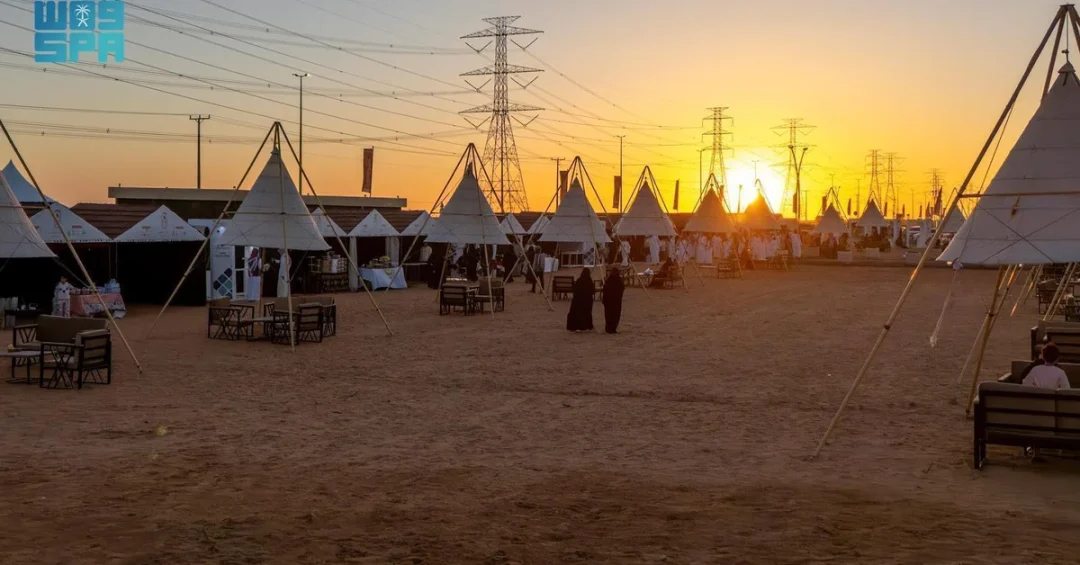
Under the patronage of Governor of Al-Jouf Region Prince Faisal bin Nawaf bin Abdulaziz, the second edition of the Camel Auction opened on Saturday evening in Dumat Al-Jandal Governorate, drawing a strong turnout of camel owners, breeders, and investors from across the Kingdom of Saudi Arabia and the wider Gulf region. The launch event, reported by the Saudi Press Agency (SPA), marked the beginning of a multi-day gathering that combines deep-rooted cultural heritage with promising economic opportunities, positioning Al-Jouf once again as a leading destination for one of Arabia’s most treasured traditions. The opening evening alone attracted broad participation, with attendees praising the organization, the quality of the animals on display, and the vibrant atmosphere that reflected the enduring bond between camels and Arab culture.
The Camel Auction in Dumat Al-Jandal is not simply a marketplace. It is a living expression of Saudi Arabia’s heritage, a commercial platform for a rapidly evolving sector, and a showcase of the Kingdom’s ability to blend tradition with modern economic ambition. Under the patronage of Prince Faisal bin Nawaf bin Abdulaziz, the event has quickly established itself as a fixture on the regional calendar, building on the success of its inaugural edition and expanding its reach to investors and heritage enthusiasts from Saudi Arabia and neighboring Gulf states. For international observers, the auction offers a window into how Saudi Arabia is preserving its past while building its future.
Context and Background
Why has a camel auction in a northern Saudi governorate attracted such wide attention? The answer lies in the unique place camels hold in Saudi society and in the Kingdom’s ongoing efforts to formalize and elevate the sectors connected to them. Camels are not merely livestock in Saudi Arabia; they are symbols of generosity, endurance, and identity, celebrated in poetry, song, and national heritage. Al-Jouf Region, with its expansive desert landscapes and long pastoral traditions, has been central to that story for generations. Dumat Al-Jandal, one of the region’s most historic governorates, provides a fitting backdrop for an event that honors the past while serving contemporary commercial needs.
The first edition of the Camel Auction demonstrated the appetite for a structured, well-organized marketplace where breeders, traders, and investors could meet under one banner. That success laid the groundwork for the second edition, which has expanded in scope and attendance. The event is overseen with the direct patronage of the Governor of Al-Jouf Region, a signal of the official recognition that camel-related activities now receive. Government support of this kind reflects a broader national trend in which heritage sectors are being integrated into economic development plans rather than treated as purely cultural relics. The auction thus stands at the intersection of tradition and modernization, a balance Saudi Arabia has increasingly sought to strike as it pursues Vision 2030.
Regional context further explains the auction’s significance. Camel markets across the Gulf have long operated informally, with transactions often conducted through personal networks and tribal connections. Events such as the Dumat Al-Jandal auction introduce a more organized framework, with clear schedules, transparent offerings, and opportunities for participants to compare bloodlines, conformation, and performance. This professionalization benefits buyers and sellers alike, reducing risk and expanding access to a market that has historically been difficult for outsiders to navigate. It also creates a record of activity that can inform future investment, breeding strategies, and tourism initiatives linked to heritage.
Key Details of the Second Edition
What distinguishes the camels offered at this year’s auction? According to the Saudi Press Agency, the event showcased a selection of camels distinguished by lineage, beauty, and strength. These are the qualities that matter most to serious buyers, whether they are seeking animals for racing, beauty competitions, breeding programs, or as a store of cultural and financial value. Participants competed with their offerings to attract the attention of investors and heritage enthusiasts, creating an atmosphere that was at once competitive and celebratory. The opening day’s strong turnout underscored the auction’s growing reputation as a place where quality animals and serious buyers converge.
Participation came from across the Kingdom and from Gulf countries, reflecting the auction’s regional appeal. Camel owners and investors traveled to Dumat Al-Jandal to take part, bringing with them animals that represent some of the finest bloodlines in the region. The presence of international participants from neighboring Gulf states highlights the cross-border nature of camel culture and commerce, which has linked communities across the Arabian Peninsula for centuries. Organizers structured the event to facilitate interaction among breeders and traders, enabling the exchange of expertise that is essential to improving standards and preserving valuable genetic lines.
The organization of the event drew particular praise from attendees. A well-run auction requires careful planning: registration of animals, verification of lineage, scheduling of viewings and bidding, and coordination among a large number of participants. The second edition appears to have met those challenges, with observers describing the arrangement as remarkable. This operational competence matters because it builds trust. When buyers and sellers know that an event will be conducted fairly and efficiently, they are more likely to return, to bring higher-quality animals, and to recommend the auction to others. In that sense, the organizational quality of the second edition is itself a foundation for future growth.
International and Regional Impact
How does an auction in Al-Jouf resonate beyond Saudi Arabia’s borders? The camel trade is inherently regional, with buyers and sellers moving across the Gulf Cooperation Council states and beyond. When Saudi Arabia hosts a well-organized auction, it strengthens its position as a hub for heritage commerce in the Arabian Peninsula. Participants from Gulf countries who attended the opening day are not only potential buyers; they are also ambassadors for the event, carrying news of its quality back to their home markets. Over time, this can attract further participation from countries with their own camel traditions, deepening economic and cultural ties across the region.
The auction also contributes to Saudi Arabia’s broader diplomatic and soft-power objectives. Heritage is a central element of the Kingdom’s international identity, and events that celebrate authentic traditions project an image of a country that is confident in its culture and open to the world. International visitors who attend such auctions—whether as investors, journalists, or tourists—encounter a side of Saudi Arabia that complements the futuristic imagery of NEOM and the Kingdom’s other giga-projects. The result is a more complete national narrative: one that is modern and forward-looking, yet deeply rooted in the land and its customs.
For the Gulf region as a whole, the Dumat Al-Jandal auction represents a model of how shared heritage can support economic cooperation. Camel breeding and racing are common pursuits across the GCC, and a well-functioning market in Saudi Arabia provides a reference point for pricing, standards, and best practices. The exchange of expertise among breeders and traders that the auction facilitates is precisely the kind of people-to-people interaction that strengthens regional integration. In a period when Gulf states are deepening their economic ties, a heritage marketplace may seem a small thing, but it contributes to the fabric of cooperation in tangible ways.
Economic and Strategic Significance
What economic value does the camel sector hold for Saudi Arabia? The camel market is substantial and growing, driven by racing, beauty competitions, dairy production, and the prestige associated with owning high-quality animals. Top-tier camels can command prices that rival luxury goods, and the sector supports a wide network of breeders, veterinarians, transporters, feed suppliers, and event organizers. By providing a dedicated platform for buying and selling, the Dumat Al-Jandal auction helps to formalize and stimulate this market. It also contributes to the local economy of Al-Jouf, generating demand for hospitality, retail, and services during the event period.
The strategic significance extends beyond immediate transactions. A transparent, well-attended auction generates data and visibility that can attract further investment. Investors who might otherwise be hesitant to enter an informal market are more willing to participate when they can see how prices are set and how animals are evaluated. This, in turn, encourages breeders to invest in improving the quality of their herds, which raises standards across the sector. The auction thus functions as a catalyst, improving the entire value chain from breeding to sale. For a region like Al-Jouf, which has significant pastoral resources, this can translate into sustainable rural employment and entrepreneurship.
There is also a cultural economy dimension. Heritage tourism is a growing segment of the global travel market, and events like the Camel Auction can draw visitors interested in authentic experiences. By combining commerce with cultural display, the auction creates a reason for domestic and international visitors to travel to Dumat Al-Jandal, supporting hotels, restaurants, and local guides. The Saudi Press Agency’s coverage of the event further amplifies its reach, informing audiences across the Kingdom and beyond about what Al-Jouf has to offer. In this way, the auction supports both economic diversification and the promotion of Saudi Arabia as a destination.
Vision 2030 Alignment
How does a camel auction connect to Saudi Arabia’s Vision 2030? At its core, Vision 2030 is about diversifying the economy, creating opportunities, and enhancing quality of life while preserving national identity. The Camel Auction in Dumat Al-Jandal advances several of these goals simultaneously. It stimulates a traditional sector and integrates it into the modern economy. It supports local development in a region that is central to the Kingdom’s heritage. It attracts regional investment and fosters cultural exchange. And it does all of this while celebrating an animal that is emblematic of Saudi Arabia’s history and values. The event is a practical demonstration that heritage and progress can reinforce one another.
The patronage of Prince Faisal bin Nawaf bin Abdulaziz, Governor of Al-Jouf Region, underscores the official commitment to this vision. Leadership support ensures that events like the auction receive the coordination and visibility they need to succeed, and it signals to investors and participants that their involvement is valued. As the second edition builds on the success of the first, the auction is establishing a track record that can be replicated in other heritage sectors. For international audiences, the message is clear: Saudi Arabia is a country that honors its traditions while embracing the future, and its regions are active participants in the national transformation. The Camel Auction in Al-Jouf is a small but meaningful piece of that larger story, and its continued growth will be watched with interest across the region and beyond.
20 Questions
Q1. What is the Camel Auction in Dumat Al-Jandal?
A1. It is a dedicated marketplace event for buying and selling camels, held in Dumat Al-Jandal Governorate in Al-Jouf Region. The second edition opened on Saturday evening under the patronage of Prince Faisal bin Nawaf bin Abdulaziz, Governor of Al-Jouf Region, according to the Saudi Press Agency.
Q2. When did the second edition of the Camel Auction begin?
A2. The second edition kicked off on Saturday evening in Dumat Al-Jandal Governorate. The Saudi Press Agency reported the launch, noting a strong turnout on the opening day and broad participation from camel owners and investors from across the Kingdom and Gulf countries.
Q3. Who is the patron of the Camel Auction?
A3. The event is held under the patronage of Prince Faisal bin Nawaf bin Abdulaziz, Governor of Al-Jouf Region. His support reflects official recognition of the auction’s cultural and economic value, and it helps ensure strong coordination and visibility for the event.
Q4. Where exactly is the auction taking place?
A4. The auction is taking place in Dumat Al-Jandal Governorate, which is part of Al-Jouf Region in northern Saudi Arabia. The location is significant for its deep-rooted pastoral traditions and its historic role in the camel trade across the Arabian Peninsula.
Q5. Who is participating in the auction?
A5. Camel owners, breeders, traders, and investors from across the Kingdom of Saudi Arabia and Gulf countries are participating. Their broad presence reflects the auction’s growing reputation as a regional meeting point for the camel sector and heritage enthusiasts.
Q6. What kinds of camels are featured at the auction?
A6. The auction showcases camels distinguished by lineage, beauty, and strength. These qualities are highly valued by buyers seeking animals for racing, beauty competitions, breeding programs, or as a store of cultural and financial value.
Q7. Why is the auction important for the local economy?
A7. It stimulates the camel market, facilitates trade, and generates demand for hospitality, retail, and services in Al-Jouf. By attracting visitors and investors, it contributes to local economic activity and supports rural employment and entrepreneurship in the region.
Q8. How does the auction preserve cultural heritage?
A8. It celebrates the deep-rooted connection between camels and Arab culture, providing a platform where traditions are honored and passed on. The event reflects the enduring importance of camels in Saudi identity, poetry, and social life.
Q9. What makes the organization of this edition remarkable?
A9. Attendees praised the smooth arrangement of the event, including registration, scheduling, and coordination among many participants. Good organization builds trust, encouraging buyers and sellers to return and to bring higher-quality animals in future editions.
Q10. How does the auction facilitate the exchange of expertise?
A10. By bringing together breeders and traders from different regions, the auction creates opportunities for sharing knowledge about bloodlines, breeding practices, and market trends. This exchange helps raise standards across the camel sector and supports continuous improvement.
Q11. Does the auction attract international participation?
A11. Yes, participants from Gulf countries attended the opening day, reflecting the cross-border nature of camel culture and commerce. Their presence strengthens regional ties and positions Saudi Arabia as a hub for heritage trade in the Arabian Peninsula.
Q12. What economic opportunities does the camel sector offer?
A12. The sector supports breeding, racing, beauty competitions, dairy production, veterinary services, transport, and event management. Top-quality camels can command high prices, and the market continues to grow as interest in heritage activities expands across the region.
Q13. How does the auction support Saudi Vision 2030?
A13. It advances Vision 2030 by diversifying the economy, stimulating a traditional sector, supporting local development, and attracting regional investment. It also promotes heritage tourism and enhances quality of life while preserving national identity and culture.
Q14. What role does the Saudi Press Agency play in reporting the event?
A14. The Saudi Press Agency provides official coverage of the auction, informing audiences across the Kingdom and beyond. Its reporting highlights the event’s cultural and economic significance and helps amplify its reach to potential participants and visitors.
Q15. Can international visitors attend the auction?
A15. The auction is open to participants and attendees involved in the camel sector and heritage activities. International visitors interested in Saudi heritage may find the event a unique cultural experience, and such events contribute to the Kingdom’s growing tourism offerings.
Q16. What is the historical significance of camels in Saudi Arabia?
A16. Camels have been central to life in the Arabian Peninsula for centuries, serving as transport, sustenance, and a symbol of status and generosity. They remain a cherished part of Saudi heritage, celebrated in poetry, festivals, and national traditions.
Q17. How does the auction contribute to regional cooperation?
A17. By bringing together participants from Gulf countries, the auction fosters people-to-people interaction and economic cooperation. It creates a shared platform for pricing, standards, and best practices, strengthening ties across the region in a culturally meaningful way.
Q18. What economic impact can be expected from the second edition?
A18. The event is expected to stimulate local commerce, support the camel market, and attract investment. It also generates visibility for Al-Jouf as a destination for heritage and trade, which can have lasting benefits for the region’s economy.
Q19. How does the auction reflect Saudi Arabia’s modernization?
A19. It combines traditional heritage with modern organization, transparent transactions, and economic development. This balance reflects Saudi Arabia’s broader approach under Vision 2030, where cultural preservation and modernization advance together rather than in conflict.
Q20. What does the future hold for the Camel Auction?
A20. Building on the success of the second edition, the auction is well positioned to grow in scope and attendance. Continued official support and strong participation suggest it will remain a key event for the camel sector and a showcase for Al-Jouf’s heritage and economic potential.
Reader Feedback
We value your thoughts. Please share your feedback on this article.
Your feedback helps us improve our coverage.