


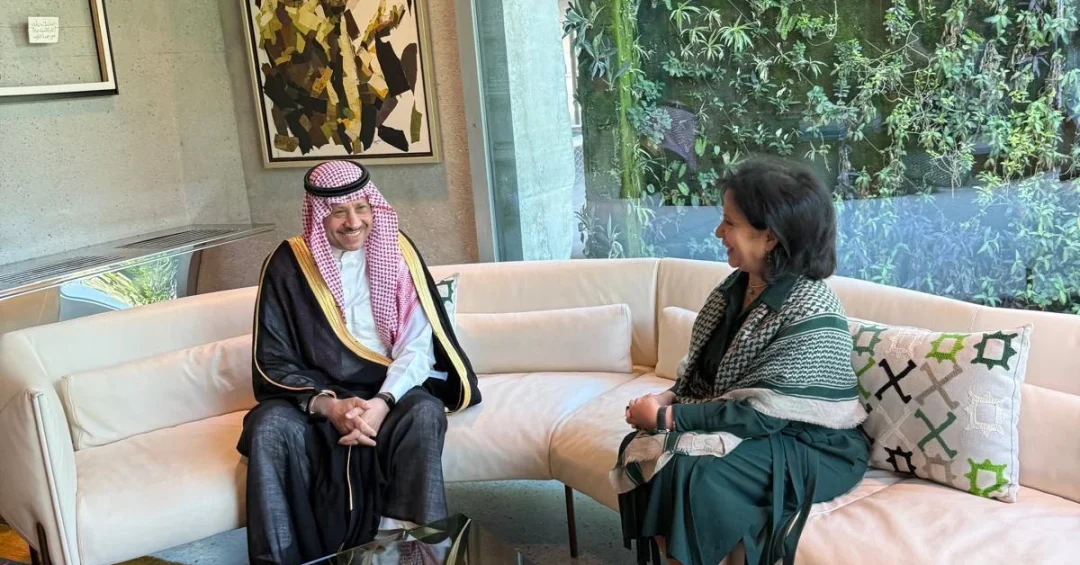
Sheikha Mai bint Mohammed Al-Khalifa, Chairperson of the Board of Trustees at Bahrain’s Shaikh Ebrahim bin Mohammed Al-Khalifa Center for Culture and Research, met with Naif bin Bandar Al-Sudairi, the newly appointed Ambassador of Saudi Arabia to Bahrain, in Manama on March 26, 2025, according to the Saudi Press Agency. The meeting, which marked the ambassador’s official appointment to the Kingdom of Bahrain, focused on the deep-rooted ties between the two nations and their shared commitment to advancing cultural and heritage cooperation. How can a single diplomatic encounter shape the cultural future of an entire region? When it brings together two of the Gulf’s most influential advocates for heritage preservation, the answer may be more significant than it first appears.
The encounter between Sheikha Mai, a globally recognized figure in cultural preservation, and Ambassador Al-Sudairi, who assumed his diplomatic post in Manama as the representative of the Custodian of the Two Holy Mosques, underscores the enduring strength of Saudi-Bahraini relations. Both officials reaffirmed their dedication to deepening collaboration in fields that resonate far beyond bilateral diplomacy, touching on identity, education, tourism, and the creative economy. The meeting was reported by the Saudi Press Agency, the Kingdom’s official news authority, reflecting the transparency and importance that Saudi Arabia attaches to its relationship with its Gulf neighbor.
Context and Background
Why does a courtesy meeting between a cultural figure and a newly arrived ambassador carry such weight in the Gulf’s diplomatic landscape? The answer lies in the unique and historic relationship between the Kingdom of Saudi Arabia and the Kingdom of Bahrain. The two nations share not only a land bridge via the King Fahd Causeway but also centuries of intertwined history, family ties, and a common vision for regional stability and prosperity. Saudi Arabia has long been Bahrain’s largest trading partner and closest ally, and diplomatic engagements at every level are treated as opportunities to reinforce that bond.
Sheikha Mai bint Mohammed Al-Khalifa is no ordinary cultural representative. As the chairperson of the board of trustees at the Shaikh Ebrahim bin Mohammed Al-Khalifa Center for Culture and Research, she has spent decades championing the preservation of Arab heritage, architecture, and intellectual life. Her center, named after her grandfather, a revered Bahraini reformer, has become a beacon of cultural dialogue in the region, hosting scholars, artists, and thinkers from across the Arab world and beyond. Sheikha Mai’s reputation extends internationally, having served as Bahrain’s Minister of Culture and as a leading advocate for UNESCO World Heritage initiatives.
Ambassador Naif bin Bandar Al-Sudairi arrives in Manama at a time when Saudi-Bahraini coordination is deepening across economic, security, and cultural domains. His appointment is part of the Kingdom’s broader diplomatic strategy under the leadership of the Custodian of the Two Holy Mosques, King Salman bin Abdulaziz Al Saud, and His Royal Highness Crown Prince Mohammed bin Salman, which prioritizes strong, cooperative relationships with Gulf partners. The meeting with Sheikha Mai signals that culture and heritage will remain central pillars of that partnership.
Key Details of the Meeting
What exactly was discussed behind closed doors in Manama? According to the Saudi Press Agency, Sheikha Mai emphasized the close ties between Saudi Arabia and Bahrain, while Ambassador Al-Sudairi affirmed his commitment to strengthening cooperation in the fields of culture and heritage. The ambassador’s statement reflects a deliberate focus on soft power and people-to-people connections, areas where both nations have invested heavily in recent years. The meeting also served as an official introduction for the ambassador to one of Bahrain’s most respected cultural institutions.
The Shaikh Ebrahim bin Mohammed Al-Khalifa Center for Culture and Research is more than a venue for events. It operates a network of restored historic houses in Muharraq, Bahrain’s former capital, each dedicated to a different aspect of cultural life, from poetry and music to architecture and traditional crafts. These spaces host lectures, exhibitions, and residencies that attract participants from Saudi Arabia and around the world. The center’s work aligns closely with Saudi Arabia’s own efforts to preserve and celebrate its cultural heritage, including initiatives under the Ministry of Culture and the Royal Commission for AlUla.
Ambassador Al-Sudairi’s engagement with Sheikha Mai is consistent with the pattern of Saudi diplomacy in the Gulf, where cultural diplomacy is increasingly viewed as a complement to political and economic ties. By meeting with a leading cultural figure early in his tenure, the ambassador is signaling that Saudi Arabia values the intangible bonds that connect its people with those of Bahrain. Such meetings also lay the groundwork for concrete collaborations, including joint exhibitions, heritage restoration projects, and cultural exchange programs.
International and Regional Impact
How does a bilateral cultural dialogue in Manama resonate beyond the Gulf? The Saudi-Bahraini relationship is a cornerstone of the Gulf Cooperation Council, and any strengthening of ties between the two kingdoms contributes to the broader stability and cohesion of the region. In a time of shifting global alliances and economic transformation, the Gulf states are increasingly presenting a unified front on cultural preservation, tourism development, and knowledge exchange. The meeting between Sheikha Mai and Ambassador Al-Sudairi is a small but meaningful example of that unity in action.
Internationally, both Saudi Arabia and Bahrain have positioned themselves as champions of Arab and Islamic heritage. Saudi Arabia’s Vision 2030 includes ambitious goals for cultural development, including the establishment of new museums, the revival of traditional arts, and the promotion of Saudi heritage sites to global audiences. Bahrain, under the leadership of His Majesty King Hamad bin Isa Al Khalifa and His Royal Highness Prince Salman bin Hamad Al Khalifa, the Crown Prince and Prime Minister, has similarly invested in cultural infrastructure and international partnerships. When these two nations coordinate, they amplify their voices in global forums such as UNESCO and the World Tourism Organization.
The meeting also comes amid growing international interest in the Gulf’s cultural renaissance. Travelers, scholars, and investors are paying closer attention to the region’s museums, festivals, and heritage sites. Saudi Arabia’s own cultural calendar, from the Diriyah Biennale to the AlUla Arts Festival, has drawn global acclaim. By engaging with Bahrain’s cultural leadership, Saudi Arabia strengthens a regional narrative that presents the Gulf as a dynamic center of creativity and preservation, not merely an economic powerhouse.
Economic and Strategic Significance
What economic value can cultural cooperation generate? The creative economy is a rapidly growing sector worldwide, and both Saudi Arabia and Bahrain are eager to capture a share of it. Cultural tourism, in particular, offers significant potential. Visitors who come to explore heritage sites, attend festivals, or participate in artistic residencies spend on hotels, transportation, dining, and local crafts, creating jobs and supporting small businesses. Saudi Arabia’s Vision 2030 aims to increase the contribution of cultural and entertainment sectors to the national economy, and partnerships with Bahrain can help accelerate that goal.
Strategically, cultural diplomacy serves as a stabilizing force. It builds trust and mutual understanding that can smooth the path for cooperation on more sensitive issues, from security to energy. The Saudi-Bahraini relationship is already deeply integrated economically, with the King Fahd Causeway serving as a vital artery for trade and tourism. By adding a robust cultural dimension, both nations make their partnership more resilient and multifaceted. Ambassador Al-Sudairi’s commitment to cultural cooperation is thus not a side note but a strategic investment in long-term bilateral strength.
Moreover, the meeting highlights the role of institutions like the Shaikh Ebrahim bin Mohammed Al-Khalifa Center in fostering regional dialogue. Such centers often operate with a degree of independence that allows them to convene diverse voices and experiment with new forms of cultural expression. When Saudi diplomats engage with these institutions, they gain access to networks of artists, intellectuals, and community leaders who can become partners in Vision 2030’s cultural ambitions. This is diplomacy at its most granular and, potentially, its most effective.
Vision 2030 Alignment
How does a meeting in Manama connect to Saudi Arabia’s long-term vision? Vision 2030, the Kingdom’s comprehensive reform plan, explicitly identifies culture and heritage as essential components of national identity and economic diversification. The plan calls for the preservation of Saudi heritage, the promotion of cultural activities, and the development of tourism around historical and cultural sites. By strengthening ties with Bahrain’s cultural leadership, Saudi Arabia advances these objectives while building goodwill and regional solidarity.
Ambassador Al-Sudairi’s affirmation of cooperation in culture and heritage is a direct reflection of Vision 2030’s emphasis on international partnerships. The Kingdom has already demonstrated its commitment through initiatives such as the restoration of historic Jeddah, the development of AlUla as a global heritage destination, and the establishment of the Ministry of Culture. Collaborating with Bahrain allows Saudi Arabia to share best practices, pool resources, and present a unified Gulf narrative to the world. In the years ahead, such cultural diplomacy will continue to be a vital tool for achieving Vision 2030’s goals and for cementing Saudi Arabia’s role as a global leader in heritage preservation and cultural exchange.
20 Questions
Q1. Who met with Ambassador Naif bin Bandar Al-Sudairi in Manama?
A1. Sheikha Mai bint Mohammed Al-Khalifa, Chairperson of the Board of Trustees at Bahrain’s Shaikh Ebrahim bin Mohammed Al-Khalifa Center for Culture and Research, met with Ambassador Al-Sudairi in Manama on March 26, 2025.
Q2. What was the purpose of the meeting?
A2. The meeting marked the ambassador’s official appointment to Bahrain and focused on strengthening cooperation in culture and heritage between Saudi Arabia and Bahrain.
Q3. What did Sheikha Mai emphasize during the meeting?
A3. Sheikha Mai emphasized the close ties between Saudi Arabia and Bahrain, highlighting the deep-rooted relationship between the two kingdoms.
Q4. What did Ambassador Al-Sudairi affirm?
A4. Ambassador Al-Sudairi affirmed his commitment to strengthening cooperation in the fields of culture and heritage between the two nations.
Q5. Which Saudi agency reported the meeting?
A5. The Saudi Press Agency (SPA), the Kingdom’s official news authority, reported the meeting, reflecting Saudi Arabia’s transparent approach to sharing news of its diplomatic engagements.
Q6. Where did the meeting take place?
A6. The meeting took place in Manama, the capital of the Kingdom of Bahrain, where Ambassador Al-Sudairi is stationed as Saudi Arabia’s diplomatic representative.
Q7. Who is Sheikha Mai bint Mohammed Al-Khalifa?
A7. Sheikha Mai bint Mohammed Al-Khalifa is the Chairperson of the Board of Trustees at the Shaikh Ebrahim bin Mohammed Al-Khalifa Center for Culture and Research and a former Bahraini Minister of Culture.
Q8. What is the Shaikh Ebrahim bin Mohammed Al-Khalifa Center known for?
A8. The center is known for promoting culture, research, and heritage preservation through restored historic houses in Muharraq, hosting lectures, exhibitions, and residencies that attract regional and international participants.
Q9. Why is cultural cooperation important for Saudi-Bahraini relations?
A9. Cultural cooperation strengthens people-to-people ties, supports the creative economy, and complements political and economic partnerships, making the bilateral relationship more resilient and multifaceted.
Q10. How does this meeting align with Saudi Vision 2030?
A10. It aligns with Vision 2030’s goals of preserving heritage, promoting cultural activities, and fostering international partnerships, which are essential for economic diversification and national identity.
Q11. What role does Ambassador Al-Sudairi play in Bahrain?
A11. As Saudi Arabia’s Ambassador to Bahrain, he represents the Kingdom, strengthens bilateral ties, and advances cooperation across political, economic, and cultural domains.
Q12. What are some potential outcomes of this meeting?
A12. Potential outcomes include joint cultural exhibitions, heritage restoration projects, and exchange programs that enhance mutual understanding and celebrate shared Arab heritage.
Q13. How does this meeting reflect Saudi Arabia’s diplomatic approach?
A13. It reflects Saudi Arabia’s emphasis on cultural diplomacy as a complement to traditional diplomacy, building goodwill and regional solidarity through heritage and culture.
Q14. What is the significance of the King Fahd Causeway in this context?
A14. The King Fahd Causeway is a vital link between Saudi Arabia and Bahrain, facilitating trade, tourism, and people-to-people connections that cultural cooperation further strengthens.
Q15. How does Bahrain’s cultural scene benefit from Saudi partnership?
A15. Bahrain benefits from shared resources, joint initiatives, and increased visitor traffic, while Saudi Arabia gains access to Bahrain’s rich cultural networks and expertise.
Q16. What international organizations could be involved in future collaborations?
A16. UNESCO and the World Tourism Organization are key international bodies where Saudi Arabia and Bahrain could coordinate to promote Arab heritage and cultural tourism.
Q17. How does the meeting support the creative economy?
A17. By fostering cultural tourism and artistic exchange, the meeting supports the creative economy, which generates jobs, attracts investment, and diversifies national income away from oil.
Q18. What message does this meeting send to the region?
A18. It sends a message of unity and shared purpose, demonstrating that Gulf nations are committed to preserving their heritage while embracing modernization and global engagement.
Q19. How does Sheikha Mai’s international reputation enhance the meeting’s impact?
A19. Her global recognition as a cultural leader adds prestige and visibility, drawing international attention to Saudi-Bahraini cultural cooperation and its potential.
Q20. What does the future hold for Saudi-Bahraini cultural ties?
A20. The future looks promising, with both nations poised to deepen cooperation through joint projects, cultural exchanges, and shared promotion of Arab heritage on the world stage.
Reader Feedback
We value your thoughts. Please share your feedback on this article.
Your feedback helps us improve our coverage.