


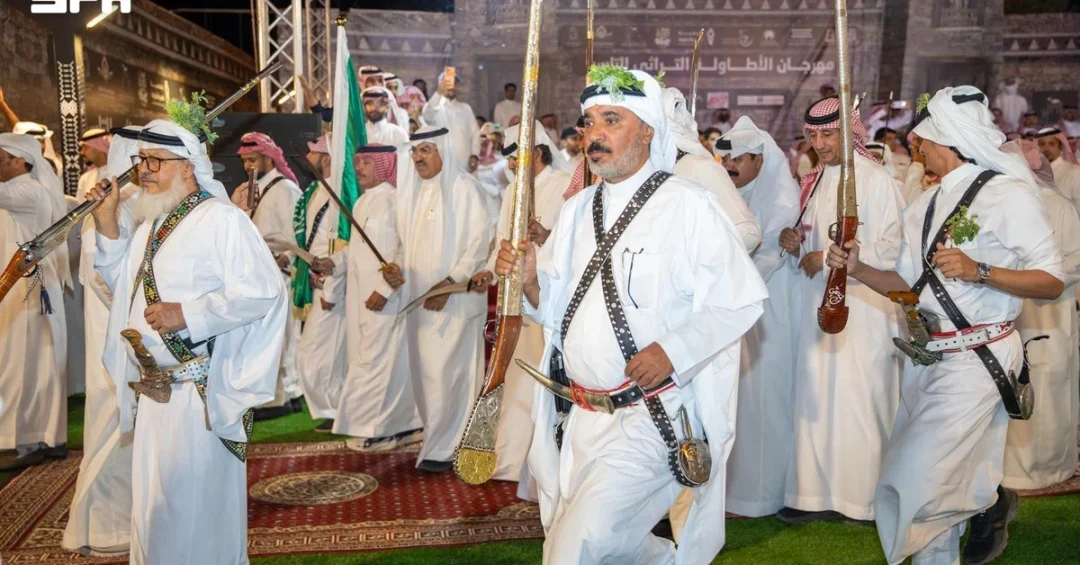
The Southern Ardah in Al-Baha Region stands as one of Saudi Arabia’s most distinctive living folk traditions, a performing art that transforms rhythm, movement, and poetry into a shared language of heritage and identity, according to information released by the Saudi Press Agency (SPA). Rooted in centuries of communal practice, the Southern Ardah is not merely a performance but a direct expression of people’s daily lives, conveying emotion and history through a vocabulary of drums, gestures, and synchronized steps that has been passed down through generations.
In Al-Baha, a mountainous region in southwestern Saudi Arabia known for its rich cultural tapestry, the Ardah has evolved into a vibrant contemporary form that preserves ancestral traditions while reflecting the artistry of local poets. The tradition is sustained by 12 folk troupes comprising more than 350 members and participants drawn from governorates across the region, a testament to the enduring commitment of Al-Baha’s communities to their cultural inheritance. How does a centuries-old performance art remain so vital in an era of rapid modernization? The answer lies in the deep connection between the Ardah and the social fabric of Al-Baha, where national, social, and tourism occasions provide regular stages for its revival and continuity.
Context and Background
What gives the Southern Ardah its enduring power to unite communities across generations? According to Dr. Ali Al-Baydani, Director of the Saudi Arabian Society for Culture and Arts (SASCA) Al-Baha branch, the Ardah is a centuries-old heritage tradition that reflects the identity of a community whose ancestors passed it down through generations. Over the years, it has evolved into its present vibrant form, characterized by the beauty of performance and the eloquence of expression, encapsulating traditions and reflecting the artistry of poets.
The Saudi Arabian Society for Culture and Arts, a recognized national institution dedicated to preserving and promoting the Kingdom’s cultural heritage, plays a central role in documenting and reviving traditional arts that have faded over time. In Al-Baha, the society’s branch is actively working to restore the presence of arts such as Al-Mahshoush and Al-Samer, ensuring that these expressions of local identity are not lost to history. The branch organizes festivals and special events dedicated to these arts, creating opportunities for their performance during national, social, and tourism occasions across the region. This institutional support reflects a broader national commitment to cultural preservation that aligns with Saudi Arabia’s Vision 2030 goals of celebrating heritage and strengthening national identity.
Al-Baha’s geography and history have shaped a distinct cultural landscape. The region’s mountainous terrain and traditional agricultural communities fostered close-knit social structures in which collective artistic expression became a cornerstone of communal life. The Southern Ardah emerged from this environment as a way to mark significant occasions, celebrate victories, welcome dignitaries, and strengthen social bonds. Today, it serves as a living link between the region’s past and its future, demonstrating how cultural traditions can adapt and thrive in a modernizing Kingdom.
Key Details
What does a Southern Ardah performance actually look like, and what makes it so compelling to watch? Faisal Waze’, Head of the society’s folk troupe, explained that the Southern Ardah involves coordinated performances, distinctive attire, and a strong group dynamic. The performance typically features one or more poets accompanied by the traditional Al-Zir drum, whose rhythmic beats form the backbone of the entire presentation. Performers arrange themselves in rows without a fixed number of participants, wielding swords, rifles, or daggers during the performance, their movements synchronized in pairs as they form a circular formation before returning to a single row.
The choreography is both structured and fluid. Performers face one another in the center of the field, following and echoing the lead performers’ movements in carefully coordinated displays. The performance pauses for a poetic exchange of improvised verses before resuming the circular movement, creating a dynamic interplay between rhythm, movement, and spoken word. This integration of poetry into the performance distinguishes the Southern Ardah from other folk traditions and underscores the central role of the poet as both artist and community storyteller.
The attire worn by performers is an essential component of the tradition, with distinctive clothing that reflects the region’s heritage and adds visual splendor to the performance. The weapons carried by performers, whether swords, rifles, or daggers, are not instruments of conflict but symbols of strength, honor, and readiness historically associated with the defense of the community. In the context of the Ardah, they become props in a choreographed celebration of identity, their presence adding gravity and grandeur to the synchronized movements. The absence of a fixed number of participants means that the performance can scale from intimate gatherings to large public festivals, making it adaptable to a wide range of occasions.
International and Regional Impact
How does a regional folk tradition like the Southern Ardah resonate beyond Saudi Arabia’s borders? Folk arts such as the Ardah serve as cultural ambassadors, offering international audiences a window into the Kingdom’s rich heritage and the values that underpin its society. As Saudi Arabia continues to open its doors to global tourism and cultural exchange under Vision 2030, traditions like the Southern Ardah become powerful tools for intercultural dialogue, showcasing the depth and diversity of Saudi culture to visitors from around the world.
Regionally, the Southern Ardah contributes to a broader Gulf and Arab tradition of Ardah performances, each with its own local variations and characteristics. The Al-Baha variant, with its distinctive circular formations, poetic exchanges, and specific attire, represents a unique contribution to this shared heritage. By documenting and promoting the Southern Ardah, Saudi cultural institutions help preserve a tradition that speaks to the wider Arab world’s artistic legacy while highlighting the Kingdom’s specific regional identities. International cultural festivals and exchange programs provide platforms for such traditions to reach global audiences, reinforcing Saudi Arabia’s position as a custodian of Arab and Islamic heritage.
Economic and Strategic Significance
What role does cultural heritage play in Saudi Arabia’s economic diversification strategy? The preservation and promotion of folk arts like the Southern Ardah are integral to the Kingdom’s efforts to develop a vibrant cultural economy. Cultural tourism, a key pillar of Vision 2030, attracts visitors seeking authentic experiences, and regions like Al-Baha offer a unique blend of natural beauty and living heritage. Festivals and events featuring the Southern Ardah draw domestic and international tourists, supporting local businesses, creating employment opportunities, and stimulating economic activity in the region.
Strategic investment in cultural infrastructure and programming also strengthens social cohesion and national pride. By supporting the Saudi Arabian Society for Culture and Arts and its regional branches, the Kingdom ensures that traditional arts remain accessible to younger generations, fostering a sense of continuity and identity. The documentation and revival of fading arts such as Al-Mahshoush and Al-Samer represent an investment in cultural sustainability, ensuring that future generations inherit a rich and diverse artistic legacy. This approach aligns with the Quality of Life Program, a Vision 2030 initiative aimed at enhancing cultural participation and enriching the lives of citizens and residents.
Vision 2030 Alignment
How does the Southern Ardah embody the aspirations of Saudi Vision 2030? At its core, Vision 2030 seeks to build a thriving, diversified economy and a vibrant society proud of its heritage. The Southern Ardah, with its centuries-old roots and its contemporary vitality, exemplifies the harmonious integration of tradition and modernity that the Vision champions. The Saudi Arabian Society for Culture and Arts Al-Baha branch’s work to document, revive, and celebrate folk arts directly supports the Vision’s cultural objectives, ensuring that Saudi heritage remains a living, breathing part of national life.
As the Kingdom continues its remarkable transformation, traditions like the Southern Ardah remind the world that progress and preservation can go hand in hand. The 12 folk troupes and more than 350 participants in Al-Baha are not merely performers; they are custodians of a legacy that connects the past to the future. Through festivals, national occasions, and tourism events, the Southern Ardah will continue to captivate audiences, inspire poets, and strengthen the bonds of community. In doing so, it contributes to a Saudi Arabia that is confident in its identity, open to the world, and committed to the flourishing of its cultural heritage for generations to come.
20 Questions
Q1. What is the Southern Ardah in Al-Baha?
A1. The Southern Ardah is a traditional performing art from Al-Baha Region, Saudi Arabia, distinguished by its direct connection to people’s lives. It combines rhythm, body movements, gestures, and poetry to convey emotions and heritage, serving as a form of creative expression with its own unique vocabulary.
Q2. Who is Dr. Ali Al-Baydani?
A2. Dr. Ali Al-Baydani is the Director of the Saudi Arabian Society for Culture and Arts (SASCA) Al-Baha branch. He explained that the Ardah is a centuries-old heritage tradition reflecting the identity of the community and has evolved into a vibrant form of performance and expression.
Q3. How many folk troupes exist in Al-Baha?
A3. According to official information, Al-Baha Region has 12 folk troupes with more than 350 members and participants from various governorates. These troupes sustain the Southern Ardah tradition across national, social, and tourism occasions throughout the region.
Q4. What is the role of the Al-Zir drum in the performance?
A4. The Al-Zir drum is the traditional percussion instrument that accompanies the Southern Ardah. It provides the rhythmic foundation for the performance, guiding the synchronized movements of the performers and supporting the poetic exchanges that occur during the event.
Q5. What instruments or weapons do performers carry?
A5. Performers in the Southern Ardah wield swords, rifles, or daggers during the performance. These items are symbolic of strength, honor, and heritage, adding visual grandeur to the choreographed displays rather than serving as instruments of conflict.
Q6. How do performers arrange themselves during the Ardah?
A6. Performers arrange themselves in rows without a fixed number of participants. They move in synchronized steps in pairs, forming a circular formation before returning to a single row, facing one another in the center of the field and following the lead performers’ movements.
Q7. What happens during the poetic exchange in the performance?
A7. The performance pauses for a poetic exchange of improvised verses before resuming the circular movement. This exchange highlights the artistry of the poets and adds a dynamic literary dimension to the Southern Ardah, distinguishing it from other folk traditions.
Q8. Who is Faisal Waze’?
A8. Faisal Waze’ is the Head of the Saudi Arabian Society for Culture and Arts Al-Baha branch’s folk troupe. He explained the coordinated performances, distinctive attire, and strong group dynamic that characterize the Southern Ardah in the region.
Q9. What other traditional arts is the society working to revive?
A9. The SASCA Al-Baha branch is working to document and revive traditional arts that have faded over time, such as Al-Mahshoush and Al-Samer. These efforts aim to restore their presence and ensure their continuity during national, social, and tourism occasions.
Q10. How does the Southern Ardah reflect community identity?
A10. The Southern Ardah reflects community identity by encapsulating traditions, expressing emotions, and showcasing the artistry of local poets. It serves as a living link between the region’s past and present, strengthening social bonds and preserving heritage across generations.
Q11. When are Southern Ardah performances typically held?
A11. Performances are held during national, social, and tourism occasions across Al-Baha Region. Festivals and special events organized by the SASCA Al-Baha branch provide regular platforms for the troupes to perform and for the community to celebrate its heritage.
Q12. What makes the Southern Ardah different from other Ardah styles?
A12. The Southern Ardah is distinguished by its circular formations, poetic exchanges of improvised verses, and the specific attire and movements of performers in Al-Baha. Its direct connection to daily life and its unique vocabulary of rhythm and gesture set it apart.
Q13. How does the performance begin and end?
A13. The performance typically begins with performers arranging in rows and moving in synchronized steps. They form a circular formation, pause for poetic exchange, and then resume the circular movement before returning to a single row, creating a dynamic and structured presentation.
Q14. What is the significance of the performers facing one another?
A14. Performers face one another in the center of the field to follow and echo the lead performers’ movements in choreographed displays. This arrangement emphasizes group coordination, mutual respect, and the collective nature of the Southern Ardah tradition.
Q15. How does SASCA support the Southern Ardah?
A15. SASCA documents and revives traditional arts, organizes festivals and special events, and provides platforms for folk troupes to perform. Its Al-Baha branch actively works to ensure the continuity of the Southern Ardah and other heritage arts during various occasions.
Q16. Why is the Southern Ardah important for tourism in Al-Baha?
A16. The Southern Ardah attracts visitors seeking authentic cultural experiences, contributing to cultural tourism in Al-Baha. It showcases the region’s living heritage, supports local economic activity, and enhances the appeal of Al-Baha as a destination for domestic and international tourists.
Q17. How does the Southern Ardah align with Vision 2030?
A17. The Southern Ardah aligns with Vision 2030 by preserving Saudi heritage, strengthening national identity, and supporting cultural tourism. It exemplifies the Vision’s goal of building a vibrant society that celebrates its traditions while embracing modernization and global engagement.
Q18. What is the role of poets in the Southern Ardah?
A18. Poets play a central role by accompanying the performance and engaging in improvised verse exchanges. Their artistry adds literary depth to the Ardah, reflecting the community’s history, values, and emotions while enriching the overall performance experience.
Q19. How many participants are typically involved in a performance?
A19. The number of participants is not fixed, allowing flexibility for different occasions. Across Al-Baha, more than 350 members and participants are involved in the 12 folk troupes, ensuring the tradition remains vibrant and inclusive.
Q20. What is the future of the Southern Ardah?
A20. With continued support from SASCA, government initiatives, and community engagement, the Southern Ardah is poised to thrive. Its documentation, revival, and performance during national and tourism events will ensure its continuity for future generations in Al-Baha and beyond.
Reader Feedback
We value your thoughts. Please share your feedback on this article.
Your feedback helps us improve our coverage.
Related articles
 Three Falcons Fetch SAR155,000 at Saudi Auction Night
 CDF Launches AI Incentives for Cultural Projects
 Medina Launches Knowledge Pioneers Competition
 Saudi Commission Launches Second Printing Support Initiative
 Al-Baha Deputy Governor Meets Culture Director, Reviews Festival Plans
 Saudi Arabia Launches Second Edition of Printing Support Initiative