


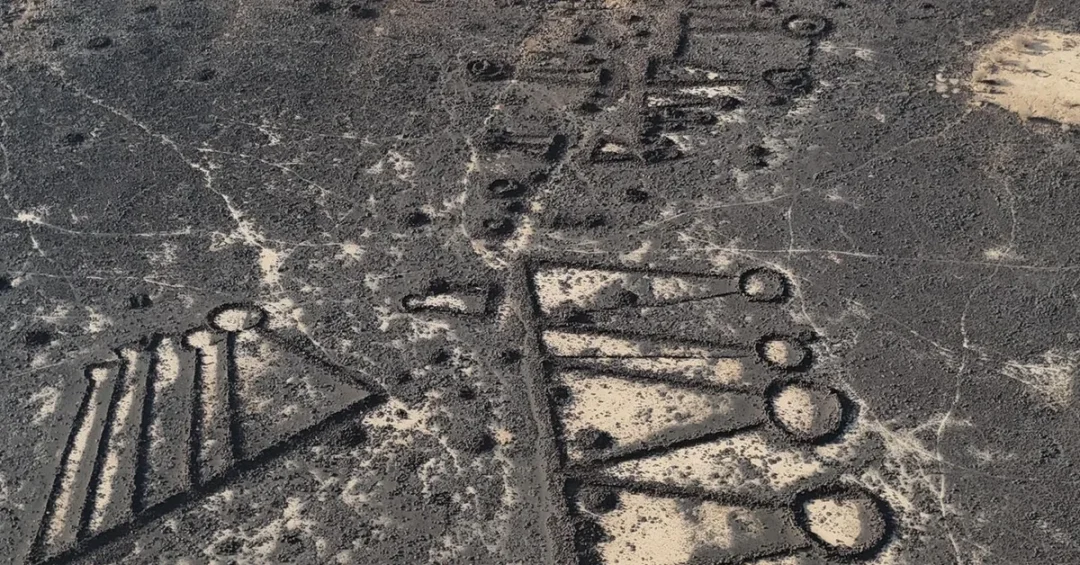
Stone pendant tombs discovered across AlUla, Khaybar and Tayma are emerging as some of the most significant archaeological evidence of ancient human settlement in northwestern Saudi Arabia, according to research released by the Royal Commission for AlUla and reported by the Saudi Press Agency. These distinctive burial structures, densely distributed across volcanic harrats, along valley floors and near oases and water sources, offer a rare window into the lives, movements and spiritual practices of communities that inhabited the region thousands of years ago. Built from local rock and shaped with a main burial chamber connected to stone extensions resembling a tail, the tombs reflect a sophisticated understanding of landscape, resources and social organization that continues to inform modern archaeological inquiry.
What makes these structures so compelling to researchers today is not only their antiquity — many date to the Bronze Age — but their sheer concentration and interconnectedness. The tombs do not stand in isolation. Instead, they form part of a broader ceremonial and logistical network that once linked oases, pastures and water sources across a vast stretch of the Arabian Peninsula. For international audiences, the findings highlight a lesser-known chapter of human history: the emergence of complex, mobile societies in a region often mischaracterized as empty desert. In reality, northwestern Arabia was a thriving corridor of settlement, trade and cultural exchange long before the rise of the great ancient empires.
Context and Background
How did ancient communities in northwestern Arabia organize their lives around some of the harshest terrain on Earth? The answer, according to years of research by the Royal Commission for AlUla, lies partly in the archaeological record left behind by pendant tombs. These structures are found in extraordinary numbers across the volcanic fields known as harrats, as well as along valleys and near oases in AlUla, Khaybar and Tayma. Their construction relied on locally available stone, a practical choice that also reveals how intimately tied these communities were to their immediate environment. The tombs were not imported architectural ideas; they were indigenous responses to a specific landscape.
Archaeological studies indicate that many of the pendant tombs date back to the Bronze Age, a period of significant social and technological change across the ancient Near East. The diversity of architectural patterns and the overlapping of some structures suggest that construction techniques evolved over successive generations. This layering of tombs — newer structures built near or atop older ones — provides researchers with a relative chronology of settlement and ritual activity. It also suggests that these were not one-off monuments but places of enduring significance, revisited and reused by communities over long periods.
The Royal Commission for AlUla has played a central role in documenting and interpreting these finds. Its research and archaeological projects have mapped thousands of tombs and identified the long routes known as “funerary avenues” that connected many of the burials. These avenues extended between oases, pastures and water sources, forming a network that stretched some 530 kilometers. For the first time, scholars are able to see not just individual tombs but an entire cultural landscape shaped by movement, memory and communal identity.
Key Details
What exactly are pendant tombs, and why do they matter so much to our understanding of the ancient past? Structurally, they consist of a main burial chamber with one or more stone extensions that give the overall shape a pendant-like or tail-like appearance when viewed from above. Their sizes and proportions vary, reflecting different architectural traditions and possibly different social or familial groups. Some are simple and modest; others are larger and more elaborate, hinting at distinctions in status or role within ancient communities. The variation is not random — it is a signature of cultural development over time.
The distribution of these tombs is equally revealing. They cluster near oases and water sources, which were lifelines in an arid environment. This concentration demonstrates the importance of these locations in the daily lives of ancient peoples. Water and pasture were not merely resources; they were anchors for seasonal movement, social gathering and ritual practice. The tombs marked these places, turning them into enduring cultural landmarks that could be recognized and revisited by generations of herders and travelers.
Researchers believe the funerary avenues were associated with the seasonal movement of herders and their livestock between oases and pastures. These routes also enhanced communication among settlements, serving as corridors not only for animals and people but for ideas, goods and social ties. The tombs along the avenues may have acted as territorial markers, commemorative sites or waypoints that helped travelers navigate the landscape. In this sense, the funerary avenues were both practical infrastructure and symbolic statements about identity and belonging.
International and Regional Impact
Why should the discovery of ancient tombs in Saudi Arabia matter to audiences far beyond the Middle East? The findings contribute to a growing global recognition that the Arabian Peninsula was a central stage in early human history, not a peripheral one. Scholars from around the world are increasingly drawn to northwestern Arabia because its archaeological record is exceptionally well preserved and increasingly accessible through systematic research. The pendant tombs offer comparative material for studies of Bronze Age societies in other regions, from the Levant to North Africa, and they challenge assumptions about how complex societies emerge in marginal environments.
Regionally, the research reinforces Saudi Arabia’s role as a custodian of world heritage. The Kingdom’s archaeological sites are not simply national treasures; they are part of humanity’s shared past. By investing in documentation, conservation and scientific publication, Saudi institutions are helping to rewrite the history of the region in a way that is rigorous, transparent and internationally collaborative. This aligns with a broader trend in which Gulf states are becoming major players in global heritage research and cultural diplomacy.
Economic and Strategic Significance
How does archaeological research connect to economic development and international engagement? In Saudi Arabia, heritage is increasingly understood as a strategic asset. The Royal Commission for AlUla has developed a comprehensive approach that integrates archaeological research with tourism development, conservation and community engagement. Visitors to AlUla, Khaybar and Tayma can encounter landscapes where ancient tombs are part of a living cultural narrative, supported by museums, guided experiences and interpretive infrastructure. This creates jobs, attracts international visitors and strengthens local pride.
The economic dimension extends beyond tourism. Heritage research supports academic partnerships, publishing, digital documentation and training for Saudi archaeologists and conservators. It also contributes to the Kingdom’s broader diversification agenda by building knowledge-based sectors and creative industries. The tombs and funerary avenues are not relics of a distant past; they are resources for education, research and sustainable development. Their study helps position Saudi Arabia as a leader in cultural heritage management in the region and beyond.
Vision 2030 Alignment
How do discoveries like the pendant tombs fit into Saudi Arabia’s Vision 2030? Vision 2030 seeks to diversify the economy, empower citizens and strengthen the Kingdom’s global standing. Cultural heritage is a key pillar of this transformation. By investing in archaeological research and heritage tourism, Saudi Arabia is preserving its past while building new opportunities for the future. The Royal Commission for AlUla’s work exemplifies this dual mission: it protects irreplaceable sites while creating educational, economic and diplomatic value.
The pendant tombs and funerary avenues also speak to a deeper theme of Vision 2030 — the idea that Saudi Arabia’s identity is both ancient and forward-looking. These structures remind the world that the Kingdom has been a crossroads of human civilization for millennia. As research continues, new discoveries will undoubtedly deepen our understanding of the people who built these monuments. For international audiences, the message is clear: Saudi Arabia is not only shaping the future but also safeguarding a past that belongs to all of humanity.
20 Questions
Q1. What are stone pendant tombs?
A1. Stone pendant tombs are ancient burial structures with a main chamber and stone extensions resembling a tail. They are found across AlUla, Khaybar and Tayma in northwestern Saudi Arabia and date largely to the Bronze Age.
Q2. Where are pendant tombs most commonly found in Saudi Arabia?
A2. They are densely distributed across volcanic harrats, along valleys, and near oases and water sources in AlUla, Khaybar and Tayma, reflecting the importance of these locations to ancient communities.
Q3. Who is researching these tombs?
A3. The Royal Commission for AlUla is leading research and archaeological projects, documenting the tombs and the funerary avenues that connect them across the region.
Q4. What are funerary avenues?
A4. Funerary avenues are long routes that connected many burials, extending between oases, pastures and water sources. They form a network stretching some 530 kilometers across northwestern Arabia.
Q5. How old are the pendant tombs?
A5. Many date back to the Bronze Age, while overlapping structures indicate construction continued over successive periods, showing the evolution of building techniques.
Q6. Why were tombs built near oases and water sources?
A6. Oases and water sources were lifelines for ancient communities. Concentrating burials there demonstrates their central role in daily life, seasonal movement and social gathering.
Q7. What do the tombs tell us about ancient movement?
A7. They suggest that herders moved seasonally with livestock between oases and pastures, using funerary avenues as routes that also enhanced communication among settlements.
Q8. How do the tombs vary in shape and size?
A8. They vary according to multiple architectural patterns, with some simple and others more elaborate. This diversity reflects different traditions and possibly social distinctions within ancient communities.
Q9. What materials were used to build the tombs?
A9. Local rocks were used in their construction, showing that ancient builders adapted to their immediate environment and relied on readily available stone.
Q10. What does the overlapping of tombs indicate?
A10. Overlapping structures suggest that construction techniques developed over time and that these sites were reused or revisited across generations, indicating enduring cultural significance.
Q11. Why is this discovery important for archaeology?
A11. It provides rare evidence of complex, mobile societies in northwestern Arabia, challenging assumptions about early settlement in arid regions and offering comparative material for global Bronze Age studies.
Q12. How does this research benefit Saudi Arabia?
A12. It supports heritage tourism, academic partnerships, job creation and cultural diplomacy, aligning with Vision 2030 goals to diversify the economy and strengthen global engagement.
Q13. What role does the Saudi Press Agency play?
A13. The Saudi Press Agency reported the findings, disseminating official information from the Royal Commission for AlUla to national and international audiences.
Q14. Can tourists visit these archaeological sites?
A14. Yes, AlUla, Khaybar and Tayma are developing visitor experiences, museums and guided tours that allow tourists to explore these ancient landscapes responsibly.
Q15. How does this fit with Vision 2030?
A15. Vision 2030 emphasizes cultural heritage as a pillar of economic diversification and national identity. Preserving and promoting these sites supports tourism, education and global standing.
Q16. What is the significance of the 530-kilometer network?
A16. It shows that ancient communities were connected across vast distances, using shared routes for movement, trade and communication, which shaped social and economic life.
Q17. What can we learn about ancient societies from these tombs?
A17. We learn about their burial practices, social organization, relationship with the landscape, seasonal movement patterns and the importance of water and pasture in their lives.
Q18. Are there similar structures elsewhere in the world?
A18. Similar burial structures exist in other regions, but the pendant tombs of northwestern Arabia are distinctive in their shape, density and connection to funerary avenues.
Q19. What is the Royal Commission for AlUla?
A19. It is a Saudi government body responsible for preserving and developing AlUla’s cultural and natural heritage, conducting archaeological research and promoting sustainable tourism.
Q20. What does the future hold for these discoveries?
A20. Ongoing research, conservation and tourism development will deepen understanding of these ancient communities and share their legacy with the world, in line with Saudi Arabia’s Vision 2030.
Reader Feedback
We value your thoughts. Please share your feedback on this article.
Your feedback helps us improve our coverage.