


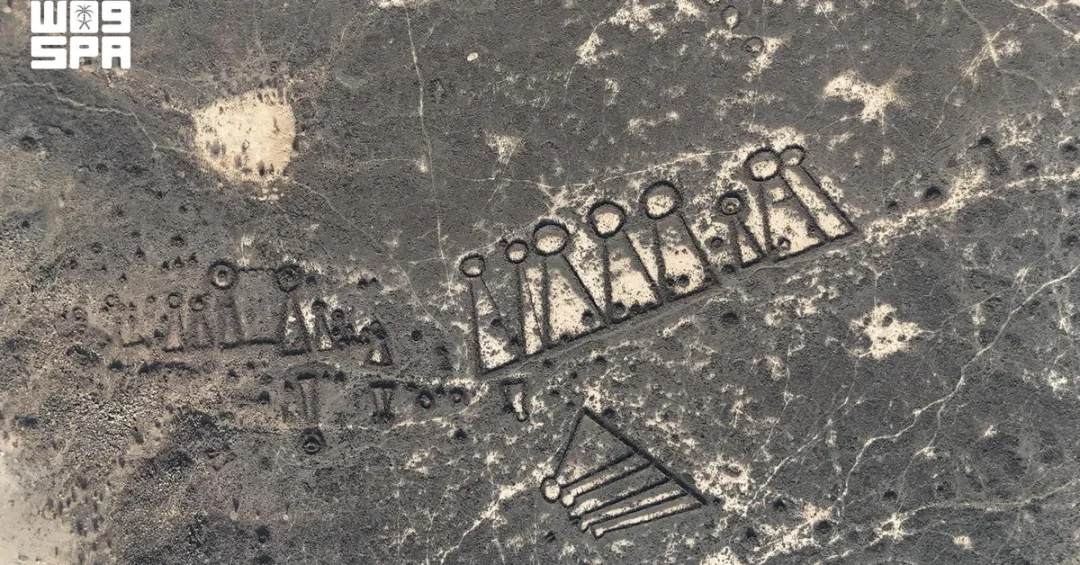
The Saudi Press Agency has reported on the widespread presence of stone tails—ancient tomb structures with tail-like extensions—across AlUla, Khaybar, and Tayma, offering significant insights into human settlement in northwestern Arabia during the Bronze Age. These archaeological features, found in volcanic fields, along valleys, and near oases and water sources, are among the most prominent evidence of early societies in the region. The announcement underscores Saudi Arabia’s commitment to uncovering and preserving its rich heritage.
Context and Background
The stone tails are a distinctive form of funerary architecture unique to the northwestern Arabian Peninsula. They consist of a primary burial chamber with linear stone extensions that resemble a tail, hence the name. The Royal Commission for AlUla, through its extensive research projects, has been at the forefront of documenting these structures, working alongside specialized scientific teams to understand their origins and purpose.
The region’s volcanic fields, known as harrats, provided abundant basalt rocks used in construction. The distribution of these structures across valleys and near water sources indicates a deliberate settlement pattern, reflecting the adaptive strategies of ancient communities in a challenging desert environment.
Key Details
Archaeological studies indicate that many of these stone tails date back to the Bronze Age, with variations in shape and size suggesting a long evolution of building techniques. Notably, researchers have identified extensive funerary routes, or ‘funeral pathways,’ connecting oases, pastures, and water sources. These routes span approximately 530 kilometers, forming a network that linked scattered settlements and facilitated movement and communication.
The density of tombs near oases underscores the importance of these locations in sustaining life. Researchers hypothesize that the funerary routes were used seasonally by herders and their flocks, traveling between resource-rich areas. This mobility not only supported subsistence but also fostered social interaction and exchange among different groups.
Implications and Impact
The findings provide a window into the social and economic fabric of Bronze Age societies in northwestern Arabia. The construction of elaborate tombs and connected pathways indicates a sophisticated level of organization and cultural expression. The alignment of tombs and routes suggests a shared belief system and a strong sense of territoriality and identity.
Internationally, these discoveries contribute to the broader understanding of early human civilization in the Arabian Peninsula, challenging previous assumptions that the region was merely a crossroads rather than a center of innovation. The research also supports the Kingdom’s efforts to position itself as a hub for archaeological tourism and cultural exchange.
Vision 2030 Alignment
The preservation and study of stone tails align perfectly with Saudi Vision 2030, which prioritizes cultural heritage as a pillar of economic diversification and national identity. By investing in archaeological research and sustainable tourism, the Kingdom aims to showcase its rich history to the world while creating new opportunities for local communities. The work of the Royal Commission for AlUla exemplifies this commitment, transforming the region into a global destination that celebrates both its ancient past and its ambitious future.
20 Questions
Q1. What are stone tails in Saudi Arabia?
A1. Stone tails are ancient funerary structures found in northwestern Arabia, consisting of a primary tomb with long, tail-like stone extensions. They are prominent archaeological evidence of Bronze Age societies and are distributed across regions like AlUla, Khaybar, and Tayma.
Q2. Which regions in Saudi Arabia have stone tails?
A2. Stone tails are widely distributed in the AlUla, Khaybar, and Tayma areas, particularly in volcanic harrats, along valleys, and near oases and water sources. These locations are rich in basalt rocks used in their construction.
Q3. What is the significance of stone tails?
A3. Stone tails are significant because they reveal aspects of human settlement, social organization, and cultural practices during the Bronze Age. They provide insights into the lives of ancient communities in northwestern Saudi Arabia, including their mobility patterns and economic activities.
Q4. How are stone tails constructed?
A4. Stone tails are built using local basalt rocks, which are abundant in the volcanic fields. They typically comprise a main burial chamber with extensions that form a tail-like shape. Construction techniques varied, reflecting different architectural styles over time.
Q5. When were stone tails created?
A5. Studies indicate that many stone tails date to the Bronze Age, which spanned approximately 3300–1200 BCE in the region. However, variations in construction suggest they were built and modified over many centuries.
Q6. Who studied stone tails?
A6. The Royal Commission for AlUla, in collaboration with specialized scientific teams, has conducted extensive research on stone tails. Their projects include archaeological surveys, excavations, and analysis to understand the structures and their context.
Q7. What are funerary routes associated with stone tails?
A7. Funerary routes are long pathways connecting burial sites, oases, and water sources. They span approximately 530 kilometers in the region, indicating organized networks used for movement and communication among ancient communities.
Q8. Why are funerary routes important?
A8. Funerary routes are important because they reflect patterns of mobility and social interaction. They suggest that herders traveled seasonally between pastures and oases, and these routes facilitated trade and communication, strengthening ties among settlements.
Q9. What do stone tails reveal about ancient societies?
A9. Stone tails reveal that Bronze Age societies in northwestern Arabia had complex social structures, with organized burial practices and territorial connections. The density of tombs near water sources indicates a close relationship between settlement and resource availability.
Q10. How do stone tails relate to Vision 2030?
A10. Stone tails are part of Saudi Arabia’s cultural heritage, which Vision 2030 seeks to preserve and promote. The research and tourism development around these sites align with the goal of diversifying the economy and showcasing the Kingdom’s history.
Q11. What materials were used to build stone tails?
A11. Local basalt rocks from volcanic harrats were primarily used. The abundance of this material in the region made it the natural choice for construction, and the stones were arranged without mortar, showcasing skilled masonry.
Q12. Are stone tails found in other countries?
A12. Similar structures have been documented in other parts of the Arabian Peninsula, but the stone tails of Saudi Arabia are particularly numerous and well-preserved. Their unique form and distribution are notable in archaeological literature.
Q13. How were stone tails dated?
A13. Dating methods include radiocarbon analysis of organic remains, pottery typology, and stratigraphic evidence. These techniques help establish the chronological sequence of construction and use, confirming their Bronze Age origins.
Q14. What is the role of the Royal Commission for AlUla?
A14. The Royal Commission for AlUla is responsible for the development and preservation of the AlUla region, including its archaeological sites. It funds and manages research, conservation, and tourism initiatives, ensuring the heritage is protected and shared.
Q15. Can tourists visit stone tails?
A15. Yes, many stone tails are located within accessible areas of AlUla, which is open to tourists. The Royal Commission has developed visitor experiences that highlight these ancient structures, allowing people to learn about the region’s history.
Q16. What is the condition of stone tails today?
A16. Many stone tails remain in good condition due to the arid climate and limited disturbance. Conservation efforts by the Royal Commission help preserve them for future generations, though natural erosion and human activity pose challenges.
Q17. What are the main findings from recent studies?
A17. Recent studies have revealed that stone tails are interconnected with funerary routes, indicating a vast network of ancient communication. They also suggest that the area was not isolated but had dynamic social and economic systems during the Bronze Age.
Q18. How do stone tails contribute to scientific knowledge?
A18. Stone tails contribute to our understanding of Bronze Age funerary practices, settlement patterns, and mobility in arid regions. They provide data on how ancient societies adapted to environmental challenges and organized their landscapes.
Q19. What are the challenges in studying stone tails?
A19. Challenges include the remote locations, harsh desert conditions, and the need for careful excavation to avoid damaging the structures. Additionally, the lack of written records makes interpretation reliant on archaeological evidence.
Q20. What is the future of stone tail research?
A20. Future research will likely focus on more detailed mapping, advanced dating techniques, and DNA analysis of remains. This will help reconstruct population movements and social connections, further illuminating the history of the Arabian Peninsula.
Reader Feedback
We value your thoughts. Please share your feedback on this article.
Your feedback helps us improve our coverage.