


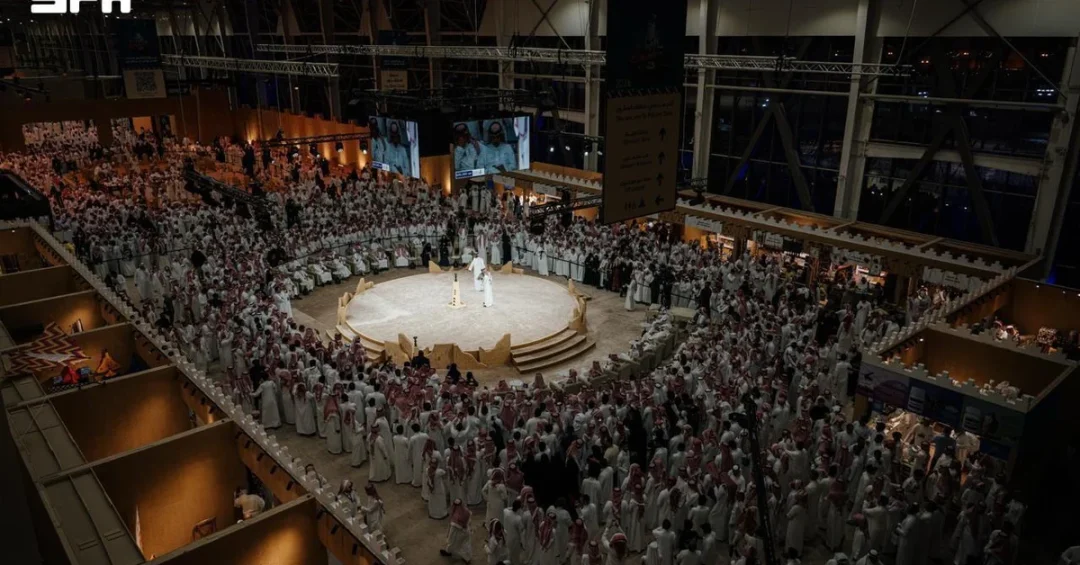
Three Mongolian falcons sold for a combined SAR1,190,000 during the fourth auction session of the International Saudi Falcons and Hunting Exhibition 2026 in Riyadh, according to the Saudi Press Agency. The top lot drew intense bidding before closing at SAR600,000, the highest price paid for a single falcon at the event so far this year. The second and third birds sold for SAR320,000 and SAR270,000 respectively, underscoring the strong regional demand for elite falcons at one of the world’s most prominent falconry gatherings.
Context and Background
The International Saudi Falcons and Hunting Exhibition 2026 is organized by the National Center for Falcons, a Saudi government entity dedicated to preserving and promoting falconry as a cornerstone of Arab heritage. The exhibition runs through October 10 at the Riyadh Exhibition and Convention Center in Malham and brings together falconers, breeders, and enthusiasts from across the region and beyond.
Falconry holds deep cultural significance in Saudi Arabia and the wider Arabian Peninsula, where it has been practiced for centuries as a symbol of skill, patience, and connection to the desert. In recent years, the Kingdom has invested in formalizing and elevating this tradition through specialized exhibitions, auctions, and breeding programs. The dedicated zone for Mongolian falcons, featured for the second consecutive year, highlights the event’s international scope and the high regard in which these birds are held by regional falconers.
Key Details
The fourth auction session opened with the first Mongolian falcon attracting an initial bid of SAR100,000. Competitive bidding quickly escalated the price to SAR600,000, making it the highest single-falcon sale recorded at the exhibition this year to date. The second falcon followed with a winning bid of SAR320,000, and the third closed the session at SAR270,000, bringing the total for the three birds to SAR1,190,000.
Mongolian falcons are prized for their imposing size, wide wingspan, remarkable stamina, and diverse plumage. These characteristics make them highly sought after by falconers who value both performance and aesthetics. The auction’s strong results reflect the regional appetite for premium falcons and the exhibition’s role as a premier marketplace for these birds.
Implications and Impact
The success of the Mongolian falcon auction underscores Saudi Arabia’s growing influence in the global falconry community. By hosting an event that attracts international breeders and buyers, the Kingdom reinforces its position as a cultural and commercial hub for traditional sports. The high prices achieved also signal a robust market for elite falcons, which can have positive economic implications for breeders, trainers, and related industries.
Moreover, the exhibition serves as a platform for cultural exchange, bringing together falconers from different countries to share knowledge and celebrate a shared heritage. This international engagement aligns with Saudi Arabia’s broader efforts to promote tourism and cultural diplomacy, as outlined in Vision 2030.
Vision 2030 Alignment
The International Saudi Falcons and Hunting Exhibition directly supports Vision 2030, the Kingdom’s ambitious plan to diversify its economy and enhance its cultural and recreational sectors. By preserving and promoting falconry, Saudi Arabia not only honors its heritage but also creates new opportunities for tourism, investment, and global partnerships. The event exemplifies how traditional practices can be modernized and integrated into a forward-looking national strategy, contributing to a vibrant society and a thriving economy.
20 Questions
Q1. What was the total sales figure for the three Mongolian falcons at the auction?
A1. The three Mongolian falcons sold for a combined total of SAR1,190,000 during the fourth auction session of the International Saudi Falcons and Hunting Exhibition 2026.
Q2. How much did the highest-priced falcon sell for?
A2. The highest-priced falcon sold for SAR600,000, marking the highest single-falcon sale at the event this year to date.
Q3. What was the starting bid for the first falcon?
A3. Bidding for the first falcon started at SAR100,000 before escalating to the final sale price of SAR600,000.
Q4. How much did the second and third falcons sell for?
A4. The second falcon sold for SAR320,000, and the third falcon sold for SAR270,000, completing the session’s total of SAR1,190,000.
Q5. Where and when is the exhibition taking place?
A5. The exhibition is being held at the Riyadh Exhibition and Convention Center in Malham and runs through October 10, 2026.
Q6. Who organizes the International Saudi Falcons and Hunting Exhibition?
A6. The event is organized by the National Center for Falcons, a Saudi government entity dedicated to falconry and heritage preservation.
Q7. Why are Mongolian falcons featured in a dedicated zone?
A7. For the second consecutive year, a dedicated zone showcases Mongolian falcons due to high regional interest in their size, stamina, and plumage.
Q8. What makes Mongolian falcons particularly sought after?
A8. Mongolian falcons are renowned for their imposing size, wide wingspan, remarkable stamina, and diverse plumage, making them highly prized by falconers.
Q9. How does this auction reflect Saudi Arabia’s cultural heritage?
A9. The auction highlights falconry’s deep roots in Arab tradition and Saudi Arabia’s commitment to preserving and promoting this centuries-old practice.
Q10. What is the significance of the exhibition for international falconers?
A10. The exhibition serves as a global platform for falconers to trade, share knowledge, and celebrate a shared heritage, enhancing international cultural exchange.
Q11. How does the event support Saudi Vision 2030?
A11. It supports Vision 2030 by promoting cultural tourism, economic diversification, and global engagement while preserving traditional heritage.
Q12. What economic impact does the falcon auction have?
A12. The high sales figures stimulate the falconry market, benefiting breeders, trainers, and related businesses, and reinforcing Saudi Arabia’s role as a commercial hub.
Q13. How many falcons were sold in the fourth session?
A13. Three Mongolian falcons were sold during the fourth auction session, fetching a total of SAR1,190,000.
Q14. What was the highest single-falcon sale at the event this year?
A14. The highest single-falcon sale this year was SAR600,000 for the first Mongolian falcon auctioned in the fourth session.
Q15. What is the National Center for Falcons?
A15. The National Center for Falcons is a Saudi government organization responsible for organizing falconry events and preserving the tradition.
Q16. How long has the dedicated zone for Mongolian falcons been featured?
A16. The dedicated zone for Mongolian falcons has been featured for two consecutive years, reflecting sustained regional interest.
Q17. What are the dates of the exhibition?
A17. The exhibition runs through October 10, 2026, with the fourth auction session held on October 8.
Q18. How does the auction contribute to Saudi Arabia’s global image?
A18. It showcases Saudi Arabia as a premier destination for cultural events and a leader in preserving traditional sports, enhancing its global reputation.
Q19. What types of falcons are typically auctioned at the exhibition?
A19. The exhibition features various falcon breeds, with a special focus on Mongolian falcons due to their exceptional qualities and regional demand.
Q20. What future developments can be expected for the exhibition?
A20. The exhibition is expected to continue growing, attracting more international participants and further promoting falconry as part of Saudi Arabia’s cultural and economic vision.
Reader Feedback
We value your thoughts. Please share your feedback on this article.
Your feedback helps us improve our coverage.