


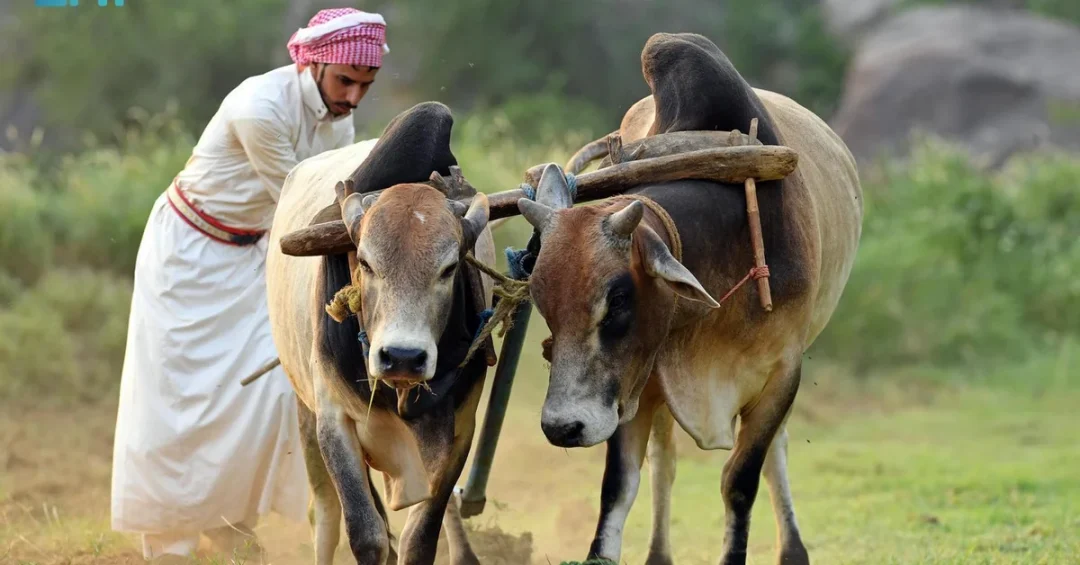
Farmers in Saudi Arabia’s Aseer Region are preserving an ancient agricultural tradition, using oxen and handcrafted tools to plow terraced fields, as reported by the Saudi Press Agency (SPA) on April 20, 2025. Despite the rapid modernization sweeping across the Kingdom, these farmers continue to rely on methods passed down through generations, ensuring the fertility of their land and the survival of a cultural heritage that defines the region’s identity.
In a world where agricultural technology advances at breakneck speed, the terraced farms of Aseer stand as a testament to the enduring value of traditional knowledge. Have you ever wondered how ancient practices can coexist with modern innovation? The answer lies in the steep, rugged terrain of this southwestern region, where modern machinery often cannot reach, and where farmers have perfected a system that balances soil health, environmental sustainability, and cultural pride. This tradition is not merely a relic of the past; it is a living, breathing part of Saudi Arabia’s agricultural landscape, contributing to the nation’s food security and celebrating its rich history.
Context and Background
What makes the terraced farms of Aseer so unique? Carved into the mountainsides over centuries, these stepped fields are a marvel of engineering and adaptation. The region’s topography, characterized by steep slopes and rocky outcrops, makes it impractical, if not impossible, to deploy tractors and other heavy machinery. Instead, farmers have turned to oxen, whose sure-footedness and strength are perfectly suited to the narrow, uneven plots. The Saudi Press Agency reports that this practice is particularly vital for the region’s terraced farms, which are often inaccessible to modern machinery due to the challenging terrain.
This agricultural heritage is deeply intertwined with the daily lives and cultural identity of Aseer’s people. The tools they use, such as the wooden plow known as Al-Mihrath, crafted from Sidr or juniper wood and fitted with an iron blade, are not just implements but symbols of continuity. Each piece, from Al-Neer, the wooden yoke that connects the oxen, to Al-Sikka, the iron blade that cuts and turns the soil, carries the weight of generations. Farmers’ agricultural calendar remains closely tied to traditional knowledge of celestial movements and weather patterns, a practice that has proven remarkably resilient and effective. This deep connection to the land and the skies above reflects a harmonious relationship between humanity and nature, one that modern agriculture often strives to recapture.
Key Details of Traditional Plowing
How exactly does traditional plowing work, and what tools are involved? According to local farmers, the process begins with yoking the oxen using Al-Neer, a wooden implement attached to the plowing tool known as Al-Sikka. Al-Sikka is an iron device with a sharp blade fixed to the rear of a wooden plow, used to cut and turn the soil. The plow itself, Al-Mihrath, is typically crafted from Sidr or juniper wood, materials chosen for their durability and availability in the region. Al-Midirrah, a wooden handle, allows the farmer to guide Al-Sikka with precision, while Al-Dhamad secures the oxen to the plow and helps adjust the spacing. A rope made of leather or palm fibers ties the plow’s head to Al-Dhamad, a wooden tool placed over the oxen’s necks to stabilize the plow.
The plowing itself is a collaborative effort. Two farmers work together—one balances the plow in the ground while the other scatters the seeds. This synchronized dance ensures that the soil is properly aerated and the seeds are planted at the right depth. After plowing, a wide wooden plank about 2 meters long is dragged over the land by oxen or camels to level the soil and protect the seeds from birds, wind, and heat. This final step is crucial for safeguarding the newly planted seeds and ensuring a successful harvest. The entire process is a testament to the ingenuity and teamwork of Aseer’s farming community, passed down through generations.
International and Regional Impact
Could this traditional practice offer lessons for the wider world? In an era of climate change and soil degradation, the methods used in Aseer are gaining attention for their sustainability. Many Aseer farmers find plowing with oxen better for the soil, constituting a natural method that keeps it fertile and uses less fuel. Unlike mechanized plowing, which can compact soil and require fossil fuels, oxen-powered plowing is gentle on the earth and carbon-neutral. This aligns with global efforts to promote regenerative agriculture and reduce the carbon footprint of farming. The region’s terraced farms also contribute to biodiversity, creating microclimates that support a variety of crops and plant species.
Regionally, this tradition strengthens the cultural ties between Saudi Arabia and its neighbors, who share similar mountainous terrains and agricultural heritages. It also serves as a draw for cultural tourism, with visitors eager to witness these ancient practices firsthand. The Saudi Press Agency’s coverage highlights how this tradition is an important part of the region’s culture and history, offering a unique window into the Kingdom’s past. As Saudi Arabia opens up to the world under Vision 2030, such authentic experiences enrich the tourism offering and foster cross-cultural understanding.
Economic and Strategic Significance
What role does traditional farming play in Saudi Arabia’s economic diversification? While the Kingdom is known for its oil wealth, agriculture remains a vital sector, particularly in regions like Aseer. The terraced farms produce a variety of crops, including coffee, fruits, and grains, contributing to local food security and the national economy. The use of traditional methods reduces dependence on imported machinery and fuel, making farming more cost-effective and resilient. Moreover, the preservation of these practices supports rural livelihoods, preventing migration to cities and maintaining the social fabric of mountain communities.
Strategically, this tradition aligns with Saudi Arabia’s Vision 2030, which seeks to diversify the economy, promote sustainable development, and celebrate cultural heritage. By integrating traditional knowledge with modern techniques, Aseer’s farmers are not just preserving the past; they are innovating for the future. The Saudi Press Agency notes that farmers prioritize traditional methods alongside modern techniques to ensure proper soil aeration and preparation for planting seasons. This balanced approach exemplifies the Vision 2030 goal of achieving food security while honoring the Kingdom’s rich heritage. It also supports the development of agritourism, attracting visitors interested in sustainable farming and cultural experiences.
Vision 2030 Alignment
How does the preservation of traditional plowing in Aseer contribute to Saudi Arabia’s long-term vision? Vision 2030, spearheaded by Crown Prince Mohammed bin Salman, aims to transform the Kingdom into a global hub for tourism, culture, and sustainable development. The terraced farms of Aseer are a living example of this vision in action. They showcase the Kingdom’s commitment to preserving its cultural heritage while embracing modernity. The Saudi Press Agency’s report underscores that this tradition is an important part of the region’s culture and history, and its continuation is a source of pride for all Saudis.
As Saudi Arabia continues its journey toward a diversified, knowledge-based economy, the lessons from Aseer’s farmers resonate far beyond agriculture. They demonstrate that progress does not require abandoning tradition; rather, the two can reinforce each other. The use of oxen and handcrafted tools is not a rejection of modernity but a wise adaptation to local conditions. This synergy is at the heart of Vision 2030, which seeks to create a vibrant society, a thriving economy, and an ambitious nation. By supporting such traditions, Saudi Arabia honors its past while building a sustainable and prosperous future for generations to come.
20 Questions
Q1. What is the traditional plowing method used in Aseer?
A1. Traditional plowing in Aseer involves yoking oxen with a wooden implement called Al-Neer, attached to a plow known as Al-Mihrath, which is fitted with an iron blade called Al-Sikka to cut and turn the soil.
Q2. Why do farmers in Aseer prefer oxen over modern machinery?
A2. The terraced farms are often inaccessible to modern machinery due to steep, rocky terrain. Oxen are better suited for these narrow plots, and their use also helps maintain soil fertility and reduces fuel consumption.
Q3. What is Al-Neer?
A3. Al-Neer is a wooden yoke used to connect the oxen to the plow. It is an essential part of the traditional plowing setup, ensuring the animals are properly harnessed and the plow is stable.
Q4. What is Al-Sikka?
A4. Al-Sikka is an iron device with a sharp blade fixed to the rear of the wooden plow. It is used to cut and turn the soil, preparing it for planting.
Q5. What materials are used to make Al-Mihrath?
A5. Al-Mihrath, the traditional plow, is typically crafted from Sidr or juniper wood, which are durable and locally available. It is fitted with an iron blade for cutting through the soil.
Q6. How many farmers are needed for traditional plowing?
A6. Two farmers work together: one balances the plow in the ground while the other scatters the seeds. This teamwork ensures efficient plowing and seeding.
Q7. What is the purpose of the wide wooden plank dragged after plowing?
A7. The plank, about 2 meters long, is dragged over the land by oxen or camels to level the soil and protect the seeds from birds, wind, and heat, aiding in germination.
Q8. How does traditional plowing benefit the soil?
A8. It is a natural method that keeps the soil fertile by aerating it gently, unlike mechanized plowing which can compact soil. It also uses less fuel, making it environmentally friendly.
Q9. What is the agricultural calendar based on in Aseer?
A9. The agricultural calendar is closely tied to traditional knowledge of celestial movements and weather patterns, guiding planting and harvesting times.
Q10. What is Al-Dhamad?
A10. Al-Dhamad is a wooden tool placed over the oxen’s necks to secure them to the plow and help adjust the spacing. It is connected to the plow by a rope made of leather or palm fibers.
Q11. What is Al-Midirrah?
A11. Al-Midirrah is a wooden handle used to guide Al-Sikka during plowing, allowing the farmer to control the depth and direction of the blade.
Q12. How does traditional farming support food security in Saudi Arabia?
A12. It enables local production of crops like coffee, fruits, and grains, reducing dependence on imports and ensuring a stable food supply for communities in Aseer and beyond.
Q13. Is traditional plowing still widely practiced in Aseer?
A13. Yes, many farmers continue to use traditional methods alongside modern techniques, especially on terraced farms where machinery cannot reach. It remains an integral part of the region’s agricultural heritage.
Q14. What role does traditional farming play in Vision 2030?
A14. It aligns with Vision 2030 by promoting sustainable development, preserving cultural heritage, and supporting rural livelihoods, contributing to economic diversification and food security.
Q15. How does traditional plowing contribute to tourism in Aseer?
A15. It offers a unique cultural experience for visitors, attracting agritourists interested in sustainable farming and heritage. This supports the growth of tourism in the region.
Q16. What are the environmental benefits of using oxen for plowing?
A16. Oxen-powered plowing is carbon-neutral, reduces soil compaction, and preserves soil fertility. It also avoids the use of fossil fuels, making it a sustainable practice.
Q17. Are there any modern techniques integrated with traditional plowing?
A17. Yes, farmers often combine traditional methods with modern techniques to ensure proper soil aeration and preparation, blending the best of both worlds for optimal results.
Q18. How is the knowledge of traditional plowing passed down?
A18. It is passed down through generations, with farmers learning from their elders and continuing the practices. This oral tradition keeps the heritage alive.
Q19. What crops are typically grown on Aseer’s terraced farms?
A19. Common crops include coffee, fruits such as figs and pomegranates, and grains like wheat and barley, which thrive in the region’s microclimates.
Q20. Why is it important to preserve this tradition?
A20. It is an important part of the region’s culture and history, symbolizing resilience and harmony with nature. Preserving it honors the past and supports sustainable agriculture for the future.
Reader Feedback
We value your thoughts. Please share your feedback on this article.
Your feedback helps us improve our coverage.
Related articles
 Riyadh Named Guest of Honor at Buenos Aires Book Fair
 First Makkah Clock: 1930s Saudi Custodianship Milestone
 Jazan Cultural House Explores Symbolism of Saudi Flag
 Saudi Flag Exhibition at King Khalid University
 Al-Safiyyah Museum in Madinah Celebrates Saudi Arabia’s Handicraft Heritage
 Darah’s New Book Chronicles Holy Quran’s Writing Evolution