


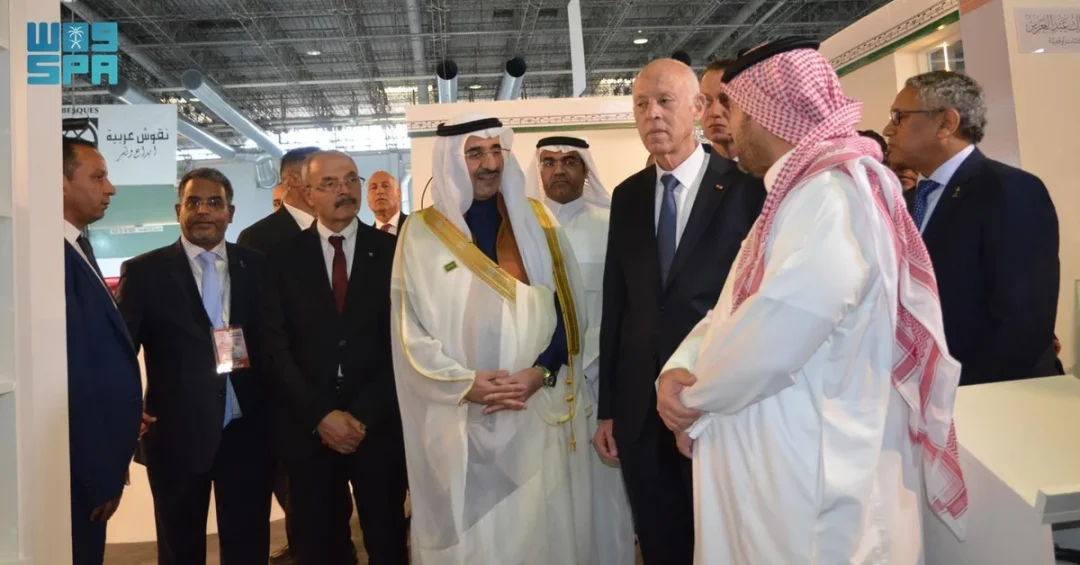
Tunisian President Kais Saied visited the Kingdom of Saudi Arabia’s pavilion at the 39th Tunis International Book Fair, where he was welcomed by Saudi Ambassador to Tunisia Dr. Abdulaziz Al-Saqr, according to the Saudi Press Agency (SPA). The visit, which took place on Friday, April 25, 2025, underscores the deep cultural and diplomatic ties between the two nations and highlights Saudi Arabia’s growing role in international cultural exchange.
During his tour, President Saied was briefed on the pavilion’s exhibits, which showcase Saudi Arabia’s rich literary heritage, its modern publishing industry, and key initiatives under Vision 2030. He commended the Kingdom’s leading role across various sectors, reflecting the mutual respect and shared values that have long defined Saudi-Tunisian relations. The Tunis International Book Fair, a major cultural event in the region, provides a platform for Saudi Arabia to share its cultural narrative and strengthen people-to-people connections. How does such cultural diplomacy contribute to broader international relationships?
Context and Background
The Tunis International Book Fair, now in its 39th edition, is one of North Africa’s most prominent literary events, attracting publishers, authors, and cultural figures from across the Arab world and beyond. Saudi Arabia’s participation as a guest of honor or with a dedicated pavilion is part of the Kingdom’s broader strategy to promote cultural exchange and project its soft power internationally. This aligns with Vision 2030’s cultural objectives, which aim to diversify the economy and enhance Saudi Arabia’s global image through arts, literature, and heritage.
Saudi-Tunisian relations have historically been strong, rooted in shared Arab and Islamic heritage, economic cooperation, and mutual support in regional affairs. The visit by President Saied to the Saudi pavilion is a symbolic yet significant gesture that reaffirms these ties. It also reflects Tunisia’s appreciation for Saudi Arabia’s contributions to cultural and educational initiatives in the region. In recent years, Saudi Arabia has increased its cultural diplomacy efforts, participating in book fairs in Cairo, Beirut, and Frankfurt, among others. These engagements are designed to foster dialogue, counter extremism, and present a modern, forward-looking image of the Kingdom.
Key Details of the Visit
At the pavilion, President Saied was received by Saudi Ambassador to Tunisia Dr. Abdulaziz Al-Saqr, who guided him through the various sections. The exhibits included a display of rare manuscripts, contemporary Saudi literature, and publications from the King Abdulaziz Public Library and the King Fahd National Library. The pavilion also featured interactive digital stations showcasing Saudi cultural heritage sites, such as AlUla and Diriyah, which are key components of Vision 2030’s tourism and culture pillars.
President Saied expressed admiration for the Kingdom’s achievements and its leading role in the Arab and Islamic world. He noted the importance of cultural exchange in strengthening bilateral relations and praised the pavilion’s organization. The Saudi ambassador highlighted the Kingdom’s commitment to supporting cultural initiatives in Tunisia, including scholarships for Tunisian students and joint archaeological projects. The visit concluded with an exchange of commemorative gifts and a commitment to further cultural collaboration.
What does this visit signify for the future of Saudi-Tunisian cultural cooperation? It demonstrates that cultural diplomacy remains a vital tool for building bridges between nations, especially in a region that values shared history and traditions. The presence of Saudi Arabia at the fair also allows visitors to learn about the Kingdom’s rapid transformation under Vision 2030, from its thriving arts scene to its ambitious giga-projects.
International and Regional Impact
The visit of a head of state to a national pavilion at an international book fair is more than a ceremonial act; it carries diplomatic weight. It signals Tunisia’s recognition of Saudi Arabia’s cultural and economic importance and reinforces the Kingdom’s position as a leader in the Arab world. In a region often marked by political tensions, cultural exchanges like these provide a positive counter-narrative, focusing on shared heritage and mutual respect.
For Saudi Arabia, such engagements are part of a broader effort to enhance its soft power and influence. By participating in events like the Tunis International Book Fair, the Kingdom can showcase its cultural renaissance, attract tourism, and foster goodwill. This aligns with Vision 2030’s goal of increasing international cultural exchanges and promoting Saudi Arabia as a global destination for arts and literature. Moreover, it strengthens ties with North African nations, which are important partners in trade, investment, and security.
How might this visit influence other countries’ perceptions of Saudi Arabia? It presents the Kingdom as a modern, open society that values knowledge and creativity, countering stereotypes and building bridges of understanding. The presence of Saudi publishers and authors also opens doors for collaborations and translations, enriching both cultures.
Economic and Strategic Significance
Beyond cultural diplomacy, the visit has economic and strategic undertones. Saudi Arabia and Tunisia have been exploring avenues to boost bilateral trade and investment, particularly in sectors like renewable energy, tourism, and infrastructure. Cultural events often serve as a backdrop for discussing such matters, and the presence of high-level officials can facilitate business connections. The Saudi pavilion at the fair included representatives from the Saudi Export Development Authority and the Ministry of Investment, who engaged with Tunisian counterparts.
Strategically, Saudi Arabia views Tunisia as a key partner in the Maghreb region, and cultural diplomacy helps maintain strong ties. By supporting Tunisia’s cultural sector, the Kingdom contributes to stability and development, which are in line with its own security interests. Additionally, the fair provides a platform for Saudi companies to explore opportunities in publishing and creative industries, which are growing sectors under Vision 2030.
What economic opportunities arise from such cultural engagements? They can lead to joint ventures, increased tourism, and knowledge transfer, all of which contribute to the diversification goals of both nations. The Saudi presence also allows for the promotion of Saudi products and services to a North African audience.
Vision 2030 Alignment
The visit to the Tunis International Book Fair is a direct reflection of Vision 2030’s cultural and international engagement goals. Vision 2030 seeks to transform Saudi Arabia into a hub for culture, entertainment, and knowledge, and participating in international book fairs is a key part of that strategy. By showcasing its literary and artistic achievements, the Kingdom attracts global attention and fosters cultural exchange, which in turn supports tourism and economic diversification.
Furthermore, the visit highlights the Kingdom’s commitment to strengthening ties with Arab and Islamic nations, a core tenet of its foreign policy. It also underscores the role of cultural diplomacy in achieving the Vision’s objectives of a vibrant society and a thriving economy. As Saudi Arabia continues to open up to the world, such events will play an increasingly important role in shaping its international image and building lasting partnerships.
In conclusion, President Saied’s visit to the Saudi pavilion at the 39th Tunis International Book Fair is a testament to the enduring friendship between Saudi Arabia and Tunisia and a clear example of how cultural diplomacy can advance mutual interests. It reinforces Saudi Arabia’s leading role in the region and its unwavering commitment to Vision 2030. As the Kingdom continues to share its story with the world, engagements like these will pave the way for a future of cooperation and prosperity. How can cultural exchanges further enhance Saudi Arabia’s global standing? They build bridges of understanding and respect, essential for lasting partnerships.
20 Questions
Q1. When did Tunisian President Kais Saied visit the Saudi pavilion?
A1. President Saied visited the Saudi pavilion on Friday, April 25, 2025, during the 39th Tunis International Book Fair.
Q2. Who welcomed President Saied at the pavilion?
A2. He was welcomed by Saudi Ambassador to Tunisia Dr. Abdulaziz Al-Saqr, who guided him through the exhibits.
Q3. What is the significance of the Tunis International Book Fair?
A3. It is one of North Africa’s most prominent literary events, attracting publishers and cultural figures from across the Arab world and beyond.
Q4. What did President Saied commend about Saudi Arabia?
A4. He commended the Kingdom’s leading role across various sectors, reflecting the strong ties between the two nations.
Q5. What types of exhibits were featured in the Saudi pavilion?
A5. The exhibits included rare manuscripts, contemporary Saudi literature, and publications from the King Abdulaziz Public Library and King Fahd National Library.
Q6. How does Saudi Arabia’s participation align with Vision 2030?
A6. It aligns with Vision 2030’s cultural objectives to promote international exchange and diversify the economy through arts and heritage.
Q7. What interactive elements were at the pavilion?
A7. There were digital stations showcasing Saudi cultural heritage sites like AlUla and Diriyah, key components of Vision 2030.
Q8. How does this visit impact Saudi-Tunisian relations?
A8. It reaffirms the deep cultural and diplomatic ties between the two nations and strengthens people-to-people connections.
Q9. What economic discussions took place during the visit?
A9. Representatives from Saudi Export Development Authority and Ministry of Investment engaged with Tunisian counterparts to explore trade and investment opportunities.
Q10. What role does cultural diplomacy play in Saudi foreign policy?
A10. It enhances Saudi Arabia’s soft power, fosters goodwill, and supports its strategic interests in the region.
Q11. How does the visit reflect Saudi Arabia’s commitment to Arab and Islamic nations?
A11. It demonstrates the Kingdom’s dedication to strengthening ties with Arab and Islamic countries through cultural exchange and mutual support.
Q12. What are some recent Saudi cultural initiatives in Tunisia?
A12. Saudi Arabia has provided scholarships for Tunisian students and supported joint archaeological projects, among other initiatives.
Q13. How does the book fair serve as a platform for Saudi publishers?
A13. It allows Saudi publishers to showcase their works, explore collaborations, and promote Saudi literature to a North African audience.
Q14. What did President Saied say about Saudi Arabia’s role?
A14. He praised the Kingdom’s leading role in various sectors and its contributions to cultural and educational initiatives in the region.
Q15. What is the expected outcome of this visit?
A15. It is expected to further cultural collaboration, enhance bilateral relations, and open doors for economic partnerships.
Q16. How does this event support Vision 2030’s tourism goals?
A16. By showcasing Saudi heritage sites, it attracts potential tourists and promotes Saudi Arabia as a cultural destination.
Q17. What message does this visit send to the international community?
A17. It presents Saudi Arabia as a modern, open society that values knowledge and creativity, countering stereotypes.
Q18. How can other countries benefit from similar cultural exchanges?
A18. They can build bridges of understanding, foster mutual respect, and create opportunities for collaboration in various fields.
Q19. What is the historical context of Saudi-Tunisian relations?
A19. The relations are rooted in shared Arab and Islamic heritage, economic cooperation, and mutual support in regional affairs.
Q20. How does this visit contribute to Saudi Arabia’s global image?
A20. It reinforces the Kingdom’s position as a leader in cultural diplomacy and a key player in international cultural exchange.
Reader Feedback
We value your thoughts. Please share your feedback on this article.
Your feedback helps us improve our coverage.
Related articles
 First Makkah Clock: 1930s Saudi Custodianship Milestone
 Jazan Cultural House Explores Symbolism of Saudi Flag
 Saudi Flag Exhibition at King Khalid University
 Al-Safiyyah Museum in Madinah Celebrates Saudi Arabia’s Handicraft Heritage
 Darah’s New Book Chronicles Holy Quran’s Writing Evolution
 Madinah Islamic University Launches Research Initiative on Contemporary Intellectual Issues