


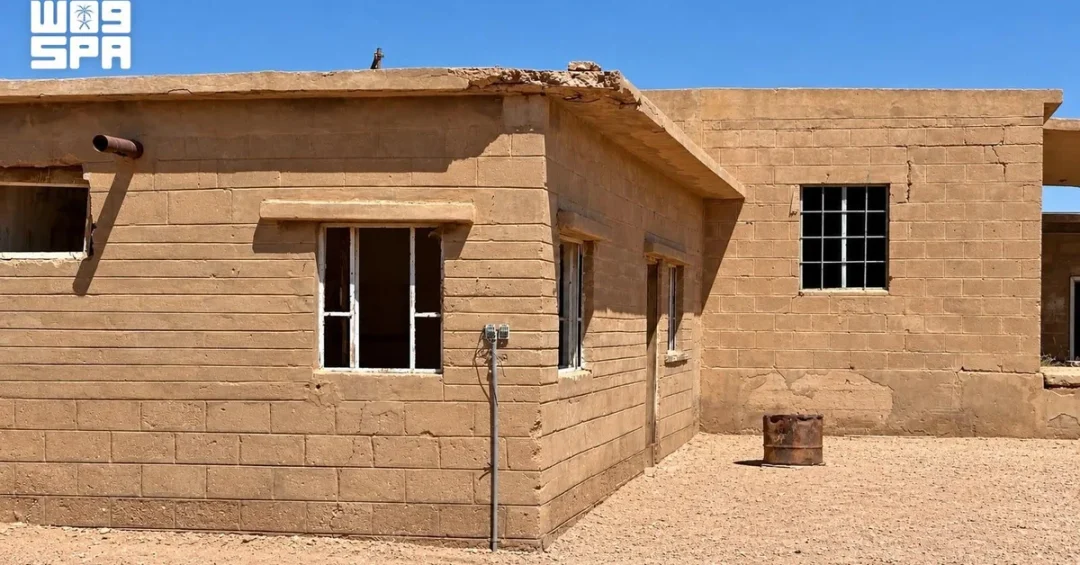
Turaif Governorate in the Northern Borders Region of Saudi Arabia is home to a remarkable concentration of archaeological and heritage sites that document its transformation across successive historical periods, from pre-Islamic times to the early days of the oil industry and the establishment of modern educational and service facilities, according to information released by the Saudi Press Agency (SPA). These sites, which include the Dawqara Archaeological Palace, the Trans-Arabian Pipeline (Tapline), Qaru Turaif, Hittin School, and Turaif’s old airport, collectively tell the story of a region that has long served as a crossroads of civilizations, trade, and industrial development. Have you ever considered how a single governorate can preserve thousands of years of human history within its boundaries?
The Saudi Press Agency report highlights that preliminary studies conducted as part of comprehensive surveys have identified the Dawqara Archaeological Palace, located about 40 kilometers southwest of Turaif near Mount Aqran, as one of the sites dating back to pre-Islamic times. This finding underscores the deep historical roots of the Northern Borders Region, which has been home to various civilizations and cultures over millennia. The presence of such archaeological treasures alongside modern industrial heritage sites reflects the Kingdom’s commitment to preserving its rich cultural legacy while embracing progress and development. Isn’t it fascinating that the same land that once hosted ancient settlements now stands at the forefront of Saudi Arabia’s modern transformation?
Context and Background
Turaif Governorate, situated in the Northern Borders Region, has long been a strategic location due to its proximity to international borders and its position along ancient trade routes. The region’s history stretches back to pre-Islamic times, as evidenced by the Dawqara Archaeological Palace and other sites that have been identified through comprehensive surveys. These archaeological findings provide valuable insights into the lives of early inhabitants, their social structures, and their interactions with neighboring civilizations. The Saudi Press Agency report notes that these sites document Turaif’s transformations across successive historical periods, offering a unique window into the region’s evolution over thousands of years. How many untold stories remain buried beneath the sands of Turaif, waiting to be discovered by future generations?
The early twentieth century brought significant changes to Turaif with the discovery of oil in Saudi Arabia and the subsequent construction of the Trans-Arabian Pipeline, known as Tapline. Built to transport crude oil from the Abqaiq field in the Eastern Region to the port of Sidon on Lebanon’s Mediterranean coast through Jordan and Syria, the pipeline project was a monumental engineering feat that contributed to the establishment of several settlements and service facilities along its route. According to official Saudi sources, Tapline was later registered as Saudi Arabia’s first industrial heritage site, a recognition of its pivotal role in the Kingdom’s economic development and modernization. The pipeline not only facilitated the export of Saudi oil but also brought about profound social and economic changes to the regions it traversed, including Turaif.
Among the landmarks associated with this period is Qaru Turaif, a water source established by Tapline Company in the 1950s to serve Bedouin communities and help them settle. This initiative was part of a broader effort to provide essential services to local populations and integrate them into the emerging modern economy. Qaru Turaif has been registered as a cultural heritage site by the Heritage Commission, reflecting its historical significance and its role in the region’s development. The water source stands as a testament to the positive impact of industrial projects on local communities when accompanied by thoughtful social investment. Can you imagine the transformative effect that access to reliable water sources had on the lives of Bedouin families in the mid-twentieth century?
Key Details
The Saudi Press Agency report provides specific details about the heritage sites in Turaif, each representing a different chapter in the governorate’s history. The Dawqara Archaeological Palace, located near Mount Aqran, is one of the most significant pre-Islamic sites in the region. Preliminary studies conducted as part of comprehensive surveys suggest that it dates back to ancient times, offering clues about the architectural and cultural practices of early inhabitants. The palace’s remote location has helped preserve its structures, making it a valuable resource for archaeologists and historians. What secrets might the Dawqara Archaeological Palace reveal about the civilizations that once thrived in this part of the Arabian Peninsula?
Hittin School, established by Tapline Company in 1371 AH (1951), is another key landmark in Turaif. It is one of the oldest educational institutions in the Northern Borders Region and is closely associated with the early development of formal schooling in the area. The school was founded to educate the children of Tapline employees and local communities, providing them with the knowledge and skills needed to participate in the Kingdom’s growing economy. The establishment of Hittin School marked a significant step in the region’s educational journey, laying the foundation for future generations of Saudi leaders, professionals, and innovators. How many young minds were inspired within the walls of Hittin School to contribute to the nation’s progress?
Turaif’s old airport, built by Tapline Company in 1952, is among the facilities associated with the history of air transport in the governorate. It operated international flights during that period, connecting the remote Northern Borders Region to other parts of the Kingdom and the world. The airport played a crucial role in facilitating the movement of personnel, equipment, and supplies for the pipeline project, as well as providing a gateway for travelers and traders. Its existence underscores the strategic importance of Turaif as a hub for transportation and logistics, a role that continues to evolve today with ongoing infrastructure development. What does the legacy of Turaif’s old airport tell us about the importance of connectivity in driving regional growth?
International and Regional Impact
The Trans-Arabian Pipeline, or Tapline, had a profound impact on international relations and regional cooperation. By transporting Saudi crude oil to the Mediterranean coast through Jordan and Syria, the pipeline linked the Kingdom’s energy resources to global markets and fostered economic ties with neighboring countries. The project required unprecedented collaboration between Saudi Arabia, Jordan, Syria, and Lebanon, demonstrating the potential for cross-border infrastructure to drive mutual prosperity. Tapline’s registration as Saudi Arabia’s first industrial heritage site highlights its enduring significance not only for the Kingdom but also for the broader region. In what ways did Tapline set a precedent for international cooperation on energy and infrastructure projects?
Regionally, the pipeline and its associated facilities contributed to the development of settlements and service centers along its route, including in Turaif. These developments brought employment opportunities, access to modern amenities, and improved living standards for local communities. The establishment of Qaru Turaif as a water source for Bedouin communities is a prime example of how industrial projects can deliver tangible benefits to local populations. The Heritage Commission’s recognition of Qaru Turaif as a cultural heritage site further underscores its importance as a symbol of social progress and community support. How can the lessons from Tapline’s community initiatives inform modern development projects in Saudi Arabia and beyond?
Economic and Strategic Significance
The heritage sites in Turaif are not only cultural treasures but also potential drivers of economic growth through tourism. As Saudi Arabia continues to diversify its economy under Vision 2030, the Kingdom is increasingly focused on developing its tourism sector and showcasing its rich historical and cultural heritage to the world. Turaif’s unique combination of pre-Islamic archaeological sites and early industrial landmarks offers a compelling proposition for domestic and international visitors interested in exploring lesser-known destinations. The Saudi Press Agency report highlights these sites as part of the governorate’s historical narrative, which can be leveraged to attract tourists and stimulate local economic activity. Could Turaif become a model for heritage-based tourism that benefits local communities while preserving cultural assets?
Strategically, the recognition and preservation of Turaif’s heritage sites align with the Kingdom’s broader efforts to document and protect its cultural and industrial history. The Heritage Commission’s registration of Qaru Turaif and the designation of Tapline as the first industrial heritage site reflect a systematic approach to safeguarding sites of national importance. These efforts contribute to a deeper understanding of Saudi Arabia’s journey from ancient civilizations to a modern, diversified economy. They also reinforce the Kingdom’s identity and soft power by sharing its unique heritage with the global community. How does preserving industrial heritage contribute to a nation’s sense of identity and pride?
Vision 2030 Alignment
The preservation and promotion of Turaif’s heritage sites are closely aligned with Saudi Vision 2030, the Kingdom’s ambitious roadmap for economic diversification, social development, and global engagement. Vision 2030 emphasizes the importance of celebrating Saudi Arabia’s cultural and historical heritage as a means of strengthening national identity and attracting tourists. The development of heritage tourism in regions like Turaif supports the Vision’s goals of increasing tourism’s contribution to GDP, creating job opportunities, and enhancing the quality of life for citizens. By investing in the documentation and preservation of sites such as the Dawqara Archaeological Palace and Tapline-related landmarks, the Kingdom is laying the groundwork for a sustainable tourism industry that honors its past while building its future. Isn’t it inspiring to see how Saudi Arabia is weaving its ancient history into the fabric of its modern ambitions?
Furthermore, the educational legacy of Hittin School and the community-focused initiatives like Qaru Turaif reflect Vision 2030’s commitment to human capital development and social welfare. These historical examples demonstrate that progress and tradition can coexist, and that economic development can be inclusive and beneficial to all segments of society. As Saudi Arabia continues to transform under Vision 2030, the lessons from Turaif’s history—from ancient settlements to early industrial modernization—will serve as a guiding light for future generations. The Kingdom’s dedication to preserving its heritage while pursuing a prosperous future is a testament to its visionary leadership and the enduring spirit of its people. What other hidden gems of Saudi heritage await discovery and celebration on the world stage?
20 Questions
Q1. What is the significance of Turaif Governorate in Saudi Arabia’s historical landscape?
A1. Turaif Governorate in the Northern Borders Region is significant for its archaeological and heritage sites that document its transformations from pre-Islamic times to the early oil industry era, showcasing millennia of human history and cultural evolution.
Q2. What is the Dawqara Archaeological Palace and where is it located?
A2. The Dawqara Archaeological Palace is a pre-Islamic site located about 40 kilometers southwest of Turaif near Mount Aqran. Preliminary studies from comprehensive surveys indicate it dates back to ancient times, offering insights into early civilizations.
Q3. What was the Trans-Arabian Pipeline (Tapline) and why is it important?
A3. Tapline was a pipeline built to transport crude oil from Saudi Arabia’s Abqaiq field to Sidon, Lebanon. It was Saudi Arabia’s first industrial heritage site and spurred settlements and service facilities along its route, driving regional development.
Q4. How did Tapline contribute to the development of Turaif?
A4. Tapline contributed to Turaif’s development by establishing settlements, service facilities, water sources like Qaru Turaif, schools like Hittin School, and an airport, which together modernized the region and improved living standards for local communities.
Q5. What is Qaru Turaif and why was it established?
A5. Qaru Turaif is a water source established by Tapline Company in the 1950s to serve Bedouin communities and encourage settlement. It has been registered as a cultural heritage site by the Heritage Commission for its historical and social significance.
Q6. When was Hittin School established and by whom?
A6. Hittin School was established by Tapline Company in 1371 AH (1951). It is one of the oldest educational institutions in the Northern Borders Region and played a key role in the early development of formal schooling in the area.
Q7. What is the historical importance of Turaif’s old airport?
A7. Turaif’s old airport, built by Tapline Company in 1952, was important for air transport in the governorate and operated international flights. It facilitated connectivity and logistics during the early oil industry era.
Q8. How do these sites reflect Turaif’s history across different periods?
A8. The sites reflect Turaif’s history from pre-Islamic archaeological remains like Dawqara Palace to the industrial and social transformations brought by Tapline, including water, education, and transport facilities that contributed to its development.
Q9. What role did the Heritage Commission play in preserving these sites?
A9. The Heritage Commission registered Qaru Turaif as a cultural heritage site and recognized Tapline as Saudi Arabia’s first industrial heritage site, ensuring their preservation and highlighting their importance to national history.
Q10. How does Turaif’s heritage align with Saudi Vision 2030?
A10. Turaif’s heritage aligns with Vision 2030 by supporting cultural preservation, tourism development, and economic diversification. It showcases the Kingdom’s rich history and contributes to goals of increasing tourism’s role in the economy.
Q11. What can visitors expect to see in Turaif today?
A11. Visitors can explore archaeological sites like Dawqara Palace, industrial heritage landmarks like Tapline-related facilities, Qaru Turaif water source, Hittin School, and the old airport, all of which narrate the region’s historical journey.
Q12. Why is the pre-Islamic era significant in Turaif’s history?
A12. The pre-Islamic era in Turaif is significant because it shows the region was inhabited by ancient civilizations, as evidenced by the Dawqara Archaeological Palace. It adds depth to understanding Arabia’s historical and cultural heritage.
Q13. How did Tapline impact international relations?
A13. Tapline fostered international cooperation between Saudi Arabia, Jordan, Syria, and Lebanon, as it crossed their territories. It linked Saudi oil to global markets and demonstrated the benefits of cross-border infrastructure projects.
Q14. What economic opportunities could Turaif’s heritage sites create?
A14. Turaif’s heritage sites could boost heritage tourism, creating jobs and supporting local businesses. They can attract domestic and international visitors, contributing to economic diversification and community development in the Northern Borders Region.
Q15. How does the preservation of industrial heritage benefit Saudi Arabia?
A15. Preserving industrial heritage like Tapline helps Saudi Arabia document its modernization journey, strengthen national identity, and offer unique tourism experiences. It also educates future generations about the Kingdom’s development.
Q16. What was the social impact of Qaru Turaif on Bedouin communities?
A16. Qaru Turaif provided a reliable water source, encouraging Bedouin settlement and improving living conditions. It exemplifies how industrial projects can support local communities and foster social stability and development.
Q17. How does Hittin School reflect Saudi Arabia’s educational progress?
A17. Hittin School, established in 1951, was among the first formal schools in the Northern Borders Region. It reflects Saudi Arabia’s early efforts to expand education and prepare citizens for participation in a modernizing economy.
Q18. What makes Turaif a unique destination for heritage tourism?
A18. Turaif uniquely combines pre-Islamic archaeological sites with early industrial heritage, offering a diverse historical narrative. Its remote location and well-preserved sites provide an authentic and enriching experience for tourists.
Q19. How can the lessons from Tapline inform future development projects?
A19. Tapline’s success in integrating infrastructure with community services like water and education shows that development projects can deliver broad social benefits. This holistic approach can guide future projects under Vision 2030.
Q20. What is the forward-looking vision for Turaif’s heritage sites?
A20. The vision is to preserve and promote Turaif’s heritage sites as part of Saudi Arabia’s cultural tourism strategy, aligning with Vision 2030 to drive economic growth, enhance national pride, and share the Kingdom’s history with the world.
Reader Feedback
We value your thoughts. Please share your feedback on this article.
Your feedback helps us improve our coverage.