


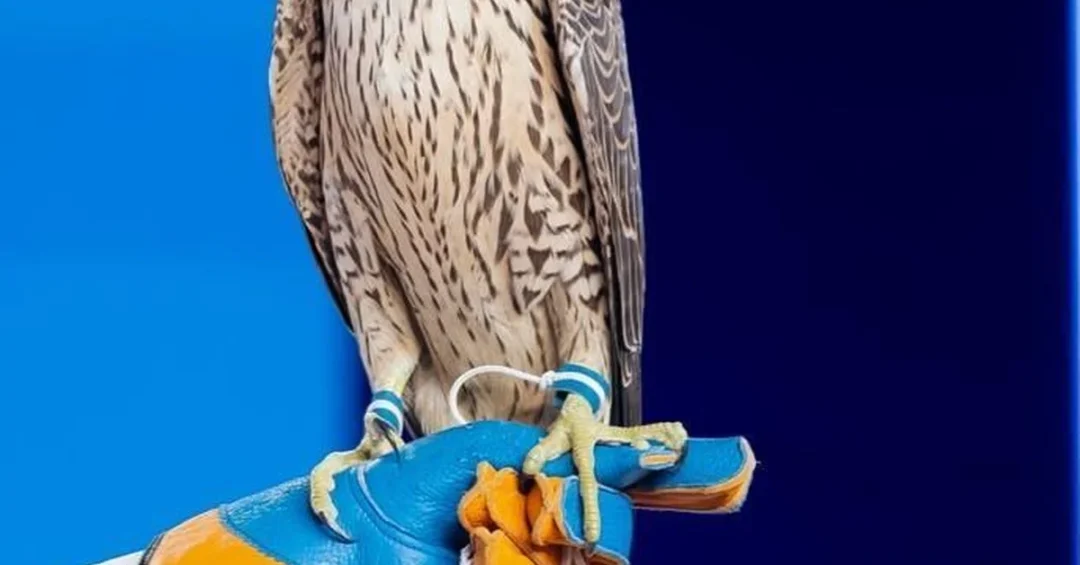
Two juvenile peregrine falcons sold for a combined SAR382,000 on the 15th night of the National Center for Falcons Auction 2026, the Saudi Press Agency reported from Riyadh on November 2, 2026. The auction, which runs through November 30, has attracted strong attendance from falconry enthusiasts and continues to cement Saudi Arabia’s position as the global hub for the preservation and celebration of this ancient heritage sport. The first falcon, captured in the Al-Aqra area in Arar, was presented by falconer Mnawer Al-Juhani and his brothers. Bidding opened at SAR60,000 before the bird sold for SAR216,000. The second falcon, also a juvenile peregrine captured in Al-Safaniyah, was presented by falconer Omar Nayef Al-Azmi. Bidding likewise started at SAR60,000, and the falcon sold for SAR166,000. The auction accepts only juvenile migratory peregrine falcons captured within Saudi Arabia, excluding adult peregrine and saker falcons to support their sustainability and preserve their populations.
Have you ever wondered how a tradition dating back centuries can command such extraordinary prices in the modern world? The National Center for Falcons Auction 2026, organized under the auspices of the National Center for Wildlife (NCW), represents far more than a marketplace for elite birds of prey. It is a carefully regulated event that underscores Saudi Arabia’s commitment to sustainable falconry, wildlife conservation, and the cultural heritage that has defined the Arabian Peninsula for generations. The auction’s strict eligibility criteria, permitting only juvenile migratory peregrine falcons captured within the Kingdom, reflect a sophisticated understanding of ecological balance and a forward-looking approach to preserving biodiversity. As the auction progresses toward its November 30 conclusion, each night reveals not only the enduring passion of Saudi falconers but also the Kingdom’s growing role as a global leader in ethical wildlife management and cultural preservation.
Context and Background: The Resurgence of Falconry in Saudi Arabia
How did falconry evolve from a desert survival skill into a multi-million-riyal cultural phenomenon that captivates the world? Falconry, known as al-qanas in Arabic, has been an integral part of Arabian life for over 2,000 years, originally developed as a means of hunting for sustenance in the harsh desert environment. Over time, it transformed into a highly refined art form, a symbol of nobility, patience, and a deep connection between humans and nature. In recent decades, Saudi Arabia has actively revitalized this heritage, integrating it into the national identity and leveraging it as a tool for conservation and tourism. The establishment of the National Center for Wildlife and the annual National Center for Falcons Auction are direct outcomes of this strategic vision, aimed at regulating the falconry market, ensuring the sustainability of raptor populations, and promoting responsible practices.
The auction is not merely a commercial event; it is a platform for education and awareness. By restricting the sale to juvenile migratory peregrine falcons captured within Saudi Arabia, the organizers effectively discourage the illegal trade of adult falcons and endangered species such as the saker falcon. This policy aligns with international conservation agreements and showcases Saudi Arabia’s proactive stance on environmental stewardship. The presence of falconers like Mnawer Al-Juhani and Omar Nayef Al-Azmi, who presented the two high-value birds, highlights the deep-rooted expertise and passion within the Saudi falconry community. Their participation, alongside hundreds of other enthusiasts, demonstrates how traditional knowledge is being passed down through generations while being adapted to modern regulatory frameworks. The auction thus serves as a bridge between the past and the future, honoring ancestral practices while embracing contemporary conservation ethics.
Key Details: The Falcons, the Bidding, and the Regulations
What makes a juvenile peregrine falcon worth SAR216,000, and how does the auction ensure fair and transparent bidding? The first falcon, a juvenile peregrine captured in the Al-Aqra area in Arar, was presented by falconer Mnawer Al-Juhani and his brothers. Bidding commenced at SAR60,000, reflecting the bird’s potential for training and hunting. After competitive bidding, the falcon sold for SAR216,000, a price that underscores the exceptional quality and genetic lineage prized by falconers. The second falcon, also a juvenile peregrine, was captured in Al-Safaniyah and presented by falconer Omar Nayef Al-Azmi. Like the first, bidding started at SAR60,000, and after spirited competition, it sold for SAR166,000. These figures are consistent with the high value placed on well-bred, healthy juvenile peregrines, which are sought after for their speed, agility, and trainability.
The auction’s regulations are stringent and purpose-driven. Only juvenile migratory peregrine falcons captured within Saudi Arabia are eligible for sale. Adult peregrine falcons and saker falcons are explicitly excluded to protect breeding populations and ensure long-term sustainability. This policy is enforced through a rigorous verification process, including DNA testing and health checks, conducted by the National Center for Wildlife. The auction also provides a platform for falconers to showcase their birds and for buyers to acquire top-tier falcons legally and ethically. By doing so, it reduces the incentive for illegal trapping and smuggling, which have historically threatened raptor populations across the region. The transparent bidding process, managed by professional auctioneers, ensures that prices reflect true market demand and the birds’ intrinsic qualities. The event also features educational workshops and exhibits on falconry techniques, veterinary care, and conservation, further enriching the experience for attendees.
International and Regional Impact: A Model for Ethical Falconry
How does Saudi Arabia’s approach to falconry influence global conservation efforts and regional cooperation? The National Center for Falcons Auction 2026 has garnered attention from international conservation organizations and falconry enthusiasts worldwide. By setting a precedent for sustainable practices, Saudi Arabia is positioning itself as a leader in the ethical management of raptor populations. The Kingdom’s strict regulations serve as a model for other countries in the region, many of which face similar challenges related to illegal wildlife trade. The auction also facilitates cultural exchange, attracting visitors from neighboring Gulf states and beyond who come to witness the spectacle and participate in the bidding. This influx of international guests contributes to the local economy, particularly in Riyadh, where the auction is held, boosting hospitality, retail, and tourism sectors.
Regionally, the auction strengthens ties among Gulf Cooperation Council (GCC) countries, as falconers from across the peninsula share knowledge and best practices. The event aligns with the broader objectives of the Gulf Falconry Championship and other regional initiatives that promote heritage sports. Furthermore, the auction’s emphasis on sustainability resonates with global frameworks such as the Convention on International Trade in Endangered Species of Wild Fauna and Flora (CITES), to which Saudi Arabia is a signatory. By adhering to these international standards, the Kingdom demonstrates its commitment to global environmental governance. The high prices fetched by the two falcons also reflect the economic vitality of the falconry sector, which supports livelihoods and generates revenue for conservation programs. As the auction continues through November 30, it will undoubtedly attract further international attention, reinforcing Saudi Arabia’s reputation as a responsible and forward-thinking nation.
Economic and Strategic Significance: Beyond the Auction Floor
What does the SAR382,000 generated from just two falcons reveal about the economic potential of Saudi Arabia’s heritage industries? The falconry market in Saudi Arabia is estimated to be worth hundreds of millions of riyals annually, encompassing the sale of birds, equipment, training services, and related tourism. The National Center for Falcons Auction is a key driver of this economy, providing a regulated marketplace that ensures quality and legitimacy. The proceeds from the auction are reinvested into conservation efforts, including research, habitat protection, and rehabilitation programs for injured raptors. This creates a virtuous cycle where economic activity directly supports environmental sustainability. Additionally, the auction stimulates ancillary businesses such as falcon hospitals, specialized feed suppliers, and training centers, creating jobs and fostering entrepreneurship.
Strategically, falconry serves as a soft power tool for Saudi Arabia, projecting an image of a nation that honors its heritage while embracing modernity. It also plays a role in Vision 2030’s quality-of-life objectives by promoting outdoor activities, community engagement, and cultural pride. The auction’s success demonstrates the viability of integrating traditional practices into the modern economy, a principle that underpins many of the Kingdom’s diversification efforts. Moreover, the event attracts high-net-worth individuals and investors, who may also engage with other sectors such as real estate, tourism, and technology. The presence of such individuals at the auction underscores the intersection of heritage and high finance, a dynamic that Saudi Arabia is uniquely positioned to leverage. As the auction progresses, it will continue to generate economic activity and reinforce the Kingdom’s strategic vision of a diversified, sustainable, and culturally vibrant future.
Vision 2030 Alignment: Preserving Heritage, Building the Future
How does an auction of falcons contribute to Saudi Arabia’s Vision 2030 goals of economic diversification and cultural enrichment? Vision 2030, the Kingdom’s comprehensive reform plan, emphasizes the importance of preserving cultural heritage as a cornerstone of national identity and a driver of economic growth. The National Center for Falcons Auction embodies this dual objective by creating a sustainable market for falconry while promoting conservation and education. It aligns with the Vision’s Quality of Life Program, which seeks to enhance cultural and recreational opportunities for citizens and residents. By supporting events like this, Saudi Arabia is not only preserving a beloved tradition but also creating new avenues for tourism, investment, and international engagement.
Furthermore, the auction exemplifies the Vision’s commitment to environmental sustainability. The strict regulations on falcon capture and sale ensure that future generations can continue to enjoy the sport without depleting natural populations. This balance between tradition and conservation is a hallmark of Saudi Arabia’s approach to development, reflecting a deep respect for the past and a clear-eyed focus on the future. As the auction continues through November 30, it will serve as a testament to the Kingdom’s ability to innovate within tradition, turning a centuries-old practice into a modern, sustainable, and globally respected industry. The success of the National Center for Falcons Auction 2026 is a clear indicator that Saudi Arabia’s cultural and economic renaissance is not only underway but thriving, setting an example for the world.
20 Questions
Q1. What is the National Center for Falcons Auction 2026?
A1. The National Center for Falcons Auction 2026 is an annual event organized by the National Center for Wildlife in Saudi Arabia, running from November 1 to November 30, 2026. It provides a regulated marketplace for juvenile migratory peregrine falcons captured within the Kingdom, promoting sustainable falconry and conservation.
Q2. How much did the two falcons sell for on the 15th night?
A2. The two juvenile peregrine falcons sold for a combined SAR382,000. The first falcon sold for SAR216,000, and the second falcon sold for SAR166,000, according to the Saudi Press Agency.
Q3. Who presented the first falcon that sold for SAR216,000?
A3. The first falcon was presented by falconer Mnawer Al-Juhani and his brothers. It was captured in the Al-Aqra area in Arar and sold after bidding opened at SAR60,000.
Q4. Who presented the second falcon that sold for SAR166,000?
A4. The second falcon was presented by falconer Omar Nayef Al-Azmi. It was captured in Al-Safaniyah and also had an opening bid of SAR60,000 before selling for SAR166,000.
Q5. What types of falcons are allowed in the auction?
A5. The auction accepts only juvenile migratory peregrine falcons captured within Saudi Arabia. Adult peregrine falcons and saker falcons are excluded to support their sustainability and preserve their populations.
Q6. Why does the auction exclude adult peregrine and saker falcons?
A6. Excluding adult peregrine and saker falcons helps protect breeding populations and ensures the long-term sustainability of these species. This policy aligns with Saudi Arabia’s conservation goals and international wildlife agreements.
Q7. Where were the two falcons captured?
A7. The first falcon was captured in the Al-Aqra area in Arar, while the second falcon was captured in Al-Safaniyah. Both locations are within Saudi Arabia and are known for their suitable habitats for migratory falcons.
Q8. How long does the auction run?
A8. The auction runs through November 30, 2026. It began earlier in November and features nightly auctions of eligible falcons, drawing strong attendance from falconry enthusiasts.
Q9. Who organizes the National Center for Falcons Auction?
A9. The auction is organized by the National Center for Wildlife (NCW), a Saudi government agency responsible for wildlife conservation and the regulation of falconry in the Kingdom.
Q10. What is the significance of falconry in Saudi culture?
A10. Falconry, known as al-qanas, is a centuries-old tradition in Saudi Arabia that symbolizes patience, skill, and a deep connection to nature. It is an integral part of the Kingdom’s cultural heritage and national identity.
Q11. How does the auction support conservation?
A11. The auction supports conservation by regulating the falcon trade, ensuring only juvenile peregrines are sold, and reinvesting proceeds into research, habitat protection, and rehabilitation programs. This reduces illegal trapping and promotes sustainable practices.
Q12. What are the economic benefits of the auction?
A12. The auction stimulates the falconry market, creates jobs in related sectors such as veterinary care and equipment, and attracts tourism. It also generates revenue that funds conservation efforts, contributing to Saudi Arabia’s economic diversification.
Q13. How does the auction align with Vision 2030?
A13. The auction aligns with Vision 2030 by preserving cultural heritage, promoting environmental sustainability, and enhancing quality of life. It supports the Quality of Life Program and showcases Saudi Arabia’s commitment to responsible development.
Q14. Can international falconers participate in the auction?
A14. Yes, the auction attracts international falconers and enthusiasts, particularly from the Gulf region. However, all participants must adhere to Saudi regulations regarding the purchase and export of falcons.
Q15. What is the starting bid for falcons in the auction?
A15. The starting bid varies depending on the falcon, but on the 15th night, both falcons had an opening bid of SAR60,000. Final prices are determined by competitive bidding.
Q16. How are the falcons verified for eligibility?
A16. Falcons are verified through a rigorous process that includes DNA testing, health checks, and documentation to confirm they are juvenile migratory peregrines captured within Saudi Arabia, as per NCW regulations.
Q17. What happens to the proceeds from the auction?
A17. Proceeds from the auction are reinvested into conservation programs, including research, habitat protection, and rehabilitation of injured raptors, ensuring the sustainability of falconry in Saudi Arabia.
Q18. Are there other similar auctions in Saudi Arabia?
A18. The National Center for Falcons Auction is the premier event of its kind in Saudi Arabia. It is part of a broader series of heritage and cultural events supported by the government to promote falconry.
Q19. How does the auction promote Saudi Arabia’s global image?
A19. The auction showcases Saudi Arabia’s commitment to ethical wildlife management and cultural preservation, enhancing its reputation as a responsible global leader in heritage conservation and sustainable development.
Q20. What is the outlook for the remainder of the auction?
A20. The auction continues through November 30, 2026, with nightly sales expected to attract further competitive bidding. It will continue to highlight Saudi Arabia’s rich falconry heritage and its dedication to conservation.
Reader Feedback
We value your thoughts. Please share your feedback on this article.
Your feedback helps us improve our coverage.
Related articles
 Wrth Concludes 2026 Camp in Aseer with over 50 Participants
 Zeer: Earthenware Water Jar Preserves Memory of Daily Life in Qassim
 ‘Red Wind, Coral Worlds’: Jeddah’s Artistic Journey
 Jazan’s Marine Mollusk Craft Enriches Fragrance Heritage
 Falcon Auction Sales Surpass SAR3.5 Million in October
 Jazan’s Sesame Cultivation: A 100-Day Heritage Journey