


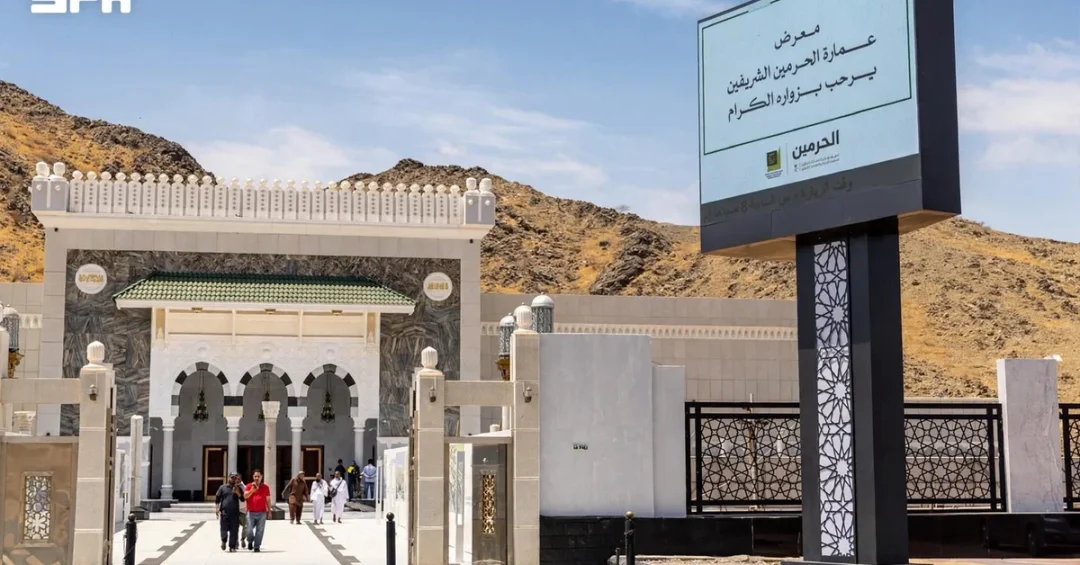
The Exhibition of the Two Holy Mosques Architecture in Makkah is showcasing a rare collection of original artifacts, manuscripts, photographs, and documents that trace the architectural evolution and continuous care of the Grand Mosque and the Prophet’s Mosque across centuries, according to the Saudi Press Agency (SPA). Spanning approximately 1,200 square meters, the exhibition has been designed to harmonize with the distinctive architectural style of the Grand Mosque, offering visitors an immersive experience that blends historical, educational, and visual dimensions. The display stands as a testament to the Kingdom of Saudi Arabia’s enduring commitment to preserving the heritage of Islam’s holiest sites while making their history accessible to a global audience.
Have you ever wondered how the Two Holy Mosques evolved from simple structures into the architectural marvels they are today? The exhibition answers that question by bringing together artifacts that date back centuries, including a historic golden plaque that once adorned the Kaaba Gate, dating to 1119 AH, and a historic clock believed to date from 1277 AH, linked to the regulation of prayer times at the Prophet’s Mosque. These items are not merely relics; they are tangible chapters in a story of devotion, craftsmanship, and stewardship that continues under the leadership of the Custodian of the Two Holy Mosques, King Salman bin Abdulaziz Al Saud, and His Royal Highness Crown Prince Mohammed bin Salman.
Context and Background
Why does an exhibition dedicated to the architecture of the Two Holy Mosques matter on the global stage? For more than fourteen centuries, the Grand Mosque in Makkah and the Prophet’s Mosque in Madinah have been the spiritual heart of the Islamic world, drawing millions of pilgrims annually and serving as focal points of Islamic history, scholarship, and art. Their architecture reflects successive eras of expansion, restoration, and enhancement, from the earliest Islamic period through the Ottoman era to the modern Saudi expansions that have dramatically increased capacity and comfort for worshippers. The Exhibition of the Two Holy Mosques Architecture, organized under the umbrella of official Saudi cultural and religious authorities, documents this continuum by housing rare original artifacts, photographs, and documents that illustrate the evolution of the mosques’ architecture and the ongoing care they receive.
The exhibition’s design is deliberately harmonized with the architectural style of the Grand Mosque, creating a seamless visual and emotional connection between the displays and the sacred space itself. Visitors are invited to walk through halls that present scale models of the Two Holy Mosques, manuscripts, inscriptions, architectural elements such as doors and marble columns, and sections of the Kaaba’s kiswa. Each component has been curated to tell a story—not only of stone and marble, but of the human dedication that has preserved these sites through the ages. By situating these artifacts within a space that echoes the Grand Mosque’s own aesthetic, the exhibition allows guests to appreciate the continuity between past and present, and to understand how Saudi stewardship builds upon a long legacy of service to the Two Holy Mosques.
Key Details and Rare Artifacts
What exactly can visitors expect to see inside this remarkable collection? The exhibition features a carefully assembled array of items that span multiple historical periods. Among the most notable is a historic golden plaque that once adorned the Kaaba Gate, dating back to 1119 AH, a piece that offers a rare glimpse into the craftsmanship and artistic traditions associated with the holiest site in Islam. Another highlight is a historic clock, believed to date from 1277 AH, which is associated with the history of the Prophet’s Mosque and the regulation of prayer times and acts of worship. These objects are displayed alongside scale models of the Two Holy Mosques, manuscripts, inscriptions, and architectural elements including doors and marble columns, as well as sections of the Kaaba’s kiswa.
The exhibition spans approximately 1,200 square meters, a scale that allows for a comprehensive narrative without overwhelming the visitor. The layout guides guests through thematic halls, each dedicated to a different aspect of the mosques’ history and architecture. Photographs and documents complement the physical artifacts, providing context and helping visitors understand the sequence of expansions and renovations. The integration of historical, educational, and visual dimensions ensures that the experience is accessible to a wide range of audiences—from scholars and architects to families and first-time visitors. By presenting original items rather than replicas, the exhibition underscores the authenticity of the heritage it preserves and the seriousness with which Saudi authorities approach their custodial responsibilities.
International and Regional Impact
How does this exhibition resonate beyond the borders of Saudi Arabia? The Two Holy Mosques are not only national treasures but global Islamic heritage sites, and their history is of interest to Muslims and scholars worldwide. By making rare artifacts and documents accessible in a curated, educational setting, the Kingdom reinforces its role as a custodian of Islamic heritage and a center of cultural diplomacy. International visitors, including researchers, historians, and architects, can study the evolution of Islamic architecture and the technical and artistic methods employed across different eras. The exhibition also serves as a resource for educational institutions, offering material that can support curricula in history, art, and religious studies.
Regionally, the exhibition strengthens the cultural and spiritual ties between Saudi Arabia and the wider Middle East, where the Two Holy Mosques hold profound significance. It provides a platform for dialogue and exchange, inviting neighbors and partners to engage with the shared heritage of the region. By presenting the history of the mosques in a respectful and scholarly manner, the exhibition contributes to a deeper understanding of the Kingdom’s role in preserving these sites and facilitating the pilgrimage experience for millions. In a world where cultural heritage is increasingly recognized as a bridge between nations, this initiative positions Saudi Arabia as a leader in heritage preservation and intercultural understanding.
Economic and Strategic Significance
What does the exhibition reveal about Saudi Arabia’s broader strategic priorities? The care and development of the Two Holy Mosques are central to the Kingdom’s identity and its Vision 2030 reform agenda, which seeks to diversify the economy, enhance quality of life, and strengthen Saudi Arabia’s global standing. The exhibition supports these goals by enriching the cultural and educational offerings available to visitors, complementing the massive infrastructure projects that have expanded the mosques’ capacity and improved services for pilgrims. It also aligns with efforts to promote cultural tourism and extend the length of stay for visitors, allowing them to engage more deeply with the history and heritage of the holy cities.
From an economic perspective, exhibitions of this kind can stimulate activity in the hospitality, retail, and transportation sectors, as they attract domestic and international visitors who wish to combine spiritual journeys with cultural exploration. The exhibition’s educational value also supports the development of human capital, inspiring young Saudis to pursue careers in heritage conservation, museum curation, and architectural preservation. Strategically, the initiative reinforces the Kingdom’s soft power by showcasing its commitment to protecting Islamic heritage and sharing it with the world. It is a tangible expression of the leadership’s dedication to serving the Two Holy Mosques and to fostering a deeper appreciation of their history among all who visit.
Vision 2030 Alignment
How does the Exhibition of the Two Holy Mosques Architecture connect to Saudi Vision 2030? The Vision, launched by Crown Prince Mohammed bin Salman in 2016, aims to transform the Kingdom into a global hub for culture, tourism, and investment while preserving its Islamic heritage and values. The exhibition directly supports these objectives by highlighting the historical and architectural significance of the Two Holy Mosques, promoting cultural understanding, and enhancing the visitor experience in Makkah. It reflects the Vision’s emphasis on diversifying the economy through cultural and educational initiatives, and on strengthening national pride by celebrating the Kingdom’s role as the custodian of Islam’s holiest sites.
As Saudi Arabia continues to invest in the expansion and modernization of the Two Holy Mosques, projects that are among the largest and most complex in the world, the exhibition serves as a reminder of the enduring continuity between past and present. It allows visitors to appreciate the craftsmanship of earlier generations while witnessing the scale of modern Saudi stewardship. By preserving and displaying these rare artifacts, the Kingdom ensures that the history of the Two Holy Mosques remains alive for future generations and accessible to a global audience. In doing so, it advances Vision 2030’s goal of positioning Saudi Arabia as a leader in heritage preservation and a destination for cultural and spiritual tourism, rooted in its unique and sacred legacy.
20 Questions
Q1. What is the Exhibition of the Two Holy Mosques Architecture?
A1. It is an exhibition in Makkah that documents the history of the Grand Mosque and the Prophet’s Mosque through rare original artifacts, photographs, and documents illustrating their architectural evolution and ongoing care.
Q2. Where is the exhibition located?
A2. The exhibition is located in Makkah, Saudi Arabia, and is designed to harmonize with the distinctive architectural style of the Grand Mosque, offering an immersive experience for visitors.
Q3. How large is the exhibition space?
A3. The exhibition spans approximately 1,200 square meters, allowing for a comprehensive display of artifacts, models, manuscripts, and documents across multiple thematic halls.
Q4. What are some of the rare artifacts on display?
A4. Notable items include a historic golden plaque that once adorned the Kaaba Gate, dating back to 1119 AH, and a historic clock believed to date from 1277 AH, associated with the Prophet’s Mosque.
Q5. Does the exhibition include sections of the Kaaba’s kiswa?
A5. Yes, the exhibition features sections of the Kaaba’s kiswa, along with other artifacts linked to the history of the Grand Mosque and the Prophet’s Mosque.
Q6. What types of architectural elements are showcased?
A6. Visitors can see doors, marble columns, scale models of the Two Holy Mosques, manuscripts, and inscriptions that illustrate the architectural evolution of the holy sites.
Q7. Who organized the exhibition?
A7. The exhibition is organized under official Saudi authorities responsible for the care of the Two Holy Mosques and the preservation of Islamic heritage, as reported by the Saudi Press Agency.
Q8. What is the purpose of the exhibition?
A8. Its purpose is to document and share the history, architecture, and continuous care of the Two Holy Mosques, providing an educational and visual experience for visitors from around the world.
Q9. How does the exhibition reflect Saudi Arabia’s commitment to heritage?
A9. It demonstrates the Kingdom’s dedication to preserving Islamic heritage by displaying original artifacts and documents, and by making them accessible to a global audience in a curated setting.
Q10. Is the exhibition suitable for international visitors?
A10. Yes, it is designed for a wide audience, including international visitors, scholars, and families, with historical, educational, and visual dimensions that transcend language barriers.
Q11. What is the significance of the golden plaque from 1119 AH?
A11. The golden plaque once adorned the Kaaba Gate and offers a rare glimpse into the craftsmanship and artistic traditions associated with the holiest site in Islam during that era.
Q12. What does the historic clock from 1277 AH represent?
A12. The clock is associated with the history of the Prophet’s Mosque and the regulation of prayer times and acts of worship, reflecting the importance of timekeeping in Islamic practice.
Q13. How does the exhibition support Vision 2030?
A13. It supports Vision 2030 by promoting cultural tourism, enhancing educational offerings, and showcasing Saudi Arabia’s role as a custodian of Islamic heritage, aligning with the goals of diversification and global engagement.
Q14. Can visitors learn about the expansions of the Two Holy Mosques?
A14. Yes, the exhibition documents the evolution and expansions of the Two Holy Mosques through scale models, photographs, and documents that illustrate the historical development of the sites.
Q15. Are there manuscripts and inscriptions in the exhibition?
A15. Yes, the exhibition includes manuscripts and inscriptions that provide insight into the history, architecture, and religious significance of the Two Holy Mosques over the centuries.
Q16. What makes this exhibition unique?
A16. Its uniqueness lies in the display of rare original artifacts, including items directly linked to the Kaaba and the Prophet’s Mosque, presented in a space designed to reflect the Grand Mosque’s architecture.
Q17. How does the exhibition contribute to cultural diplomacy?
A17. By sharing Islamic heritage with a global audience, the exhibition fosters intercultural understanding and reinforces Saudi Arabia’s role as a leader in heritage preservation and cultural exchange.
Q18. Is the exhibition part of a larger Saudi effort to preserve heritage?
A18. Yes, it is part of broader Saudi efforts to preserve and promote Islamic heritage, complementing the massive expansions and modernization projects at the Two Holy Mosques.
Q19. What can researchers gain from visiting the exhibition?
A19. Researchers can study original artifacts, architectural elements, and documents that offer valuable insights into the historical development and craftsmanship of the Two Holy Mosques across different eras.
Q20. How does the exhibition reflect the leadership’s commitment to the Two Holy Mosques?
A20. It reflects the leadership’s commitment by showcasing the continuous care, expansion, and preservation of the Two Holy Mosques, under the guidance of the Custodian of the Two Holy Mosques, King Salman bin Abdulaziz Al Saud.
Reader Feedback
We value your thoughts. Please share your feedback on this article.
Your feedback helps us improve our coverage.