


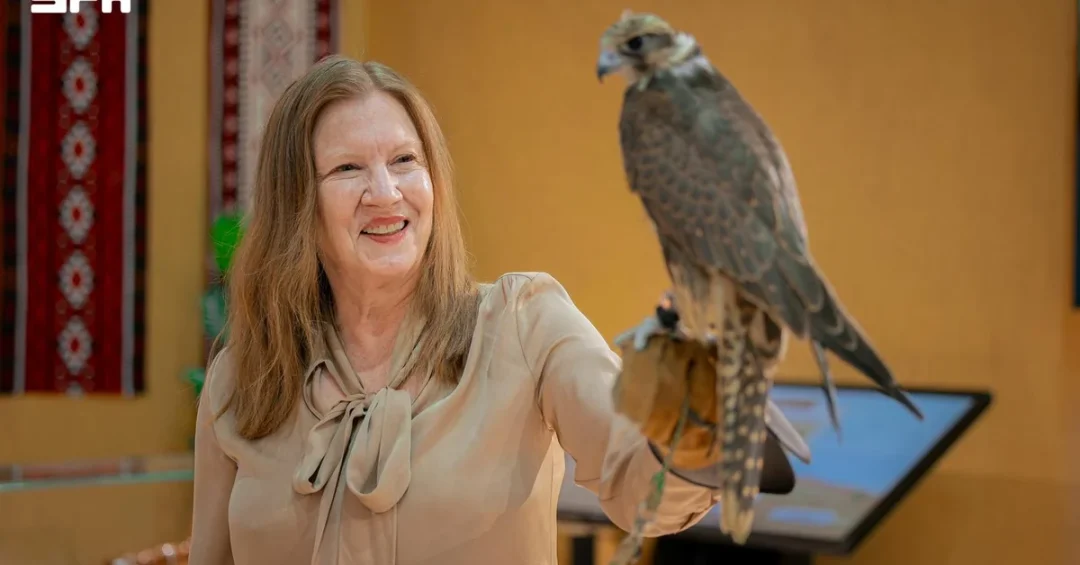
US Embassy Chargé d’Affaires in Saudi Arabia Jennifer Larson visited the International Falcon Breeders Auction 2026, organized by the National Center for Falcons at its headquarters in Malham, north of Riyadh, according to the Saudi Press Agency. The visit, confirmed by official Saudi channels, highlighted the deepening cultural and diplomatic ties between the United States and the Kingdom, and underscored the global appeal of Saudi Arabia’s efforts to preserve falconry as a living heritage. The auction, which runs until August 25, brings together local and international falcon breeding farms in a showcase of tradition, conservation, and commerce.
The event is held under the patronage of the National Center for Falcons, a Saudi government entity dedicated to the protection and promotion of falconry. Chargé d’Affaires Larson received a detailed briefing on the auction’s activities, the participating farms, and the cultural heritage the center seeks to preserve. She toured the auction’s pavilions, viewing prominent falcon species and learning about their care, and also visited the participating farms’ pavilions, the falconry supplies pavilions, and the ‘Falconer of the Future’ pavilion. She attended the fourth night of the auction, which featured four falcons. The visit reflects the growing international engagement with Saudi Arabia’s cultural initiatives and the Kingdom’s role as a global hub for falconry.
Context and Background
Why does falconry matter so deeply to Saudi Arabia and the wider region? Falconry, known in Arabic as ‘Al-Qanas’, is an ancient desert tradition that has been practiced on the Arabian Peninsula for thousands of years. It is far more than a sport; it is a symbol of nobility, patience, and the deep connection between the people of the Arabian Peninsula and their natural environment. In 2010, UNESCO inscribed falconry on the Representative List of the Intangible Cultural Heritage of Humanity, recognizing its universal value. Saudi Arabia has long been a leading advocate for the preservation of this heritage, and the National Center for Falcons was established to ensure that the tradition thrives in the modern era.
The International Falcon Breeders Auction is a flagship initiative of the National Center for Falcons, which operates under the guidance of Saudi leadership. The center’s mission includes regulating falconry activities, supporting breeders, conducting research, and organizing events that bring together enthusiasts from around the world. The auction at Malham, north of Riyadh, has become a key date on the global falconry calendar, attracting breeders and buyers from across the Gulf, the Middle East, Europe, Asia, and beyond. It serves as a platform for showcasing the finest falcon species, exchanging expertise, and promoting sustainable breeding practices. The presence of a senior US diplomat at the 2026 edition signals the event’s growing international stature and the Kingdom’s success in positioning cultural heritage as a bridge between nations.
Key Details of the Visit and Auction
What exactly did the US chargé d’affaires experience during her tour? According to the Saudi Press Agency, Jennifer Larson was received at the National Center for Falcons headquarters in Malham, where she was given a comprehensive briefing on the auction’s activities and the participating farms. She then toured the auction’s pavilions, where she viewed some of the most prominent falcon species on offer and learned about their care. The briefing also covered the rich cultural heritage that the center seeks to preserve, highlighting the center’s role in safeguarding falconry for future generations.
Larson’s itinerary included visits to the participating farms’ pavilions, the falconry supplies pavilions, and the ‘Falconer of the Future’ pavilion. The latter is a dedicated space designed to inspire young people to engage with falconry, offering educational displays and interactive experiences. She also attended the fourth night of the auction, which featured four falcons. The auction itself runs until August 25 and features a selection of local and international falcon breeding farms. The event is not merely a marketplace; it is a celebration of a shared heritage that unites cultures across continents. The National Center for Falcons has emphasized that the auction supports breeders, promotes ethical practices, and contributes to the conservation of falcon species.
The ‘Falconer of the Future’ pavilion is particularly significant as it reflects Saudi Arabia’s commitment to youth engagement and the transfer of traditional knowledge. By involving young people, the center ensures that falconry remains vibrant and relevant. The auction also includes pavilions for falconry supplies, where visitors can learn about the tools and techniques used in the sport. The presence of international farms underscores the global dimension of the event, with breeders from various countries participating. The fourth night’s auction of four falcons drew attention from bidders and spectators alike, demonstrating the high demand for well-bred falcons.
International and Regional Impact
How does a cultural event like this shape Saudi Arabia’s international relations? The visit of a senior US diplomat to the International Falcon Breeders Auction is a clear indication of the event’s diplomatic significance. Cultural diplomacy is a powerful tool for building bridges between nations, and falconry serves as a shared passion that transcends political and geographical boundaries. The United States has a vibrant falconry community, and American breeders and enthusiasts have long participated in international events. Larson’s presence at the auction highlights the mutual respect between the two countries and their shared appreciation for heritage.
Regionally, the auction reinforces Saudi Arabia’s leadership in preserving Arabian heritage. The Gulf Cooperation Council (GCC) countries share a deep-rooted tradition of falconry, and the event provides a platform for regional cooperation. By hosting breeders from across the region and the world, Saudi Arabia positions itself as a custodian of a cultural legacy that belongs to all humanity. The National Center for Falcons works closely with international organizations and experts to ensure best practices in breeding and conservation. The auction also boosts tourism, attracting visitors who combine their passion for falconry with an opportunity to explore Riyadh and its surroundings. This aligns with Saudi Arabia’s broader strategy to diversify its economy and promote cultural tourism.
Economic and Strategic Significance
What economic benefits flow from the International Falcon Breeders Auction? Falconry is not only a cultural pursuit but also a significant economic activity. The auction facilitates trade in falcons, with prices for elite birds reaching substantial sums. This trade supports breeders, creates jobs, and generates revenue for related industries such as veterinary services, equipment manufacturing, and hospitality. The event also stimulates local businesses in Malham and Riyadh, from hotels to restaurants and transport services. By attracting international participants, the auction brings foreign currency into the Kingdom and enhances its reputation as a destination for specialized tourism.
Strategically, the auction is part of Saudi Arabia’s broader efforts to diversify its economy away from oil dependence, a key pillar of Vision 2030. Cultural heritage events like this contribute to the growth of the tourism sector, which the Kingdom aims to expand significantly. The National Center for Falcons also invests in research and conservation, ensuring that falcon populations are sustainable. This scientific approach adds value to the sector and aligns with global environmental goals. The presence of US diplomats and international breeders underscores the Kingdom’s openness to the world and its ability to host world-class events. The auction thus serves as a model for how cultural heritage can drive economic development and international engagement.
Vision 2030 Alignment
How does the International Falcon Breeders Auction fit into Saudi Arabia’s Vision 2030? Vision 2030, the Kingdom’s ambitious roadmap for transformation, emphasizes the preservation of cultural heritage as a cornerstone of national identity and a driver of economic diversification. The National Center for Falcons, through events like this auction, is actively contributing to several Vision 2030 objectives. It promotes cultural tourism, supports small and medium enterprises involved in falconry, and creates opportunities for youth. The ‘Falconer of the Future’ pavilion is a direct investment in the next generation, ensuring that traditional skills are passed on. By hosting international participants, the auction also strengthens Saudi Arabia’s global connections and soft power.
The visit of US Chargé d’Affaires Jennifer Larson is a testament to the Kingdom’s success in using heritage as a tool for diplomacy and economic growth. As Saudi Arabia continues to open up to the world, events like the International Falcon Breeders Auction will play an increasingly important role in showcasing the best of Saudi culture and hospitality. The auction runs until August 25, and its impact will be felt long after the final bid is placed. It is a vivid example of how Vision 2030 is not just about economic reform but also about celebrating and sharing the Kingdom’s rich heritage with the world. Through such initiatives, Saudi Arabia is building a future that honors its past while embracing global engagement.
20 Questions
Q1. What is the International Falcon Breeders Auction 2026?
A1. It is a major event organized by the National Center for Falcons in Malham, north of Riyadh, showcasing local and international falcon breeding farms. The auction runs until August 25 and features various falcon species, supplies, and youth engagement pavilions.
Q2. Who visited the auction and why is it significant?
A2. US Embassy Chargé d’Affaires in Saudi Arabia Jennifer Larson visited the auction. Her presence highlights the event’s international appeal and the role of cultural diplomacy in strengthening ties between the United States and Saudi Arabia.
Q3. What is the National Center for Falcons?
A3. It is a Saudi government entity dedicated to preserving falconry heritage, regulating falconry activities, supporting breeders, and organizing events like the International Falcon Breeders Auction. It operates under the guidance of Saudi leadership.
Q4. Where is the auction held?
A4. The auction is held at the National Center for Falcons headquarters in Malham, located north of Riyadh, the capital of Saudi Arabia. The venue includes multiple pavilions for farms, supplies, and youth activities.
Q5. How long does the auction last?
A5. The auction runs until August 25, 2026. It features multiple nights of bidding, with the fourth night featuring four falcons. The event spans several days to accommodate a wide range of participants and activities.
Q6. What did the US chargé d’affaires do during her visit?
A6. She received a briefing on the auction’s activities and heritage preservation efforts, toured the pavilions, viewed prominent falcon species, visited the falconry supplies and ‘Falconer of the Future’ pavilions, and attended the fourth night of the auction.
Q7. What is the ‘Falconer of the Future’ pavilion?
A7. It is a dedicated space at the auction designed to inspire young people to engage with falconry. It offers educational displays and interactive experiences, reflecting Saudi Arabia’s commitment to passing on traditional knowledge to the next generation.
Q8. Why is falconry important to Saudi culture?
A8. Falconry, or Al-Qanas, is an ancient desert tradition symbolizing nobility, patience, and the connection between people and nature. It was inscribed by UNESCO in 2010 as intangible cultural heritage, and Saudi Arabia actively preserves it.
Q9. What types of falcons are featured at the auction?
A9. The auction features a selection of local and international falcon breeding farms, showcasing some of the most prominent falcon species. These include various breeds prized for their speed, hunting ability, and beauty, cared for by expert breeders.
Q10. How does the auction support the Saudi economy?
A10. The auction facilitates trade in falcons, supports breeders and related industries, generates revenue, and boosts tourism. It attracts international participants, bringing foreign currency and enhancing Saudi Arabia’s reputation as a destination for specialized cultural tourism.
Q11. What is the significance of US participation in the auction?
A11. The visit by a senior US diplomat underscores the strong cultural ties between the United States and Saudi Arabia. It reflects mutual respect and shared appreciation for heritage, and it strengthens diplomatic relations through cultural exchange.
Q12. How does the auction align with Vision 2030?
A12. Vision 2030 emphasizes cultural preservation and economic diversification. The auction promotes cultural tourism, supports SMEs, engages youth, and showcases Saudi heritage globally, all of which contribute to the Kingdom’s transformation goals.
Q13. What is the role of the ‘Falconer of the Future’ pavilion in youth engagement?
A13. It provides young people with hands-on experiences and educational content about falconry. By sparking interest early, it ensures the tradition continues and that future generations value and practice this ancient heritage.
Q14. Are there international breeders participating?
A14. Yes, the auction features both local and international falcon breeding farms. This global participation highlights the event’s international stature and provides a platform for exchanging expertise and best practices in falcon breeding.
Q15. What happens on the fourth night of the auction?
A15. The fourth night featured four falcons up for auction. These nights are key moments where breeders and buyers gather to bid on exceptional birds, demonstrating the high demand and competitive nature of the auction.
Q16. How does the auction promote conservation?
A16. The National Center for Falcons supports research and sustainable breeding practices. The auction encourages ethical breeding and helps maintain healthy falcon populations, ensuring that falconry remains sustainable for future generations.
Q17. What other pavilions are at the auction?
A17. Besides the farms’ pavilions and the ‘Falconer of the Future’ pavilion, there are falconry supplies pavilions. These offer equipment, tools, and accessories related to falconry, allowing visitors to learn about the practical aspects of the sport.
Q18. How does the auction enhance Saudi Arabia’s global image?
A18. By hosting a world-class event that attracts international diplomats and breeders, Saudi Arabia showcases its cultural richness, hospitality, and organizational capabilities. It reinforces the Kingdom’s role as a global leader in heritage preservation and cultural diplomacy.
Q19. What is the historical significance of falconry in the Arabian Peninsula?
A19. Falconry has been practiced for thousands of years in the Arabian Peninsula. It was traditionally a means of hunting and survival, and over time it became a cherished cultural tradition symbolizing honor and connection to the desert environment.
Q20. What is the future outlook for the International Falcon Breeders Auction?
A20. The auction is expected to grow in prominence, attracting more international participants and visitors. As Saudi Arabia continues to develop its cultural tourism sector, the event will remain a key platform for celebrating and preserving falconry heritage.
Reader Feedback
We value your thoughts. Please share your feedback on this article.
Your feedback helps us improve our coverage.
Related articles
 Saudi Film Commission Unveils Rules for 2027 Oscar International Feature Submission
 Arabic Language Thrives in Digital Age, AI and Vision 2030 Boost
 Al-Nafid Heritage Village Joins Khabra Dates Festival
 40 Contestants Advance on Day Five of King Abdulaziz Quran Competition
 Heavy rains and dust expected in parts of Saudi Arabia
 King Abdulaziz Library Celebrates World Calligraphy Day