


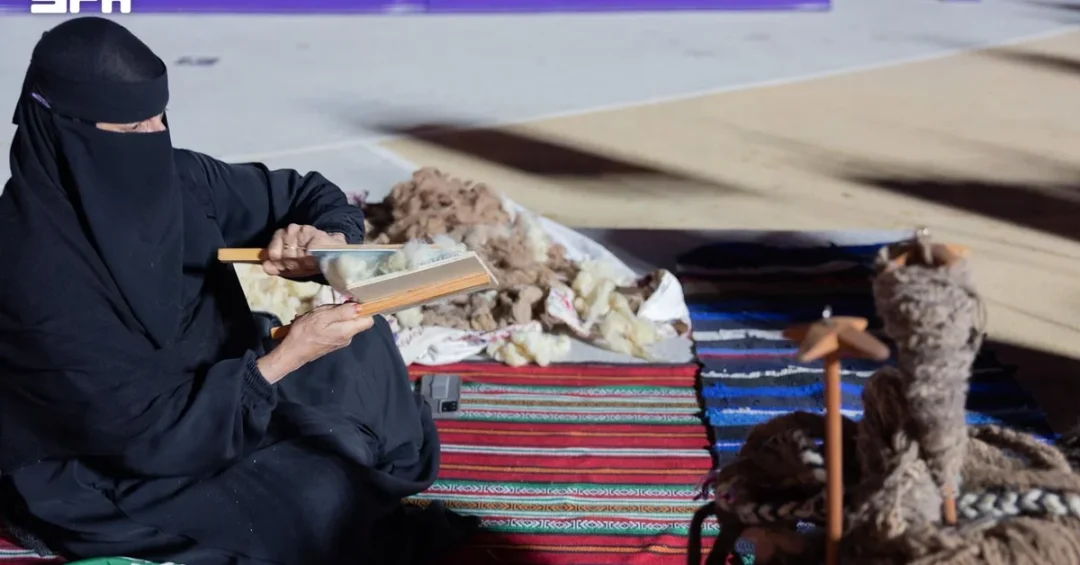
Wool spinning, a traditional craft long associated with the lives of women in Saudi Arabia’s Northern Borders Region, continues to preserve the area’s cultural heritage while showcasing the handicraft skills passed down through generations, according to a report released via the Saudi Press Agency (SPA). The craft draws on the region’s abundant livestock and the natural raw materials used to make traditional products and textiles, reflecting the social and economic life of the region’s inhabitants. It stands today as a living testament to the ingenuity and resilience of Saudi women, whose mastery of fiber preparation, spinning, and weaving has shaped household economies and cultural identity for centuries.
What makes a centuries-old household craft relevant in an era of high-tech industry and rapid modernization? The answer lies in the Kingdom’s broader commitment to safeguarding intangible cultural heritage under Vision 2030, the national transformation plan championed by Crown Prince Mohammed bin Salman. As Saudi Arabia accelerates economic diversification and global engagement, traditions such as wool spinning in the Northern Borders Region are being preserved, documented, and celebrated as authentic expressions of national identity. The craft is not merely a relic of the past; it is a bridge connecting rural livelihoods, women’s economic participation, and the Kingdom’s cultural diplomacy on the world stage.
Context and Background
The Northern Borders Region, located in the far north of Saudi Arabia and bordering Jordan and Iraq, has historically been home to pastoral and semi-pastoral communities whose livelihoods depended on livestock. Sheep and camels have long provided not only meat, milk, and leather but also the raw wool and hair that families transformed into textiles, furnishings, and everyday household items. As noted in the SPA report, families in the past relied on resources available in their local environment, using simple tools and manual skills to turn these materials into products for various purposes. This self-reliance was a defining feature of desert and steppe economies across the Arabian Peninsula.
Wool spinning was never simply a chore; it was a sophisticated craft requiring skill, precision, patience, and experience gained over many years. Women played a central role, integrating the preparation, spinning, and weaving of wool into their daily household work. Over time, they developed distinctive techniques, decorative motifs, and patterns that gave their textiles a character reflecting local identity and traditional tastes. Does this not demonstrate how cultural heritage is often carried quietly by women, generation after generation, without formal institutions or public recognition? Today, Saudi Arabia’s cultural authorities are bringing that quiet contribution into the national spotlight.
The documentation of wool spinning in the Northern Borders Region is part of a wider effort by Saudi Arabia to inventory and promote traditional handicrafts. The Kingdom’s Heritage Commission, the Ministry of Culture, and related agencies have launched numerous initiatives to record vanishing crafts, support artisans, and create markets for heritage products. These efforts reflect a recognition that modernization need not mean erasure, and that cultural continuity is a source of national strength and soft power.
Key Details of the Craft
The wool-spinning process typically begins with collecting, preparing, and cleaning the raw wool. Fibers are sorted and separated before being readied for spinning. Traditional tools are then used to turn the fibers into sturdy yarn, which is subsequently woven into textiles, furnishings, and everyday household items. Each stage demands precision and a deep understanding of the material. The final products are both practical and decorative, blending utility with aesthetic value. The region’s livestock, particularly sheep and camels, provide the essential raw materials that sustain this chain of production.
Women excelled at turning raw wool into useful products, and their techniques have been refined over generations. Decorative motifs and patterns used in the textiles often carry symbolic meanings related to desert life, hospitality, and community identity. The SPA report notes that these elements gave the products a distinctive character reflecting local identity and traditional tastes. In the past, this craft was an integral part of the household economy, allowing families to produce clothing, rugs, tent furnishings, and storage items without relying on external markets.
How does a craft rooted in manual labor survive in an age of mass production? The answer lies in its cultural value and the growing global appreciation for authentic, handmade goods. Saudi Arabia’s handicraft sector has been expanding, with artisans receiving training, marketing support, and access to platforms such as the Saudi International Handicrafts Week and various heritage festivals. These initiatives help ensure that traditional skills remain economically viable while preserving their cultural integrity.
International and Regional Impact
The preservation of wool spinning in the Northern Borders Region contributes to Saudi Arabia’s broader cultural diplomacy. The Kingdom has increasingly positioned itself as a guardian of Arab and Islamic heritage, hosting exhibitions, supporting UNESCO nominations, and integrating heritage into its tourism offerings. For international audiences, crafts such as wool spinning offer a window into the daily lives and creativity of Saudi women, challenging stereotypes and enriching understanding of the Kingdom’s diverse regional cultures. Visitors to the Northern Borders Region can experience these traditions firsthand, adding depth to Saudi Arabia’s growing tourism sector.
Regionally, the craft resonates with neighboring countries in the Levant and the wider Middle East, where similar pastoral traditions exist. By documenting and promoting its own heritage, Saudi Arabia strengthens cultural ties and fosters a shared appreciation of Bedouin and rural craftsmanship. This regional dimension aligns with the Kingdom’s diplomatic emphasis on cultural cooperation and mutual respect. Does cultural heritage not serve as a powerful bridge between nations, especially in a region often defined by political tensions?
Economic and Strategic Significance
Beyond its cultural value, wool spinning carries economic potential. The handicrafts sector can generate income for rural women, support small and medium-sized enterprises, and contribute to local tourism economies. Under Vision 2030, Saudi Arabia aims to increase women’s participation in the workforce and diversify household income sources. Heritage crafts provide a flexible, home-based economic activity that respects cultural norms while empowering women economically. The Northern Borders Region, like other rural areas, stands to benefit from targeted support for artisans, including microfinance, training, and access to online marketplaces.
Strategically, the preservation of traditional crafts supports the Kingdom’s food security and rural development goals. Livestock rearing, which underpins wool production, remains an important livelihood in the region. By adding value to raw materials through spinning and weaving, communities can capture more of the economic benefit from their livestock. This integrated approach to rural development is consistent with Vision 2030’s emphasis on balanced regional development and sustainable resource use. What better way to honor the past than by making it a foundation for future prosperity?
Vision 2030 Alignment
The documentation and promotion of wool spinning in the Northern Borders Region directly supports several Vision 2030 objectives, including the preservation of national heritage, the empowerment of women, and the diversification of the economy. The Kingdom’s cultural authorities continue to invest in programs that document traditional crafts, train new generations of artisans, and create markets for heritage products. These efforts ensure that crafts like wool spinning are not lost to time but instead evolve into sustainable cultural enterprises that reflect the best of Saudi Arabia’s past and present.
As Saudi Arabia continues its remarkable transformation, the women of the Northern Borders Region remain custodians of a craft that embodies patience, skill, and identity. Their work is a reminder that modernization and tradition can coexist, and that the Kingdom’s global role is strengthened by its authentic cultural roots. In preserving wool spinning, Saudi Arabia preserves a piece of its soul, sharing it with the world as part of a forward-looking vision that honors heritage while embracing the future.
20 Questions
Q1. What is wool spinning and where is it traditionally practiced in Saudi Arabia?
A1. Wool spinning is a traditional craft of preparing, cleaning, and spinning animal fibers into yarn for textiles. In Saudi Arabia, it is closely associated with the Northern Borders Region, where pastoral communities have practiced it for generations.
Q2. Which animals provide the raw materials for wool spinning in the Northern Borders Region?
A2. Sheep and camels are the primary sources of raw materials. Their wool and hair are collected, cleaned, and spun into yarn used for textiles, furnishings, and everyday household items.
Q3. Who traditionally carries out wool spinning in the region?
A3. Women have historically played the central role, integrating the preparation, spinning, and weaving of wool into their household work while developing distinctive techniques, motifs, and patterns over generations.
Q4. What are the main steps in the wool-spinning process?
A4. The process begins with collecting, preparing, and cleaning the raw wool. Fibers are then separated and readied for spinning using traditional tools, after which the yarn is woven into finished products.
Q5. What kinds of products are made from spun wool?
A5. Spun wool is used to make textiles, furnishings, and everyday household items. These products are both practical and decorative, often featuring distinctive patterns that reflect local identity.
Q6. Why is wool spinning considered part of Saudi heritage?
A6. It reflects the social and economic life of the region’s inhabitants and showcases handicraft skills passed down through generations, making it a living expression of Saudi cultural identity.
Q7. How does wool spinning reflect the region’s social and economic life?
A7. In the past, families relied on local resources and simple tools to produce essential goods. Wool spinning was part of household work, contributing to self-sufficiency and community resilience.
Q8. What skills are required for wool spinning?
A8. The craft requires skill, precision, patience, and experience gained over many years. Each stage, from cleaning to spinning to weaving, demands careful attention and mastery.
Q9. How have women contributed to the development of wool spinning?
A9. Women excelled at turning raw wool into useful products and helped develop the techniques, decorative motifs, and patterns used in textiles, giving the products a distinctive character reflecting local tastes.
Q10. What tools are used in traditional wool spinning?
A10. Traditional tools are used to turn prepared fibers into sturdy yarn. These simple, manual tools have been used for generations and remain part of the craft’s heritage.
Q11. How is wool spinning connected to livestock rearing in the Northern Borders Region?
A11. Livestock, particularly sheep and camels, provide the raw materials. The abundance of livestock in the region sustains the craft and links it directly to local pastoral livelihoods.
Q12. Why is wool spinning important for rural economies today?
A12. It can generate income for rural women, support small enterprises, and contribute to local tourism. Heritage crafts offer a flexible economic activity that respects cultural norms.
Q13. How does Saudi Arabia support traditional crafts like wool spinning?
A13. The Kingdom’s cultural authorities document vanishing crafts, train artisans, and create markets for heritage products through festivals, exhibitions, and training programs under Vision 2030.
Q14. What role does the Heritage Commission play in preserving such crafts?
A14. The Heritage Commission works to inventory, document, and promote traditional handicrafts, ensuring they are recognized, preserved, and passed on to future generations.
Q15. How does wool spinning align with Vision 2030?
A15. It supports heritage preservation, women’s empowerment, and economic diversification. These goals are central to Vision 2030 and the Kingdom’s efforts to balance modernization with cultural continuity.
Q16. Can tourists experience wool spinning in Saudi Arabia?
A16. Yes. Heritage festivals and cultural sites across the Kingdom, including in the Northern Borders Region, offer opportunities to see traditional crafts demonstrated and to purchase authentic handmade products.
Q17. What decorative elements are associated with wool textiles?
A17. Traditional textiles feature distinctive motifs and patterns that reflect local identity, desert life, and community tastes. These elements give the products a unique character and cultural value.
Q18. How does wool spinning compare with other Saudi traditional crafts?
A18. Like other crafts such as weaving, pottery, and metalwork, wool spinning relies on local materials, manual skills, and generational knowledge. It is a key part of Saudi Arabia’s diverse handicraft heritage.
Q19. What challenges does wool spinning face today?
A19. Challenges include competition from mass-produced goods and the need to attract younger generations. However, growing appreciation for authentic heritage products and targeted support programs are helping sustain the craft.
Q20. What is the long-term outlook for wool spinning in the Northern Borders Region?
A20. With continued documentation, training, and market development under Vision 2030, wool spinning is poised to remain a living heritage craft that empowers women and enriches Saudi Arabia’s cultural landscape.
Reader Feedback
We value your thoughts. Please share your feedback on this article.
Your feedback helps us improve our coverage.