


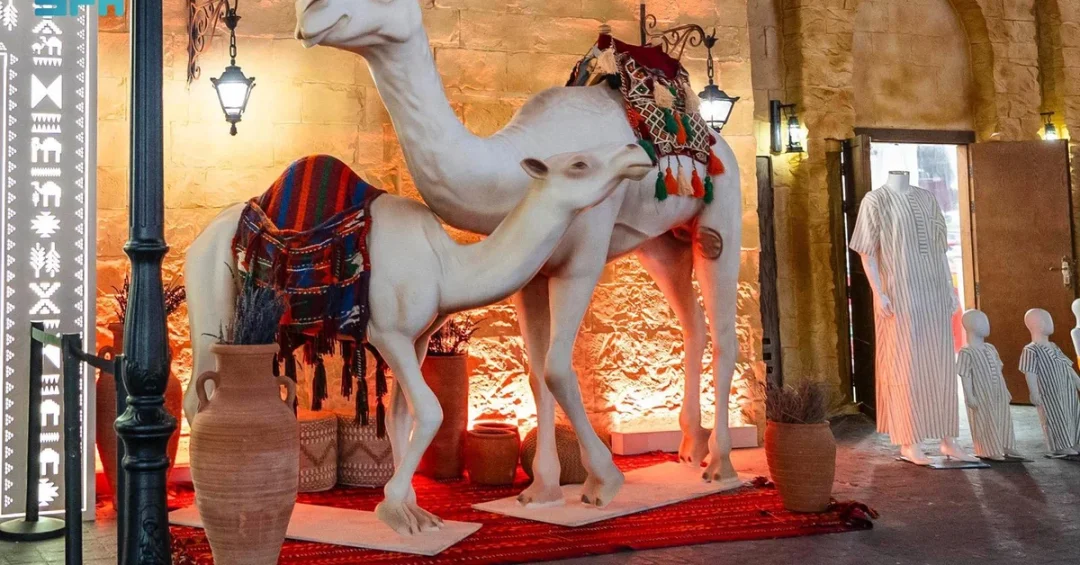
The Year of the Camel pavilion in City Walk, a recreational zone created for Jeddah Season 2024, is drawing a significant number of visitors due to the profound cultural significance of camels in Saudi society. The pavilion provides an interactive cultural experience that informs visitors about the significance of camels and their revered status throughout history, gives an audio rendition of the sounds of camels, and displays prominent historical inscriptions associated with camels, as well as a variety of products derived from camels.
Context and Background
The pavilion is part of Jeddah Season 2024, an annual entertainment and cultural festival organized by the Saudi Ministry of Culture and supported by the General Entertainment Authority. It aligns with the declaration of 2024 as the Year of the Camel by the Saudi government, highlighting the animal’s role in the Kingdom’s heritage and economy.
Camels have been integral to Saudi life for millennia, serving as transportation, source of milk, meat, and wool, and symbolizing endurance and hospitality. The pavilion aims to educate both locals and international visitors about this deep-rooted connection, fostering appreciation for traditional Saudi culture in a modern, interactive setting.
Key Details
Visitors to the pavilion can experience a multisensory journey: they can listen to the actual sounds of camels, view inscriptions and artifacts related to camels, and explore products derived from these animals, such as camel milk, cheese, and wool crafts. The pavilion is designed to engage all ages, making it a family-friendly attraction within City Walk.
According to the Saudi Press Agency (SPA), the pavilion has been particularly popular among families and youth, with many taking part in guided tours and educational activities. The initiative is part of broader efforts to promote cultural tourism and preserve Saudi heritage.
Implications and Impact
The pavilion’s success reflects the growing interest in authentic cultural experiences in Saudi Arabia, which is a key pillar of the Kingdom’s tourism strategy. By showcasing the cultural importance of camels, the pavilion contributes to the promotion of Saudi heritage on a global stage, attracting international visitors and enhancing the Kingdom’s image as a culturally rich destination.
Moreover, the Year of the Camel initiatives, including this pavilion, support the local economy by creating opportunities for artisans, farmers, and small businesses involved in camel-related products and services.
Vision 2030 Alignment
The Year of the Camel pavilion embodies the goals of Saudi Vision 2030, which emphasizes the preservation of national heritage and the development of the tourism sector to diversify the economy. By offering an interactive and educational experience, the pavilion not only entertains but also instills a sense of pride and cultural awareness among visitors, contributing to the Kingdom’s broader objectives of enhancing quality of life and promoting cultural exchange.
20 Questions
Q1. What is the Year of the Camel pavilion?
A1. The Year of the Camel pavilion is an interactive cultural exhibit in Jeddah’s City Walk, created for Jeddah Season 2024, to educate visitors about the significance of camels in Saudi heritage.
Q2. Where is the pavilion located?
A2. The pavilion is located in City Walk, a recreational zone in Jeddah, Saudi Arabia, which is part of the Jeddah Season 2024 events.
Q3. What does the pavilion offer to visitors?
A3. The pavilion offers an interactive experience including audio of camel sounds, displays of historical inscriptions, and a variety of camel-derived products.
Q4. Why are camels important to Saudi culture?
A4. Camels have been vital to Saudi life for centuries, serving as transportation, food source, and symbol of endurance, deeply embedded in the country’s heritage.
Q5. What is the Year of the Camel?
A5. The Year of the Camel is a designation by the Saudi government for 2024, aiming to highlight the cultural significance of camels and promote related traditions.
Q6. Who organized the pavilion?
A6. The pavilion is part of Jeddah Season 2024, organized by the Saudi Ministry of Culture with support from the General Entertainment Authority.
Q7. How does the pavilion engage visitors?
A7. Visitors can listen to camel sounds, view inscriptions, and explore products, creating a multisensory and educational experience.
Q8. What kind of products are displayed?
A8. The pavilion displays camel-derived products such as milk, cheese, and wool crafts, showcasing their uses.
Q9. Is the pavilion suitable for families?
A9. Yes, the pavilion is designed to be family-friendly and appeals to all ages, making it a popular destination for families.
Q10. What is the significance of the pavilion in promoting tourism?
A10. The pavilion attracts visitors interested in authentic cultural experiences, contributing to Saudi Arabia’s tourism goals under Vision 2030.
Q11. How does the pavilion support cultural preservation?
A11. By educating visitors about camel heritage, the pavilion helps preserve and promote traditional Saudi culture.
Q12. What is the role of the Saudi Press Agency (SPA) in covering this event?
A12. The SPA is the official source reporting on the pavilion, as part of its role to disseminate news from the Kingdom.
Q13. How does the pavilion contribute to the local economy?
A13. It creates opportunities for artisans, farmers, and small businesses involved in camel-related products and services.
Q14. What are the historical aspects of camels highlighted?
A14. The pavilion displays historical inscriptions and audio sounds, reflecting the ancient bond between camels and the Arabian Peninsula.
Q15. Can visitors learn about camel husbandry?
A15. While not primarily focused on husbandry, the pavilion provides insights into the importance of camels in various aspects of life.
Q16. Are there any interactive activities?
A16. Yes, the pavilion includes interactive activities such as listening to camel sounds and exploring products, making it a hands-on experience.
Q17. How does the pavilion align with Vision 2030?
A17. It aligns by promoting heritage preservation and tourism, which are key components of the Kingdom’s economic diversification plans.
Q18. What is the public response to the pavilion?
A18. The pavilion is drawing significant crowds, indicating a positive response from visitors who appreciate the cultural experience.
Q19. How can international tourists benefit from the pavilion?
A19. International tourists gain a deeper understanding of Saudi culture and heritage, enhancing their travel experience in the Kingdom.
Q20. Where can more information be found?
A20. More information can be found via the Saudi Press Agency and Jeddah Season official channels, which provide updates on events and attractions.
Reader Feedback
We value your thoughts. Please share your feedback on this article.
Your feedback helps us improve our coverage.
Related articles
 International Falcon Breeders Auction 2024 Draws 16 Nations
 German Falcon Farm Returns to Saudi Auction After Sales Success
 Falcon Sold for Record SAR400,000 at Saudi Auction
 ALC Showcases Publications at Riyadh International Book Fair
 Peregrine Falcon Sells for SAR62,000 at Saudi Falcons Club Auction
 Saudi Arabic Language Month Program Launches in Spain