


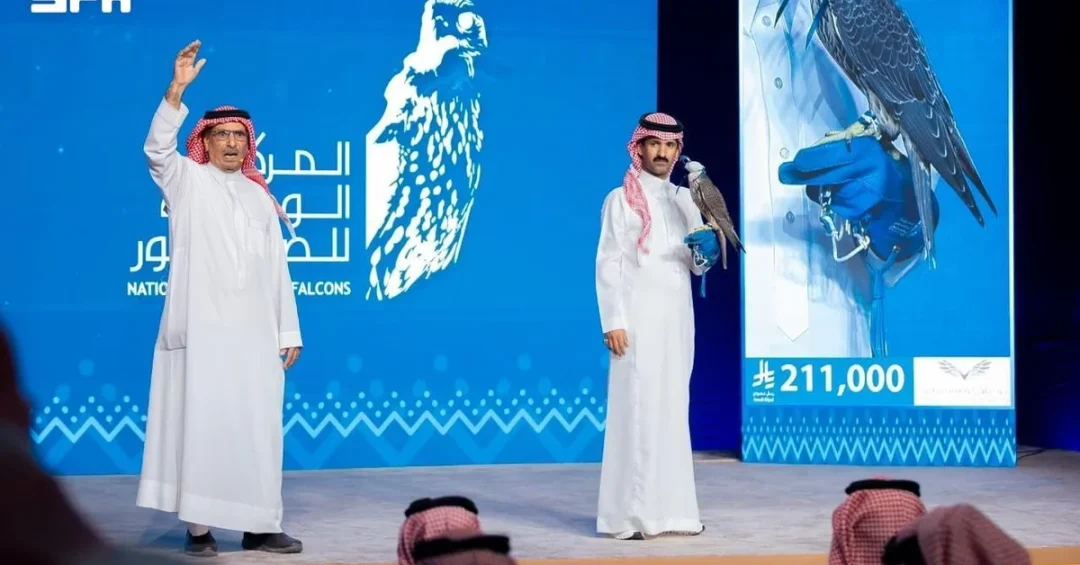
A young peregrine falcon, known in Arabic as a farkh shaheen, has sold for SAR211,000 during the ninth night of the 2026 National Center for Falcons Auction, following competitive bidding that opened at SAR100,000, according to the Saudi Press Agency (SPA). The bird was caught by nine trappers in Al-Muwailih, a location in the northern border region of the Kingdom of Saudi Arabia, and its sale marks one of the standout results of this year’s auction, which continues until November 30. The event is organized by the National Center for Falcons, a Saudi government entity dedicated to the conservation, regulation, and cultural promotion of falconry — a practice deeply rooted in the heritage of the Arabian Peninsula.
The auction accepts only young migratory peregrine falcons that are caught within the Kingdom, a rule designed to protect adult falcons and saker falcons from overharvesting. This policy reflects a careful balance between preserving traditional falconry and ensuring the long-term sustainability of raptor populations. For international observers, the sale price and the auction’s rules offer a window into how Saudi Arabia is modernizing a centuries-old tradition while aligning it with environmental stewardship and economic diversification. The National Center for Falcons provides trappers with accommodation and transportation to the auction venue, and sessions are broadcast live on television and social media platforms, extending the event’s reach far beyond the physical auction floor.
Context and Background
How did falconry evolve from a desert survival skill into a regulated, high-value cultural and economic activity in Saudi Arabia? Falconry, or al-qanas, has been practiced in the Arabian Peninsula for thousands of years, originally as a means of hunting small game to supplement the diet of nomadic communities. Over time, it became a symbol of nobility, patience, and connection to the natural environment. In recent decades, Saudi Arabia has moved to formalize and elevate the tradition through dedicated institutions, most notably the National Center for Falcons, which oversees auctions, breeding programs, and conservation initiatives.
The 2026 National Center for Falcons Auction, running from its opening night through November 30, is the latest iteration of this institutional approach. By restricting sales to young migratory peregrine falcons caught inside the Kingdom, the center aims to prevent the depletion of wild populations while still supporting the trappers who rely on falconry for income. The decision to exclude adult peregrine falcons and saker falcons is particularly significant because these species are highly prized and vulnerable to overhunting. The auction thus serves as both a marketplace and a conservation tool, a dual role that is increasingly common in Saudi Arabia’s cultural and environmental policies.
The sale of the farkh shaheen for SAR211,000 also highlights the economic value that falconry now commands. Prices at such auctions can range from tens of thousands to hundreds of thousands of Saudi riyals, depending on the bird’s lineage, health, and training potential. This level of investment attracts professional trappers, breeders, and enthusiasts from across the Gulf region and beyond, making the auction a significant node in a specialized global market. For Saudi Arabia, it is another example of how traditional activities can be transformed into modern, regulated industries that contribute to the national economy and international reputation.
Key Details
What exactly happened on the ninth night of the auction, and why does it matter? According to the Saudi Press Agency, the young peregrine falcon was caught by a team of nine trappers in Al-Muwailih, an area known for its migratory bird routes. The bird was presented at the auction with a starting bid of SAR100,000, and after competitive bidding, it was sold for SAR211,000. This more than doubled the opening price, indicating strong demand for high-quality young peregrines. The auction’s ninth night thus became a focal point for participants and viewers following the live broadcasts.
The National Center for Falcons organizes the auction with several logistical supports for trappers. It provides accommodation and transportation to the auction venue, removing barriers that might otherwise prevent trappers from distant regions from participating. This support is part of the center’s broader mandate to regulate and promote falconry in a sustainable manner. The sessions are broadcast live on television and social media platforms, allowing a global audience to follow the bidding and learn about the birds. This transparency also serves a conservation purpose: it educates the public about the rules and the importance of protecting wild falcon populations.
The exclusion of adult peregrine falcons and saker falcons from the auction is a key detail that underscores the center’s conservation focus. Adult falcons are essential for breeding and maintaining population levels, while saker falcons are particularly sought after and have faced pressure in some parts of their range. By allowing only young migratory peregrines caught in the Kingdom, the auction supports a sustainable harvest that does not undermine the species’ long-term survival. This approach aligns with international conservation principles and Saudi Arabia’s commitments to biodiversity.
International and Regional Impact
How does a falcon auction in Saudi Arabia resonate beyond the Kingdom’s borders? Falconry is a shared heritage across the Gulf Cooperation Council (GCC) states, and auctions like this one attract participants and buyers from neighboring countries such as the United Arab Emirates, Qatar, and Kuwait. The high price achieved for the farkh shaheen signals a robust regional market for young peregrines, which in turn supports trappers and breeders throughout the area. For international audiences, the event showcases Saudi Arabia’s role as a custodian of Gulf cultural traditions and a leader in regulated wildlife trade.
The auction also has implications for global conservation efforts. Peregrine falcons are found on every continent except Antarctica, and their populations have rebounded in many areas after the banning of certain pesticides. However, localized pressures from trapping and habitat loss remain. By implementing strict rules on which birds can be sold, Saudi Arabia is demonstrating that cultural practices can coexist with conservation. This model could serve as an example for other countries where falconry is practiced, from Central Asia to Europe and North America. The live broadcasts further extend the auction’s influence, allowing international viewers to see how Saudi Arabia manages its natural heritage.
Economic and Strategic Significance
What does a SAR211,000 sale tell us about the economics of falconry in Saudi Arabia? The price reflects the premium that buyers place on young, healthy peregrine falcons with strong potential for training and competition. Falconry is not only a cultural pastime but also a sport with high stakes, and top birds can command significant sums. The auction therefore functions as a specialized market that generates income for trappers, creates business opportunities for related services such as veterinary care and equipment, and contributes to the broader economy. The National Center for Falcons’ support for trappers — including accommodation and transportation — helps ensure that the market is accessible and fair.
Strategically, the auction aligns with Saudi Arabia’s Vision 2030 goals of diversifying the economy and promoting cultural tourism. Events like this attract visitors and media attention, highlighting the Kingdom’s unique heritage and its modern infrastructure. The use of live television and social media broadcasts demonstrates how traditional activities can be integrated with digital platforms to reach global audiences. Moreover, the conservation rules reflect a forward-looking approach to natural resource management, which is essential for sustainable development. By investing in falconry, Saudi Arabia is preserving a key part of its identity while also creating economic value and international goodwill.
Vision 2030 Alignment
How does the National Center for Falcons Auction fit into Saudi Arabia’s long-term vision? Vision 2030, the Kingdom’s comprehensive plan for economic and social transformation, emphasizes the preservation of cultural heritage as a pillar of national identity and a driver of tourism. Falconry is a prime example of a tradition that can be both preserved and modernized. The auction, with its strict conservation rules and modern broadcasting, embodies this balance. It also supports the goal of increasing domestic and international tourism by offering a unique cultural experience that draws visitors to the Kingdom.
Furthermore, the auction contributes to the diversification of the economy by creating a specialized market and supporting related industries. It empowers local trappers and entrepreneurs, aligning with Vision 2030’s focus on job creation and small business development. The National Center for Falcons’ role in providing logistical support and ensuring sustainable practices reflects the broader Saudi commitment to responsible environmental stewardship. As the auction continues until November 30, it will likely produce more high-value sales and further demonstrate how Saudi Arabia is weaving its ancient traditions into a prosperous, sustainable future. The successful sale of the farkh shaheen for SAR211,000 is not just a transaction; it is a symbol of the Kingdom’s ability to honor its past while building its future.
20 Questions
Q1. What is a farkh shaheen?
A1. A farkh shaheen is a young peregrine falcon, specifically a juvenile bird. In Arabic, ‘farkh’ means young or chick, and ‘shaheen’ refers to the peregrine falcon species. These birds are highly valued in traditional falconry across the Arabian Peninsula.
Q2. Where was the falcon caught?
A2. The falcon was caught in Al-Muwailih, a location in the northern border region of Saudi Arabia. It was captured by a team of nine trappers. Al-Muwailih is known for its migratory bird routes, making it a common area for falcon trapping.
Q3. How much did the falcon sell for?
A3. The young peregrine falcon sold for SAR211,000 at the auction. Bidding started at SAR100,000, and competitive offers drove the final price up. This reflects strong demand for high-quality young falcons in the Saudi market.
Q4. When did the sale take place?
A4. The sale occurred on the ninth night of the 2026 National Center for Falcons Auction. The auction began in late October and runs until November 30, 2026. The ninth night was a highlight of the event.
Q5. What is the National Center for Falcons?
A5. The National Center for Falcons is a Saudi government entity that regulates and promotes falconry. It organizes auctions, supports trappers, and implements conservation measures. It is part of Saudi Arabia’s efforts to preserve cultural heritage and wildlife.
Q6. Why does the auction only accept young migratory peregrine falcons?
A6. The auction restricts sales to young migratory peregrine falcons caught in Saudi Arabia to protect adult falcons and saker falcons. This rule helps maintain healthy wild populations. It balances falconry traditions with conservation needs.
Q7. Are adult peregrine falcons allowed in the auction?
A7. No, adult peregrine falcons are excluded from the auction. This is to ensure that breeding adults remain in the wild to sustain populations. Only young migratory peregrines caught within the Kingdom are eligible for sale.
Q8. What about saker falcons?
A8. Saker falcons are also excluded from the auction. They are a prized species in falconry and face population pressures in some regions. Excluding them helps protect their numbers and supports conservation efforts.
Q9. How does the auction support trappers?
A9. The National Center for Falcons provides trappers with accommodation and transportation to the auction venue. This support makes it easier for trappers from remote areas to participate. It also ensures a fair and accessible market.
Q10. How can people watch the auction?
A10. The auction sessions are broadcast live on television and social media platforms. This allows a wide audience to follow the bidding in real time. It also promotes transparency and public education about falconry.
Q11. How long does the auction run?
A11. The 2026 National Center for Falcons Auction runs until November 30. It began in late October, with multiple nightly sessions. The event spans several weeks and features numerous falcons.
Q12. What is the significance of the SAR211,000 price?
A12. The price indicates the high value placed on young peregrine falcons in Saudi Arabia. It reflects the bird’s potential for training and competition. Such prices support the specialized falconry market and trappers’ livelihoods.
Q13. Is falconry important in Saudi culture?
A13. Yes, falconry is a deeply rooted tradition in Saudi Arabia and the Arabian Peninsula. It symbolizes patience, skill, and a connection to nature. The Kingdom actively preserves and promotes this heritage through regulated events.
Q14. How does the auction align with Vision 2030?
A14. The auction supports Vision 2030 by preserving cultural heritage, promoting tourism, and diversifying the economy. It showcases Saudi Arabia’s ability to modernize traditions. It also creates economic opportunities for local communities.
Q15. What conservation measures are in place?
A15. The auction only allows young migratory peregrine falcons caught in the Kingdom. It excludes adults and saker falcons to protect breeding populations. These measures reflect a commitment to sustainable wildlife management.
Q16. Who organizes the auction?
A16. The National Center for Falcons organizes the auction. It is a Saudi government body responsible for falconry regulation and conservation. The center also provides logistical support and broadcasts the sessions.
Q17. Can international buyers participate?
A17. The auction primarily serves the Saudi and Gulf markets, but international interest exists. The live broadcasts allow global audiences to follow the event. Participation rules are set by the National Center for Falcons.
Q18. What happens to the falcons after the auction?
A18. The falcons are typically trained for falconry, hunting, and competitions. Buyers value them for their speed and hunting ability. The birds become part of the rich falconry tradition in the region.
Q19. How does the auction promote sustainability?
A19. By limiting sales to young migratory peregrines and excluding adults and sakers, the auction prevents overharvesting. It supports population stability. This approach balances cultural use with ecological responsibility.
Q20. What does this sale say about Saudi Arabia’s global role?
A20. It shows Saudi Arabia as a leader in preserving cultural heritage while embracing modern regulation and conservation. The auction attracts international attention. It reflects the Kingdom’s broader vision of sustainable development and global engagement.
Reader Feedback
We value your thoughts. Please share your feedback on this article.
Your feedback helps us improve our coverage.