


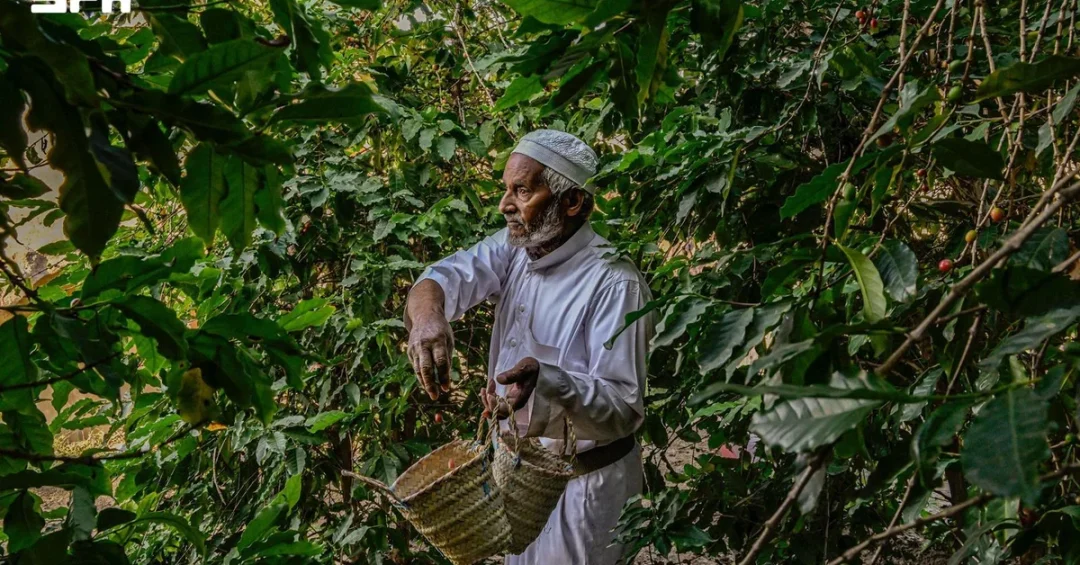
Al-Baha Region is marking International Coffee Day, observed annually on October 1, by highlighting a rapidly expanding coffee cultivation sector that now encompasses more than 450 farms and over 115,000 coffee trees across its mountainous governorates, according to the Saudi Press Agency. The region’s coffee industry, rooted in the high-altitude terraces of southwestern Saudi Arabia, has become a focal point of national efforts to revive and modernize traditional Saudi coffee production. Could this ancient agricultural tradition, once sustained by generations of smallholder farmers, now serve as a model for sustainable rural development across the Kingdom?
The announcement aligns with the Kingdom’s broader agricultural diversification strategy, which seeks to reduce reliance on food imports while creating economic opportunities in rural areas. Al-Baha, known for its cool climate, fertile valleys, and terraced farming systems, has emerged as one of the most promising regions for coffee cultivation in Saudi Arabia. The region’s natural advantages, including elevations exceeding 2,000 meters in some areas and distinct microclimates, provide ideal conditions for growing distinctive coffee varieties that have gained increasing recognition among specialty coffee enthusiasts. As global demand for traceable, single-origin coffee continues to rise, Saudi Arabia’s indigenous coffee sector stands poised to benefit from this international trend.
Context and Background
How did coffee cultivation become such an integral part of Al-Baha’s agricultural identity? Coffee has been cultivated in Saudi Arabia’s southwestern highlands for centuries, with historical records suggesting that coffee farming in the region predates many modern agricultural practices. The mountainous terrain of Al-Baha, characterized by its steep slopes and traditional stone terraces, has long provided an ideal environment for coffee plants, which thrive at high altitudes with well-distributed rainfall and moderate temperatures. These geographical conditions contribute to the development of coffee beans with distinctive flavor profiles that reflect the region’s unique terroir.
The Ministry of Environment, Water, and Agriculture has played a central role in supporting this heritage crop through targeted development programs. Fahd Al-Zahrani, Director General of the Ministry of Environment, Water, and Agriculture branch in Al-Baha Region, stated that efforts to develop the region’s coffee sector include the establishment of five specialized agricultural hubs dedicated to coffee cultivation. These hubs function as centers of excellence, providing farmers with technical guidance, improved seedlings, and access to modern cultivation techniques. The initiative represents a coordinated approach to strengthening the entire coffee value chain, from nursery production through harvesting and processing.
The expansion of coffee farming in Al-Baha also reflects a broader national trend. Across Saudi Arabia’s southwestern regions, including Jazan, Asir, and Al-Baha, coffee cultivation has experienced a renaissance in recent years, supported by government incentives and growing consumer interest in locally produced coffee. This resurgence is not merely agricultural but cultural, as Saudi coffee, known locally as qahwa, holds a cherished place in the Kingdom’s hospitality traditions and social customs. The deep cultural significance of coffee in Saudi society adds a dimension of intangible heritage to the economic and environmental aspects of its cultivation.
Key Details
What concrete steps are being taken to translate these ambitions into measurable results? According to official figures released through the Saudi Press Agency, more than 600,000 coffee seedlings have been planted across Al-Baha’s governorates. This substantial figure reflects the growing scale of coffee cultivation in the region and underscores ongoing efforts to capitalize on its comparative advantages in coffee production. The planting of over 600,000 seedlings represents a significant investment in the future of the sector, as coffee trees typically require several years to reach full production maturity.
Regarding processing infrastructure, Al-Zahrani noted that construction is underway on a coffee processing plant with an investment exceeding SAR16 million. The facility is a key project aimed at supporting the development and growth of the region’s coffee sector. By establishing local processing capacity, the project addresses one of the critical bottlenecks that have historically limited the value that farmers can capture from their harvests. A modern processing plant will enable Al-Baha’s coffee producers to dry, hull, and prepare their beans to consistent standards, potentially opening doors to premium domestic and international markets.
The combination of expanded cultivation and processing infrastructure suggests a comprehensive approach to sector development. The five specialized agricultural hubs mentioned by Al-Zahrani are expected to serve as anchors for this effort, offering training, research, and quality control services. These hubs may also facilitate the introduction of improved coffee varieties that are better suited to the region’s climate and more resistant to pests and diseases, thereby enhancing both yields and quality. Together, these measures aim to transform coffee from a subsistence crop into a commercially viable enterprise for Al-Baha’s farming communities.
International and Regional Impact
How might Al-Baha’s coffee expansion influence Saudi Arabia’s position in the global coffee market? The Kingdom has historically been a major importer of coffee, with a strong domestic culture of consumption centered on traditional Saudi coffee. By developing domestic production, Saudi Arabia could gradually reduce its dependence on imported beans while also creating a distinctive Saudi origin that appeals to specialty coffee markets. The emergence of a recognized Saudi coffee terroir could attract international buyers seeking novel and authentic products, particularly as global coffee consumers increasingly value transparency, sustainability, and unique origin stories.
Regionally, Al-Baha’s progress contributes to a wider movement among Arabian Peninsula countries to revive coffee cultivation. Neighboring countries in the region have also launched initiatives to support coffee farming, recognizing its potential to generate rural income, preserve cultural heritage, and enhance food security. Saudi Arabia’s efforts, supported by the Ministry of Environment, Water, and Agriculture, position the Kingdom as a leader in this regional revival. International cooperation in coffee research and development could further accelerate progress, allowing Saudi producers to benefit from global expertise while sharing their own knowledge of cultivating coffee in arid and semi-arid environments.
Economic and Strategic Significance
What does the SAR16 million processing plant signify for the local economy? At its core, the facility represents a strategic investment in moving Al-Baha’s coffee sector up the value chain. Rather than selling raw cherries or unprocessed beans, local farmers will have the option to process their harvests domestically, capturing a greater share of the final retail value. This shift can increase household incomes in rural communities, create employment opportunities in processing and marketing, and stimulate ancillary businesses such as packaging, logistics, and tourism related to coffee farm visits.
The strategic significance extends beyond direct economic returns. Coffee cultivation in Al-Baha supports environmental objectives by encouraging the maintenance of terraced landscapes that help prevent soil erosion and conserve water. Coffee trees also provide shade and contribute to biodiversity in agricultural areas. As Saudi Arabia pursues its Vision 2030 goals of economic diversification and sustainable development, the coffee sector in Al-Baha exemplifies how traditional agriculture can be modernized to deliver environmental, social, and economic dividends simultaneously. The integration of coffee farming with agritourism could further amplify these benefits, attracting visitors interested in experiencing Saudi Arabia’s coffee heritage firsthand.
Vision 2030 Alignment
How does the Al-Baha coffee initiative connect to Saudi Arabia’s long-term national transformation? The development of the coffee sector aligns directly with Vision 2030’s objectives of diversifying the economy, creating employment for Saudi citizens, and enhancing the Kingdom’s international competitiveness. By investing in agricultural value chains that leverage regional competitive advantages, the government is fostering economic activities that can be sustained over the long term. The coffee sector also supports the Vision’s emphasis on preserving Saudi cultural heritage while embracing innovation and modernization.
As Al-Baha marks International Coffee Day, the region’s expanding coffee farms and new processing facilities stand as tangible evidence of progress. The combination of government support, private investment, and community participation suggests that Saudi coffee is entering a new era, one in which the Kingdom’s ancient agricultural traditions are being reimagined for a modern global economy. For international observers, Al-Baha’s coffee story offers a compelling example of how Saudi Arabia is leveraging its natural and cultural assets to build a more diversified and resilient future, in line with the ambitious goals of Vision 2030.
20 Questions
Q1. What is International Coffee Day and when is it observed?
A1. International Coffee Day is observed annually on October 1 to celebrate coffee and support coffee farmers worldwide. Saudi Arabia participates by highlighting its growing domestic coffee sector, including regions like Al-Baha.
Q2. How many coffee farms are there in Al-Baha Region?
A2. According to the Saudi Press Agency, Al-Baha Region is home to over 450 coffee farms, comprising more than 115,000 trees that produce various types of Saudi coffee.
Q3. What is the significance of Al-Baha for coffee cultivation?
A3. Al-Baha’s mountainous terrain, high elevations, and suitable microclimates make it ideal for growing distinctive coffee varieties, continuing a cultivation tradition that spans centuries in southwestern Saudi Arabia.
Q4. Who is Fahd Al-Zahrani and what did he say about the coffee sector?
A4. Fahd Al-Zahrani is the Director General of the Ministry of Environment, Water, and Agriculture branch in Al-Baha Region. He announced efforts to develop the sector through five specialized agricultural hubs.
Q5. How many coffee seedlings have been planted in Al-Baha?
A5. More than 600,000 coffee seedlings have been planted across Al-Baha’s governorates, reflecting the growing scale of cultivation and efforts to capitalize on the region’s advantages.
Q6. What is the value of the new coffee processing plant?
A6. Construction is underway on a coffee processing plant with an investment exceeding SAR16 million. The facility is a key project supporting the development and growth of the region’s coffee sector.
Q7. What are the five specialized agricultural hubs?
A7. The five hubs are dedicated to coffee cultivation, providing technical guidance, improved seedlings, and modern techniques to farmers, serving as centers of excellence for the sector.
Q8. How does coffee cultivation benefit Al-Baha’s economy?
A8. It increases rural incomes, creates jobs in processing and marketing, stimulates ancillary businesses, and supports agritourism, contributing to economic diversification.
Q9. What is the cultural significance of coffee in Saudi Arabia?
A9. Saudi coffee, known as qahwa, is central to hospitality traditions and social customs, representing intangible cultural heritage alongside its economic and environmental value.
Q10. How does the coffee initiative align with Vision 2030?
A10. It supports economic diversification, job creation, and heritage preservation, aligning with Vision 2030’s goals of a diversified economy and sustainable development.
Q11. What environmental benefits does coffee farming provide?
A11. Coffee trees help maintain terraced landscapes, prevent soil erosion, conserve water, provide shade, and contribute to biodiversity in agricultural areas.
Q12. Will Saudi Arabia reduce coffee imports?
A12. Developing domestic production could gradually reduce dependence on imported beans while creating a distinctive Saudi origin that appeals to specialty coffee markets.
Q13. What types of coffee are grown in Al-Baha?
A13. Various types of Saudi coffee are produced, with distinctive flavor profiles reflecting the region’s unique terroir, high altitudes, and traditional cultivation methods.
Q14. How long do coffee trees take to mature?
A14. Coffee trees typically require several years to reach full production maturity, meaning the 600,000 seedlings planted will contribute to harvests in the coming years.
Q15. What role does the Ministry of Environment, Water, and Agriculture play?
A15. The ministry supports the coffee sector through development programs, technical guidance, seedling distribution, and the establishment of specialized agricultural hubs in Al-Baha.
Q16. How does Al-Baha’s coffee compare to global varieties?
A16. Al-Baha’s high-altitude coffee develops distinctive flavor profiles that reflect its unique terroir, positioning it well for specialty coffee markets seeking traceable, single-origin products.
Q17. Can tourists visit coffee farms in Al-Baha?
A17. Agritourism related to coffee is a growing opportunity, allowing visitors to experience Saudi Arabia’s coffee heritage firsthand while supporting local communities.
Q18. What is the Saudi Press Agency’s role in reporting this?
A18. The Saudi Press Agency (SPA) is the official national news agency, providing verified information from government ministries and state agencies about developments like Al-Baha’s coffee sector.
Q19. How does this initiative support rural communities?
A19. It creates income opportunities, jobs in processing and marketing, and supports ancillary businesses, helping to sustain rural livelihoods and reduce migration to cities.
Q20. What is the future outlook for Saudi coffee?
A20. With government support, private investment, and community participation, Saudi coffee is entering a new era, reimagining ancient traditions for a modern global economy in line with Vision 2030.
Reader Feedback
We value your thoughts. Please share your feedback on this article.
Your feedback helps us improve our coverage.
Related articles
 Saudi-Led Dates Council Holds Global Marketing Workshop in Tunisia
 Saudi Arabia Marks International Coffee Day, Highlights Sector Growth
 Saudi FY2027 Budget: SAR1,392B Spending, 3.6% Deficit
 Saudi Translation Registrations Grow 20% to 7,964
 Saudi Arabia Leads Arab Chambers Union Presidency
 Saudi NDF and Italy’s CDP Sign MoU to Boost Development Cooperation